递延资产

Search documents
美联储三年亏损期终落幕!2432亿美元窟窿还需数年来填?
Jin Shi Shu Ju· 2025-12-03 12:05
Group 1 - The Federal Reserve has reportedly turned around its unprecedented losses that lasted for three years, closely linked to the monetary policies implemented post-COVID-19 [2] - Since early November, the Federal Reserve has returned to profitability, allowing it to slowly begin to fill its deferred assets, which have decreased from $243.8 billion to $243.2 billion by November 26 [2] - Analysts expect that the process of replenishing deferred assets and returning profits to the Treasury will take years to complete [2] Group 2 - During the pandemic, the Federal Reserve significantly increased its asset holdings by purchasing government bonds and mortgage-backed securities, peaking at $9 trillion in the summer of 2022 [3] - Rising inflation pressures led the Federal Reserve to raise interest rates significantly starting in early 2022, creating a mismatch between its income and the payments it needed to make to banks [3] - The cessation of losses for the Federal Reserve is attributed to the reduction in interest on reserve balances (IORB) and not from special earnings like seigniorage [3]
美联储,突然“爆雷”!
21世纪经济报道· 2025-03-23 05:16
Core Viewpoint - The Federal Reserve reported an operational loss of $776 million for the year 2024, primarily attributed to aggressive interest rate hikes from 2022 to 2023 [1][4][5]. Financial Performance - The Federal Reserve's operational loss for 2024 reached $776 million (approximately 56 billion RMB), marking the second consecutive year of significant losses, following a loss of $11.45 billion in 2023 [4]. - The losses stem from the Fed's economic support during the pandemic in 2020 and 2021, and subsequent rate hikes to combat high inflation, raising the benchmark interest rate from near zero to a range of 5.25% to 5.5% [5][6]. Asset and Liability Management - The Fed's balance sheet includes assets such as government bonds and mortgage-backed securities, generating income similar to other investors. Liabilities consist of bank reserves at the Fed, for which interest must be paid [6]. - Since 2022, the Fed has continuously raised interest rates, increasing the interest paid on bank reserves. By September 2022, the interest paid exceeded the income from its securities portfolio, leading to substantial operational losses [7]. Interest Rate Dynamics - As of the end of 2024, the Fed held $6.8 trillion in securities with a weighted average yield of 2.6%, while paying an interest rate of 4.4% on $3.4 trillion in reserves [8]. - The Fed's operational losses do not affect its ability to conduct monetary policy, as profit generation is not its primary goal; rather, it aims to maintain stable inflation and a healthy labor market [9][13]. Future Profitability Outlook - The timeline for the Fed to return to profitability depends on when the benchmark interest rate falls below the average yield of its securities and other assets. Predictions indicate continued losses if short-term rates remain above 4% [15]. - The Fed decided to maintain the short-term federal funds rate in the range of 4.25% to 4.5% during its March meeting, citing increased uncertainty in the economic outlook [16]. Deferred Assets - Since 2022, the Fed has established an internal account called "deferred assets." When the Fed returns to profitability, it will first use surplus earnings to repay these deferred assets before resuming payments to the Treasury [11]. - The deferred assets grew from $1.33 trillion in 2023 to nearly $2.16 trillion in 2024, indicating ongoing operational losses [12].

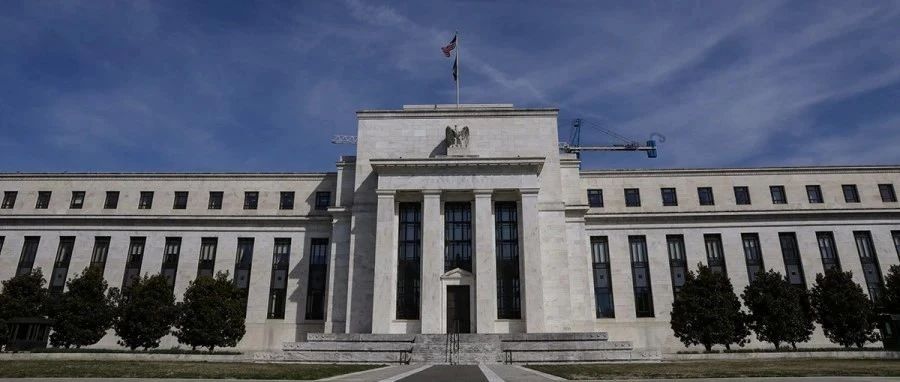
美联储,猛亏5600亿!
证券时报· 2025-03-23 00:28
Core Viewpoint - The Federal Reserve reported an operational loss of $77.6 billion for the year 2024, marking its second consecutive year of significant losses, primarily due to aggressive interest rate hikes from 2022 to 2023 [1][3]. Financial Performance - The Federal Reserve's operational loss for 2024 is $77.6 billion (approximately 56 billion RMB), following a loss of $114.5 billion in 2023 [1][3]. - The losses are attributed to the Fed's economic support during the pandemic and subsequent rate hikes that raised the benchmark interest rate from near zero to a range of 5.25% to 5.5% [3]. - As of the end of 2024, the Fed holds $6.8 trillion in securities with an average yield of 2.6%, while paying an interest rate of 4.4% on $3.4 trillion in reserves [3]. Impact on Monetary Policy - The Fed's ability to return to profitability depends on the trajectory of interest rate cuts; if short-term rates remain above 4%, losses are expected to continue [7]. - Market expectations suggest a potential interest rate cut of 50 to 75 basis points within the year [7]. - The Fed's operational losses do not hinder its monetary policy implementation, as profitability is not its primary goal [5][4]. Future Outlook - The New York Fed predicts that the Fed will approach breakeven as time progresses, contingent on interest rates falling below the average yield of its securities [7]. - Fed officials, including Chicago Fed President Goolsbee, express optimism about potential rate cuts in the next 12 to 18 months if inflation progresses positively [7][8].

突然爆雷!美联储,猛亏5600亿!
券商中国· 2025-03-22 14:15
Core Viewpoint - The Federal Reserve reported an operational loss of $77.6 billion for 2024, marking the second consecutive year of significant losses, primarily due to aggressive interest rate hikes from 2022 to 2023 [2][4]. Financial Performance - The Federal Reserve's operational loss for 2024 is $77.6 billion (approximately 56 billion RMB), following a loss of $114.5 billion in 2023 [4]. - The losses are attributed to the Fed's economic support during the pandemic and subsequent rate hikes that raised the benchmark interest rate from near zero to a range of 5.25% to 5.5% [4]. - As of the end of 2024, the Fed holds $6.8 trillion in securities with a weighted average yield of 2.6%, while paying an interest rate of 4.4% on $3.4 trillion in reserves [4]. Impact on Monetary Policy - The operational losses do not affect the Fed's ability to conduct monetary policy, as profit generation is not its primary goal [5][6]. - The Fed operates as a self-funding entity, covering its expenses through securities income and remitting any surplus to the U.S. Treasury [5]. Future Profitability Outlook - The Fed's return to profitability depends on lowering the benchmark interest rate below the average yield of its securities [8]. - Predictions indicate that if short-term rates remain above 4%, the Fed will continue to incur losses; however, if rates decrease, profitability may be achievable [8]. - Market expectations suggest a potential rate cut of 50 to 75 basis points within the year [8]. Economic Context - Concerns regarding tariffs and their impact on prices and economic growth have been raised, with Fed officials acknowledging the need to assess the broader economic situation [9].