
类滞胀

Search documents
财信证券晨会纪要-20260401
Caixin Securities· 2026-04-01 02:29
Market Overview - The tightening liquidity is suppressing risk appetite, leading to a pullback in the market [5][8] - The Shanghai Composite Index closed at 3891.86, down 0.80%, while the Shenzhen Component Index fell 1.81% to 13478.06 [1][8] - The overall market saw a decline with 1008 stocks rising and 4372 stocks falling, with a total trading volume of 20059.05 billion [9] Economic Insights - Eurozone's March CPI preliminary year-on-year increase is 2.5%, with a month-on-month increase of 1.2% [15][16] - The People's Bank of China conducted a 325 billion yuan reverse repurchase operation with a rate of 1.40% [17][18] - China's Purchasing Managers' Index returned to the expansion zone in March, indicating economic recovery [19][20] Company Dynamics - **Lens Technology (300433.SZ)**: Reported a 2025 annual revenue of 744.10 billion yuan, up 6.46%, and a net profit of 40.18 billion yuan, up 10.87% [27][28] - **Kailai Ying (002821.SZ)**: Expected revenue growth of 19%-22% in 2026, with a 2025 revenue of 66.70 billion yuan, up 14.91% [29][30] - **China Duty Free Group (601888.SH)**: Reported a 2025 revenue of 536.94 billion yuan, down 4.92%, and a net profit of 35.86 billion yuan, down 15.96% [31][32] - **Reap Bio (300119.SZ)**: Achieved a net profit of 4.01 billion yuan in 2025, up 33% [33][34] - **Anhui Heli (600761.SH)**: Reported a revenue of 198.19 billion yuan, up 11.35%, with a net profit of 12.25 billion yuan, down 8.50% [35][36] - **Sany Heavy Industry (600031.SH)**: Achieved a net profit of 84.1 billion yuan in 2025, up 41.2%, with total revenue of 897 billion yuan [38][39] - **Zoomlion (000157.SZ)**: Reported a revenue of 521.07 billion yuan, up 14.58%, and a net profit of 48.58 billion yuan, up 38.01% [40] Industry Trends - The steel industry is undergoing deep adjustments, with companies focusing on high-end, intelligent, and green transformations [41] - The Chinese duty-free and tourism retail market is highly concentrated, with China Duty Free Group maintaining a leading position through its comprehensive layout and supply chain advantages [32]
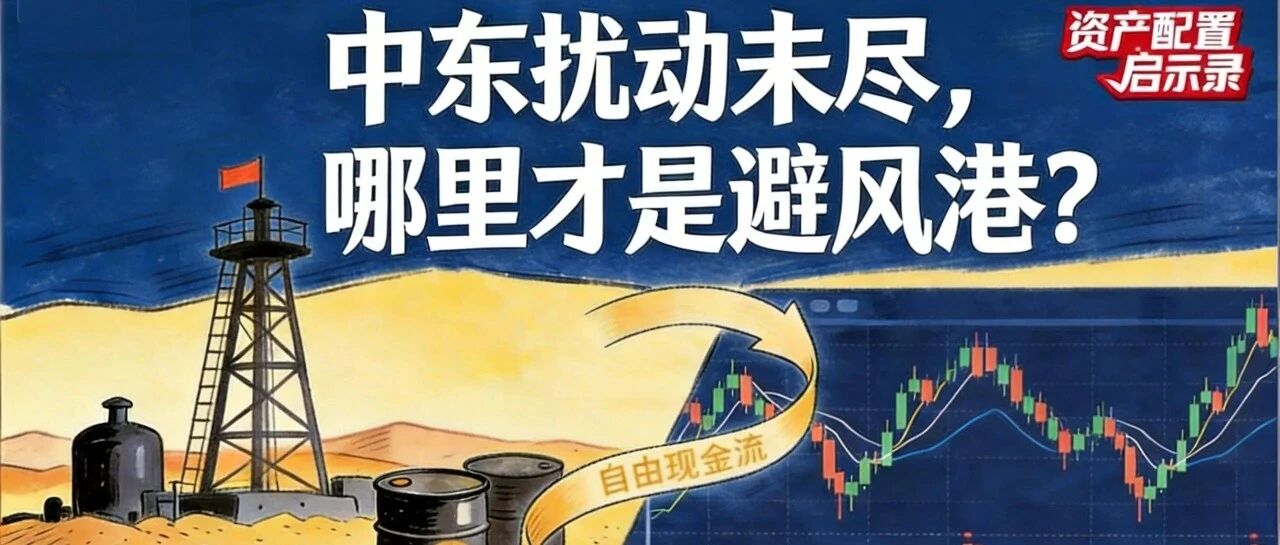
中东扰动未尽,哪里才是避风港? | 资产配置启示录
私募排排网· 2026-03-31 04:06
Group 1 - The article discusses the impact of the recent US-Iran conflict on global asset volatility and the shift in market trading logic, indicating a potential transition from short-term inflation fears to long-term economic stagnation concerns [6][8][9] - The market is currently experiencing a "stagflation" risk characterized by slowing economic growth and persistently high inflation, posing challenges for traditional asset allocation strategies [9] - Historical data shows that April is not a favorable month for A-shares, with only a 31.25% probability of the Shanghai Composite Index rising during this month from 2010 to 2025, likely due to concentrated earnings report disclosures [11] Group 2 - Companies with strong free cash flow, referred to as "cash cows," are highlighted as potential safe havens in the current market environment, as they can better withstand market fluctuations [13][14] - Free cash flow is emphasized as a more reliable indicator of a company's financial health compared to profits, which can be manipulated through accounting practices [14] - The article introduces the Free Cash Flow Index, which selects stocks based on their ability to generate free cash flow, providing a tool for investors to identify quality companies [15][16] Group 3 - The National Free Cash Flow Index covers a balanced distribution of industries, including both value and growth sectors, while excluding financial and real estate companies [17] - The index has a self-correcting mechanism, adjusting quarterly to maintain a focus on companies with strong cash flow generation capabilities [19] - Since its inception, the National Free Cash Flow Index has shown impressive performance, with a cumulative increase of 504.23% and an annualized return of approximately 14.64% as of February 27, 2026 [19] Group 4 - In light of the current investment challenges, the article suggests that investors should focus on companies with solid cash flow rather than chasing market trends [22] - For ordinary investors, tracking funds linked to free cash flow indices, such as the Yinhua National Free Cash Flow ETF, provides a convenient way to invest in a basket of cash-generating companies [22]

类滞胀-将进一步发酵-勿低估美元流动性紧缩
2026-03-30 05:15
Summary of Key Points from Conference Call Records Industry Overview - The current market is experiencing a "stagflation-like" environment, characterized by rising inflation and stagnant economic growth, primarily driven by increasing oil prices and tightening dollar liquidity [1][2][3]. Core Insights and Arguments - **Market Performance**: The U.S. stock market has entered a correction phase, with the Nasdaq index down over 10% from its January peak, and the Dow Jones Industrial Average also falling more than 10% [2][3]. - **Oil Price Impact**: Oil prices have surged past $83 per barrel, reaching $100, negating the effects of fiscal tax cuts and significantly impacting consumer purchasing power [3][4]. - **Macroeconomic Data**: Recent macroeconomic indicators, including a decline in the composite PMI and rising import price indices, suggest a slowdown in economic growth, with Q1 GDP growth projected at only 1% [4][5]. - **Tightening Dollar Liquidity**: There are signs of tightening dollar liquidity, as evidenced by the overnight repo rates consistently exceeding excess reserve rates, indicating a shift towards a more restrictive monetary environment [1][6][7]. - **Credit Market Conditions**: High-yield bond spreads have widened, and there are emerging restrictions in private credit markets, indicating a tightening of credit conditions [7][8]. Additional Important Content - **Consumer Confidence**: The University of Michigan's consumer confidence index has been revised downwards, reflecting consumer concerns over rising inflation and economic uncertainty [4][5]. - **Comparison with Historical Context**: The current stagflation risks differ from the 1970s due to reduced reliance on imported energy and improved energy efficiency, but the impact is expected to be more severe than during the 2022 Ukraine crisis due to a lack of substantial policy support [5][9]. - **Asset Performance**: Traditional safe-haven assets like gold have underperformed, with the market now favoring the dollar and oil as primary safe assets [8][9]. - **Investment Strategy for 2026**: Given the current economic and market conditions, a defensive investment strategy is recommended, focusing on risk reduction and waiting for more stable market conditions before making significant investment decisions [9].
财信证券晨会纪要-20260330
Caixin Securities· 2026-03-30 00:09
Market Strategy - The market is expected to maintain a volatile bottoming phase, with a focus on buying into high-growth performance sectors [5][11] - The overall market sentiment remains cautious due to external uncertainties, particularly geopolitical tensions in the Middle East, which may suppress market risk appetite [11] - Earnings reports due by the end of April are anticipated to significantly influence market trends, with high-valuation sectors facing potential pressure [11] Economic Insights - In January and February 2026, profits of large-scale industrial enterprises in China grew by 15.2%, totaling 10,245.6 billion yuan [17][18] - State-owned enterprises reported a profit of 3,665.6 billion yuan, a 5.3% increase, while private enterprises saw a 37.2% increase to 2,844.5 billion yuan [18] - The mining sector's profits increased by 9.9%, while the manufacturing sector's profits rose by 18.9% [18] Industry Dynamics - The semiconductor discrete device industry experienced a profit growth of 130.5% in the first two months of 2026 [28] - The U.S. has initiated a 337 investigation into TOPCon solar cell products, affecting several major Chinese manufacturers [26][27] - Guangdong province is optimizing housing provident fund policies to support housing consumption, particularly for families with multiple children [30] Company Updates - Rongchang Bio (688331.SH) reported a revenue of 3.251 billion yuan for 2025, a year-on-year increase of 89.36%, with a net profit of 710 million yuan [33] - Guotou Zhonglu (600962.SH) achieved a net profit of 41 million yuan in 2025, up 39.88% year-on-year [35] - Andeli (605198.SH) reported a net profit of 330 million yuan for 2025, reflecting a 26.71% increase [37] - Muyuan Foods (002714.SZ) reported a net profit of 15.487 billion yuan for 2025, a decline of 13.39% year-on-year due to falling pig prices [40] - Dingtai High-Tech (301377.SZ) plans to invest 5 billion yuan in a smart manufacturing headquarters project, with a revenue increase of 35.70% in 2025 [43][44]


财信证券宏观策略周报(3.30-4.3):指数震荡磨底,低吸业绩高增方向-20260329
Caixin Securities· 2026-03-29 12:24
Group 1: Market Overview - The market is expected to maintain a volatile consolidation phase until the end of April, with a trend-driven market still needing to wait [5][8] - The technical indicators show weak recovery after the recent decline, with the Shanghai Composite Index and the Wind All A Index not filling previous gaps, indicating a cautious sentiment among investors [5][8] - The performance of industrial enterprises is crucial for market direction, with a focus on sectors that exceed earnings expectations [5][8] Group 2: Investment Recommendations - Attention should be given to high dividend assets such as coal, oil, and transportation [17] - Opportunities in energy substitution sectors, including new energy, energy storage, and coal chemical industries, are highlighted [17] - High-growth technology sectors, such as optical modules, PCBs, and storage, are recommended for investment [17] Group 3: Economic Indicators - In January and February, profits of industrial enterprises above designated size increased by 15.2% year-on-year, with a notable acceleration compared to the previous year [10][11] - The profit margin for industrial enterprises improved, with the cost per hundred yuan of revenue decreasing for the first time since 2022 [10][11] - High-tech manufacturing and raw materials sectors showed significant profit growth, with high-tech manufacturing profits rising by 58.7% and raw materials manufacturing profits increasing by 88.3% [11] Group 4: Policy Changes - The collection ratio of state-owned capital profits is set to increase, with adjustments made to the categories of enterprises subject to profit collection [12] - The new policy aims to enhance fiscal balance and support key areas such as national strategy and technological innovation [12] Group 5: Geopolitical Factors - The ongoing Middle East conflict adds uncertainty to the market, with potential impacts on oil prices and overall market sentiment [13][14] - The situation in the Strait of Hormuz is critical, as its closure could lead to prolonged market volatility and shifts in trading logic [13]
财信证券晨会纪要-20260327
Caixin Securities· 2026-03-26 23:31
Market Strategy - The market experienced a decline with a total trading volume below 2 trillion yuan, indicating a shrinking market activity [6] - The major indices showed a downward trend, with the Shanghai Composite Index down by 1.09% and the ChiNext Index down by 1.34% [6][7] - The overall market sentiment remains cautious due to previous rapid declines and the need for increased trading volume to support a breakout [6] Industry Dynamics - The price of photovoltaic silicon materials has decreased, continuing to explore lower levels, with a drop of 6.25% for n-type recycled materials [21] - Transportation disruptions due to geopolitical tensions have negatively impacted the supply of raw materials, leading to reduced operational capacity in downstream facilities [23][25] - The online market for laptops in China saw a significant decline of 40.5% in sales volume during January-February 2026, attributed to high base effects from previous subsidies and rising component costs [26][27] Company Tracking - North New Materials (000786.SZ) reported a 20.31% year-on-year decline in net profit for 2025, with total revenue down by 2.09% [29][30] - Yifang Bio (688382.SH) completed the enrollment of all subjects in the Phase III clinical trial for D-2570, a treatment for psoriasis, and is advancing its clinical research [31][32] - Tangrenshen (002567.SZ) announced a capital increase for its subsidiary Longhua Agriculture, aiming to optimize its capital structure [33][34]
财信证券晨会纪要-20260324
Caixin Securities· 2026-03-23 23:30
Market Overview - The A-share market experienced a significant decline, with the Shanghai Composite Index falling by 3.63% to close at 3813.28 points, and the Shenzhen Component Index dropping by 3.76% to 13345.51 points [1][7] - The overall market sentiment is under pressure due to geopolitical tensions, particularly related to the Middle East, which has raised concerns about energy prices and inflation [7] Economic Insights - The People's Bank of China conducted a 7-day reverse repurchase operation of 8 billion yuan, with a fixed interest rate of 1.40%, resulting in a net withdrawal of 129.3 billion yuan on that day [15][16] - The central bank plans to issue the third phase of central bank bills worth 60 billion yuan on March 25, 2026, to enhance the RMB yield curve in Hong Kong [16][17] Industry Dynamics - The National Development and Reform Commission has implemented temporary measures to regulate domestic refined oil prices in response to rising international oil prices due to geopolitical tensions [23] - India's government has diversified its energy import strategy, increasing the proportion of crude oil sourced from non-Hormuz routes to 70%, up from 55% before the conflict [25][26] - The Chinese engineering machinery export value for January-February 2026 reached 5.556 billion USD, marking a year-on-year increase of 33.4% [32] Company Updates - WuXi AppTec (603259.SH) reported a revenue of 45.46 billion yuan for 2025, reflecting a year-on-year growth of 15.8%, with a net profit of 19.15 billion yuan, up 102.65% [34] - Rongchang Biopharmaceutical (688331.SH) received approval for the marketing application of its drug for treating HER2 low-expressing breast cancer with liver metastasis, marking its fourth indication approval [38]
特朗普访华前瞻:建制派的反扑与特朗普的窘境
East Money Securities· 2026-03-23 07:26
Group 1 - The report highlights that Trump's policy control during his second term is significantly weaker than previously expected, facing systemic constraints from the judiciary and establishment forces, particularly regarding tariffs and the Federal Reserve [4][11][12] - The macroeconomic environment in the U.S. is showing signs of "stagflation," with non-farm payroll data rebounding but lacking authenticity due to structural industry disparities, while inflation remains sticky with PCE rising to high levels [4][12][54] - Fiscal sustainability is a deeper constraint for Trump, as attempts to implement the "Great America Act" for revenue generation and spending cuts have faced legal challenges and delays, leading to ongoing fiscal pressure [4][54][62] Group 2 - The report discusses the shift in U.S.-China relations from "maximum pressure" to "phased repair," suggesting that Trump's upcoming visit to China may focus on pragmatic outcomes like extending tariff pauses and increasing purchases [4][12] - If Trump loses power in the midterm elections, the independence of the Federal Reserve may strengthen, leading to a reduced probability of significant interest rate cuts, which could affect the attractiveness of U.S. Treasury bonds [4][12][54] - The report identifies potential beneficiaries in the A-share market related to external demand and manufacturing sectors if a phased agreement is reached during Trump's visit to China [4][12][54]
财信证券晨会纪要-20260323
Caixin Securities· 2026-03-22 23:31
Market Overview - The Shanghai Composite Index closed at 3957.05, down 1.24%, while the Shenzhen Component Index decreased by 0.25% to 13866.20. The ChiNext Index rose by 1.30% to 3352.10, indicating a mixed performance across different market segments [1][7] - The overall market saw a decline in major indices, with the CSI 300 Index down 0.35% to 4567.02, reflecting a broader trend of market volatility [1][8] Economic Insights - The People's Bank of China raised the macro-prudential adjustment coefficient for domestic enterprises' overseas lending from 0.5 to 0.6, increasing the overall cap on overseas lending balances [22] - The March LPR (Loan Prime Rate) remained unchanged, with the 1-year LPR at 3% and the 5-year LPR at 3.5%, indicating a stable interest rate environment [21] Industry Dynamics - The draft of the "People's Republic of China Financial Law" has been released for public consultation, aiming to enhance financial regulation and risk management in the financial sector [27][28] - The China Securities Association published a model for the key competency requirements for investment advisors, supporting the development of talent in the wealth management sector [29][30] Company Updates - Zhongxing Junye (002772.SZ) reported a 162% year-on-year increase in net profit for 2025, reaching 335 million yuan, driven by improved product pricing and operational efficiency [33][34] - Dize Pharmaceutical (688192.SH) announced positive results from a Phase III clinical trial for its drug Shuwotai, targeting a specific type of lung cancer, marking a significant milestone in its product development [35][36] - Shouchuang Securities (601136.SH) achieved a net profit of 1.056 billion yuan for 2025, reflecting a 7.26% increase year-on-year, supported by a balanced business structure and growth in asset management [37][38] - China Duty Free Group completed the acquisition of DFS Group's stores in Hong Kong and Macau, establishing a partnership with LVMH Group to enhance its position in the global travel retail market [31][32]
霍尔木兹的终局-不是失控-而是低效均衡
2026-03-22 14:35
Summary of Key Points from Conference Call Records Industry and Company Involved - The discussion primarily revolves around the geopolitical situation in the Middle East, particularly focusing on the implications of U.S. military actions in the Strait of Hormuz and its impact on global oil markets and the U.S. economy. Core Insights and Arguments 1. **U.S. Military Actions and Risks** The potential costs and benefits of U.S. military actions in the Middle East, particularly regarding the control of Kirkuk Island, are complex. The best-case scenario involves minimal casualties and Iranian compliance, while the worst-case scenario could lead to significant U.S. casualties and regional conflict escalation [2] 2. **Prisoner's Dilemma in the Strait of Hormuz** The situation in the Strait of Hormuz is characterized as a "prisoner's dilemma," where the U.S. is not the primary beneficiary of keeping the strait open due to its energy independence. The real beneficiaries are countries like Japan, South Korea, and India, which rely heavily on Middle Eastern oil [3] 3. **Geopolitical and Financial Market Implications** The geopolitical tensions have led to a significant rise in U.S. Treasury yields, reflecting market concerns over inflation and potential Federal Reserve interest rate hikes. The 10-year Treasury yield rose by 13 basis points in a single day, indicating heightened market anxiety [2] 4. **Impact on Oil Prices and Regional Price Disparities** If a low-intensity standoff persists, oil prices are expected to rise due to increased supply costs and risk premiums. For instance, the price of WTI crude oil was $96 per barrel, while Brent was $116, and Oman crude for Asia reached $166, indicating a $70 per barrel premium for Asian countries due to geopolitical risks [4] 5. **Dollar's Transition from Credit to Commodity Currency** The U.S. dollar is shifting from being viewed as a credit currency to a commodity currency, supported by the U.S.'s role as a major oil producer. This shift enhances the dollar's resilience amid global oil shortages [4] 6. **Structural Changes in the "Petrodollar" System** The traditional "petrodollar" system, where oil-exporting countries reinvested dollars into U.S. Treasuries, may evolve. The new model could see countries like Japan and South Korea purchasing U.S. oil with dollars, aligning with U.S. energy policies [5] Other Important but Potentially Overlooked Content 1. **Systemic Risks Facing the U.S. Economy** Beyond the Middle Eastern conflict, the U.S. economy faces systemic risks in 2026, including stagflation pressures driven by rising oil prices, risks in the private credit market, and tightening liquidity conditions. The overall investment strategy should shift from high-beta to defensive approaches [5] 2. **Political Implications of Military Actions** The potential negative impact of military actions on U.S. domestic politics, especially in an election year, could create significant pressure on the current administration, with the likelihood of a Democratic sweep in Congress increasing to 50% according to betting market data [2] 3. **Long-term Strategic Asset Considerations** The evolving geopolitical landscape emphasizes the importance of energy resources as strategic assets, warranting long-term attention to the new dynamics of oil trade and dollar transactions [5]