都市型工业

Search documents
制造业向上、文化向新、交通向外 高价值城市生态“禅城打法”
2 1 Shi Ji Jing Ji Bao Dao· 2025-12-27 01:17
Core Insights - The article highlights the transformation of Zhan Cheng in Foshan, focusing on the integration of industry, culture, and transportation to overcome development bottlenecks [1][9]. Group 1: Land Development and Industrial Upgrading - Foshan Dingcheng Investment Co., Ltd. acquired the TOD land in Zhan Cheng for 31.21 million yuan, signaling a shift towards high-end manufacturing and innovation platforms in artificial intelligence and smart manufacturing [2]. - Zhan Cheng aims to maintain a strong manufacturing base while integrating high-end industries, efficient spaces, and quality services to drive urban economic development [2][3]. - The "three-year million" initiative has led to the establishment of over 8 million square meters of urban industrial space, promoting vertical space utilization and close proximity of upstream and downstream enterprises [2][3]. Group 2: Cultural and Tourism Development - The opening of the first Wanxiang Tiandi shopping center in Foshan, covering 180,000 square meters, represents a blend of modern commercial and cultural experiences [4]. - Zhan Cheng is focusing on revitalizing its cultural heritage through immersive experiences and modern consumer engagement, exemplified by the "Thousand-Year Foshan" city IP initiative [5][6]. - The integration of cultural elements into commercial spaces has attracted numerous brands, with the Zhuliao Street area seeing about 124 new brand openings in the past year [6]. Group 3: Transportation Infrastructure - The opening of the Guangzhou-Zhanjiang high-speed railway has significantly reduced travel time and connected Zhan Cheng to the national high-speed rail network, enhancing its role as a resource exchange hub [8][9]. - The high-speed railway is expected to bring approximately 6 million visitors annually to Foshan, transforming Zhan Cheng into a key node for innovation and capital flow [8]. - The development of the "Foshan High-Speed Railway Future City" aims to leverage the influx of people and resources to drive innovation and economic growth [8][9]. Group 4: Strategic Goals and Future Outlook - Zhan Cheng's strategy focuses on reshaping land value and industrial space, aiming to revitalize collective construction land, which constitutes 46% of the district's development area [3]. - The region's goal is to transition from a functional center to a value hub, enhancing its ability to attract resources and create incremental value [9]. - The collaborative evolution of industry, culture, and transportation within limited space is seen as a model for high-quality urban development under similar constraints [9].
钱江世纪城产业新地标开建
Hang Zhou Ri Bao· 2025-08-08 02:33
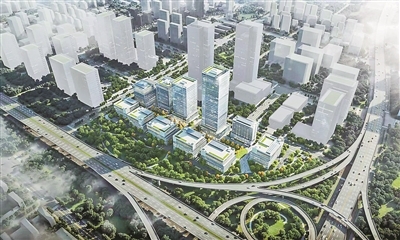
Core Viewpoint - The Qianjiang Century City Intelligent Comprehensive Science and Technology Park has officially commenced construction, marking the first "industrial building" project in the area, which aims to explore urban industrial development practices [3][4]. Group 1: Project Overview - The project is located in the Qiantang Bay Future Headquarters Base, covering a total area of 100 acres, consisting of 11 independent buildings, including a 150-meter tall office building that will become a new landmark in the region [3]. - The park is expected to be completed by June 2028 and will focus on developing leading industries such as low-altitude economy and artificial intelligence, as well as pillar industries like smart manufacturing and smart home [3]. Group 2: Industrial Development Strategy - The "industrial building" concept represents a systematic innovation in industrial production methods, with approximately 149,000 square meters designated for industrial and research facilities, featuring differentiated designs for general, specialized, and composite factory types based on enterprise needs [3][4]. - The project aims to redefine perceptions of industrial development in central business districts, creating a new urban development model that integrates "business + manufacturing" [4]. Group 3: Investment and Leasing Strategy - Prior to the construction, a proactive leasing strategy was initiated, targeting specialized and high-tech enterprises, with a management approach allowing companies to customize factory details for a "ready-to-move-in" experience [4]. - Several companies, including a high-end home textile brand, have already committed to leasing over 60,000 square meters of space, indicating the effectiveness of the innovative leasing model [4].

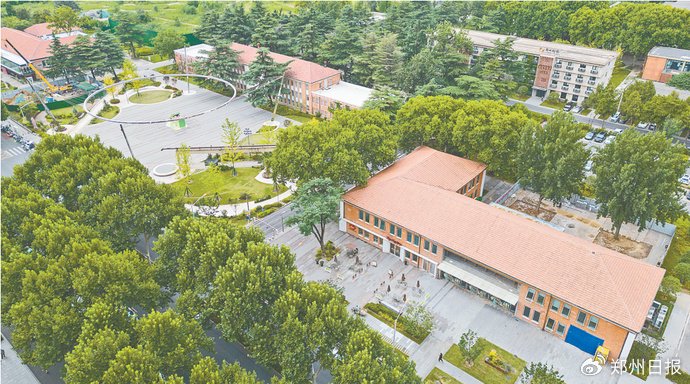
【风物郑州】厚重中原 工业基地焕发新活力
Zheng Zhou Ri Bao· 2025-07-21 01:57
Core Viewpoint - The article highlights the transformation and revitalization of the Zhongyuan District in Zhengzhou, showcasing its historical significance as an industrial base and its current evolution into a vibrant urban area with modern amenities and cultural richness [1][9][10]. Industrial Development - Zhongyuan District is recognized as an old industrial base, having been home to significant industrial achievements such as the production of China's first artificial diamond in 1963 and the first cubic boron nitride in 1966 [3][4]. - The district was a hub for numerous state-owned enterprises, contributing to a substantial portion of Zhengzhou's industrial output, with cotton mills accounting for 36.22% of the city's industrial value in 1957 [3][4]. - The area has transitioned from traditional manufacturing to a more dynamic industrial landscape, with the "One Road Four Streets" area now bustling with commercial activity and tourism [9][10]. Cultural Heritage - Zhongyuan District is rich in cultural heritage, with archaeological sites dating back to the Yangshao and Erlitou cultures, as well as remnants from the Shang and Zhou dynasties [4][5]. - The district's historical significance is emphasized through its numerous cultural relics and sites, which have been developed into ecological cultural parks for public engagement [5][6]. Urbanization and Governance - The establishment of Zhongyuan District has been pivotal in the urbanization of Zhengzhou, evolving through various administrative changes since the Qing Dynasty [6][7]. - The district has undergone significant urban development, with all areas now fully urbanized and organized into street-level governance structures [8][10]. Future Development and Innovation - The district is focusing on high-quality development, aiming to integrate technology and industry, with plans to enhance its modern industrial system and promote innovation [10][11]. - There is a strategic emphasis on developing a digital economy and fostering industries such as advanced manufacturing and artificial intelligence, with a target of achieving a future industry scale of 40 billion yuan by 2030 [11].