量化大数据投资

Search documents
百亿产业园落地,炒大消费的题材又多了一个
Sou Hu Cai Jing· 2026-02-22 07:40
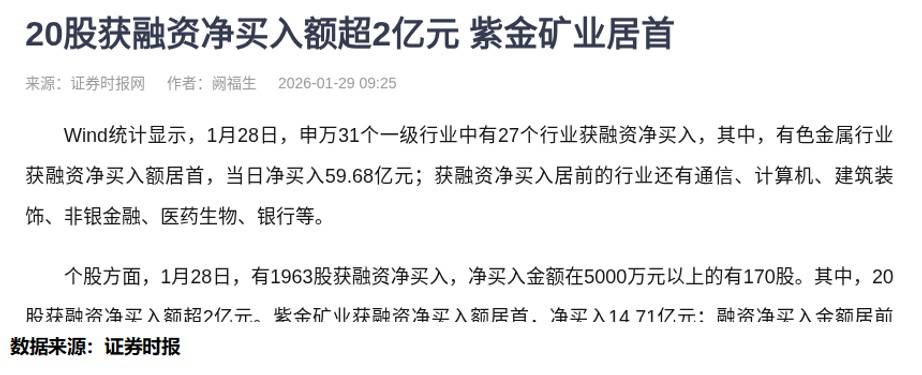
Group 1 - The leading company in the traditional health supplement sector announced an investment of 1.485 billion yuan to build a health consumer goods industrial park, which is interpreted as a significant transformation in response to the trend of younger and food-oriented consumption [1] - This move is seen as a key action to position itself in the health sector, reflecting a strategic shift towards the growing health market [1] Group 2 - The concept of "speculative capital" is introduced, indicating that quality stocks often attract capital competition before showing significant price movements, which reflects the market's attitude towards future trends [2] - The phenomenon of "speculative capital" is characterized by the simultaneous appearance of "institutional inventory" data and "speculative capital movement" data, suggesting a competitive dynamic among different types of capital [2][3] Group 3 - The analysis highlights that prior to price movements, there are often two rounds of noticeable "speculative capital" activity, followed by a period of adjustment, indicating a battle among different capital participants [5] - The identification of "washing" behavior through quantitative data can help recognize quality stocks that are undergoing adjustments, as institutions may be collecting more shares rather than abandoning the stock [5][8] Group 4 - The analysis emphasizes the importance of a multi-dimensional quantitative approach to market analysis, which helps avoid falling into information traps and allows for a comprehensive understanding of stock value from various perspectives, including capital, behavior, price, and probability [11][13] - Stocks that exhibit repeated "washing" behavior indicate a longer-term investment strategy by participating capital, rather than short-term speculation, making them worthy of continued observation [11][13] Group 5 - The core advantage of quantitative trading is to replace subjective judgment with objective data, allowing for the construction of a probabilistic investment framework [14] - The analysis suggests that instead of making impulsive decisions based on news, it is crucial to observe capital behavior related to news events to assess the true market sentiment and make more rational investment decisions [14]

公募股权激励升温,看数据避情绪坑
Sou Hu Cai Jing· 2026-02-20 11:42
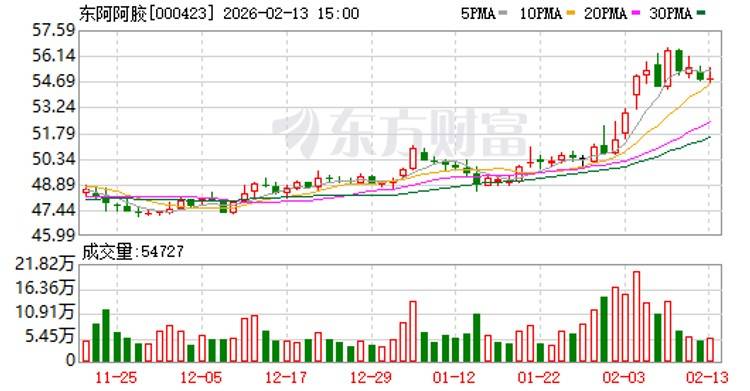
Group 1 - The core point of the article discusses the trend of public equity incentives, highlighting that nearly 40 public funds have implemented employee stock ownership plans, with some companies nearing a 50% employee ownership ratio [1] - The article emphasizes the importance of understanding market dynamics beyond just news headlines, suggesting that relying on quantitative data can help investors avoid emotional decision-making [1] - It illustrates that despite negative news, such as a company being investigated or reporting losses, stock prices can still rise if institutional participation remains strong, as indicated by active "institutional inventory" data [5][6] Group 2 - The article contrasts situations where positive earnings announcements do not lead to stock price increases, indicating that lack of institutional interest can negate the impact of good news [8] - It provides examples of stocks that appeared undervalued based on fundamentals but failed to attract institutional interest, leading to price declines, thus reinforcing the idea that institutional participation is crucial for price movements [10] - The article advocates for using objective data, specifically "institutional inventory," to guide investment decisions, arguing that this approach minimizes emotional interference and enhances investment outcomes [12][13]

节后基金密集布局,选对方向少走弯路
Sou Hu Cai Jing· 2026-02-17 02:36
Group 1 - The core viewpoint of the article highlights the accelerated pace of public fund issuance around the Spring Festival, with 29 new funds being launched in the three weeks following February 9, of which 21 are equity funds, indicating a strong market expectation for the spring season [1][2] - The article emphasizes the importance of analyzing institutional participation in trading when selecting investment targets, suggesting that a stable price movement is often supported by active institutional involvement [3][7] - It points out that many investors make the mistake of focusing solely on short-term price movements without considering underlying funding behaviors, which can lead to poor investment decisions [10][20] Group 2 - The article discusses the contrast between stocks with sustained institutional participation and those that experience a decline in institutional interest, noting that the latter often fail to maintain upward momentum [10][19] - It advises investors to avoid panic selling during price adjustments, as these may be part of a strategy by institutions to consolidate positions for future gains [11][16] - The concept of "institutional shakeout" is introduced, indicating that adjustments in stock prices can reflect active institutional trading rather than a market downturn, which can help investors make more informed decisions [19][21] Group 3 - The article advocates for a quantitative approach to investment decision-making, which helps investors avoid subjective biases and emotional reactions to market fluctuations [20][21] - It stresses that understanding the true actions of capital can lead to better investment outcomes, as opposed to relying on short-term price changes [21]
融资热捧赛道,此刻再靠直觉操作就毁了
Sou Hu Cai Jing· 2026-01-29 07:23
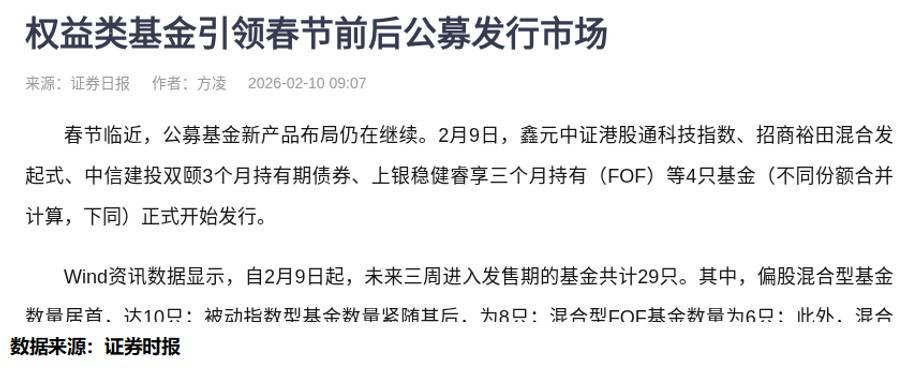
Core Viewpoint - The article emphasizes the importance of using quantitative data to understand institutional investment behavior rather than relying on intuition or public news, which can lead to poor investment decisions. Group 1: Institutional Investment Insights - Recent data from Wind shows that among 31 primary industries, 27 experienced net buying, with the non-ferrous metals sector leading at 5.968 billion yuan [1] - Many investors tend to rely on subjective intuition and delayed information, which can result in significant losses when chasing popular stocks without understanding underlying institutional actions [1][3] - The article highlights the importance of monitoring "institutional inventory" data, which reflects the trading activity of institutional investors, to gauge their interest in specific stocks [6] Group 2: Timing and Market Reactions - Investors often make the mistake of entering the market after a hot news event, believing they are following the trend, but by that time, institutions have already positioned themselves, leaving retail investors to buy at inflated prices [7][9] - Emotional reactions during market downturns, such as panic selling, can lead to missed opportunities, as institutions may continue to accumulate shares during these periods [11] - The article suggests that understanding the timing of institutional investments can help ordinary investors avoid common pitfalls and improve their decision-making process [13]