
量子中继

Search documents
新思想引领新征程丨“十四五”期间 我国科学谋划、全局统筹 加大重点领域关键核心技术攻关力度 未来产业发展呈现良好势头
Yang Guang Wang· 2026-02-25 07:12
Core Insights - The article emphasizes the strategic importance of advancing future industries in China, focusing on key technologies and sectors that can drive economic growth and national rejuvenation [1] Group 1: Future Industry Development - The "14th Five-Year Plan" outlines a comprehensive approach to future industry development, highlighting the need for breakthroughs in key core technologies [1] - The Beijing Humanoid Robot Innovation Center has launched the "Embodied Tiangong 3.0," a new generation of general-purpose robots with significant improvements in motion control and autonomous operation [1] - The "15th Five-Year Plan" suggests forward-looking layouts for future industries, including quantum technology, biomanufacturing, hydrogen energy, nuclear fusion, brain-machine interfaces, embodied intelligence, and 6G mobile communication [1] Group 2: Brain-Machine Interface - In Guangzhou, a clinical research ward for brain-machine interfaces is helping patients with severe conditions regain mobility through non-invasive training methods [2] Group 3: Quantum Technology and Hydrogen Energy - Anhui Province has made significant advancements in quantum technology, achieving a breakthrough in scalable quantum relay modules and quantum key distribution over distances exceeding 100 kilometers [3] - Jiangxi Province is developing a comprehensive hydrogen energy ecosystem, with a recent project enabling hydrogen-powered trucks to achieve over 600 kilometers of range with quick refueling [3] Group 4: Policy Support and Innovation - The Chinese government is focusing on enhancing the collaboration between industry, academia, and research to promote key technological advancements [4] - During the "14th Five-Year Plan," China accounted for over 20% of global patent applications in biomanufacturing and produced 70% of global bio-fermentation products [4] - The development of the 6G industry is entering a critical phase of technological innovation and clearer industrial direction [4] Group 5: Investment and Support Systems - The National Venture Capital Guidance Fund will be launched in December 2025 to increase support for strategic emerging industries and future industries [5] - The National Development and Reform Commission plans to create a high-quality, comprehensive venture capital service system to support enterprise growth through governance, strategic planning, and industry collaboration [6]
我国科学家取得可扩展量子网络重大突破
Ren Min Wang· 2026-02-13 22:41
Core Insights - The research team from the University of Science and Technology of China, led by Pan Jianwei, has made significant breakthroughs in scalable quantum network research, with results published in prestigious journals Nature and Science [1] Group 1: Quantum Network Development - The primary goal of quantum information science is to construct efficient and secure quantum networks [1] - A major challenge in building scalable quantum networks is the exponential decay of quantum entanglement transmission efficiency with distance due to inherent fiber optic losses [1] - Utilizing quantum relay schemes can enhance entanglement distribution efficiency by 100 billion billion times over a distance of 1000 kilometers compared to direct fiber transmission [1] Group 2: Achievements in Quantum Entanglement - The research team has developed long-lived trapped ion quantum storage, high-efficiency ion-photon communication interfaces, and high-fidelity single-photon entanglement protocols, achieving long-lived quantum entanglement for the first time [1] - The entanglement lifetime significantly exceeds the time required to establish entanglement, enabling effective connections and enhancing the scalability of quantum relays [1] - The team successfully established high-fidelity entanglement between two rubidium atoms over long distances, marking a significant advancement in practical quantum key distribution [1] Group 3: Practical Applications - The distance for device-independent quantum key distribution has surpassed 100 kilometers, improving by more than two orders of magnitude compared to previous international best experimental levels [1] - This advancement greatly accelerates the practical application process of quantum key distribution technology [1]
器件无关量子密钥分发传输距离突破百公里
Ke Ji Ri Bao· 2026-02-09 00:46
Core Insights - The research team led by Academician Pan Jianwei from the University of Science and Technology of China has achieved significant breakthroughs in quantum communication technology, specifically in scalable quantum repeaters and device-independent quantum key distribution (DI-QKD) [1][2] Group 1: Quantum Repeater Technology - The team has constructed the basic module for a scalable quantum repeater and achieved long-distance high-fidelity entanglement between single atomic nodes, overcoming a major technical challenge that has persisted for nearly 30 years [1] - The entanglement lifetime achieved is 550 milliseconds, which significantly exceeds the time required to establish entanglement (450 milliseconds), enabling effective connection of entanglements and making long-distance quantum networks feasible [1] Group 2: Device-Independent Quantum Key Distribution - The DI-QKD scheme allows for secure key distribution even when quantum devices are completely untrusted, enhancing the practicality and attack resistance of quantum key distribution [2] - The research team has successfully extended the transmission distance of DI-QKD to over 100 kilometers, improving upon the previous best experimental level by more than two orders of magnitude [2] - This achievement is considered a milestone in the field, following the success of the "Mozi" quantum satellite, and signifies a shift from theoretical concepts to practical possibilities in fiber-based quantum networks [2]
可扩展量子网络研究取得重大突破 我国科学家在国际上首次构建出可扩展量子中继的基本模块
Xin Hua She· 2026-02-06 23:45
Core Insights - The research team from the University of Science and Technology of China has achieved a significant breakthrough in scalable quantum network research by constructing the basic module of a scalable quantum relay, making long-distance quantum networks a realistic possibility [1][2] - They have successfully established long-lived quantum entanglement between single atomic nodes over long distances and have, for the first time, surpassed the 100-kilometer transmission distance for device-independent quantum key distribution, improving upon previous international experimental levels by more than two orders of magnitude [2] Group 1 - The ultimate goal of quantum information science is to build efficient and secure quantum networks, with the fundamental element being the distribution of long-distance deterministic quantum entanglement [1] - The inherent loss in optical fibers leads to an exponential decay in the efficiency of quantum entanglement transmission with distance, posing the greatest challenge in constructing scalable quantum networks [1] - The quantum relay scheme is an effective solution to address the transmission loss in optical fibers, potentially enhancing the efficiency of entanglement distribution over 1000 kilometers by 100 billion billion times compared to direct transmission [1] Group 2 - The research team developed long-lived trapped ion quantum memory, high-efficiency ion-photon communication interfaces, and high-fidelity single-photon entanglement protocols to achieve long-lived quantum entanglement, significantly exceeding the time required to establish entanglement [2] - The successful construction of the basic module for scalable quantum relays marks a transition from theoretical concepts to realistic possibilities for fiber-based quantum networks [3]
首次!量子科技再获里程碑式重大突破
中国能源报· 2026-02-06 13:15
Core Viewpoint - The research team from the University of Science and Technology of China has achieved significant breakthroughs in quantum communication technology, including the construction of a scalable quantum relay module and the successful transmission of device-independent quantum key distribution (DI-QKD) over distances exceeding 100 kilometers, marking a major step towards practical applications in quantum networks [1][2]. Group 1 - The research team developed long-lived trapped ion quantum memory, high-efficiency ion-photon communication interfaces, and high-fidelity single-photon entanglement protocols, achieving long-lived quantum entanglement with a lifetime of 550 milliseconds, which significantly exceeds the 450 milliseconds required to establish the entanglement [2][3]. - The successful construction of the scalable quantum relay module enables the realization of long-distance quantum networks, making it a feasible possibility [2][3]. - The distance for device-independent quantum key distribution has been improved by more than two orders of magnitude compared to the previous best international experimental level, showcasing the advancements in this field [2][3]. Group 2 - Academician Pan Jianwei stated that these breakthroughs represent another milestone achievement for China following the "Mozi" quantum satellite, indicating that fiber-based quantum networks are transitioning from theoretical concepts to practical possibilities [2][3]. - This progress further enhances China's international leading position in the field of quantum technology [2][3].


【新华社】我国科学家在可扩展量子网络研究方面取得重大突破
Xin Hua She· 2026-02-06 02:13
Core Insights - The research team from the University of Science and Technology of China has made significant breakthroughs in scalable quantum network research, constructing the basic module of a scalable quantum repeater for the first time internationally, making long-distance quantum networks a realistic possibility [1][2] - They achieved high-fidelity entanglement between single atom nodes over long distances and successfully extended the transmission distance of device-independent quantum key distribution beyond 100 kilometers, improving previous international experimental levels by more than two orders of magnitude [2] Group 1 - The ultimate goal of quantum information science is to build efficient and secure quantum networks, with long-distance deterministic quantum entanglement distribution as a fundamental element [1] - The inherent loss in optical fibers leads to an exponential decay in the efficiency of quantum entanglement transmission with distance, posing the greatest challenge in constructing scalable quantum networks [1] - The quantum repeater scheme is an effective solution to address the transmission loss in optical fibers, potentially enhancing the efficiency of entanglement distribution over 1000 kilometers by 10^20 times compared to direct transmission [1] Group 2 - The research team developed long-lived trapped ion quantum memory, high-efficiency ion-photon communication interfaces, and high-fidelity single-photon entanglement protocols, achieving long-lived quantum entanglement that significantly exceeds the time required to establish entanglement [2] - This breakthrough marks a transition from theoretical concepts of fiber-based quantum networks to realistic possibilities, indicating progress towards practical applications of quantum entanglement technology [3]
我国量子科技研究取得新突破
财联社· 2026-02-06 02:11
Core Viewpoint - The research team led by Academician Pan Jianwei from the University of Science and Technology of China has achieved significant breakthroughs in quantum networking, including the first scalable quantum relay module and the ability to distribute device-independent quantum keys over distances exceeding 100 kilometers [1][5][6]. Group 1: Quantum Relay Technology - The ultimate goal of quantum information science is to construct efficient and secure quantum networks, which rely on long-distance deterministic quantum entanglement distribution [4]. - The challenge of signal attenuation in optical fibers has been a major barrier to long-distance quantum entanglement distribution, which the team addressed through the development of "quantum relay" technology [4]. - The team successfully created a basic module for scalable quantum relays, enabling the effective connection of entangled segments over long distances, thus making long-distance quantum networks a feasible reality [4][6]. Group 2: Device-Independent Quantum Key Distribution - The research team made advancements in device-independent quantum key distribution, which is crucial for the security of quantum communication [5]. - Previously, the maximum transmission distance for this technology was only a few hundred meters, but the team has now achieved over 100 kilometers using quantum relay technology [5]. - This breakthrough ensures that even if the quantum devices are completely untrustworthy, the generated keys remain secure, enhancing the overall security of quantum communication systems [5]. Group 3: Future Implications - These technological breakthroughs solidify China's international leadership in quantum technology and lay the groundwork for the future construction of a quantum internet [6]. - Academician Pan Jianwei indicated that with an additional 10 to 15 years of effort, a universal quantum computer could connect all quantum computers into a network, transforming the concept of a quantum internet into reality [6]. - This development would revolutionize the way information is perceived and understood in the material world, providing a revolutionary means to comprehend the universe [6].

中国打通量子网络“任督二脉” 理论构想走向现实可能
Yang Shi Xin Wen· 2026-02-06 00:58
Core Insights - Chinese scientists have achieved a significant breakthrough in quantum communication by constructing the first truly scalable quantum network relay unit, marking a decisive step towards the practical application of long-distance quantum communication [1][3] Group 1: Quantum Network Development - The newly developed quantum relay technology allows for the highest security level communication verification over 11 kilometers of fiber optics, extending secure communication distance to 100 kilometers [1] - The quantum network's capabilities are likened to upgrading from riding a bicycle to using a magical teleportation portal, enabling the measurement of minute changes undetectable by traditional instruments and providing built-in anti-eavesdropping features [1][2] Group 2: Overcoming Transmission Challenges - A major challenge in establishing a large-scale quantum network is overcoming the significant loss of quantum signals during fiber optic transmission, which can take an average of 300 years to successfully receive a pair of entangled quantum particles over 1000 kilometers [2] - The introduction of quantum relay technology acts as a "secret agent" that allows entangled particles to connect over long distances, significantly improving transmission efficiency by 100 billion billion times [2] Group 3: Achievements in Quantum Entanglement - The research team has successfully established high-fidelity entanglement between distant nodes, enabling device-independent quantum key distribution over long distances, ensuring that transmitted information remains unbreakable even if the communication devices are compromised [3] - These breakthroughs signify that the concept of fiber optic quantum networks based on quantum entanglement is transitioning from theoretical ideas to practical realities, enhancing China's international leadership in this field [3]
我国量子科技研究取得新突破 量子网络走向现实可能
Huan Qiu Wang Zi Xun· 2026-02-05 23:13
Core Insights - The research team led by Academician Pan Jianwei at the University of Science and Technology of China has achieved significant breakthroughs in the field of quantum networks, specifically in scalable quantum relay modules and device-independent quantum key distribution (QKD) over distances exceeding 100 kilometers [1][5]. Group 1: Quantum Relay Technology - The team has successfully implemented a basic module for scalable quantum relays, which addresses the challenge of signal attenuation in optical fibers that limits the distance for quantum entanglement distribution [4]. - The concept of "quantum relay" involves setting up multiple "relay stations" along the long-distance journey of quantum signals to create entanglement between adjacent stations, thereby enabling entanglement distribution over long distances [4]. Group 2: Device-Independent Quantum Key Distribution - The research has also made advancements in device-independent quantum key distribution, which ensures the security of generated keys even if the quantum devices are completely untrustworthy [5]. - Previously, the maximum transmission distance for this technology was only a few hundred meters, but the new breakthrough allows for secure key distribution over distances greater than 100 kilometers [5]. Group 3: Future Implications - These breakthroughs solidify China's international leading position in quantum technology and lay the groundwork for the future construction of a quantum internet [5]. - Academician Pan Jianwei indicated that with continued efforts over the next 10 to 15 years, a universal quantum computer could connect all quantum computers into a network, making the quantum internet a reality and revolutionizing our understanding of the material world [5].
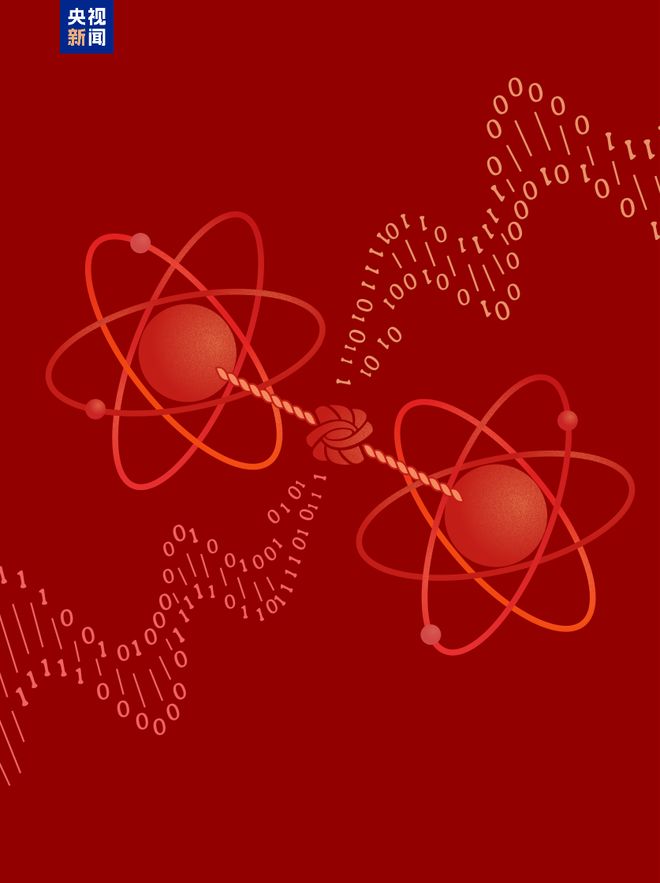
我国科学家在可扩展量子网络研究方面取得重大突破
Xin Hua She· 2026-02-05 19:06
Core Insights - The research team from the University of Science and Technology of China has achieved a significant breakthrough in scalable quantum network research by constructing the basic module of a scalable quantum relay, making long-distance quantum networks a realistic possibility [1][2] - They have successfully established long-lived quantum entanglement between single-atom nodes over long distances and have, for the first time, surpassed the 100-kilometer transmission distance for device-independent quantum key distribution [1][2] Group 1 - The ultimate goal of quantum information science is to build efficient and secure quantum networks, with long-distance deterministic quantum entanglement distribution being a fundamental element [1] - The inherent loss in optical fibers leads to an exponential decay in the efficiency of quantum entanglement transmission with distance, posing the greatest challenge in constructing scalable quantum networks [1] - The quantum relay scheme is an effective solution to address the transmission loss in optical fibers, enabling entanglement distribution over distances of 1,000 kilometers, which could enhance efficiency by 100 billion billion times compared to direct transmission [1] Group 2 - The research team developed long-lived trapped ion quantum memory, high-efficiency ion-photon communication interfaces, and high-fidelity single-photon entanglement protocols, achieving long-lived quantum entanglement that significantly exceeds the time required to establish entanglement [2] - The successful construction of the basic module for scalable quantum relays makes long-distance quantum networks feasible [2] - The breakthrough signifies that fiber-based quantum networks utilizing quantum entanglement are transitioning from theoretical concepts to practical possibilities [2]