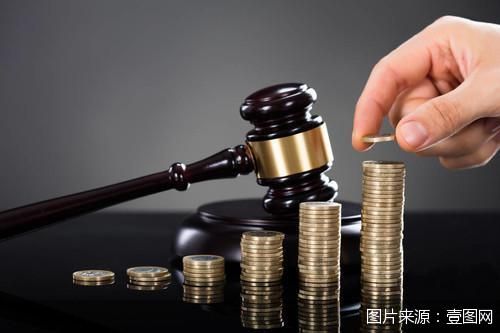
银行内控治理

Search documents
多项重点业务管控失序?成都银行725万罚单敲响内控警钟
Nan Fang Du Shi Bao· 2025-12-10 08:33
Core Viewpoint - Chengdu Bank and its 15 branches were fined a total of 7.25 million yuan due to multiple core business management violations, highlighting vulnerabilities in its management system [2][3] Summary by Sections Regulatory Actions - Chengdu Bank's main issues were identified as imprudent management in loan, deposit, discount, and bill businesses, with the total fine amounting to 7.25 million yuan, including 900,000 yuan for the head office and 6.35 million yuan for 15 branches [3] - The penalties also included warnings and fines for 13 responsible individuals, totaling 730,000 yuan, indicating a shift towards personal accountability in regulatory enforcement [3][4] Financial Performance - Chengdu Bank, established in 1996, is the largest legal bank in Sichuan Province, achieving record performance in 2024 with total assets of 1.25 trillion yuan, deposits of 880 billion yuan, and loans of 740 billion yuan, marking four consecutive years of over 100 billion yuan growth [5] - However, the bank faces challenges such as slowing growth and imbalanced business structure, with revenue growth rates declining from 22.54% in 2021 to 5.9% in 2024 [5][6] Risk Management and Compliance - The bank's high customer concentration is concerning, with the top ten loan clients accounting for 38.31% of net capital, significantly higher than peers like Jiangsu Bank and Nanjing Bank [6] - The regulatory environment is tightening, with nearly 1,000 fines issued to banks in 2025 alone, emphasizing the need for improved internal controls and compliance mechanisms [7][8]


柳州银行原董事长黎敦满被查!此前已有两位“一把手”落马
Nan Fang Du Shi Bao· 2025-11-24 09:51
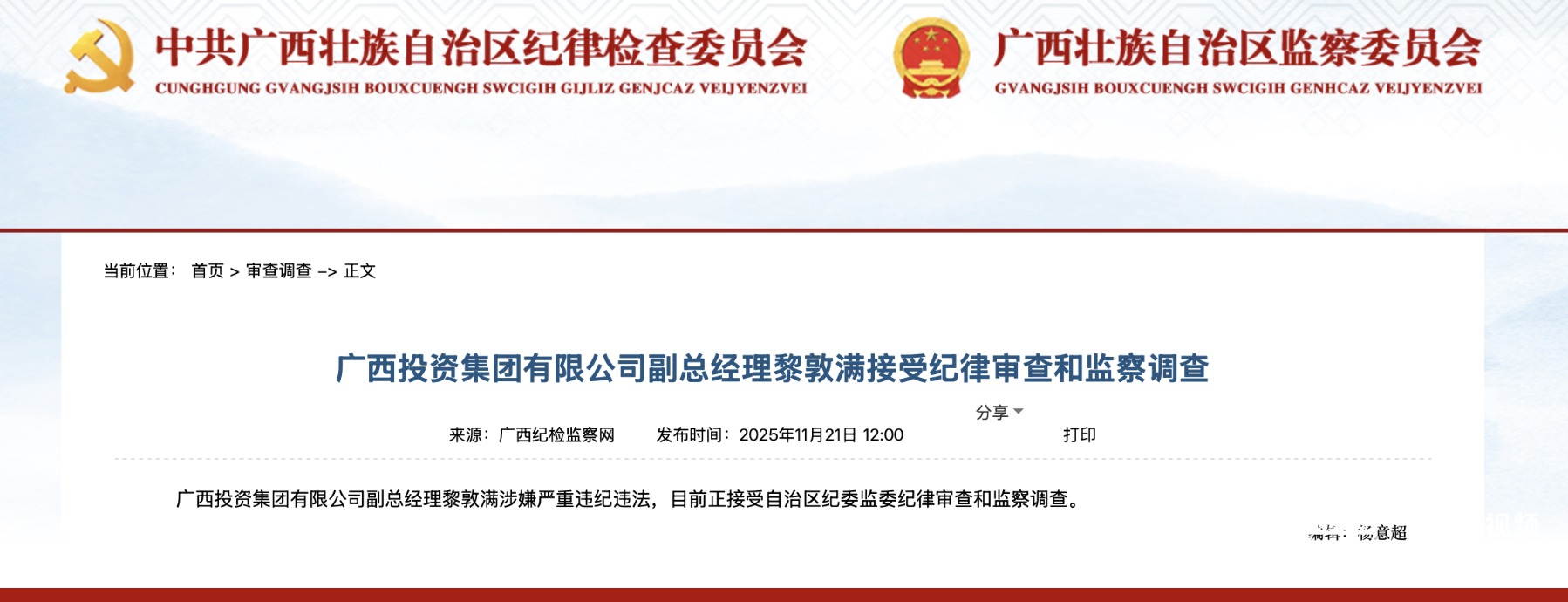
Core Viewpoint - The Vice President of Guangxi Investment Group, Li Dunman, is under investigation for serious disciplinary violations, raising concerns about internal control governance in local banks, especially following the corruption cases of his predecessors at Liu Zhou Bank [1][8]. Group 1: Background of Li Dunman - Li Dunman has extensive experience in the banking sector, having held key positions in several financial institutions, including China Bank and Liu Zhou Bank [3]. - He served as the President and later the Chairman of Liu Zhou Bank, where he aimed to develop supply chain finance and green finance, targeting a public listing [5][7]. Group 2: Corruption Cases in Liu Zhou Bank - Li Dunman is the third consecutive leader of Liu Zhou Bank to face corruption allegations, following former Chairmen Li Yaoqing and Liu Zhong, both of whom were implicated in serious corruption cases [8]. - Li Yaoqing was prosecuted for accepting bribes while serving as Chairman from February 2014 to May 2019, with accusations of illegally receiving substantial amounts of money [8][9]. - Liu Zhong was sentenced to 16 years in prison for bribery and illegal loan issuance, highlighting systemic issues within the bank's governance [9]. Group 3: Liu Zhou Bank's Financial Performance - Liu Zhou Bank reported total assets of 259.18 billion yuan as of September 30, 2025, reflecting a year-on-year increase of 12.857 billion yuan, or 5.22% [10]. - The bank's loan balance reached 162.53 billion yuan, up by 13.723 billion yuan, marking a 9.22% increase year-on-year [10]. - Total liabilities amounted to 240.55 billion yuan, with deposits increasing to 186.69 billion yuan, showing growth rates of 5.86% and 8.34%, respectively [10].
罚没9.81亿元!前三季度银行收近千张罚单,信贷违规高频踩“雷”
Bei Jing Shang Bao· 2025-10-09 14:37
Core Viewpoint - In 2025, the financial regulatory environment remains stringent, with a "zero tolerance" approach towards banks and financial institutions, leading to a significant number of penalties issued for various compliance violations [1][3]. Regulatory Overview - In the first three quarters of 2025, a total of 997 penalties were issued to various banking institutions, amounting to approximately 981 million yuan [3][4]. - The National Financial Supervision Administration issued 14 penalties with a total fine of approximately 314.67 million yuan, indicating a strong regulatory signal [3]. - The number of penalties and total fines in 2025 has decreased compared to the same period in 2024, where 1,533 penalties totaling about 1.18 billion yuan were issued [4][5]. Penalty Distribution - The first quarter of 2025 saw the highest number of penalties, with 394 issued and fines totaling around 299 million yuan [4]. - The second quarter experienced a decline in both the number of penalties and fines, with 231 penalties totaling about 143 million yuan [4]. - The third quarter saw a resurgence, with 372 penalties and fines soaring to 538 million yuan, marking it as the peak period for regulatory actions [4]. Focus on Credit Violations - Credit-related violations accounted for nearly 60% of total penalties, highlighting the sector as a primary focus for regulatory scrutiny [6]. - Notable penalties include Zhejiang Merchants Bank's Shanghai branch fined 16.8 million yuan for multiple credit-related violations [6]. - In September, several banks, including Huaxia Bank and Guangfa Bank, received significant fines for credit violations, with amounts reaching up to 87.25 million yuan [7]. Reasons for High Violation Rates - Credit business is critical for banks but also poses high risks due to potential misuse of funds and regulatory evasion [8]. - Increased scrutiny on non-performing loans and the exposure of hidden risks in real estate and local government financing have intensified regulatory actions [8][9]. - The competitive landscape has led some banks to relax risk management standards, resulting in frequent violations [9]. Internal Control and Compliance Issues - Beyond credit violations, other areas such as wealth management and credit card operations also exhibit significant compliance gaps [10][11]. - Banks are urged to enhance their internal control systems and shift their focus from short-term growth to long-term compliance and risk management [10][11]. - A comprehensive upgrade in internal governance is necessary, emphasizing a culture of compliance across all business units [11].