
阿耳忒弥斯计划

Search documents
美国载人绕月任务一再推迟背后的困局
Xin Hua She· 2026-02-25 00:50
Core Viewpoint - The "Artemis 2" manned lunar mission by NASA has faced multiple delays due to technical issues and budget cuts, raising concerns about the future of the mission and the agency's capabilities [1][4]. Technical Challenges - The "Artemis 2" mission is set to use the Space Launch System (SLS) and Orion spacecraft to send four astronauts into lunar orbit. Recent rehearsals revealed significant technical problems, including a liquid hydrogen leak in the rocket's core stage and a helium supply interruption to the upper stage [2]. - The liquid hydrogen leak, which occurred during the first rehearsal, led to the postponement of the February launch window to March. This issue had previously been encountered during the "Artemis 1" mission, raising doubts about NASA's technical control [2]. - The second rehearsal faced a helium supply disruption, which, while not catastrophic, could affect propellant management and safety margins. Any single point anomaly must be thoroughly resolved before proceeding with manned deep space missions [2]. - The Orion spacecraft's heat shield has also been a point of contention, with concerns about its performance during re-entry. Anomalies observed during the "Artemis 1" mission have prompted calls for a deeper investigation into its structural integrity [3]. Budget Cuts Impact - The political environment and uncertainty surrounding budget allocations have added further complications to the manned lunar mission. The Trump administration proposed significant budget cuts for NASA in the FY 2026 budget draft, affecting key projects like the SLS and Orion spacecraft [4]. - These budget adjustments are expected to impact the overall funding and progress of the Artemis program, with potential "catastrophic" consequences for U.S. space science and global technological competitiveness [4]. - Analysts express concern that the current budget framework has diminished the priority of space initiatives, which were previously emphasized during Trump's first term [4]. Policy Instability - The long-term nature of space engineering projects requires stable policy support. Frequent changes in budget size and priorities can disrupt project management and supply chain predictability, ultimately slowing progress [6]. - The development history of the U.S. lunar return plan has been marked by contradictions and political maneuvering, leading to a decline in NASA's overall capabilities and oversight [6]. - The delays in the manned lunar mission are attributed not only to technical failures but also to the dual pressures of engineering risks and financial constraints. Budget instability may weaken NASA's supply chain coordination and personnel stability, extending execution timelines [6].
美国拟将载人绕月飞行任务火箭和飞船撤回装配大楼
Xin Lang Cai Jing· 2026-02-23 06:20
Core Points - NASA announced a delay in the Artemis 2 mission due to technical issues identified during a comprehensive rehearsal, with plans to return the rocket and spacecraft to the assembly building for troubleshooting and repairs [1] - The Artemis 2 mission aims to send four astronauts on a lunar orbit flight using the Space Launch System rocket and Orion spacecraft, following the successful Artemis 1 unmanned mission in November 2022 [2] Group 1 - The return of the rocket and spacecraft to the assembly building is necessary to identify the cause of the helium gas interruption affecting the rocket's transitional low-temperature propulsion stage [1] - The transportation process covers approximately 6.4 kilometers and is expected to take several hours, with the potential to retain the April launch window if preparations are expedited and issues are resolved [1] - The Artemis 2 mission was initially scheduled for February but has faced multiple delays due to technical problems encountered during rehearsals [1] Group 2 - The Artemis program was announced by the U.S. in 2019, with the Artemis 1 mission serving as a precursor to the upcoming Artemis 2 crewed lunar mission [2] - Following the completion of Artemis 2, NASA plans to advance the implementation of the Artemis 3 crewed lunar landing mission [2]
美拟将载人绕月飞行任务火箭和飞船撤回装配大楼
Xin Hua She· 2026-02-23 04:53
Core Viewpoint - NASA has announced a delay in the Artemis II mission due to technical issues identified during a comprehensive rehearsal, necessitating the return of the rocket and spacecraft to the assembly building for troubleshooting and repairs [1][2]. Group 1: Mission Details - The Artemis II mission aims to send four astronauts on a lunar orbit flight using the Space Launch System (SLS) rocket and Orion spacecraft [1]. - The mission was initially scheduled for February but has faced multiple delays due to technical problems encountered during rehearsals [1]. Group 2: Technical Issues - A disruption in the flow of helium to the rocket's transitional low-temperature propulsion stage was identified during the rehearsal process [1]. - NASA stated that the return of the rocket and spacecraft to the assembly building at Kennedy Space Center is a necessary step to determine the cause of the issue and implement repairs [1]. Group 3: Future Plans - The return process will cover approximately 6.4 kilometers and is expected to take several hours [1]. - If preparations are expedited and the issues are resolved quickly, there is a possibility of retaining the April launch window, although the final schedule will depend on data analysis and repair progress [1].
美航天局原定3月的载人绕月任务再次推迟
Yang Shi Xin Wen· 2026-02-21 18:46
Core Points - NASA's Artemis 2 mission has been postponed due to technical issues, specifically problems with helium flow through the spacecraft system during routine pressurization [1] - The spacecraft is currently in a safe state, but the rocket must be retracted to the assembly building for repairs, eliminating the March launch window [1] - The Artemis program aims to return astronauts to the Moon, with Artemis 1 having completed its unmanned mission in November 2022, and Artemis 3 planned for crewed lunar landing, pending the development of the lunar lander [1] Summary by Category - **Technical Issues** - NASA's Artemis 2 mission will undergo rocket retraction due to helium flow issues similar to those encountered in the Artemis 1 mission [1] - The potential faults may involve components at the launch tower connection or internal valve systems of the spacecraft [1] - **Mission Timeline** - The planned launch date for Artemis 2 was March 6, but this has been canceled due to the need for repairs [1] - The Artemis program was announced in 2019, with Artemis 1 successfully completing its mission in November 2022 [1] - **Future Plans** - Following Artemis 2, NASA intends to advance the Artemis 3 mission, which aims to return astronauts to the Moon [1] - The Artemis 3 mission is contingent on the ongoing development of the lunar lander [1]
美载人绕月飞行任务完成综合演练 拟3月发射
Xin Hua She· 2026-02-21 04:00
Group 1 - NASA announced the completion of the second integrated rehearsal for the Artemis 2 crewed lunar flyby mission on February 19, with a planned launch in March [1] - During the rehearsal at Kennedy Space Center, over 700,000 gallons (approximately 2.65 million liters) of liquid propellant were loaded into the Space Launch System rocket, and ground teams practiced closing the Orion spacecraft hatch [1] - The Artemis 2 mission will involve four astronauts flying aboard the Orion spacecraft for a lunar flyby, with the earliest launch window set for March 6 [1][2] Group 2 - The Artemis program was announced by the U.S. in 2019, with Artemis 1 successfully completing an uncrewed lunar flyby test mission in November 2022 [2] - Following the Artemis 2 mission, NASA plans to advance to the Artemis 3 crewed lunar landing mission [2]
美载人绕月飞行任务综合演练中止,发射推迟至3月
Xin Lang Cai Jing· 2026-02-03 10:29
Group 1 - NASA conducted a comprehensive rehearsal for the "Artemis 2" crewed lunar flyby mission, which included key elements such as propellant loading and launch countdown procedures. However, the countdown was halted due to a liquid hydrogen leak at the rocket's core stage propellant interface, leading to a delay in the launch window from February to March [1][2] - The rehearsal involved loading cryogenic liquid hydrogen into the new generation lunar rocket, the Space Launch System (SLS), and practicing the countdown procedures. The liquid hydrogen leak required multiple pauses in operations to implement countermeasures, such as adjusting propellant flow, which delayed the countdown process [1] - NASA Administrator Bill Nelson acknowledged that challenges were expected given that it has been over three years since the last launch of the Space Launch System, emphasizing the importance of conducting comprehensive rehearsal tests to identify and resolve potential issues [1] Group 2 - The "Artemis" lunar program was announced by the U.S. in 2019, with the "Artemis 1" unmanned lunar flyby test completed in November 2022. The "Artemis 2" mission will involve four astronauts aboard the Orion spacecraft for approximately 10 days of lunar flight, although these astronauts did not participate in the recent rehearsal [2] - Following the completion of the "Artemis 2" mission, NASA plans to advance the implementation of the "Artemis 3" crewed lunar landing mission [2]
美载人绕月飞行任务综合演练中止 发射推迟至3月
Xin Hua Wang· 2026-02-03 09:44
Core Points - NASA conducted a comprehensive rehearsal for the Artemis 2 crewed lunar flyby mission, which included critical operations such as propellant loading and launch countdown procedures. However, the countdown was halted due to a liquid hydrogen leak at the rocket's core stage [1] - The rehearsal aimed to identify and resolve potential issues to ensure the successful execution of the launch mission. NASA will review the test data and address the problems encountered during the rehearsal before determining the official launch date [1] - The Artemis program was announced in 2019, with Artemis 1 successfully completing an uncrewed lunar flyby test in November 2022. The Artemis 2 mission will involve four astronauts aboard the Orion spacecraft for approximately 10 days of lunar flight [2] Summary by Sections Rehearsal Details - The rehearsal included low-temperature liquid hydrogen loading into the Space Launch System and countdown procedure drills. Multiple pauses were required to address the liquid hydrogen leak, which delayed the countdown process [1] - Additional issues included the need to retighten the pressure valve of the Orion crew module after recent replacement, which took considerable time, and low-temperature effects on some cameras and equipment, as well as intermittent audio communication issues with the ground team [1] Mission Timeline - Following the rehearsal, NASA decided to shift the launch window from February to March, acknowledging that challenges were expected given that it has been over three years since the last launch of the Space Launch System [1] - After the completion of the Artemis 2 mission, NASA plans to advance the Artemis 3 crewed lunar landing mission [2]
欧媒幻想:新一轮登月竞赛,德国人有没有可能先登月?
Guan Cha Zhe Wang· 2025-12-29 09:30
Core Viewpoint - Europe aims to become an independent participant in the lunar exploration race, seeking to send European astronauts to the Moon, while still heavily relying on the U.S. Artemis program for its lunar ambitions [1][5]. Group 1: European Space Agency (ESA) Involvement - ESA is expected to play a key role in NASA's Artemis program, potentially sending European astronauts aboard U.S. spacecraft to the Moon [1][5]. - ESA's Director General, Aschbacher, indicated that the first European astronauts for the lunar missions are likely to come from Germany, France, and Italy, with four German candidates being the most promising [3][5]. - ESA has received nearly €22.1 billion from its member states for operations from 2026 to 2028, aiming to enhance Europe's independent access to space [5]. Group 2: Funding and Investment - Germany is the largest contributor to ESA, providing €5.1 billion, and emphasizes the need for increased investment in space as a contribution to European sovereignty and security [5]. - Despite budget constraints, Germany's Federal Minister for Research, Technology, and Space, Dorothee Bär, advocates for more funding in the space sector [5]. Group 3: Global Lunar Exploration Context - The U.S. Artemis program, initiated in 2017, aims for a manned lunar landing, with Artemis 3 now delayed to mid-2027 due to development challenges [6]. - China is progressing steadily with its lunar exploration plans, aiming for its first manned lunar landing by 2030, having already conducted multiple lunar missions [6].

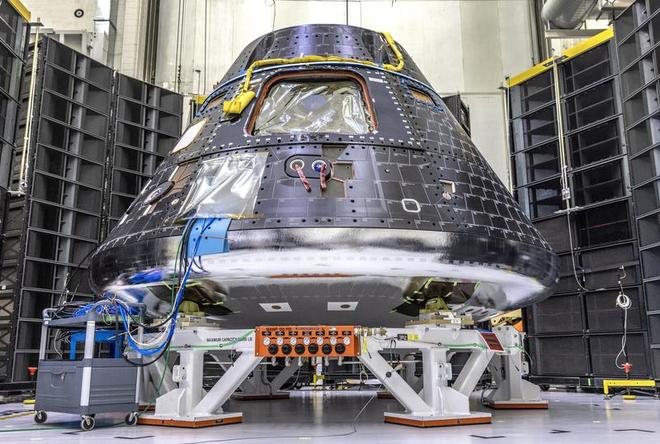
热点问答丨美国能在2028年前重返月球吗
Xin Lang Cai Jing· 2025-12-21 16:36
Group 1: Core Insights - The U.S. government aims to return astronauts to the Moon by 2028 through the Artemis program, as outlined in an executive order signed by President Trump [1] - The Artemis program has faced significant delays and challenges, raising doubts about the feasibility of meeting the 2028 deadline [1] Group 2: Leadership and Conflicts - Jared Isaacman, a private astronaut and entrepreneur, was appointed as the head of NASA, raising concerns due to his lack of federal experience and close ties with Elon Musk [2][3] - Isaacman's relationship with Musk could potentially influence NASA's priorities, possibly diverting resources from the lunar mission to Mars exploration [3] Group 3: Political and Financial Challenges - The Artemis program requires stable political support and funding, which is uncertain in the current polarized political climate in the U.S. [4] - The U.S. government experienced a record 43-day shutdown this year, halting most NASA operations and highlighting the risks associated with long-term projects [4] Group 4: Project Progress and Technical Issues - The Artemis program is significantly behind schedule, with at least 8 out of 13 critical tasks lagging [5] - Technical design flaws have been identified in key components, such as the Orion spacecraft and the Space Launch System, contributing to delays and increased costs [5] - NASA plans to reopen contracts for the Artemis 3 lunar lander due to delays from SpaceX, indicating a shift in strategy to involve more companies [5] Group 5: Future Projections - The Artemis 3 lunar mission may face delays of several years due to issues with the lander [6]
美国能在2028年前重返月球吗?
Xin Lang Cai Jing· 2025-12-21 15:31
Core Points - The article discusses President Trump's signing of an executive order titled "Ensuring America's Space Dominance," which aims to return Americans to the Moon by 2028 through the Artemis program [1] - Concerns are raised regarding the appointment of Jared Isaacman as NASA Administrator, given his lack of federal experience and close ties to Elon Musk, which may influence NASA's priorities [2][3] - The political environment poses uncertainties for the manned lunar program, as it requires stable funding and support, which is challenged by increasing political polarization and potential government shutdowns [4] - The Artemis program is significantly behind schedule, with at least 8 out of 13 critical tasks lagging, and issues with key components like the Orion spacecraft and Space Launch System [5][6] Group 1: Executive Order and Artemis Program - President Trump signed an executive order to ensure the U.S. returns to the Moon by 2028 through the Artemis program, which has faced delays and challenges [1] - The Artemis program was initiated during Trump's first term but has seen slow progress, raising doubts about meeting the 2028 deadline [1] Group 2: Concerns Over NASA Leadership - Jared Isaacman, a private astronaut and entrepreneur, was appointed as NASA Administrator, raising concerns due to his lack of government experience and close relationship with Elon Musk [2][3] - Isaacman's potential influence on NASA's priorities could shift focus towards Mars exploration, possibly hindering the lunar landing plans [3] Group 3: Political and Funding Challenges - The manned lunar program requires long-term political support and funding, which is uncertain due to the current polarized political climate [4] - The U.S. government experienced a record 43-day shutdown, impacting NASA's operations and funding stability [4] Group 4: Project Delays and Technical Issues - The Artemis program is heavily reliant on outsourcing, with multiple companies involved in key components, leading to significant delays [5] - NASA's review reports indicate that critical tasks are falling behind schedule, with technical design flaws in the Orion spacecraft and delays in the Space Launch System [5][6] - NASA plans to reopen contracts for the Artemis 3 lunar lander due to delays from SpaceX, indicating ongoing challenges in meeting project timelines [5][6]