降碳减污扩绿增长

Search documents
省政协十三届四次会议举行专题(联组)讨论
Shan Xi Ri Bao· 2026-01-29 00:52
Group 1: Promoting Common Prosperity - The discussion emphasized solidifying the foundation of a strong education province, promoting the development of the elderly care industry, and ensuring the rights of new employment forms [2] - Suggestions included optimizing elderly care services to create a "15-minute elderly care service circle" and integrating health and elderly care services to enhance service quality [2] - A proposal was made to establish a sustainable income growth mechanism for residents and improve the income distribution system to increase labor compensation [2] Group 2: Developing New Productive Forces - Participants discussed the importance of coordinating technological and industrial innovation, strengthening strategic emerging industry chains, and empowering the modern industrial system through finance [3] - Recommendations included using technology finance to facilitate the transformation of scientific research into industrial applications and enhancing financial services through data-driven approaches [3] - A focus on integrating education and talent development with industry needs was highlighted, suggesting the establishment of a mechanism to align demand and capabilities [3] Group 3: Urban-Rural Integration and Regional Coordination - The dialogue centered on accelerating the collaborative development of the Xi'an metropolitan area and enhancing food supply security while expanding income channels for farmers [4] - Suggestions included strengthening provincial coordination and innovating industrial linkages to promote high-quality economic development in Shaanxi [4] - The need for differentiated planning for tourism and cultural experiences across different regions was emphasized to create a comprehensive tourism loop [5] Group 4: Building an Inland Reform and Opening-up High Ground - Discussions focused on aligning with Central Asian demands, integrating into the Guangdong-Hong Kong-Macao Greater Bay Area, and stimulating private investment [5] - Recommendations included establishing a three-level investment attraction mechanism and creating a digital platform for project and capital matching [5] - The importance of leveraging the advantages of the China-Europe Railway Express and enhancing logistics capabilities was also noted [5] Group 5: Promoting Green and Low-Carbon Transformation - Participants discussed establishing a diversified ecological compensation mechanism and accelerating the development of renewable energy [6] - Suggestions included enhancing top-level design and broadening funding channels for ecological protection initiatives [6] - The need for a comprehensive development of the environmental protection industry and the establishment of standards was highlighted [6] Group 6: Cultural Mission and Building a Cultural Strong Province - The conversation focused on improving the protection and utilization of cultural heritage and advancing the construction of a cultural strong province [7] - Recommendations included creating a multi-dimensional protection system for cultural heritage and promoting the integration of culture and tourism [7] - The importance of implementing brand support plans and enhancing global narrative capabilities through talent development was emphasized [7]
开拓进取 接续奋斗 推动“十五五”开好局起好步
Shan Xi Ri Bao· 2026-01-29 00:24
Group 1: Promoting Common Prosperity - The focus is on improving the quality of life for the people in Shaanxi, emphasizing the importance of meeting the public's aspirations for a better life [2] - Suggestions include integrating rural elderly care, childcare, and assistance for the disabled into key tasks of rural revitalization, and promoting public resources to support rural and disadvantaged groups [2] - Recommendations for enhancing labor rights and protections for new employment forms, including establishing a legal framework and improving access to benefits [2][3] Group 2: Developing a Modern Industrial System - The development of new productive forces is essential for upgrading productivity and achieving modernization in Shaanxi [4] - Suggestions include strengthening local industrial policies, enhancing innovation platforms, and promoting collaboration across various sectors to improve competitiveness [4][5] - Recommendations for establishing a drone innovation center and a national-level low-altitude economy training base to enhance the aerospace industry's competitive edge [5] Group 3: Urban-Rural Integration and Regional Coordination - Urban-rural integration and regional coordination are crucial for optimizing spatial layout and enhancing internal dynamics for sustainable development [6] - Proposals include creating a collaborative mechanism for industrial integration and establishing a supply-demand information platform for key industries [6] - Suggestions for enhancing the connectivity between Xi'an and Yulin to form a collaborative innovation and energy industry belt [6][7] Group 4: Building an Inland Reform and Opening High Ground - The goal is to create an inland reform and opening high ground to support high-quality development in Shaanxi [8] - Recommendations include enhancing transportation networks and resource allocation hubs to facilitate cross-regional collaboration [8][9] - Suggestions for participating in the Belt and Road Initiative to foster multidimensional trade cooperation and attract high-tech investments [9] Group 5: Promoting Green and Low-Carbon Development - The "14th Five-Year Plan" period is critical for the comprehensive green transformation of economic and social development [10] - Proposals include developing renewable energy industries and enhancing pollution control measures through collaborative governance [10][11] - Recommendations for optimizing waste management systems and transforming waste incineration into a resource recovery hub [11] Group 6: Cultural Development and Promotion - Building a culturally strong province is essential for the high-quality development of Shaanxi [12][13] - Suggestions include enhancing cultural tourism experiences and optimizing service delivery to attract visitors [13] - Recommendations for establishing cultural exchange platforms and promoting Shaanxi's cultural products internationally [14]
美丽中国铺展新画卷
Ren Min Ri Bao· 2025-09-13 02:42
Group 1 - The core viewpoint emphasizes the importance of ecological civilization construction for the well-being of the people and the future of the nation, highlighting the need for sustainable development through ecological protection [1][4] - The "Two Mountains" concept is being actively implemented across various regions, promoting high-level protection to drive high-quality development and improve living standards [1][4] - Significant improvements in water quality have been reported, with the Yangtze River maintaining Class II water quality for five consecutive years and the Yellow River for three years [1][2] Group 2 - The pollution prevention efforts have led to increased public satisfaction regarding the ecological environment, with notable improvements in air and water quality across the country [2][4] - The average PM2.5 concentration in cities has decreased from 46 micrograms per cubic meter in 2015 to 29.3 micrograms per cubic meter in 2024, indicating effective pollution control measures [2] - The proportion of surface water with good quality has reached 90.4% in 2024, marking a significant increase of 28.8 percentage points since 2012 [2] Group 3 - Integrated protection and systematic governance of ecosystems are being prioritized, with a focus on enhancing biodiversity and ecological stability [3][4] - The area designated for ecological protection has exceeded 30% of the land territory, and over 120 million acres have been restored through various ecological projects [3] - The construction of national parks has made significant progress, contributing to the overall ecological security of the nation [3] Group 4 - The green transformation of economic and social development is yielding significant results, with a clear emphasis on high-quality development [4] - The average annual growth rate of energy consumption is 3.3%, supporting an economic growth rate of over 6.1%, making the country one of the fastest in reducing energy intensity globally [4] - By 2024, the share of clean energy consumption in total energy consumption has risen to 28.6%, demonstrating the economic value generated from a good ecological environment [4]
高质量发展故事汇|向绿而兴 协同推进降碳减污扩绿增长
Ren Min Ri Bao· 2025-08-18 05:18
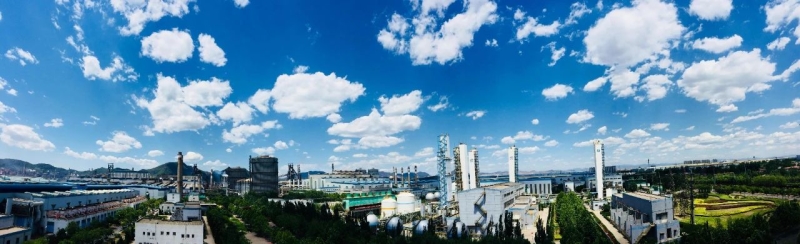
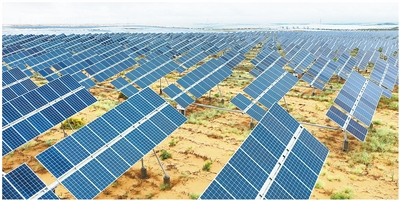
Group 1 - The core viewpoint emphasizes the importance of harmonious coexistence between humans and nature in China's modernization efforts, highlighting significant achievements in ecological and green development under the leadership of the Communist Party of China [2][3] - The "dual carbon" goals proposed by the central government are strategic decisions aimed at balancing domestic and international priorities, reflecting a long-term vision for ecological civilization [3][5] - The collaborative approach to reducing carbon emissions, pollution, expanding green spaces, and promoting growth is essential for achieving high-quality development while ensuring environmental protection [4][9] Group 2 - Since the 18th National Congress, significant progress has been made in ecological protection, with air quality improving markedly; PM2.5 levels decreased from 46 micrograms per cubic meter in 2015 to 29.3 micrograms per cubic meter by 2024, making China the fastest country in the world to improve air quality [5][6] - The energy consumption growth rate has averaged 3.3% while supporting an economic growth rate of over 6.1%, positioning China as one of the fastest countries in reducing energy intensity [6] - By 2024, the share of clean energy consumption in total energy consumption is expected to reach 28.6%, while coal's share will decrease to 53.2%, indicating a significant shift towards renewable energy sources [6][8] Group 3 - The "Two Mountains" theory has facilitated the transformation of ecological advantages into developmental benefits, with the establishment of a national park system and significant increases in forest coverage and ecological protection areas [7][8] - The implementation of ecological compensation mechanisms and innovative practices in ecological tourism and market development has enhanced the economic value derived from a healthy environment [8][10] - The focus on ecological prioritization and green low-carbon development is expected to foster a positive interaction between high-level protection and high-quality development [9][10] Group 4 - The case studies illustrate successful initiatives in various regions, such as the transformation of the Tai Pu River through collaborative governance, leading to improved water quality and community engagement [13][17] - The development of renewable energy projects in Inner Mongolia showcases the potential for ecological restoration and economic benefits through solar and wind energy integration [19][20] - The protection efforts for endangered species like the Tibetan antelope in the Sanjiangyuan National Park highlight the commitment to biodiversity conservation and the harmonious relationship between humans and nature [16][17]

向绿而兴 协同推进降碳减污扩绿增长(高质量发展故事汇·第10期)
Ren Min Ri Bao· 2025-08-17 22:01
Core Viewpoint - The article emphasizes the importance of ecological civilization and the integration of high-quality development with environmental protection, highlighting China's commitment to achieving carbon neutrality and sustainable growth through coordinated efforts in reducing carbon emissions, pollution, expanding green spaces, and economic growth [5][6][10]. Group 1: Achievements in Environmental Protection - Since the 18th National Congress, significant progress has been made in ecological protection, with air quality improving and the average concentration of PM2.5 decreasing from 46 micrograms per cubic meter in 2015 to 29.3 micrograms per cubic meter by 2024, making China the fastest country in the world to improve air quality [7]. - The proportion of surface water with good quality has reached 90.4%, an increase of 28.8 percentage points since 2012, and the quality of coastal waters has improved, with 83.7% classified as good [7]. Group 2: Green Economic Transformation - China's energy consumption has grown at an average rate of 3.3% while achieving over 6.1% economic growth, making it one of the fastest countries in reducing energy intensity [8]. - By 2024, the share of clean energy in total energy consumption is expected to rise to 28.6%, while coal's share will decrease to 53.2%. Renewable energy installations account for 86% of new power capacity, surpassing half of the global additions [8]. - The production and sales of new energy vehicles represent over 70% of the global market, maintaining China's position as the world's largest producer for ten consecutive years [8]. Group 3: Ecological and Economic Integration - The "Two Mountains" theory has facilitated the transformation of ecological advantages into developmental benefits, with over 30% of land designated as ecological protection red lines and forest coverage exceeding 25% [9]. - The establishment of a national park system and various ecological compensation mechanisms has promoted practices that convert ecological health into economic value, with 572 ecological civilization demonstration zones created [9]. Group 4: Future Directions - The focus on ecological priority and green, low-carbon high-quality development is set to continue, with an emphasis on integrating pollution reduction and carbon emission control into broader economic strategies [10][11]. - The promotion of green production and the establishment of market mechanisms for resource allocation are essential for achieving sustainable development goals [11].
生态环境部部长黄润秋:向“绿”而兴 协同推进降碳减污扩绿增长
Ren Min Wang· 2025-08-15 01:16
Group 1 - High-quality development is the primary task for building a modern socialist country, with green and low-carbon economic and social development being key to achieving this goal [1] - The concept of "green water and lush mountains are as valuable as mountains of gold and silver" emphasizes the mutual support between ecological protection and economic development [1] - The Ministry of Ecology and Environment highlights significant historical achievements in improving environmental quality, with noticeable increases in blue skies and clean water [1] Group 2 - The Shougang Group's Tianjin Steel Plant has become the first steel enterprise in China to pass ultra-low emission assessments, showcasing its leadership in global low-emission practices [2] - Continuous improvement in ecological governance has been achieved through initiatives like the "Joint River Chief System" in the Taihu River basin, leading to enhanced water quality and local economic development [3] - The value of the "green water and lush mountains" philosophy is increasingly recognized, promoting biodiversity and ecological balance as essential components of high-quality development [4] Group 3 - The transition to a green economy is yielding significant results, with regions like Ordos in Inner Mongolia moving towards becoming "green zero-carbon cities" through renewable energy initiatives [6] - The collaborative approach to reducing carbon emissions, pollution, and expanding green spaces is essential for both economic development and environmental quality improvement [6]
生态环境部部长黄润秋做客“高质量发展故事汇”:向“绿”而兴 协同推进降碳减污扩绿增长(人民网)
Ren Min Wang· 2025-08-14 07:57
Group 1 - High-quality development is the primary task for building a modern socialist country, with green and low-carbon economic and social development being key aspects [1] - The collaboration in reducing carbon emissions, pollution, and expanding green initiatives is both a strategic deployment and a principle for ecological civilization construction in China [1] - The ecological environment quality has seen historic improvements, with significant advancements in pollution prevention and control leading to better air and water quality [1][3] Group 2 - Shougang's Mian Steel Company has become the first steel enterprise in China to pass ultra-low emission assessments, showcasing its commitment to environmental standards [3] - The modernization of ecological governance has been emphasized, with efforts to improve water quality and manage pollution sources effectively [3][5] - The "Green Water and Green Mountains are Gold and Silver Mountains" philosophy continues to demonstrate its value in promoting sustainable development [5] Group 3 - The successful transformation of the Tai Pu River area into a "happy river" reflects the effective collaboration among Jiangsu, Zhejiang, and Shanghai in ecological governance [5] - The protection of biodiversity and ecosystems is crucial for high-quality development, emphasizing respect for and harmony with nature [5][8] - The energy transition in Ordos, Inner Mongolia, highlights the shift towards a "green zero-carbon new city," showcasing the importance of ecological civilization for humanity's future [9]