
非红供应链

Search documents
国台办:民进党当局卖台无底线、贴靠无原则,只能换来美国更加肆无忌惮的榨取和掠夺
Huan Qiu Wang· 2025-10-29 03:40
Core Viewpoint - The spokesperson of the Taiwan Affairs Office criticized the Taiwanese authorities for collaborating with external forces to counter China's rare earth regulations, arguing that this approach sacrifices Taiwan's economic interests and future for political support from the U.S. [1] Group 1: Industry Impact - The formation of supply chains is a result of market economic principles and resource optimization [1] - The Taiwanese authorities are seen as acting as a "vanguard" for external forces to contain China, which may lead to detrimental effects on Taiwan's industries and enterprises [1] Group 2: Economic Consequences - The collaboration with the U.S. and Western allies to create a so-called "non-red supply chain" is viewed as detrimental to Taiwan's development prospects [1] - The actions of the Taiwanese authorities are criticized for potentially harming the economic future of the Taiwanese people and industries [1]
国台办:民进党当局卖台无底线 毁掉台湾经济和民众未来
Xin Lang Cai Jing· 2025-10-29 03:40
Core Viewpoint - The Chinese government criticizes Taiwan's collaboration with the U.S. and Western allies to create a "non-red supply chain" for critical minerals in response to China's rare earth regulations, arguing that this cooperation undermines Taiwan's economic interests and future [1] Group 1 - The spokesperson from the State Council Taiwan Affairs Office, Peng Qing'en, stated that the formation of supply chains is a result of market economic laws and resource optimization [1] - The Taiwanese authorities are accused of acting as a "vanguard" for external forces to contain China, sacrificing Taiwan's advantageous industries and development prospects [1] - The collaboration with external forces is seen as a means for Taiwan to seek support for its independence, which is criticized as a betrayal of local interests and detrimental to the Taiwanese economy and people's future [1]
国台办:民进党当局唱衰大陆的所谓“预言”无一应验
Xin Hua Wang· 2025-09-10 12:03
Group 1 - The spokesperson of the Taiwan Affairs Office criticized the Democratic Progressive Party (DPP) for ignoring the economic struggles of local businesses affected by tariffs and exchange rates while promoting the narrative of "mainland economic collapse" [1] - The DPP's predictions about the mainland's economic downturn have consistently proven false, with the mainland's economic indicators showing positive growth, including a GDP increase of 5.3% year-on-year in the first half of the year [1] - Key economic indicators for the mainland include a 6.3% year-on-year increase in industrial added value from January to July, a 4.8% increase in retail sales, a 1.6% increase in fixed asset investment, and a 3.5% increase in foreign trade [1] Group 2 - The Taiwan Industrial Association's "2025 White Paper" reflects concerns from the Taiwanese business community regarding the current cross-strait situation and questions the DPP's policies [2] - The DPP's policies are seen as detrimental to local industries, with many facing survival challenges due to increased tariffs from the U.S., while the mainland market presents opportunities for recovery and growth [2] - The DPP's approach of creating a "non-red supply chain" and aligning closely with the U.S. is criticized for neglecting market economic principles and harming local businesses [2] Group 3 - The DPP's opposition to the use of mainland-made products, such as robotic dogs for patrols, is viewed as a hindrance to market order and consumer welfare, driven by self-interest rather than public benefit [3] - The DPP's intimidation of Taiwanese artists who engage with the mainland is seen as an attempt to suppress their voices and reflects the party's fear of cross-strait exchanges [3] - The willingness of Taiwanese performers to develop their careers in the mainland is highlighted as a sign of their recognition of shared identity and opposition to separatism, with a call for the DPP to reflect on its policies [3]
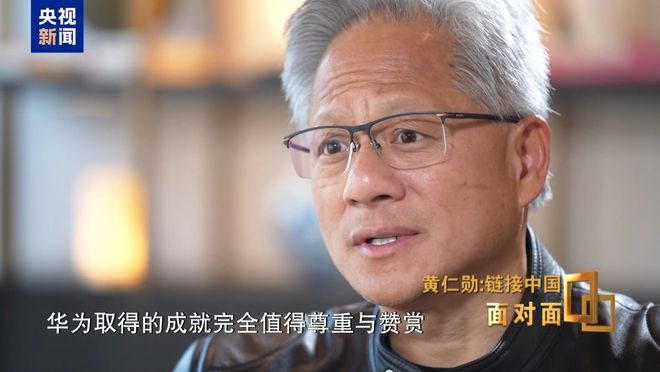
黄仁勋称全球供应链不存在“彻底脱钩”可能性,陈挥文呛赖清德:还坚持“非红供应链”?
Huan Qiu Wang Zi Xun· 2025-07-23 04:39
Core Viewpoint - Huang Renxun, founder of Nvidia, emphasized the impossibility of a complete decoupling in the global supply chain during his visit to Beijing, highlighting the unique importance of the Chinese market for Nvidia [1][3]. Group 1: Nvidia's Position in the AI Market - Huang stated that the Chinese AI market is irreplaceable for Nvidia, and not participating could lead to unpredictable and unfavorable consequences [3]. - He acknowledged that regardless of Nvidia's involvement, the AI market in China will continue to progress, driven by innovative companies like Huawei [3]. - Huang expressed admiration for Huawei, viewing it as a competitor rather than an adversary [3]. Group 2: Global Supply Chain Dynamics - Huang's comments sparked discussions in Taiwan about the interdependence of global supply chains, countering the notion of a complete decoupling [3][4]. - Taiwanese media personalities noted that Huang's insights reflect the complex reality of technological competition between the US and China, which cannot be simplified into a binary opposition [3]. Group 3: Political Implications in Taiwan - The remarks raised questions about the feasibility of Taiwan's "non-red supply chain" strategy proposed by its leadership, suggesting it may be overly idealistic [4]. - Critics pointed out that Huang's assertion challenges the Taiwanese government's approach to economic decoupling from China, urging a reevaluation of their strategy [4]. - The commentary highlighted concerns that pursuing such a decoupling strategy could harm Taiwan's industries and citizens' welfare [4].


国台办:坚决反对我建交国同中国台湾地区开展任何形式的官方往来
news flash· 2025-06-11 03:58
Core Viewpoint - The Chinese government firmly opposes any form of official exchanges between its diplomatic allies and Taiwan, particularly in relation to agreements that imply sovereignty or official status [1] Group 1 - The spokesperson for the Taiwan Affairs Office criticized Lai Ching-te's push for a "Taiwan-Europe Economic Partnership Agreement" and the creation of a so-called "non-red supply chain" [1] - The spokesperson emphasized that such actions cater to external forces and undermine Taiwan's economic and market principles, potentially harming Taiwan's advantageous industries and development prospects [1] - The strategy of sacrificing Taiwan's economic interests to gain support for independence from external forces is deemed counterproductive and will face opposition [1]
国台办评所谓“非红供应链”:以意识形态搞经济“小圈子”
Zhong Guo Xin Wen Wang· 2025-05-14 12:15
Group 1 - The spokesperson of the Taiwan Affairs Office criticized Taiwan's leader Lai Ching-te for promoting a "non-red supply chain," suggesting it is driven by ideology and aims to create an economic "small circle" [1] - Lai's administration is accused of selling out to the U.S. while simultaneously advocating for economic decoupling from the mainland, revealing a submissive stance towards the U.S. [1] - The spokesperson refuted Lai's claims about the mainland's trade practices, asserting that the mainland adheres to free trade principles and contributes to global trade stability [1] Group 2 - The recent surge in the New Taiwan Dollar is believed to be linked to U.S.-Taiwan tariff negotiations, which could severely impact Taiwan's export-dependent industries such as machinery, chemicals, and textiles [2] - The spokesperson described the Taiwanese government's negotiations with the U.S. as performative, indicating that the outcome will only lead to further U.S. demands [2] - The spokesperson emphasized the need for cross-strait cooperation to address common challenges and invited Taiwanese industries to invest and develop in the mainland [2]