风控至上

Search documents
风控至上,行稳致远:永赢基金强风控文化筑牢发展压舱石
Zheng Quan Shi Bao Wang· 2025-12-09 03:04
Core Insights - Yongying Fund emphasizes a strong risk management culture as a fundamental aspect of its operations, viewing it as essential for survival and development [1][3] - The company has established a comprehensive risk control system that integrates technology and processes to ensure effective risk management across all business operations [2][3] Group 1: Risk Management Framework - Yongying Fund has developed a full-process risk control system that spans from investment transactions to compliance supervision, creating a multi-layered protective network [2] - The risk monitoring mechanism includes daily static monitoring, monthly risk reports, and quarterly attribution meetings, ensuring comprehensive risk prevention [2] - The company’s self-developed Mingjing Risk Management System won the 2023 Financial Technology Development Award from the People's Bank of China, highlighting its commitment to integrating technology into risk management [2] Group 2: Cultural Commitment to Risk Control - The "risk control first" culture has led Yongying Fund to achieve high-quality development, serving over 47.91 million clients and generating profits of 74.9 billion yuan for customers [3][4] - The company translates its risk control philosophy into specific institutional designs, technical systems, and daily operations, fostering a unique risk management culture [3] - Yongying Fund aims to deepen its "risk control first" culture and continuously improve its compliance and risk control systems to adapt to market changes and enhance investor trust [3]
顺势而为 风控至上
Qi Huo Ri Bao Wang· 2025-12-01 01:01
Core Insights - The article highlights the achievements of Xu Xiaozhong, who won the second prize in risk control at the 19th National Futures (Options) Real Trading Competition, emphasizing his trading philosophy of "following the trend and prioritizing risk control" [1][2]. Group 1: Trading Philosophy - Xu Xiaozhong's trading philosophy prioritizes risk control, stating that "stop-loss is the lifeline of a trader" [2]. - He emphasizes the importance of setting stop-loss points based on technical support levels or fundamental key points before each trade and strictly adhering to them [2]. - The principle of position management he follows includes starting with a light position, increasing it in line with the trend, and reducing it against the trend, ensuring account safety during extreme market conditions [2]. Group 2: Market Analysis and Strategy - Xu's trading system is built on a three-dimensional operational logic: macro analysis for strategic direction, industry research for target selection, and technical analysis for timing [1]. - He identifies potential sectors for investment, such as energy and precious metals, based on macroeconomic signals and domestic policies [1]. - His approach to technical analysis involves entering trades decisively at key support levels when price breaks out of previous ranges with significant volume [1]. Group 3: Future Plans and Market Perspective - Xu plans to further optimize his trading system by adjusting stop-loss ratios and position parameters based on the volatility of different commodities and incorporating new data analysis tools to gauge market sentiment [3]. - He views the futures market as not only a platform for wealth growth but also as a place for personal development, emphasizing the importance of recognizing market dynamics and personal weaknesses [3].
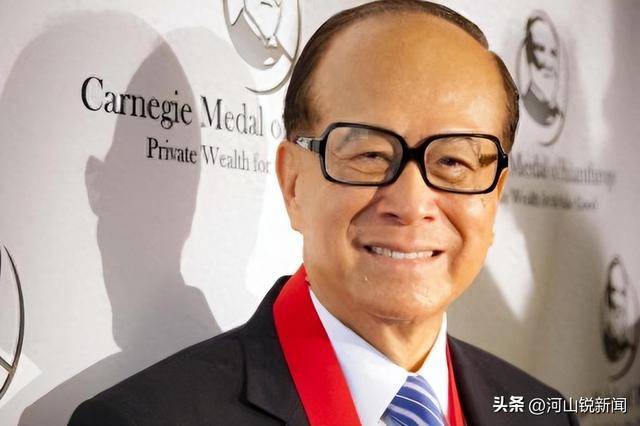
一查吓一跳,李嘉诚资产大揭秘:英国才是他的“金库”
Sou Hu Cai Jing· 2025-05-30 01:27
Group 1: Overview of Li Ka-shing's Business Empire - Li Ka-shing has maintained his status as Hong Kong's richest person for 21 consecutive years, building a vast business empire that spans across continents, particularly in the UK where he controls significant portions of essential services [1] - His overseas investments, especially in the UK, include controlling 30% of the electricity supply, 25% of gas services, and 7% of drinking water resources, showcasing a strategic approach to wealth accumulation [1][5] Group 2: Strategic Investments and Acquisitions - In 1986, during a global oil crisis, Li Ka-shing made a bold move by acquiring 52% of Husky Energy for 3.2 billion HKD, later increasing his stake to 95% and transforming the company into a major player in the energy sector [3] - His UK investments began in 1991 with the acquisition of the Thames River Dock, leading to the control of nearly one-third of the UK's container throughput by acquiring major ports and gas networks [5] - Li's acquisition of NGN gas network in 2005 for 557 million GBP now provides gas services to 25% of the UK population, while his 2010 purchase of National Grid's gas business for 11 billion GBP further solidified his influence in the energy sector [5] Group 3: Business Philosophy and Risk Management - Li Ka-shing's business philosophy emphasizes seizing opportunities during crises, as demonstrated by his land acquisitions during the 1967 Hong Kong riots, which later appreciated significantly [9] - His approach to risk management includes diversifying into stable sectors like electricity and water services, ensuring his asset portfolio remains resilient against economic fluctuations [12] - The narrative of Li's success reflects a long-term investment strategy, focusing on industries with slow but steady growth, allowing for compounding returns over time [14] Group 4: Controversies and Globalization - Li Ka-shing has faced scrutiny for his asset divestments in China, reportedly selling over 200 billion HKD worth of properties since 2013, while reallocating investments towards European infrastructure projects [11] - Despite criticisms of monopolizing the UK economy, his business practices illustrate a broader trend of globalization in capital allocation, where investments are directed towards regions with higher returns [11][16]