
风险外包

Search documents
中资密集接盘麦当劳星巴克汉堡王
Di Yi Cai Jing Zi Xun· 2025-11-14 12:12
Core Insights - The article discusses the trend of foreign brands in China, particularly in the food and beverage sector, increasingly partnering with Chinese investors to adapt to the competitive market landscape [2][3][4][6]. Group 1: Foreign Brands' Strategy in China - Starbucks has formed a joint venture with Boyu Capital to operate its retail business in China, with Boyu holding up to 60% of the joint venture [3]. - Costa Coffee is reportedly in discussions for a potential acquisition by Luckin Coffee's major shareholder, Dazhong Capital, indicating a growing interest from Chinese investors in foreign brands [2]. - Major international brands like Domino's, McDonald's, and Burger King are restructuring their operations in China by introducing Chinese shareholders and relinquishing control to navigate the competitive environment [3][4]. Group 2: Market Dynamics and Performance - Yum Brands, the parent company of KFC and Pizza Hut, sold its Chinese operations to Primavera Capital and Ant Financial in 2016, leading to significant growth in KFC's store count, particularly in lower-tier cities [4][5]. - McDonald's has expanded its presence in China, with over 7,100 stores, a threefold increase compared to eight years ago, and plans to continue opening 1,000 new stores annually until reaching 10,000 by 2028 [5][6]. - Luckin Coffee surpassed Starbucks in revenue for the first time in Q2 2023, highlighting the competitive pressure on foreign brands from local players [8][10]. Group 3: Challenges Faced by Foreign Brands - Foreign brands are facing challenges such as menu stagnation, rising operational costs, and increased competition from local brands, leading to a decline in same-store sales [6][8]. - Starbucks has had to lower prices and offer promotions to remain competitive, reflecting the pressure from local brands that have adopted aggressive pricing strategies [8][10]. - The shift in consumer preferences towards local brands and fast coffee options has diminished the appeal of Starbucks' traditional third-space strategy, necessitating a reevaluation of its business model [10]. Group 4: Investment and Market Outlook - The trend of foreign brands partnering with Chinese capital is seen as a way to mitigate risks and leverage local market knowledge, with Chinese investors benefiting from established brand recognition [6][7]. - The current market dynamics indicate a shift towards local brands dominating the landscape, with many international brands transitioning from strong to weaker market positions [7][9]. - The future success of foreign brands in China may depend on their ability to innovate and adapt to local consumer preferences, moving beyond traditional strategies [10].


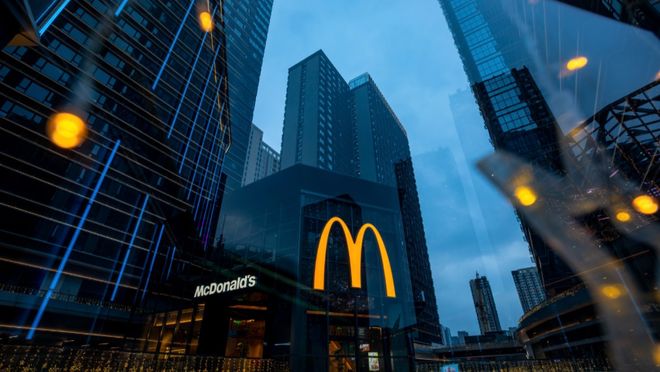
洋品牌卖股权复盘:一招鲜打遍全球哑火,洋品牌卖身后狂飙下沉市场
Di Yi Cai Jing· 2025-11-14 09:35
Group 1 - The core viewpoint is that many international brands are restructuring their development paths in China by introducing Chinese investors and relinquishing control, driven by the need to balance "risk outsourcing" and growth efficiency in a competitive market [1][2] - Yum Brands was the first to sell its Chinese operations, divesting KFC and Pizza Hut to Primavera Capital Group and Ant Financial in 2016, leading to steady growth and expansion into lower-tier markets [1] - By the third quarter of 2025, KFC had added 992 new stores, totaling 12,600, with nearly 40% of these located in third-tier cities and below [1] Group 2 - The chairman and CEO of Zhanlian Consulting, Gao Chengyuan, noted that foreign brands entering China share similar strategies, initially relying on high-end pricing and landmark locations from 2000 to 2010, but facing declining same-store growth and market challenges post-2012 [2] - The introduction of Chinese capital is seen as foreign brands exchanging "future growth options" for "current cash flow," effectively selling off assets with diminishing returns to players more willing to invest in lower-tier markets [2]

洋品牌卖股权复盘:一招鲜打遍全球哑火,引中资狂飙下沉市场
Di Yi Cai Jing· 2025-11-14 09:12
Core Insights - The trend of foreign brands in China reflects a strategic shift towards "risk outsourcing" and growth efficiency in a competitive market [1][2][5] Group 1: Foreign Brands' Strategies - Starbucks has formed a joint venture with Boyu Capital to operate its retail business in China, with Boyu holding up to 60% of the joint venture [2] - Costa Coffee is reportedly in discussions for acquisition by Luckin Coffee's major shareholder, Dazhong Capital, indicating a trend of foreign brands seeking local partnerships [1][2] - Many international giants, including Domino's, McDonald's, and Burger King, are restructuring their operations in China by introducing local shareholders and relinquishing control [2][3] Group 2: Market Performance and Expansion - Yum China, which includes KFC and Pizza Hut, has expanded significantly since selling its Chinese operations in 2016, with KFC increasing its store count to 12,600 by Q3 2025, nearly 40% of which are in lower-tier cities [3][4] - McDonald's has tripled its store count in China to over 7,100, with a rapid opening rate of 2-3 new stores daily, and aims to reach 10,000 stores by 2028 [4][3] - Luckin Coffee surpassed Starbucks in revenue for the first time in Q2 2023, with a total net income of 12.36 billion yuan, reflecting a 47.1% year-on-year growth [9][10] Group 3: Challenges for Foreign Brands - Foreign brands are facing increased competition from local players, leading to a decline in market influence and necessitating a reevaluation of their business strategies [6][8] - Starbucks has had to lower prices and offer promotions to compete with local brands, which have gained significant market share [6][10] - The shift towards local partnerships is seen as a way for foreign brands to mitigate risks and adapt to the rapidly changing market environment in China [5][8]
