
食品溯源

Search documents
市市场监管局局长:推行非现场监管让企业安心经营
Xin Jing Bao· 2026-01-27 02:45
Core Viewpoint - Beijing is enhancing its business environment through innovative regulatory measures and services, aiming to improve the quality of life for citizens and support economic development [1][2][3]. Group 1: Market Regulation Achievements - During the "14th Five-Year" period, Beijing's market regulation has focused on supporting the capital's "four centers" (political, cultural, international exchange, and technological innovation) and has achieved significant progress [2][3]. - The city has implemented a "zero accident" safety standard during major events like the Winter Olympics and has established 21 high-level technical platforms to support technological innovation [2][3]. - The introduction of a "no-contact" foreign enterprise registration model has significantly improved the convenience for foreign investments in Beijing [2][3]. Group 2: Future Plans for "15th Five-Year" Period - The goal for the "15th Five-Year" period is to establish a modern market regulation system by 2030 that aligns with the capital's functions, focusing on legal completeness, digital empowerment, and multi-party governance [3][6]. - The city aims to continue optimizing market access and exit mechanisms to enhance the competitiveness and efficiency of "Beijing services" [3][6]. Group 3: Innovations in Business Environment - The successful establishment of coffee shops in subway stations, previously a regulatory challenge, exemplifies the city's commitment to improving the business environment and meeting public demand [4]. - The integration of robotic chefs into the market is supported by regulatory services that ensure compliance, enhancing consumer experiences and promoting the integration of culture, commerce, and tourism [4]. Group 4: Economic Growth Metrics - By 2025, Beijing is projected to have 380,100 new business entities, with 321,000 new enterprises, of which 47.49% will be technology-based [5]. - The total number of business entities in Beijing is expected to reach 2,869,700 by the end of 2025, reflecting a year-on-year growth of 6.83% [5]. Group 5: Regulatory Innovations in Healthcare - Beijing has established a green channel for the urgent import of life-saving drugs, significantly improving the speed of drug availability for patients [8][9]. - The city has optimized the clinical trial approval process for innovative drugs, reducing the approval time from 60 to 30 working days, with some projects approved in as little as 18 working days [9]. Group 6: Comprehensive Regulatory Reform - The "integrated comprehensive regulatory reform" aims to streamline inspections and reduce the burden on businesses, shifting the focus from "fear of inspections" to "expectation of services" [10][11]. - The implementation of non-contact inspections and the "one-time check" reform has improved regulatory efficiency and reduced disruptions to business operations [11]. Group 7: Consumer Protection in E-commerce - The rise of live-streaming sales has prompted the market regulation department to enhance compliance guidance and address issues like false marketing and competition [12]. - The department has successfully tackled the issue of "professional bullet screeners," setting a precedent for regulatory innovation in the e-commerce sector [12]. Group 8: Food Safety Initiatives - Beijing is committed to ensuring food safety by implementing real-time verification of food vendors on delivery platforms and enhancing traceability in food supply chains [13][14]. - The city plans to expand the use of digital identification for food products, making food safety a standard practice and reinforcing public trust [13][14].
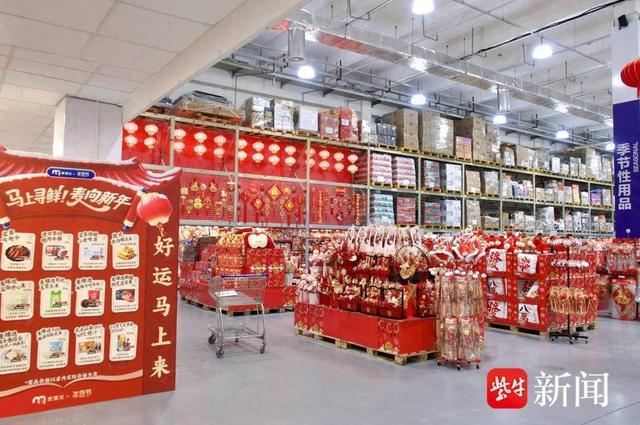
超1600款鲜味年货集结,多款商品扫码可知身世:麦德龙年货节主打安心牌
Xin Lang Cai Jing· 2026-01-23 09:39
Core Viewpoint - The report by NielsenIQ highlights the increasing consumer demand for quality, health, and safety in food ingredients for the upcoming 2026 Spring Festival, prompting Metro to enhance its supply chain and product offerings [1][3]. Group 1: Consumer Trends - Consumers are shifting their focus from merely "freshness" to "specific origin" and "quality certification" of food products, as evidenced by the doubling of fruit sales and a 20% increase in seafood sales compared to the previous year [3]. - The self-owned brand "Mai Zhen Xuan" has seen a significant performance, with its product sales accounting for nearly 20% since the launch of the New Year goods festival [1][3]. Group 2: Product Offerings - Metro's New Year festival features a diverse range of regional flavors, including dairy and meat products from the Northwest, seasonal fruits from the Northeast and Southwest, and seafood from the Southeast, creating a comprehensive "fresh map" for consumers [3][5]. - Notable products include organic pure milk and premium beef sourced from the Tianshan region, which cater to consumer preferences for quality and taste during family gatherings [3][5]. Group 3: Quality Assurance - Metro employs its unique "Mai Zi Da" traceability system to ensure the safety and freshness of its products, allowing consumers to access detailed information about the origin and quality of their food [7][8]. - The traceability system has developed over 6,000 traceable products, enhancing consumer confidence in food safety [8]. Group 4: Marketing and Engagement - Metro is engaging consumers through social media initiatives and partnerships with well-known traditional brands to create a sense of nostalgia and community around the New Year festival [8][10]. - The company is also offering promotional activities, such as cashback on purchases, to enhance the value proposition for consumers during the festival period [10].

食品溯源全景路径剖析:从原料到成品,如何实现全程透明与效果验证?
Xin Lang Cai Jing· 2026-01-21 05:33
Core Insights - The article emphasizes the evolution of consumer expectations from basic safety compliance to a demand for quality certainty and efficacy in food products, highlighting the importance of trust in brand value [1][4][41] Group 1: Traceability in Food Industry - The search index for "food traceability" keywords increased by 157.39% year-on-year in the first half of 2025, indicating a growing consumer interest in product origins and processing [2] - Companies like Nongfu Spring are pioneers in traceability practices, transforming their water source into a symbol of brand trust [2] - Major food brands, including McDonald's and KFC, have initiated traceability journeys, but face challenges in differentiating their offerings in a crowded market [2][4] Group 2: Evolution of Traceability - Traceability marketing has shifted from merely ensuring safety compliance to establishing quality certainty and efficacy stability, driven by consumer health demands and technological advancements [4][5] - The traceability system has evolved from simple information recording to a standardized carrier of product value, integrating into brand building, product innovation, and user delivery [4][5] Group 3: Role of Technology - The traceability system in functional foods is advancing from basic safety assurance to a standardized and refined approach, similar to the beauty industry’s control over active ingredients [9] - Brands are increasingly using digital traceability to provide comprehensive production data, ensuring that active ingredients remain effective through industrial processing [14][15] Group 4: Consumer Engagement - Over 60% of global consumers are willing to pay a premium for brands that transparently disclose ingredient sources and production details, indicating a strong demand for transparency [8] - The trend is particularly pronounced in functional foods, where traceability is becoming a key component of building technical barriers [8][9] Group 5: Supply Chain Management - The ultimate value of traceability lies in the ability to deepen and control the supply chain, transitioning from mere production capabilities to sustainable selling [39][40] - Companies are moving from passive procurement to active supply chain management, enhancing their ability to respond to consumer demands quickly [40] Group 6: Traditional Chinese Medicine and Modernization - The market for "medicinal food" is projected to exceed 500 billion yuan by 2025, driven by consumer demand for standardized and verified products [25][26] - Brands are constructing comprehensive traceability systems to address issues of origin confusion and safety in traditional Chinese medicine [27][29] Group 7: Geographic Branding - Geographic indicators are being transformed into tangible brand assets through traceability, allowing consumers to verify the authenticity and quality of regional products [37][38] - Successful case studies, such as the sales of birch juice from Yichun, demonstrate the effectiveness of deep traceability in building consumer trust [38]
轮台县市监局双节前食品安全专项检查 筑牢消费安全屏障
Zhong Guo Shi Pin Wang· 2025-09-28 13:24
Core Viewpoint - The article highlights the proactive measures taken by the Wulantai County Market Supervision Administration to ensure food safety during the upcoming National Day and Mid-Autumn Festival, focusing on key areas of food circulation and consumer protection [1] Group 1: Food Safety Inspections - The administration is conducting special inspections in supermarkets, farmers' markets, and temporary sales points to address food safety vulnerabilities in the circulation process [1] - Key focus areas include popular festive foods such as mooncakes, meat products, dairy products, and fresh fruits and vegetables, with thorough checks at critical points in the supply chain [1] Group 2: Compliance and Regulation - Inspections involve verifying the implementation of food purchase inspection systems, checking supplier qualifications, product inspection reports, and purchase ledgers to ensure traceability and compliance [1] - The administration is also monitoring the storage temperatures of refrigerated and frozen foods, as well as ensuring that bulk food items have adequate dust and fly prevention measures and complete labeling [1] Group 3: Consumer Awareness and Education - The administration is taking steps to regulate temporary food sales stalls by verifying business qualifications and food traceability information to prevent the circulation of unqualified products [1] - Efforts to educate consumers include offline postings and online guidelines promoting purchasing tips such as checking qualifications, labels, and requesting receipts, along with providing accessible complaint channels [1] Group 4: Ongoing Monitoring - The administration plans to increase the frequency of inspections in the circulation process and strictly address any illegal activities to ensure that consumers can buy and eat with confidence [1]