
餐饮连锁

Search documents
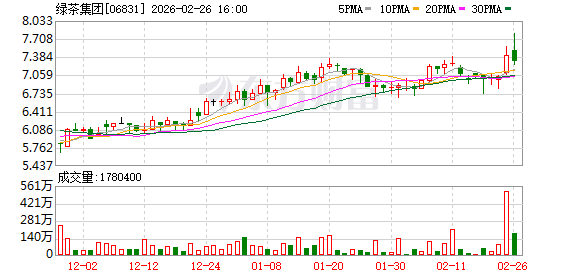
餐饮行业暖风频吹 绿茶集团利润预增
Zheng Quan Ri Bao· 2026-02-26 11:40
Core Viewpoint - The restaurant industry is experiencing a significant recovery in 2026, driven by improved consumer scenarios and the effects of various consumption promotion policies, with a notable increase in revenue growth rates [2] Industry Overview - The restaurant revenue growth rate in Q4 2025 reached 3.0%, accelerating by 1.6 percentage points from Q3 2025 [2] - The marginal recovery signals in the restaurant sector are becoming clearer due to the dual effects of the Spring Festival timing and a low base [2] Company Performance - Green Tea Group has released a positive profit forecast, projecting a profit between RMB 4.60 billion and RMB 5.08 billion for 2025, representing a growth of 31.4% to 45.1% compared to RMB 3.50 billion in 2024 [2] - The profit growth is attributed to a healthy relationship between revenue and net profit, indicating that the growth is driven by both store network expansion and improved operational efficiency [3] Operational Strategy - Green Tea Group employs a "small store + high efficiency" strategy, focusing on operational efficiency rather than blind expansion [3] - The company has improved its table turnover rate from 3.05 times per day in H1 2024 to 3.10 times per day in H1 2025, which has helped offset slight fluctuations in per capita consumption [3] Supply Chain and Cost Management - The company has established a robust supply chain system that includes partnerships with leading suppliers and a digital cold chain, ensuring food freshness and standardized taste while building a solid cost advantage [4] International Expansion - Since opening its first store in Hong Kong in 2024, Green Tea Group has accelerated its global expansion, with 15 stores in Hong Kong and Southeast Asia [5] - The revenue and profit scale of overseas stores can reach 2.5 to 3 times that of domestic stores, with Hong Kong stores generating monthly revenues of HKD 1.5 million to 2 million and operating profit margins exceeding 15% [5] - The company balances global standards with local adaptations through collaborations with Michelin-star chefs to develop localized dishes, addressing cultural and taste barriers in overseas markets [5] Growth Strategy - Green Tea Group has established a clear dual growth strategy: leveraging domestic market scale and efficiency as a foundation while using high growth and profitability in overseas markets as a value driver [5]

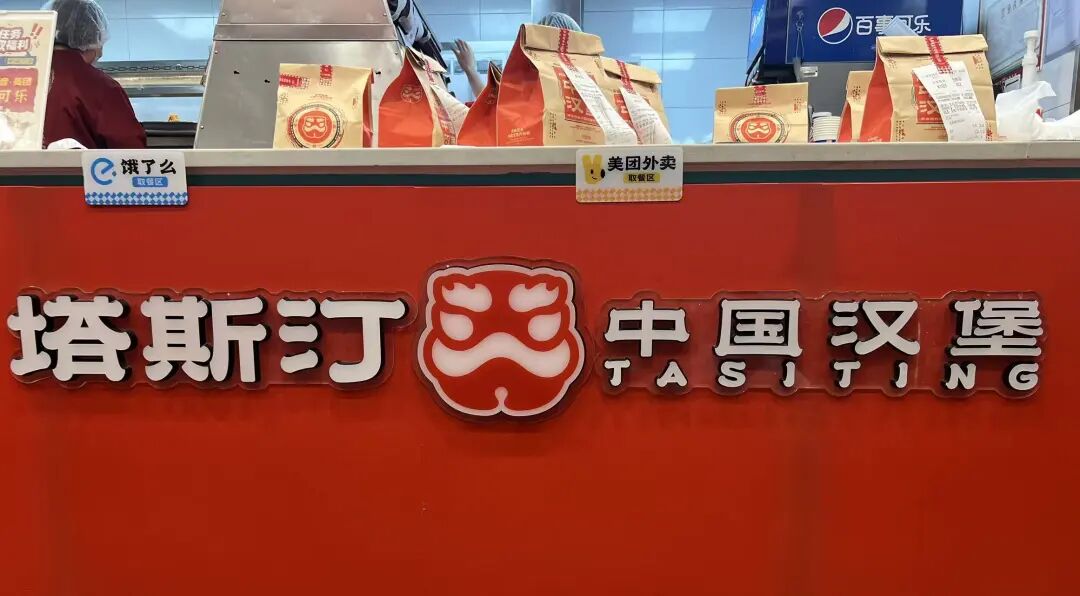
塔斯汀大规模开店关店
3 6 Ke· 2025-12-04 10:57
Core Insights - Tasting, a fast-food brand, is experiencing a high rate of store openings and closures, with 968 new stores opened and 907 closed in the past 90 days, resulting in approximately 10,296 operational stores as of December 2 [1][4] - The brand's rapid expansion has led to a significant number of closures, indicating potential instability compared to more established competitors like Wallace and KFC [1][7] - Tasting's aggressive growth strategy, particularly in lower-tier markets, has resulted in a high number of openings, but the brand is now facing challenges in maintaining profitability and attracting franchisees [10][12] Expansion and Closure Dynamics - Tasting's rapid expansion has been facilitated by a mature supply chain and digital management systems, allowing it to grow faster than competitors like Wallace and KFC [9] - The brand's strategy involved opening multiple stores in close proximity, which has led to market saturation and subsequent closures due to poor performance [4][5] - The average investment required to open a Tasting store is approximately 452,300 yuan, which is lower than KFC's investment threshold, making it attractive for franchisees [9] Market Position and Competition - Tasting's market position is characterized by a pricing strategy that is higher than Wallace but lower than McDonald's and KFC, providing a unique offering in the Chinese fast-food market [9] - The brand is actively seeking to expand in first-tier cities and northern regions, despite the recent closures, indicating a continued focus on growth [9][10] - The competitive landscape includes significant pressure from established brands like KFC and McDonald's, which have a stronger consumer acceptance in urban areas [5][10] Franchisee Challenges - Franchisees are facing longer payback periods, with estimates now around two years, compared to previous expectations [12] - The average gross margin for Tasting is reported to be around 45%, which is lower than the typical margins for beverage brands, indicating profitability challenges [12] - There is a concern among franchisees regarding the brand's aggressive expansion strategy, which may lead to market saturation and reduced profitability for individual stores [13]
YUM CHINA HOLDINGS INC(9987.HK)3Q25 RESULTS:ANOTHER SOLID QUARTER
Ge Long Hui· 2025-11-06 13:21
Core Viewpoint - YUMC reported a 4.4% year-over-year total revenue growth in 3Q25, with a 0.4 percentage point year-over-year operating profit margin (OPM) expansion, outperforming peers in the restaurant and catering sector [1] Group 1: 3Q Results Review - Total revenue for YUMC increased to US$3,206 million in 3Q25, aligning with expectations [1] - System sales (excluding foreign exchange effects) rose by 4.0% year-over-year, with same-store sales increasing by 1.0% year-over-year [1] - The pace of store openings accelerated, with net additions of 402 KFC and 154 PH stores in 3Q25, compared to 295 KFC and 99 PH in 2Q25 [1] - Franchise store format accounted for 41% of new KFC stores and 27% of new PH stores in the first nine months of 2025, indicating a strategic focus on leveraging franchisees [1] - Delivery sales contributions increased by 8 percentage points for KFC and 6 percentage points for PH year-over-year [1] - Restaurant margin slightly increased to 17.3%, with a cost ratio of food and paper at 31.3%, payroll at 26.2%, and occupancy at 25.2% [1] - General and administrative expenses remained flat year-over-year at 4.5%, reflecting disciplined cost control [1] - Operating profit margin rose to 12.5%, while investment loss narrowed to US$10 million in 3Q25 [1] - Reported shareholders' profit decreased by 5% year-over-year to US$282 million, in line with expectations [1] Group 2: Outlook - YUMC's long-term business strategy appears consistent, with an agile business model and positive feedback on new initiatives [2] - Strategic cooperation with franchisees is expected to enhance sales and improve free cash flow margins [2] - Same-store sales growth (SSSG) has been steady but may fluctuate due to the macroeconomic environment [2] - KFC and PH are anticipated to be less affected by delivery subsidy normalization in 2026 compared to other restaurant players [2] - Management targets a total capital return to shareholders of US$3.0 billion for 2025-26, equating to an average annual capital return of 8%-9% [2] - Average annual capital expenditure guidance remains at US$600-700 million from a long-term perspective [2] Group 3: Valuation - Topline forecasts for 2025-27 have been raised by 0.3%-0.8% due to accelerated store openings, particularly in franchise formats [3] - OPM forecasts have been slightly revised upward due to ongoing cost tailwinds and efficiency gains [3] - Earnings per share (EPS) is expected to grow at a 10% compound annual growth rate (CAGR) from 2024 to 2027, considering a 3% average annual decline in shares outstanding [3] - The BUY rating is maintained with a target price of HK$428.00 (US$54.90) for YUMC-H, representing a price-to-earnings ratio of 21.8x/19.2x for 2025-26 estimates [3]
遇见小面,最快本月上市预路演,募资或达2亿美元
Sou Hu Cai Jing· 2025-11-06 06:42
Core Viewpoint - The Chongqing-based restaurant chain, "Yujian Xiaomian," is expected to launch its pre-IPO roadshow this month, aiming to raise between $100 million to $200 million [1]. Company Overview - "Yujian Xiaomian" specializes in Chongqing-style noodles and has expanded its menu to include various spicy and non-spicy dishes, such as noodles, rice, snacks, and beverages [1]. - As of October 8, 2025, the company operates 440 restaurants across 22 cities in mainland China and 11 in Hong Kong, with an additional 101 new restaurants in preparation [1]. - According to Frost & Sullivan, "Yujian Xiaomian" is the largest operator of Sichuan-Chongqing style noodle restaurants in China and ranks fourth among all Chinese noodle restaurants, while being the thirteenth in the overall Chinese fast food market by total merchandise transaction value [1]. Shareholder Structure - The major shareholders include Baifu Holdings (14.88%), Country Garden (3.97%), and Jiumaojiu (6.50%), among others [2]. - The controlling shareholder is Huai'an Chuangtao, with a 49.04% stake held by Mr. Song Qi [2].

遇见小面IPO前开店骤然提速,低价内卷下艰难求增量
Guan Cha Zhe Wang· 2025-04-17 05:18
Core Viewpoint - The company "Yujian Xiaomian" has submitted its IPO application to the Hong Kong Stock Exchange, marking a significant step in its expansion plans after previous media reports indicated intentions for an IPO as early as January of the previous year [1]. Financial Performance - Revenue for Yujian Xiaomian from 2022 to 2024 is projected to grow from RMB 418 million to RMB 1.154 billion, reflecting a compound annual growth rate (CAGR) of 66.2% [3][4]. - The net profit is expected to shift from a loss of RMB 35.973 million in 2022 to a profit of RMB 60.7 million in 2024 [3][4]. Expansion Strategy - The company plans to use the funds raised from the IPO for expanding its restaurant network, enhancing technology and digital systems, brand building, strategic investments in upstream food processing companies, and general corporate purposes [1]. - Yujian Xiaomian has significantly increased its store openings, with a target of 120 new stores in 2024, following a net increase of 82 stores in 2023 [7][8]. Market Position - Yujian Xiaomian has established itself as the largest operator of Sichuan-Chongqing style noodle restaurants in China, with a notable presence in first-tier cities and transportation hubs [5][11]. - The company has adopted a dual strategy of self-operated and franchised stores, although it remains primarily self-operated, with franchise revenue showing only a 16.35% increase [9][10]. Competitive Landscape - The company faces intense competition in the restaurant sector, particularly in Hong Kong, where it aims to open 100 stores, despite challenges such as high rental and labor costs [13][17]. - Yujian Xiaomian's pricing strategy in Hong Kong is positioned as affordable compared to local tea restaurants, but it still competes in a saturated market [15][18]. Future Outlook - The company aims to leverage its supply chain advantages from mainland China to reduce operational costs in Hong Kong and attract price-sensitive consumers [18]. - The expansion into Hong Kong is seen as a way to enhance brand visibility and revenue, although the profitability of this move remains uncertain [15][18].
