
高技能人才队伍建设

Search documents
【代表委员履职故事】每条建议,都紧贴着工友的心声
Xin Lang Cai Jing· 2026-02-25 18:56
(来源:工人日报) "一边做好本职工作,一边把工友的想法整理出来,充实到两会建议里,带到北京去。"开年以来,全国 人大代表、西安纺织控股有限责任公司技术中心教练员黄云娜忙着开展车间技术指导的同时,马不停蹄 开展调研。调研路上,她前往西安、咸阳等地的国有企业与民营企业,与一线工人交流,让每一条建议 都带着车间的温度、紧贴着工友的心声。 深耕纺织行业20多年来,黄云娜始终扎根一线、心系工友。 在纺织行业织造车间,机下打结是值车工必须熟练掌握的基本功。黄云娜1998年进入织造车间担任值车 工,苦练技艺,创造出机下打结一分钟48个的最好成绩,进厂第一年就荣获集团青工操作比武第一名, 并连续16年蝉联集团操作标兵能手。凭借娴熟的技能,她先后获评全国劳动模范、全国优秀农民工等。 "我是从技能成才这条路走出来的,特别能体会一线工人的成长需求。"黄云娜说,这份成长经历,让她 始终将一线产业工人的成长成才放在履职的重要位置。为此,她围绕加强高技能人才队伍建设提出多份 建议,包括加大金融支持力度,鼓励企业进行科技创新、技术改造;充分发挥人才优势、地方产业资源 优势,加强产学研深度融合,推动产业转型升级等。 身为纺织行业的代言人, ...
淄博新增5家市技师工作站
Qi Lu Wan Bao· 2026-01-18 11:25
Core Viewpoint - The establishment of technician workstations in Zibo is aimed at enhancing the development of high-skilled talent and promoting technological innovation to support regional economic growth [1] Group 1: Technician Workstations - Zibo City Human Resources and Social Security Bureau announced the recognition and evaluation results for technician workstations, designating five units, including Shandong Huacheng Group Co., Ltd. and Zibo Qixiang Tengda Chemical Co., Ltd. as construction units for the 2025 technician workstations [1] - After the evaluation, Zibo now has a total of 52 technician workstations [1] Group 2: Purpose and Funding - The purpose of the technician workstations is to leverage existing high-skilled talent in industries and enterprises through activities such as technical exchanges, innovations, and mentoring, thereby accelerating talent cultivation and addressing key production challenges [1] - New technician workstations will receive a one-time funding support of 80,000 yuan (approximately 11,000 USD) from the municipal finance for technological innovation and talent training [1]
丰台高技能人才队伍建设让重点产业“筋骨”更强
Xin Lang Cai Jing· 2026-01-08 16:56
Core Viewpoint - The article highlights the efforts of Fengtai District in enhancing high-skilled talent development to meet industrial needs, showcasing successful initiatives that improve productivity and precision in manufacturing processes [1][2][3]. Group 1: High-Skilled Talent Development - Fengtai District has established a four-tier high-skilled talent evaluation and promotion system, creating a "Master Craftsman Talent Pool" that aligns talent growth with industrial demands [2]. - Over 100 high-skilled talents at the master level have been recognized, covering key sectors such as aerospace, high-end manufacturing, and information technology, effectively addressing critical technical challenges in the region [2][3]. Group 2: Dynamic Demand Lists - The district has implemented a "dynamic demand list" to connect high-skilled talents with pressing industrial needs, facilitating the resolution of key technical issues [3]. - The demand list includes 140 hard technology projects and 169 technical skill requirements from enterprises, directly targeting real pain points in production [3]. Group 3: Brand Building and Knowledge Transfer - Fengtai District promotes skill inheritance and team building through the "Master Craftsman+" model, training over 1,000 individuals and establishing a multi-level talent structure [4]. - The district has created a "skill sharing" mechanism to encourage cross-enterprise and cross-field technical collaboration, enhancing the impact of talent development [4]. Group 4: Future Initiatives - Future plans include deepening the high-skilled talent work mechanism led by "masters," optimizing operational frameworks, and innovating incentive policies to convert talent advantages into industrial innovation benefits [5].
江苏以系统制度体系锻造“工匠方阵”
Xin Hua Ri Bao· 2025-10-20 07:31
Core Insights - The third National Craftsman Innovation Exchange Conference highlighted the emergence of 200 nationally cultivated craftsmen, with 11 from Jiangsu, showcasing the province's skilled workforce [1] Group 1: Top-Level Design - Jiangsu's reform aligns with national strategies, aiming to cultivate around 2,000 craftsmen by 2035, with specific provincial targets of 200 national craftsmen, 1,000 provincial craftsmen, and 5,000 municipal craftsmen [2] - Legislative measures have been implemented to enhance high-skilled talent development, including a dual recognition system for vocational qualifications and professional titles [2] - Collaborative policies have been established to create a "fast track" for high-skilled talent development, involving multiple departments and focusing on vocational education and incentive mechanisms [2][3] Group 2: Local Exploration - Cities in Jiangsu are developing unique craftsman training systems tailored to their industrial characteristics, such as multi-level training platforms and diverse skill evaluations [4] - Specific initiatives include the establishment of a local law in Suqian to support industrial workers, and the promotion of skill competitions and training partnerships in cities like Yancheng [4] - The introduction of regulations in Yangzhou emphasizes the integration of skill levels with educational qualifications, enhancing the recognition of skilled workers [5] Group 3: Corporate Practices - Leading companies like Eagle Group in Wuxi are implementing innovative employee development and incentive systems, including a cloud-based reward platform and talent training programs [6] - The focus on enhancing workers' sense of gain, happiness, and security is central to the reform's success, with over 20,800 enterprises signing collective contracts for technical innovation [6] - Ongoing surveys of the industrial workforce are being conducted to inform targeted policy measures, aiming to create a more vibrant and skilled craftsman workforce in Jiangsu [6]
第十八届全国有色金属行业职业技能竞赛在甘宁收官
Zhong Guo Xin Wen Wang· 2025-09-30 08:50
Core Points - The 18th National Nonferrous Metals Industry Vocational Skills Competition, known as the "China Aluminum Cup," was held from September 18 to 25, 2025, in Lanzhou, Gansu, and Yinchuan, Ningxia [1] - The competition involved 509 participants from 69 units in the nonferrous metals industry, competing in four vocational categories: aluminum electrolysis workers, carbon roasting workers, mine rescue workers, and welders [1] - The event is recognized as the highest-level national competition in the nonferrous metals industry, aimed at enhancing the construction of high-skilled talent and promoting the reform of the industrial workforce [2] Summary by Category Competition Details - The competition was organized by the China Nonferrous Metals Industry Association and other key organizations, with events held simultaneously in two locations [1] - Participants competed in specific vocational tasks, with notable performances in aluminum electrolysis and carbon roasting categories taking place at Lanzhou Aluminum Co., while welding and mine rescue competitions were held at Ningxia Energy [1] Results - Zhang Tingjie and Liu Pengju from Lanzhou Aluminum won first and third place in the aluminum electrolysis category, while Lyu Huajun and Wang Mingnan from China Aluminum's Guangxi branch secured first and third in the carbon roasting category [2] - Ningxia Energy's Xie Yujun won first place in the mine rescue category, and Wang Hua from Ningxia Energy placed fifth in welding [2] - Lanzhou Aluminum and China Aluminum's Guangxi branch received the first and third team excellence awards, respectively, with five other companies recognized for their outstanding team performance [2] Industry Impact - The competition serves as a significant platform for promoting the spirit of labor and craftsmanship within the nonferrous metals industry, contributing to its high-quality development [2]

陕西国企职工技能大赛决赛举行
Shan Xi Ri Bao· 2025-07-12 23:56
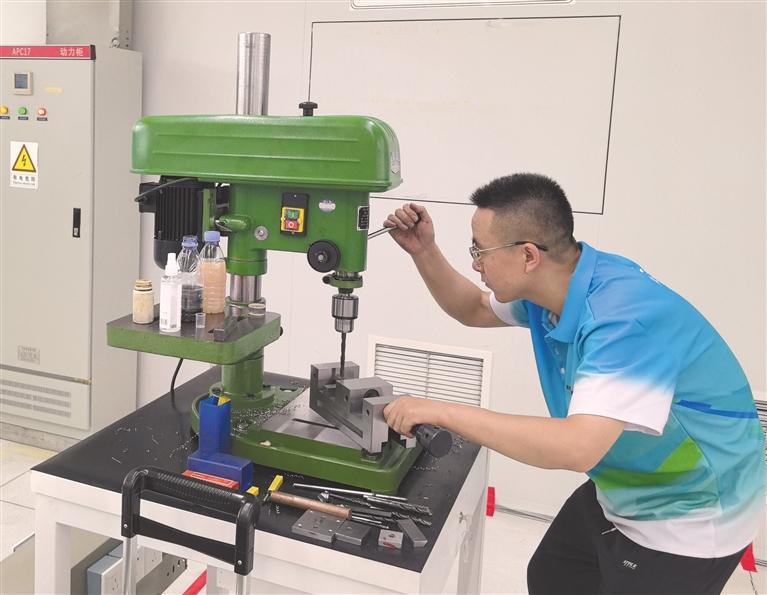
Group 1 - The eighth Shaanxi Province State-owned Enterprise Employee Skills Competition was held in Xi'an, featuring 201 contestants from 37 participating units [2] - The competition is a high-level provincial event with multiple skill categories, recognized as the most influential comprehensive vocational skills competition for state-owned enterprises in the province [2] - The theme of this year's competition is "Shaanxi Manufacturing, Qin Workers' Exquisite Products, Craftsmanship and Innovation" [2] Group 2 - The competition includes five skill categories: fitter, welder, additive manufacturing engineering technician, drone pilot, and water production treatment worker, utilizing a "1 main venue + 3 sub-venues" model for efficiency [2] - The Shaanxi Provincial State-owned Assets Supervision and Administration Commission emphasizes the importance of building a high-skilled talent team for technological innovation and industrial transformation [3] - Future actions will focus on enhancing the training, evaluation, and incentive mechanisms for skilled talent in state-owned enterprises to support high-quality development [3]

广州:推动职业院校围绕“12218”现代化产业体系动态调整专业设置
news flash· 2025-04-21 11:35
Core Viewpoint - Guangzhou has released implementation opinions to strengthen the construction of a high-skilled talent team in the new era, focusing on modernizing vocational education and training systems [1] Group 1: Policy Initiatives - The policy emphasizes the dynamic adjustment of vocational school programs in line with the "12218" modern industrial system [1] - It aims to establish a number of high-level vocational schools, including technical schools and professional clusters [1] Group 2: Financial Support and Incentives - Vocational schools are encouraged to engage in paid social training, technical services, or establish enterprises, with revenues used to improve educational conditions [1] - A certain percentage of public vocational schools' income can be used as a source for performance-based salaries, with specific regulations allowing for exceptions to total salary limits [1]