高铁技术

Search documents
中国高铁营业里程突破五万公里
Ren Min Ri Bao· 2025-12-26 19:55
Core Viewpoint - The opening of the Xi'an to Yan'an high-speed railway marks a significant milestone as China's high-speed rail network surpasses 50,000 kilometers, solidifying its position as the world's largest and most modern high-speed railway system [1][2]. Group 1: Achievements in High-Speed Rail - During the 14th Five-Year Plan period, China has achieved historic milestones in high-speed rail, with a total of 12,000 kilometers of new high-speed rail lines completed, resulting in a 32% increase in operational mileage since the end of 2020 [1][2]. - High-speed rail now covers 97% of cities with populations over 500,000, enhancing connectivity and accessibility across the country [1]. - The "eight vertical and eight horizontal" high-speed rail network is becoming increasingly comprehensive, facilitating 1-2 hour travel times between city clusters within a 500-kilometer radius [1]. Group 2: Transportation Capacity and Service Quality - High-speed rail accounts for 80% of passenger volume and 69% of passenger turnover in China's railway system, with an average of 9,346 high-speed trains operating daily, transporting approximately 9.36 million passengers [2]. - The total number of passengers transported by high-speed trains during the 14th Five-Year Plan reached 12.8 billion, a 39.2% increase compared to the previous five-year period [2]. Group 3: Technological Advancements - The CR450 high-speed train model is set to be released by the end of 2024, featuring internationally leading performance metrics in speed, energy consumption, noise levels, and braking distance [2]. - A new record of 896 kilometers per hour was achieved during testing, establishing a top-level indicator system for 400 km/h high-speed trains in China [2]. Group 4: Economic and Environmental Impact - The high-speed rail construction has a long industrial chain and broad impact, significantly contributing to domestic demand expansion and industrial structure optimization [2]. - High-speed rail is noted for its green and low-carbon advantages, with an estimated reduction of 14.44 million tons of carbon dioxide emissions during the 14th Five-Year Plan compared to equivalent passenger turnover by road [2]. Group 5: International Contributions - The Jakarta-Bandung high-speed railway, built in collaboration with Indonesia, has reduced travel time from over three hours to 46 minutes, accelerating the formation of the economic corridor [3]. - The Serbia section of the Hungary-Serbia railway has opened, integrating Chinese railway technology with EU standards, enhancing international connectivity [3].
5万公里!中国高铁运营里程取得新突破
Xin Lang Cai Jing· 2025-12-26 19:02
Core Insights - China's high-speed rail (HSR) network has surpassed 50,000 kilometers in operational mileage as of December 26, marking a significant milestone in its development [1] - The HSR has evolved from non-existence in 2008 to a global leader, with major projects launched during the 14th Five-Year Plan period contributing to the construction of 12,000 kilometers of new railways [1] - The HSR network has improved connectivity, creating 1-2 hour travel circles for cities within a 500-kilometer radius and enabling 4-hour access between cities up to 1,000 kilometers apart [1] Industry Developments - The overall technology of China's high-speed rail has reached a world-leading level, establishing a comprehensive technical system covering construction, equipment manufacturing, and operation management [2] - The CR450 trainset is currently in the testing phase, achieving a record speed of 896 kilometers per hour, and has established a top-level index system for 400 km/h trainsets, further solidifying China's leading position in high-speed rail [2] Achievements and Coverage - High-speed rail now covers 97% of urban populations in cities with over 500,000 residents, with operational mileage ranking first globally, exceeding the combined mileage of all other countries [1] - China is recognized as the country with the highest operational speed for high-speed rail [1]
西班牙凭什么打败美日德等强国,成为世界第二里程数的高铁国家?
Sou Hu Cai Jing· 2025-10-14 06:31
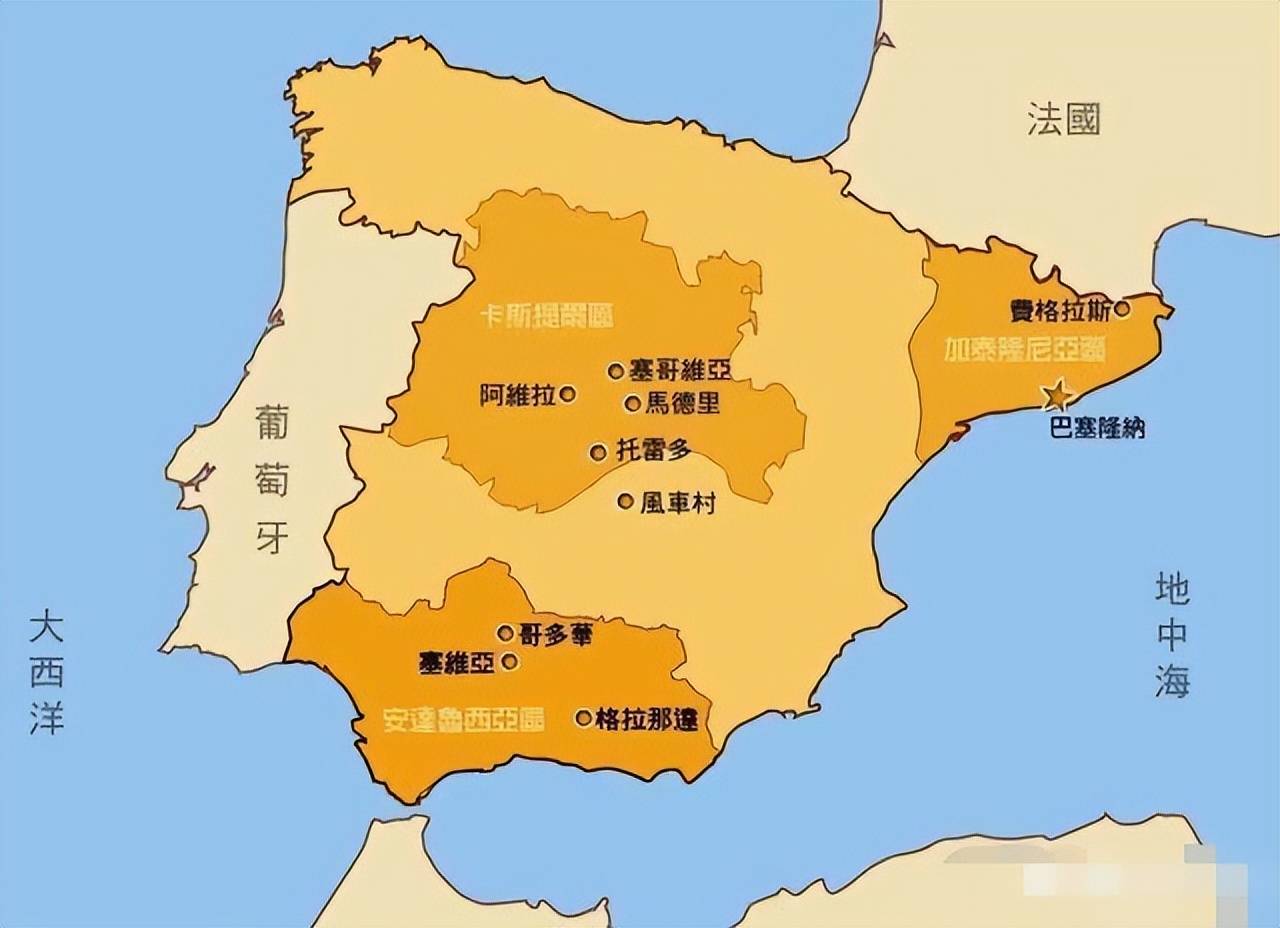
Core Viewpoint - Spain has emerged as the second-largest high-speed rail power in the world, following China, showcasing a remarkable journey from obscurity to prominence in high-speed rail development [1][3][17] Development History - Spain's high-speed rail history is characterized by a significant transformation, moving from being a "nobody" to a key player in the global high-speed rail sector [3] - The decision to build a high-speed rail line in the late 1980s marked the beginning of Spain's high-speed rail journey, with a focus on connecting economically lagging regions [6][8] - Spain initially relied on foreign technology, particularly from France and Germany, to kickstart its high-speed rail development [6][8] Technological Advancements - Spain's commitment to high standards in speed and quality led to the development of its own high-speed trains, such as the Talgo350, which can reach speeds of 350 km/h [8][14] - The first high-speed rail line, connecting Madrid and Seville, was inaugurated in 1992, significantly enhancing Spain's international profile in high-speed rail [9][10] Network Expansion - The construction of high-speed rail lines in Spain has been strategically centered around major cities like Madrid, Barcelona, Valencia, and Seville, creating a comprehensive national network [10][12] - Despite a slowdown in construction in recent years, Spain is planning new high-speed rail projects, indicating ongoing potential for growth in this sector [12] Global Standing - In terms of total high-speed rail mileage, Spain ranks second globally, with a per capita high-speed rail mileage that surpasses that of China [14] - Spain's high-speed rail system is noted for its quality, with features that enhance passenger comfort, such as spacious seating and well-designed facilities [14][15] Conclusion - Spain's high-speed rail development, though starting later than some countries, has successfully transitioned from technology importation to independent innovation, establishing itself as a formidable player in the global high-speed rail industry [17]

美国高铁列车终于上线,700公里行驶7小时
3 6 Ke· 2025-09-01 06:19
Core Points - The new generation high-speed train "NextGen Acela" has finally commenced operations after several years of delays, but its speed improvement is minimal, with travel times remaining largely unchanged [1][2][4] - The new Acela operates on the heavily trafficked Northeast Corridor, covering the distance from Boston to Washington D.C. in approximately seven hours, which is only a slight improvement over the previous model [2][15] - Despite the delays, U.S. officials express enthusiasm for the new train, highlighting its significance for the future of American high-speed rail [4][19] Summary by Sections New High-Speed Train Launch - The "NextGen Acela" has started operations on the Northeast Corridor, with two daily round trips between Boston and Washington D.C. [2] - The project was initially announced over nine years ago, with multiple delays due to manufacturing defects and testing issues [2][4] Historical Context of U.S. Rail System - The U.S. once had a leading railway system, but post-World War II investments shifted focus to highways and aviation, leading to a decline in passenger rail services [5][6] - Amtrak was established in 1971 to rescue the failing passenger rail system, but it has faced financial challenges and limitations in service efficiency [6] Technical Aspects of the New Acela - The new Acela is based on French TGV technology, designed and built by Alstom, indicating a lack of domestic high-speed rail technology in the U.S. [7][11] - The train's operational speed is limited to 260 km/h due to outdated track conditions, which is only a slight increase from the previous model [13][15] Infrastructure Challenges - The Northeast Corridor's aging infrastructure and shared tracks with commuter and freight trains hinder the potential for true high-speed rail operations [11][15] - The new Acela's design includes modifications to accommodate the existing track conditions, but it still cannot match the performance of European high-speed trains [13][15] Demand and Future Plans - The Northeast Corridor is densely populated, making it a prime candidate for high-speed rail, with significant passenger demand [17][19] - Amtrak plans to invest $2.45 billion in upgrading stations and increasing track capacity in the Northeast Corridor [19] Comparison with Other Regions - California's high-speed rail project has faced significant delays and cost overruns, with the initial budget ballooning from $33 billion to estimates between $89 billion and $128 billion [24] - The Brightline service in Florida, while operational, has limited speed and travel time, highlighting the challenges of high-speed rail in the U.S. [26]

大国总师一席谈|中国中车冯江华:为中国高铁铸造“奔腾之心”
Xin Hua She· 2025-06-17 12:48
Core Insights - The article highlights the significant contributions of Feng Jianghua, the chief scientist of CRRC, in the development of China's high-speed rail technology, showcasing the evolution from the "Zhonghua Star" to the "Fuxing" train series [1][2][3] Group 1: Historical Development - In 1989, Feng Jianghua joined CRRC Zhuzhou Institute, contributing to the development of China's first independently designed high-speed train, "Zhonghua Star," which achieved a record speed of 321.5 km/h [1] - The 2004 approval of the "Medium- and Long-Term Railway Network Plan" by the State Council marked a pivotal moment for high-speed rail development in China, necessitating high-quality trains [2] Group 2: Technological Advancements - Feng Jianghua's team overcame significant challenges in core technologies, leading to the development of the "Harmony" train equipped with domestic power technology, breaking foreign monopolies [2] - The "Fuxing" train, launched in 2017, set a new benchmark in global high-speed rail with a commercial operating speed of 350 km/h [2][3] Group 3: Future Innovations - The CR450 technology innovation project initiated in 2021 aims for higher speed, safety, and sustainability in rail transport, with Feng Jianghua's team focusing on advanced permanent magnet traction technology [3][4] - The upcoming CR450 train, set to be unveiled in December 2024, represents another milestone in China's high-speed rail technology, reinforcing its global leadership [4]