
高附加值转型

Search documents
黄金首饰消费量大降 品牌珠宝商加快高附加值转型
Zhong Guo Jing Ying Bao· 2025-11-10 12:09
Core Viewpoint - China's gold consumption is experiencing a decline, particularly in jewelry, while demand for gold bars and coins is increasing, indicating a shift in consumer preferences and market dynamics [1][2]. Group 1: Gold Consumption Trends - In the first three quarters of 2025, China's gold consumption reached 682.730 tons, a year-on-year decrease of 7.95% [1]. - Gold jewelry consumption fell to 270.036 tons, down 32.50% year-on-year, while gold bars and coins increased to 352.116 tons, up 24.55% [1]. - The rise in gold prices has significantly impacted gold jewelry consumption, leading to a strategic shift among jewelry brands towards high-value products [1][4]. Group 2: Market Dynamics and Consumer Preferences - Despite the overall decline in gold jewelry consumption, lightweight and high-value jewelry products are gaining market traction, with 10 grams or less gold products accounting for 45% of retail sales in the first half of 2025, up from 37% in 2023 [2]. - The market is witnessing a shift from traditional weight-based transactions to a focus on design, culture, and emotional value, particularly appealing to younger consumers [7]. Group 3: Industry Challenges and Strategic Responses - The implementation of new gold tax regulations is accelerating the transformation of the gold jewelry industry, creating pressure on smaller brands lacking design capabilities and brand influence [5][6]. - Major brands like Chow Tai Fook are adapting by enhancing their product offerings and focusing on high-value collections, such as the "Chuan Xi" series and the "Tian Yuan Di Fang" series, which incorporate cultural elements [5]. - Companies are increasingly leveraging innovative strategies, such as collaborations with cultural elements and IP partnerships, to enhance brand exposure and sales [6]. Group 4: Future Outlook - The younger generation is expected to play a crucial role in the gold jewelry market, driven by a growing appreciation for Chinese culture and the investment value of gold [7]. - The industry is moving towards a new development phase centered on design, culture, and emotional value, with brands like Lao Pu Gold exemplifying the "gold luxury" model [7].
到会人数创同期历史新高!第138届广交会首期展览结束
Sou Hu Cai Jing· 2025-10-20 07:56
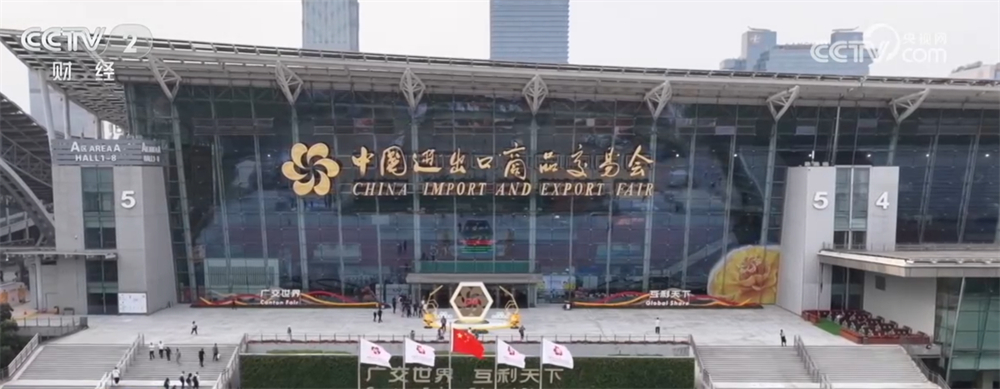
Core Insights - The 138th Canton Fair's first phase concluded on October 19, with over 157,000 overseas buyers attending, marking a 6.3% increase compared to the previous session and setting a historical high for the same period [1] Group 1: Exhibition Overview - The total exhibition area for this phase was 520,000 square meters, featuring over 25,000 booths and approximately 12,000 participating companies [3] - More than 5,500 high-quality and specialized enterprises, including national-level high-tech companies and "little giant" firms, participated, an increase of 400 from the last session, accounting for 55% of the total quality enterprises [3] Group 2: Product Trends - The exhibition showcased high-tech and high-value-added products such as precision machining tools, AI smart wearable devices, energy-efficient home appliances, and intelligent robots, reflecting a shift from traditional processing to original design and comprehensive solutions [5] - This trend indicates a transformation in Chinese manufacturing towards higher added value and innovation [5] Group 3: Competitive Advantages - The core competitiveness of Chinese enterprises is increasingly derived from excellent design, user experience, and technological upgrades, highlighting the deep integration of Chinese design and manufacturing as a new advantage in expanding overseas markets [7] - International buyers, such as Algerian purchaser Ilirian Kokshioni, noted that China's long-term focus on R&D and innovation has enabled it to achieve a leading position in the global market, showcasing cutting-edge technology and highly competitive products at the fair [9]

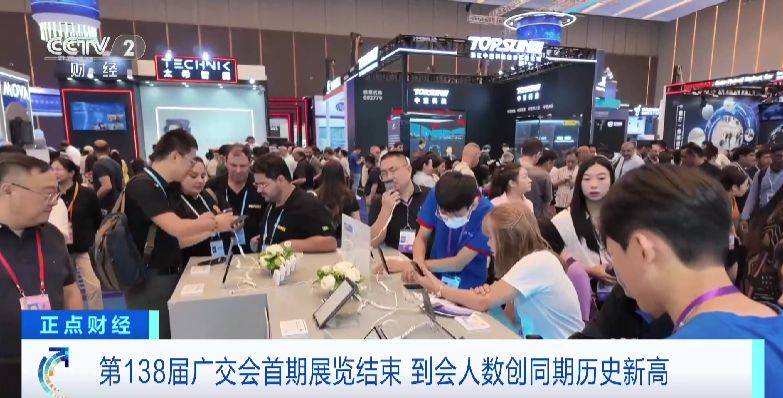
透过数据看“热度” 第138届广交会首期展览到会人数创同期历史新高
Yang Shi Wang· 2025-10-20 02:12
Core Insights - The 138th Canton Fair's first phase concluded on October 19, with over 157,000 overseas buyers attending, marking a 6.3% increase compared to the previous session and setting a new historical high for the same period [1] Group 1: Exhibition Scale and Participation - The total exhibition area for this phase of the Canton Fair is 520,000 square meters, featuring over 25,000 booths and approximately 12,000 participating companies [4] - More than 5,500 high-quality and distinctive enterprises, including national-level high-tech companies and "little giant" firms, participated, an increase of 400 from the last session, representing 55% of the total high-quality enterprises [4] Group 2: Product Trends and Innovations - The exhibition showcased a range of high-tech, high-value-added products such as precision machining tools, AI smart wearable devices, energy-efficient home appliances, and intelligent robots, attracting significant interest from buyers [4] - There is a noticeable trend of Chinese companies transitioning from mere processing to original design and comprehensive solutions, reflecting a shift towards high value-added manufacturing [4] Group 3: Competitive Advantages - The core competitiveness of Chinese companies is increasingly derived from excellent design, user experience, and technological upgrades, indicating a deep integration of Chinese design and manufacturing as a new advantage in expanding overseas markets [7] - International buyers, such as Algerian purchaser Ilirian Kokshioni, emphasized that China's long-term focus on R&D and innovation has enabled it to achieve a leading position in the global market, showcasing cutting-edge technology and highly competitive products at the fair [9]
安徽合力(600761):收入稳步增长 盈利能力有望上行
Xin Lang Cai Jing· 2025-05-06 12:25
Core Viewpoint - The company reported a slight revenue growth in Q1 2025, but net profit declined significantly, indicating challenges in profitability despite a positive sales environment [1][2]. Financial Performance - In Q1 2025, the company achieved revenue of 4.274 billion yuan, a year-on-year increase of 2.05% - The net profit attributable to shareholders was 322 million yuan, a year-on-year decrease of 20.05% - The non-recurring net profit was 279 million yuan, down 14.42% year-on-year [1]. Market Dynamics - The company’s revenue growth is attributed to better export performance compared to domestic sales, with total forklift sales in China increasing by 10.16% in Q1 2025 [2]. - Domestic sales reached 229,044 units, up 8.82%, while export sales were 119,139 units, reflecting a growth of 12.82% [2]. Cost and Profitability Analysis - The gross margin for Q1 2025 was 22.31%, slightly up by 0.06 percentage points year-on-year due to accounting adjustments [3]. - The net profit margin was 8.49%, down 1.81 percentage points year-on-year, primarily due to increased expenses in sales, management, and R&D [3]. - Investment income decreased by 49 million yuan year-on-year, mainly due to reduced bank wealth management returns [3]. Innovation and Product Development - The company has strong R&D capabilities, launching significant products such as the world's largest lithium battery forklift and a series of new warehouse vehicles [4]. - The second-generation hybrid stacker has improved fuel efficiency by 69% and operational efficiency by 25% [4]. - The company aims to transition towards high value-added products, which is expected to positively impact revenue performance [4]. Future Outlook - The domestic manufacturing demand is expected to stabilize, supported by trends in automation and growth in smart logistics and aftermarket services [4]. - Despite short-term uncertainties in international trade, the company’s advantages in new energy products and ongoing overseas expansion are anticipated to drive steady growth in international revenue [4]. - Projected net profits for 2025 and 2026 are 1.409 billion yuan and 1.627 billion yuan, respectively, with corresponding price-to-earnings ratios of 10x and 9x [4].
