鲜活

Search documents
瑞幸新一轮9.9元“上价值”:锚定鲜活,重仓健康
第一财经· 2026-03-19 08:13
Core Viewpoint - Luckin Coffee's recent promotional strategy emphasizes fresh and healthy products at competitive prices, showcasing its ability to combine pricing and value in a challenging market environment [1][4]. Group 1: Promotional Strategy - The "Fresh Origin Season" promotion launched on March 16, 2026, features a diverse range of seasonal drinks, moving beyond coffee to include innovative health-focused beverages [5][6]. - The new promotion includes products like "Fresh Brewed Longjing" tea and "Bitter Melon Light Body Fruit and Vegetable Tea," highlighting the integration of health and freshness into the product lineup [5][9]. - The shift in product structure reflects Luckin's commitment to health and innovation, as evidenced by its recognition as a "Health Consumption Leading Brand" and the implementation of health standards across its supply chain [5][9]. Group 2: Financial Performance - In 2025, Luckin Coffee reported total net revenue of 49.288 billion yuan, a 43% year-on-year increase, with 4.1 billion cups of drinks sold and over 450 million cumulative customers [9]. - The introduction of over 140 new products in 2025, with non-coffee beverages accounting for more than 20% of total sales, indicates a significant diversification in its product offerings [9]. Group 3: Supply Chain and Cost Efficiency - Luckin has developed a robust supply chain strategy, establishing a "Fresh Origin Matrix" that includes sourcing from key coffee-producing regions and exclusive local suppliers [9][13]. - The company has built four roasting bases, increasing its annual coffee roasting capacity to 155,000 tons, which enhances its control over the supply chain and reduces costs [15]. - With over 30,000 stores nationwide, Luckin benefits from economies of scale, allowing it to maintain competitive pricing while ensuring quality and freshness in its products [12][15]. Group 4: Digitalization and Operational Efficiency - Luckin's commitment to digital management enhances operational efficiency, enabling real-time data analysis across its supply chain, from order placement to inventory management [18]. - The company's agile production mechanism supports the rapid iteration of over 100 new products annually, minimizing inventory waste and improving responsiveness to market changes [18]. - The recent promotion is not merely a price war but a strategic move to deliver greater value to consumers through a well-structured product matrix [18].



集体押注“现炒”,中式快餐烽烟四起
3 6 Ke· 2026-01-05 06:10
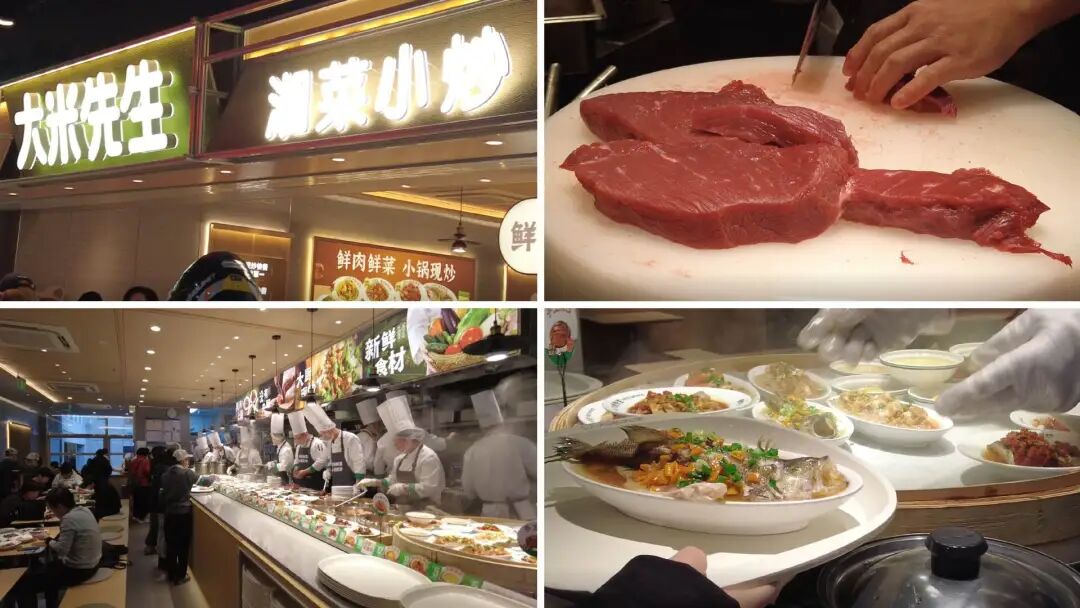
Core Viewpoint - The opening of the first store of "Mr. Rice" marks a significant entry into the competitive Beijing fast food market, emphasizing fresh and stir-fried dishes, which aligns with current consumer preferences for quality and freshness [1][3][5]. Group 1: Market Dynamics - The fast food market in Beijing is experiencing intense competition, with brands like "Mr. Rice" and "Country Base" vying for dominance, aiming to exceed 2000 stores nationwide by 2025 [3][5]. - The market is witnessing a shift from established brands to new entrants, with some local brands like "Red Kung Fu" shutting down all their stores due to failure [5][7]. - Data indicates a 58% year-on-year increase in the number of fast food stores being closed, with around 60% of these having operated for less than a year, highlighting the brutal market conditions [7]. Group 2: Trends in Fast Food - 2025 is identified as the year of the "stir-fry boom," with fresh and lively food becoming the core keywords in the restaurant industry, pushing brands to adopt fresh cooking methods as a standard [8][15]. - The demand for fresh stir-fried dishes is driving brands to upgrade their offerings, with significant increases in search growth for terms like "fresh" (135.3%) and "stir-fry" (71%) on popular platforms [15]. Group 3: Brand Strategies - "Country Base" has invested over 20 million yuan in developing a new model that emphasizes better, faster, and cheaper offerings, while also upgrading existing stores [9][17]. - Brands are focusing on enhancing customer experience through fresh cooking and transparent kitchen practices, which are becoming essential for consumer trust [15][19]. - The need for brands to balance operational costs with customer experience is critical, as seen in the failures of brands that raised prices post-upgrade, leading to a loss of customer base [18][20]. Group 4: Operational Challenges - The shift to fresh cooking methods requires significant investment in skilled labor and supply chain management, with "Country Base" reporting an increase in costs by approximately 46 million yuan in the first half of 2025 [17]. - Brands must navigate the complexities of maintaining quality and efficiency in food preparation while managing higher operational costs associated with fresh ingredients and skilled labor [22][23]. Group 5: Future Outlook - The fast food industry is expected to continue evolving towards fresh and stir-fried offerings, with brands needing to innovate and differentiate to survive in a competitive landscape [23][24]. - Successful brands will likely focus on supply chain integration, operational efficiency, and understanding consumer needs to thrive in the changing market [23].
太二卖不动酸菜鱼了
Xin Lang Cai Jing· 2026-01-03 04:51
Core Insights - The company is transitioning from its signature dish, sour fish, to a broader focus on Sichuan cuisine due to declining sales and market pressures [1] - The overall Sichuan cuisine market is thriving, with over 150,000 restaurants nationwide, representing 11.4% of the total Chinese dining sector [1] Company Performance - In the first half of the year, the company reported revenue of 2.753 billion yuan, a year-on-year decline of 10.14% [1] - The net profit attributable to shareholders was 60.69 million yuan, down 16.05% year-on-year [1] - Revenue from the sour fish segment was 1.948 billion yuan, reflecting a 13.3% decrease compared to the previous year [1] Industry Trends - The demand for fresh ingredients and freshly cooked meals is increasing among consumers, prompting many restaurant brands to adopt similar marketing strategies [1] - The company is emphasizing the "fresh" concept in its new branding to align with consumer preferences [1]
太二,抛弃酸菜鱼了?
3 6 Ke· 2025-12-30 04:11
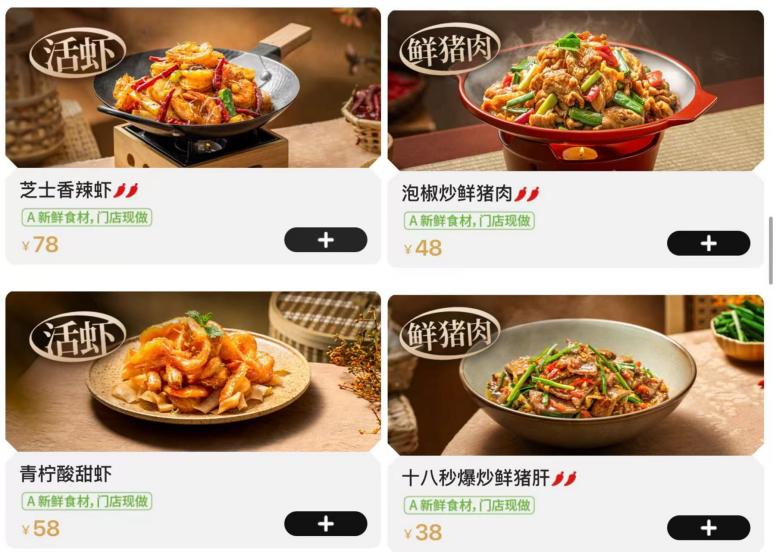
Group 1 - The core concept of the article revolves around the continuous brand transformation of Tai Er, which is shifting from its traditional focus on sauerkraut fish to a broader offering of Sichuan cuisine under the new branding "Xin Tai Er · Fresh Ingredients Sichuan Cuisine" [1][2][6] - The new Tai Er stores have introduced over 20 new dishes, emphasizing fresh ingredients such as live fish, shrimp, beef, chicken, and pork, while still retaining the sauerkraut fish on the menu, albeit with reduced portion sizes and prices [5][8] - The brand upgrade is part of a strategic shift to adapt to changing consumer preferences and market dynamics, with the goal of enhancing customer engagement and increasing overall sales [6][9] Group 2 - The company has faced declining revenues, with a reported 10.14% year-on-year decrease in revenue to 2.753 billion yuan and a 13.3% decline in income from Tai Er to 1.948 billion yuan in the first half of the year [8][9] - The Sichuan cuisine market is thriving, with over 150,000 Sichuan restaurants in China, representing 11.4% of the total Chinese dining market, prompting Tai Er to return to its roots in Sichuan cuisine [9][10] - The transition to a fresh ingredient model is expected to increase supply chain costs by 15%, posing a challenge for the company as it seeks to maintain competitive pricing while ensuring quality [14][19] Group 3 - The company is currently testing the new store format, with plans to expand to 200 renovated locations by the end of the year, indicating a significant commitment to this brand evolution [8][9] - Challenges include the need for skilled chefs to support the new cooking style, as the shift from a central kitchen model to fresh cooking requires extensive training and consistency across locations [19][20] - The brand's historical association with sauerkraut fish may complicate efforts to reshape consumer perceptions and establish a new identity in the Sichuan cuisine segment, which could take years to achieve [21][22]