
AI+中医药

Search documents
智能面诊、把脉、开方!AI为中医药插上了“智慧”的翅膀
Yang Zi Wan Bao Wang· 2026-02-11 08:53
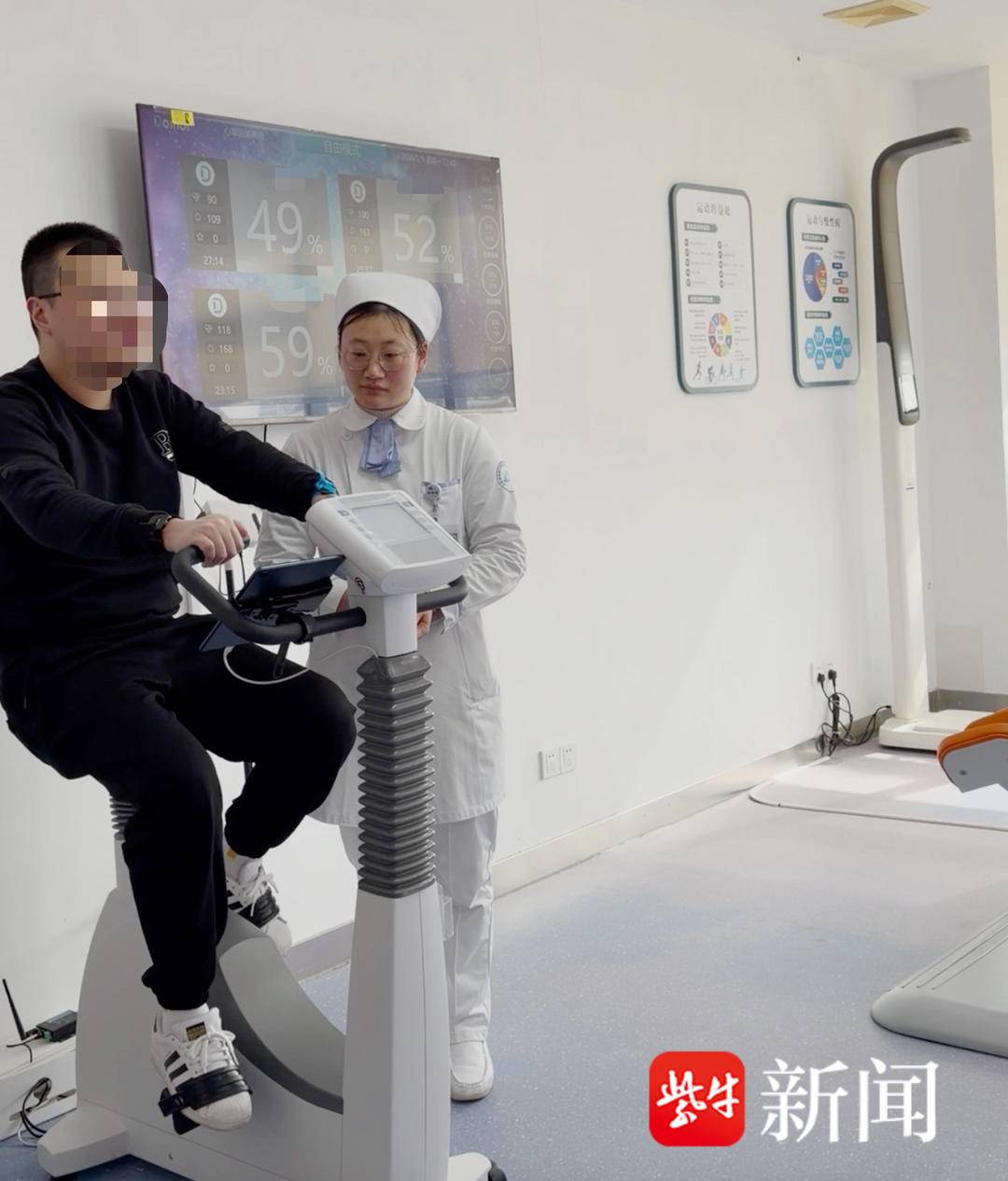
Core Insights - The article highlights the integration of AI and traditional Chinese medicine (TCM) at Jiangsu Haibin Rehabilitation Hospital, showcasing successful health transformations of patients through a six-dimensional health management system [1][3][4]. Group 1: Patient Transformations - Patient Mr. Lu, aged 49, experienced significant health improvements, losing 6 kg of body fat and reducing his waist circumference by 5 cm, while discontinuing hypertension medication after three months of treatment [1]. - Another patient, Mr. Yuan, aged 42, increased his skeletal muscle mass by 2.9 kg and reduced his body fat percentage from 27.1% to 21.4% through a personalized health management plan based on AI diagnostics [3]. Group 2: Technological Integration - The hospital's core technology, the AI-based TCM diagnostic device, has accurately assessed over 2,600 patients, achieving a diagnostic accuracy rate of over 90% when compared to experienced TCM practitioners [4]. - The hospital has upgraded its traditional herbal medicine preparation methods with fully automated machines, improving efficiency by 50% compared to manual processes, making TCM more accessible for families [4]. Group 3: Holistic Health Management - The six-dimensional health management system encompasses diet, exercise, sleep, psychology, daily routines, and environment, tailored for all age groups, positioning TCM as a vital component of modern health care [7]. - The hospital aims to integrate TCM wisdom into daily family life, promoting a healthier lifestyle through technology and personalized services [7]. Group 4: Community Engagement and Education - The hospital has created an engaging environment for health education, utilizing AI and historical medical knowledge to provide personalized health advice to various age groups [6]. - The integration of traditional music therapy with TCM principles in the hospital's garden enhances the overall patient experience, making health management enjoyable and culturally enriching [6].

寿仙谷:公司高度重视人工智能技术与中医药全产业链的融合应用
Zheng Quan Ri Bao Zhi Sheng· 2026-01-28 10:41
Core Viewpoint - The company emphasizes the integration of artificial intelligence (AI) technology with the entire traditional Chinese medicine (TCM) industry chain, aiming for intelligent upgrades and high-quality development through AI applications in various core processes [1] Group 1: AI Integration in Operations - The company has developed the world's largest Ganoderma lucidum germplasm information database, utilizing digital breeding simulations and automated phenotype data collection for precise breeding, transitioning from experimental to data-driven biological breeding [1] - AI predictive models and image recognition technologies are employed to create smart farms, enabling precise control of the growth environment for medicinal materials and intelligent quality inspection [1] - The company has independently developed a customer service Q&A robot based on customized large models, establishing an AI dynamic knowledge engine to optimize operational processes and reduce labor costs [1] Group 2: Market and Consumer Insights - AI technology is used to analyze multi-channel data, constructing user profiles based on age, physical condition, and consumption preferences, which aids in precise advertising and personalized product recommendations [1] - The company plans to continue deepening the integration of "AI + TCM" innovation, further promoting intelligent upgrades across the entire industry chain [1]

医学科研出圈记——感受河南省健康产业发展大会上的创新力量
He Nan Ri Bao· 2025-12-25 23:43
Group 1: Medical Innovations - The Henan Health Industry Development Conference showcased several medical research achievements, including an ex vivo heart transport system and a precision massage robot, indicating a shift from theoretical concepts to practical applications in the medical field [1] - The Central Plains Nanozyme Laboratory is developing rapid test strips for various infectious diseases, with expected annual output exceeding 100 million yuan after market launch, and plans to establish a straw degradation base with an annual capacity of 500,000 tons [2] - The Fuxi AI model, developed by a team led by an academician, has upgraded to version 2.0, featuring the largest dataset globally for ophthalmology AI, and is being piloted in 11 hospitals across four provinces [3] Group 2: Organ Transplant and Precision Medicine - A breakthrough ex vivo heart transport system has been developed, allowing for the preservation of a heart for over 24 hours, which is crucial for organ transplantation [4] - A "chip factory" is being established to produce micro copies of human organs using AI and organ-on-a-chip technology, with a projected annual capacity of 10,000 chips upon completion in 2026 [5] Group 3: AI and Traditional Medicine Integration - The establishment of a national AI application pilot base focused on integrating AI with traditional Chinese medicine aims to create a public platform for standardized development in the industry, offering various core services [6] - The pilot base has signed agreements with 13 ecological partners to promote the application of AI in auxiliary diagnosis and health management, enhancing the efficiency of grassroots medical services [7]
康恩贝再次换帅 管理层震荡调整
Nan Fang Du Shi Bao· 2025-12-18 23:16
Core Viewpoint - The resignation of Jiang Yi, the chairman of Kang En Bei, has raised market concerns, marking a significant leadership change within the company, which has been undergoing continuous management adjustments since Zhejiang International Trade Group became the actual controller in 2020 [2][3]. Group 1: Leadership Changes - Jiang Yi's resignation comes after a brief tenure of approximately 1 year and 4 months, originally set to end in August 2027, and is officially attributed to "work adjustments" [3][4]. - Jiang Yi's departure coincides with reports of disciplinary reviews of other executives within Zhejiang International Trade Group, suggesting potential internal issues [3][4]. - The company is currently in the process of selecting a new chairman, with an emphasis on finding a successor with a strong medical background [2][10]. Group 2: Business Strategy and Performance - Jiang Yi's leadership was characterized by a strategic shift towards traditional Chinese medicine and digital transformation, aiming to counteract pressures from the generic drug market [7][9]. - Despite a focus on cost reduction, Kang En Bei's financial performance has shown a decline, with a 2.61% drop in revenue to 3.358 billion yuan and a 7.48% decrease in net profit to 353 million yuan in the first half of 2025 [8][9]. - The company's revenue for the third quarter of 2025 showed a slight increase of 1.27% to 4.976 billion yuan, with net profit rising by 12.65% to 584 million yuan, largely due to cost control measures [8][9]. Group 3: Future Outlook - The future direction of Kang En Bei remains uncertain following Jiang Yi's resignation, particularly regarding the continuation or adjustment of the current "Chinese medicine + digitalization" strategy [10][11]. - The new board candidates, Xu Jie and Jin Junli, are expected to bring relevant expertise and experience to the company, with a focus on enhancing decision-making quality and strategic execution [11]. - Investors are keenly observing how Kang En Bei will balance state regulation and market adaptability during this transitional phase, especially in revitalizing its high-margin product lines and realizing the benefits of digital transformation investments [11].


同仁堂股份:构建营销新生态 激活产业新动能
Bei Jing Shang Bao· 2025-11-26 09:46
Core Viewpoint - Beijing Tongrentang Co., Ltd. is implementing a core strategy of "inheriting essence and innovating with integrity," focusing on cultural empowerment, digital intelligence, professional collaboration, and quality foundation in its marketing approach [1][2]. Group 1: Cultural Empowerment - The company is breaking traditional cultural dissemination models by creating a "Traditional Chinese Medicine Health Culture IP" centered around the "Qingxin Jiannao Huoluo Exercise," which aims to establish a closed-loop operation of "cultural awareness - user education - product scenario binding" [4]. - This initiative targets the elderly population, providing practical "preventive healthcare" solutions through a platform that covers 14 core cities and nearly 2 million elderly families [4]. - Collaborations with organizations like the China Marriage and Family Research Association and the China Elderly Sports Association enhance community engagement and service offerings [4]. Group 2: Digital Intelligence - The company is accelerating its digital transformation to enhance operational efficiency and user service, establishing a "data-driven, intelligent collaboration" marketing model [6]. - A digital marketing decision-making platform has been developed to collect data across various dimensions, enabling real-time market trend analysis and dynamic optimization of marketing strategies [6]. - The launch of an AI-driven health service platform in collaboration with Xiaomi aims to lower barriers for users seeking TCM services and effectively reach younger consumers [7]. Group 3: Professional Collaboration - The company is focusing on grassroots medical services as a key area for market expansion, creating a collaborative ecosystem among enterprises, medical institutions, and grassroots practitioners [8]. - The "Strong Foundation Cultivation of Chinese and Western Medicine" project aims to ensure high-quality training for practitioners through a structured selection and training process [8][9]. Group 4: Quality Foundation - Quality is emphasized as the lifeline of the brand, with a comprehensive supply chain quality control system established from sourcing to production and end-user traceability [10]. - The company adheres to strict standards in sourcing, particularly with its Jilin ginseng, which has received multiple organic certifications, ensuring high-quality products [10]. - A traceability system allows consumers to access detailed information about the entire process of herbal medicine, reinforcing trust in the brand's quality [10].

中新健康丨AI+中医药如何发展?多位院士发声
Zhong Guo Xin Wen Wang· 2025-04-27 14:00
Group 1 - The integration of AI and traditional Chinese medicine (TCM) is seen as an inevitable trend, with experts predicting that AI will drive industrial and social development, including in the TCM sector [2][3] - AI can enhance the accuracy and efficiency of TCM diagnosis, improve product quality and production efficiency, and facilitate the decentralization of medical resources [2][3] - Experts emphasize the need for TCM practitioners to adapt to the integration of AI technology and TCM, urging a proactive approach to this transformation [2][3] Group 2 - Challenges in integrating AI with TCM include the need for standardized data collection methods and the development of a scientific understanding of TCM diagnostic patterns [3] - There are significant barriers to overcome, such as data discrepancies, the establishment of evaluation systems, and the cultivation of interdisciplinary talent who understand both TCM and computational sciences [3] - Future integration of AI with medical service data may face regulatory and ethical hurdles that require collaborative efforts to establish a comprehensive support system [3][4]