
AI+自动化

Search documents
国产智慧实验室公司完成Pre-A轮融资
仪器信息网· 2026-01-16 03:56
Core Viewpoint - Qingfeng Biotech has completed a Pre-A round financing of several tens of millions, led by Baiyun Fund, to accelerate the development of AI-driven laboratory automation and expand production capacity [1] Group 1: Company Overview - Qingfeng Biotech, established in 2018, focuses on the R&D, production, and sales of high-end life science automation equipment and related modules, possessing fully independent core technology [2] - The company aims to break the long-standing foreign monopoly in the high-end laboratory automation equipment market, where imported brands hold over 95% market share [2] Group 2: Technological Advancements - The core of Qingfeng's large-scale liquid handling workstation is a flexible 8-channel liquid handling module with non-equidistant dual liquid level detection, crucial for expanding application scenarios [3] - In 2025, Qingfeng successfully won a bid for a large liquid handling workstation project valued at nearly 2 million, marking a significant step in domestic high-end laboratory automation equipment replacement [3] Group 3: Strategic Initiatives - The investment from Baiyun Fund will support Qingfeng in deepening technology transformation and industrial implementation [3] - Qingfeng is leading the establishment of the "Life Science Automation Innovation Center," which has been included in the list of innovation centers in Guangzhou, focusing on key technology R&D and promoting collaborative innovation [4] Group 4: AI and Automation Integration - The integration of AI and automation is seen as a significant advancement, with Qingfeng aiming to develop "self-driving labs" that enhance productivity [5] - The company's self-developed BioFlow AI translates scientists' natural language into executable experimental requirements, while Supervisor AI focuses on data governance and optimization [5] Group 5: Investment Background - Baiyun Fund, established in August 2017 with a registered capital of 200 million, is a private equity investment institution managing over 8.048 billion in assets and has invested in 62 projects [6]


海尔生物:产品已应用于全球150多个国家和地区
Zheng Quan Ri Bao Wang· 2026-01-13 13:55
Core Viewpoint - Haier Biomedical focuses on providing AI-driven automated solutions for life sciences users, including pharmaceutical companies, research institutions, hospitals, and public health organizations, with products applied in over 150 countries and regions [1] Group 1 - The company targets pharmaceutical and life sciences sectors, as well as healthcare users such as hospitals and disease control centers [1] - Haier Biomedical integrates "AI + automation" into its products and solutions, enhancing their capabilities [1] - The solutions cover various fields, including low-temperature storage, laboratory applications, hospital medication, and blood technology [1]

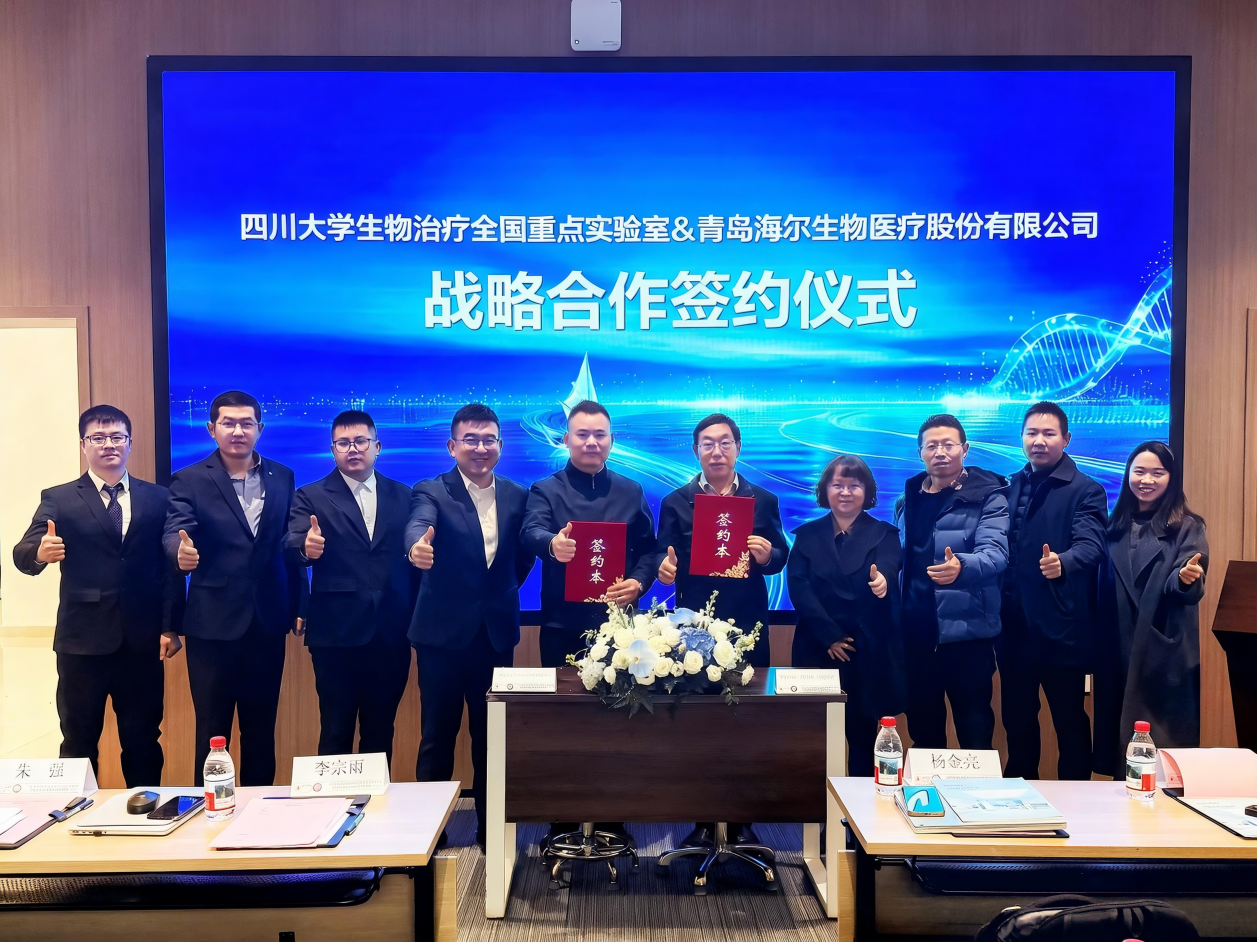
海尔生物携手川大全国重点实验室,共筑“科工共创”新生态
Jin Rong Jie· 2025-12-28 02:13
Core Insights - Haier Biomedical has signed a strategic cooperation agreement with Sichuan University National Key Laboratory of Biotherapy to focus on the development of the biomedical health industry, emphasizing technological innovation, product development, and market expansion [1][3]. Group 1: Strategic Collaboration - The collaboration represents a deep integration of national-level scientific research capabilities with leading industry enterprises, focusing on major diseases such as tumors and infectious diseases [3]. - The National Key Laboratory is recognized as a key innovation platform, having successfully developed the world's first mRNA vaccine for HBV-related liver cancer, which received FDA clinical trial approval in 2025 [3]. Group 2: Technological Innovation - Haier Biomedical aims to leverage AI and automation to enhance research scenarios and create a collaborative ecosystem between science and engineering [4]. - The company is not merely a supplier of equipment but acts as an "innovation partner," transforming original laboratory innovations into stable, reliable, and replicable solutions [4]. Group 3: Financial Performance - Continuous innovation has led to stable growth, with new industry revenues from smart medication and blood technology accounting for 48% of total revenue in the first three quarters of 2025 [4]. - The overseas market revenue has increased by 20.18% year-on-year, indicating significant global expansion and resilience [4]. Group 4: Future Prospects - With ongoing investments in R&D and the enhancement of collaborative ecosystems, Haier Biomedical is expected to achieve breakthroughs in high-end biomedical equipment and smart laboratory solutions [5]. - The market is anticipated to benefit from a platform-driven ecosystem that enhances innovation conversion efficiency, solidifying Haier Biomedical's investment value [5].
AI专题:2025中国企业级AI实践调研分析年度报告
Sou Hu Cai Jing· 2025-11-28 12:50
Core Insights - The report highlights the transition of AI practices in Chinese enterprises from "concept-driven" to "value-driven," emphasizing the importance of strategic integration and systematic implementation of AI technologies across various industries [10][11][14]. Group 1: Strategic Insights - Over 80% of enterprises have integrated AI into their strategic planning, indicating a shift towards recognizing AI as a core component of business growth [10][14]. - The primary goal for 84.49% of enterprises is to "reduce costs and increase efficiency," followed by objectives related to revenue growth and customer experience enhancement [29][31]. - Companies face significant challenges in scaling AI from pilot projects to full implementation, with over 70% still in experimental or tactical investment phases [32][34]. Group 2: Technological Insights - Generative AI, AI agents, and AI+ automation are identified as the main technological directions, with a hybrid cloud architecture being the preferred infrastructure choice for 52.58% of enterprises [10][14]. - The focus is shifting from merely generating content to executing tasks and optimizing processes, with generative AI leading in application rates at 57.28% [43][44]. - Companies are increasingly prioritizing open, compatible, and secure technology platforms, reflecting a mature approach to technology selection [48][49]. Group 3: Organizational and Talent Insights - The most significant talent gap identified is in the ability to integrate AI applications with business needs, with 59.15% of enterprises highlighting this issue [10][14]. - A strategic shift towards "internal training and transformation" is being adopted by 68.25% of companies to cultivate a workforce capable of leveraging AI effectively [10][14]. - The establishment of an "AI learning organization" is crucial for fostering continuous growth and adaptation in the workforce [19][22]. Group 4: Governance Insights - Over 60% of enterprises are still in the early stages of governance development, focusing on technical robustness, compliance, and business continuity [10][14]. - A unified governance framework is essential for ensuring that AI systems operate in a controlled and trustworthy manner, with CIOs encouraged to elevate AI governance to a strategic level [20][21].
从6G高地到智造标杆,松江以全链条实力交出新质生产力“答卷”
Guo Ji Jin Rong Bao· 2025-11-19 05:46
Core Viewpoint - Shanghai's Songjiang District is focusing on the development of advanced manufacturing, new productivity, modern urban construction, and rural revitalization, leveraging the G60 Science and Technology Innovation Corridor to enhance economic growth and innovation in the region [1][6][22]. Group 1: 6G Future Industry Development - The Shanghai 6G Communication Valley is taking shape with a 123,000 square meter high-quality space ready for innovation in the future communication industry [2][6]. - The park aims to integrate "6G + satellite + AI" technologies, focusing on key areas such as integrated space-ground technology and establishing a full-chain innovation platform for 6G [7][12]. - A significant number of leading enterprises, including global leaders in mobile communication modules and satellite internet, have already signed agreements to settle in the park, indicating a strong industrial cluster effect [12][17]. Group 2: Investment and Support Mechanisms - The park has established a 100 million yuan "6G Communication Valley Eagle Cultivation Plan" and a 300 million yuan 6G industry incubation fund, aiming to leverage at least 2 billion yuan in guiding funds [17][21]. - A comprehensive investment system covering seed, angel, venture capital, and mergers and acquisitions is being developed to support the entire lifecycle of innovation [17][21]. - The park is also integrating high-end think tanks and global networks to create a robust collaborative innovation system, providing full-cycle support for hard-tech enterprises [20]. Group 3: Technological Advancements in 3D Printing - LianTai Technology, a leading player in the industrial-grade 3D printing sector, is driving digital transformation in the industry with its Unionfab Cloud platform, which connects 58 enterprises and 1,630 devices, enhancing overall efficiency by 40% [27][33]. - The company plans to invest 20% more in R&D annually over the next 3 to 5 years, focusing on integrating AI and automation into 3D printing to tackle common industry challenges [33]. - LianTai aims to expand its market share in the global market by 15% to 20% by providing rapid customization services for various sectors, including new energy vehicles [33].

股价暴涨近50%!UiPath带火的“智能体自动化”,艺赛旗已摸到新玩法
Cai Fu Zai Xian· 2025-10-31 09:08
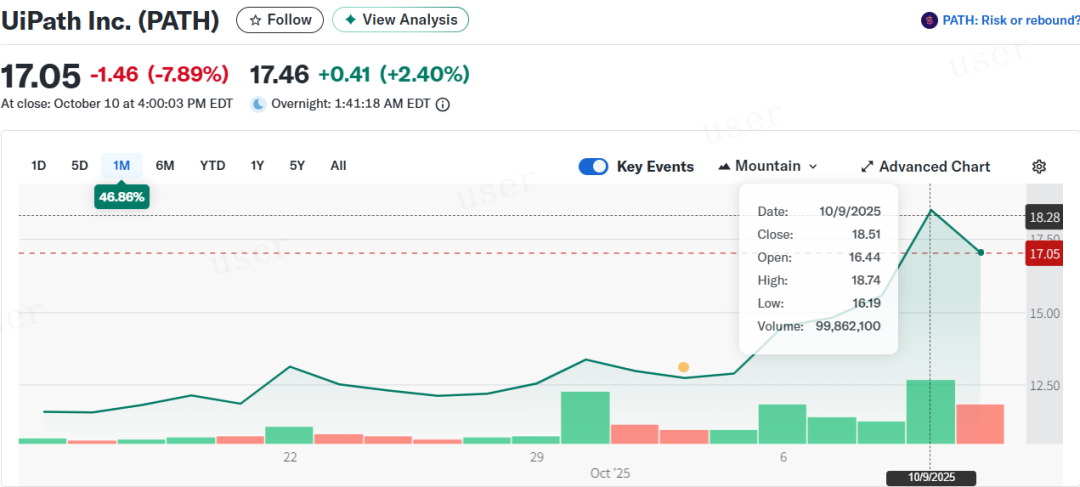
Core Insights - UiPath's stock price surged nearly 50% in two weeks, reaching a four-month high, driven by its deep collaboration with OpenAI and NVIDIA, highlighting the renewed focus on the RPA+AI sector [1][3] - The integration of RPA and AI is not about replacement but rather about creating a synergistic relationship where AI enhances RPA's execution capabilities, and RPA provides a framework for AI to operate effectively [3][4] RPA and AI Integration - The misconception that large models will replace RPA is addressed, emphasizing that RPA's execution power is essential for the practical application of AI's cognitive abilities [3][4] - UiPath's partnership with OpenAI aims to establish an enterprise-level intelligent agent system, showcasing the evolution of "AI + automation" into a collaborative ecosystem involving agents, robots, and human input [3][4] Market Opportunities in China - The RPA+AI market in China is experiencing rapid growth, with IDC projecting a market size of 3.15 billion yuan in 2024, reflecting a year-on-year increase of 27.4%, significantly outpacing the global average [4] - Chinese companies are positioned to leverage policy advantages, technological innovation, and local market strengths to capitalize on the RPA+AI integration trend [4][6] Local Innovations - Companies like Yisaiqi are lowering the barriers to AI agent usage by providing "out-of-the-box" components for complex model integration and process orchestration, making it accessible for non-technical business personnel [6][9] - Yisaiqi's platform allows businesses to easily assemble intelligent agents using pre-integrated components, enhancing operational efficiency without requiring extensive technical knowledge [9][10] New Automation Tools - The introduction of Yisaiqi's Magical Automator shifts the design logic from "how to do" to "what to do," enabling business users to articulate their needs while AI generates the necessary workflows [10][12] - This approach significantly reduces the complexity of creating automated processes, allowing users to focus on business requirements rather than technical details [12][14] Future Outlook - The collaboration between agents, robots, and people is expected to maximize digital productivity, with potential applications in smart manufacturing, urban management, and advanced research fields [14] - The integration of AI and automation is seen as a transformative force, making intelligent solutions accessible across various industries and driving high-quality digital economic development [14]
IPO雷达|105亿估值“独角兽”冲刺港股!镁伽科技收入高增长,难掩盈利困境
Jin Rong Jie· 2025-07-11 13:45
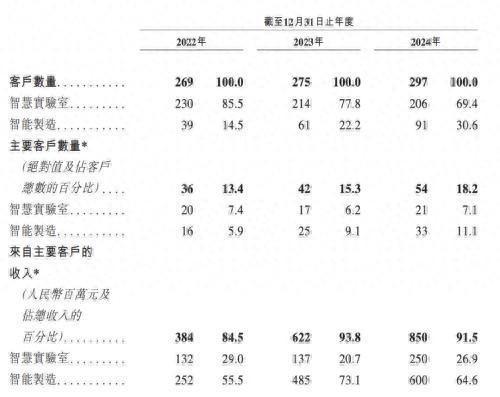
Core Viewpoint - Meggitech Technology, a robotics company specializing in smart laboratories and intelligent manufacturing equipment, is preparing for an IPO in Hong Kong, having raised a total of 2.7 billion RMB in funding since its establishment in 2016. The company has a current valuation of 10.5 billion RMB but has faced significant financial losses and low profit margins despite high revenue growth [1][12][24]. Group 1: Business Overview - Meggitech positions itself as a "self-intelligent agent supplier," focusing on automating tasks in laboratories and advanced manufacturing that traditionally require significant human labor [2]. - The global market for autonomous intelligent robots is projected to grow from approximately 31.8 billion RMB in 2020 to about 114.3 billion RMB by 2024, with a compound annual growth rate (CAGR) of 37.7% [2]. - The company has expanded its business from the pharmaceutical sector to include various industries such as consumer integrated circuits, food and beverage, new energy, chemicals, and agriculture [4]. Group 2: Financial Performance - Meggitech's revenue has shown strong growth, increasing from 455 million RMB in 2022 to 663 million RMB in 2023, and projected to reach 930 million RMB in 2024, representing a nearly 43% CAGR over three years [6]. - The overall gross margin has fluctuated, with a gross margin of 28.1% in 2022, declining to 23.9% in 2023, and recovering to 29% in 2024 [8]. - The company reported net losses of 760 million RMB in 2022, 742 million RMB in 2023, and an expected increase to 780 million RMB in 2024, with significant portions attributed to non-cash expenses related to convertible bonds and stock incentives [9][10]. Group 3: Customer Base and Market Position - Meggitech serves over 880 clients, with a customer retention rate of 74% for newly acquired major clients in 2022, indicating strong customer loyalty [20]. - The company’s revenue is heavily concentrated, with the top five clients contributing 56.2% of total revenue, and the largest client accounting for 15.6% [21]. - The number of clients in the intelligent manufacturing sector has increased from 39 in 2022 to 91 in 2024, while the number of clients in the smart laboratory sector has decreased in proportion [4][5]. Group 4: Challenges and Future Outlook - The company faces significant cash flow challenges, with operating cash flow net losses of 330 million RMB in 2022, 432 million RMB in 2023, and projected losses of 521 million RMB in 2024 [10]. - As of the end of 2024, Meggitech's current liabilities totaled approximately 4.744 billion RMB, with a significant portion tied to convertible redeemable preferred shares, indicating a high reliance on equity financing [14]. - To achieve profitability, the company needs to increase the proportion of self-manufactured and standardized products, as well as enhance revenue from AI software and services [23][24].
全球消费巨头向“AI+自动化”要效益,中国物流企业迎千亿美金新风口?
IPO早知道· 2025-04-23 10:25
菜鸟拿下数亿美元全球科技合作订单。 本文为IPO早知道原创 作者| MD 微信公众号|ipozaozhidao 近日有消息称,菜鸟与全球知名跨境集团达成数亿美元的全球科技合作。对此,菜鸟回应称,菜鸟 物流科技出海 持续取得进展, "近日 与 全球多家消费、电商和快递等领域的头部企业, 达成全球 科技 合作, 为 他们在 欧洲、亚洲和美洲等多 地的仓储 和分拨 自动化升级 提供从设计到施工的全 链路解决方案 "。 这可以说是中国物流科技企业在进军海外市场上取得的重要进展 ,或也说明随着全球快消、电商和 快递企业向自动化、数字化要效益, 物流科技行业正在迎来一个全球性的新风口,数据显示这一行 业的市场规模超过千亿美元。而以菜鸟为代表的创新性物流科技企业,则具备先发优势。 IPO早知道查阅全球快消头部企业的年报发现,联合利华、雀巢、宝洁等头部快消企业都在年报中多 次提及了物流领域的数字化对于公司"降本增效"的价值,并将进一步加速提升数字化科技在战略中的 应用和布局。 以联合利华( UL.US ) 为例,公司在 2024年财报中提及, 将利用先进的自动化设施和 AI来提升 公司的运营效率、驱动业务和需求增长。 另一快 ...