AI具身化

Search documents
广东AI硬件全链出海 众擎机器人亮相国际消费类电子产品展
2 1 Shi Ji Jing Ji Bao Dao· 2026-01-09 03:39
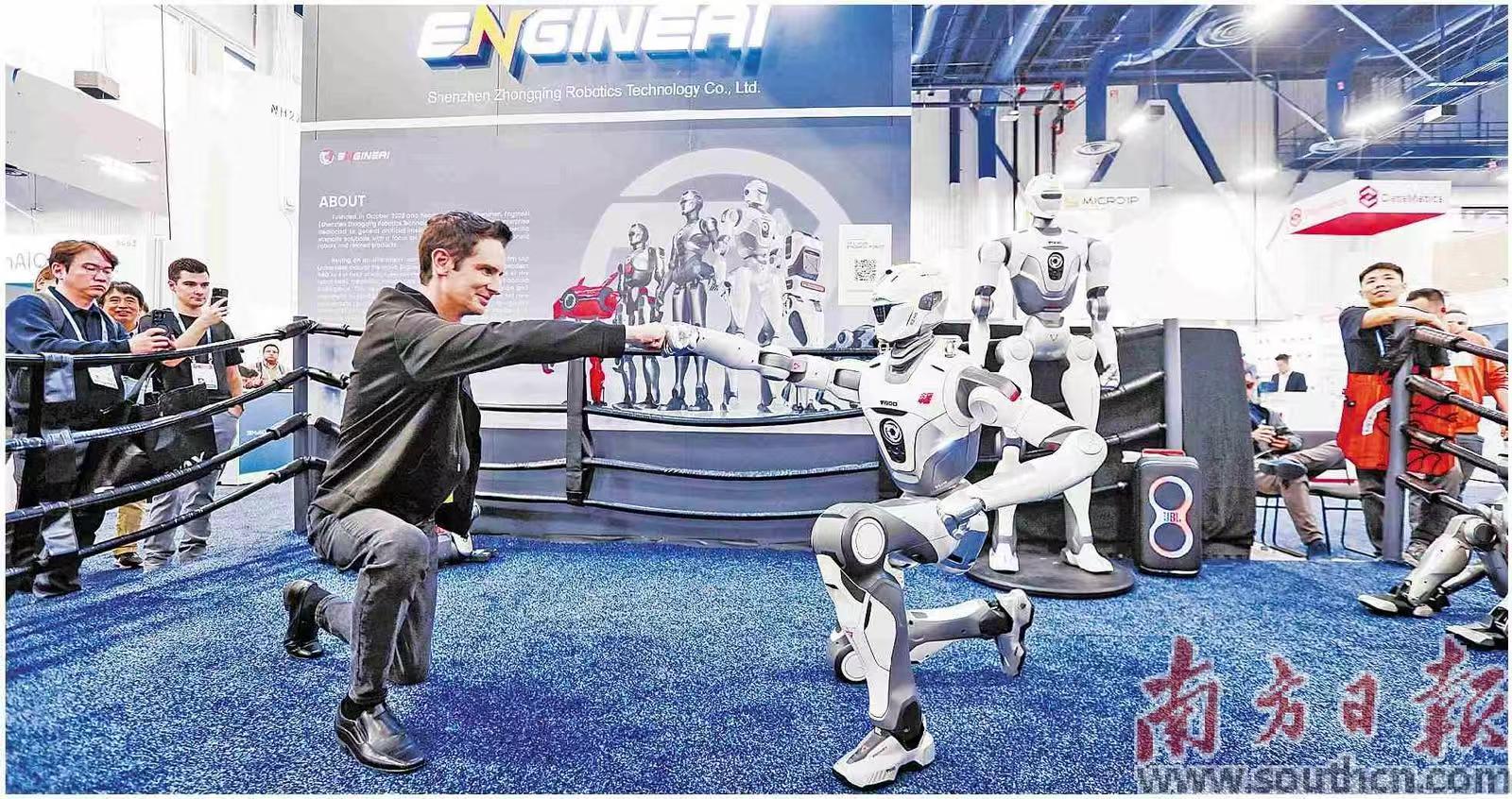
Core Insights - The article highlights the emergence of AI as a foundational element in consumer electronics, with a significant growth forecast for AI technology hardware in 2026 [2][3]. Group 1: Company Highlights - Shenzhen Zhongqing Robot Technology Co., Ltd. showcased its humanoid robot T800 at CES 2026, attracting considerable attention with its interactive capabilities [2][5]. - The T800 robot features advanced technology, including a peak torque of 450N·m, equivalent to the power of a high-end car engine, and a solid-state battery with a 4-5 hour runtime [6][7]. - The company has completed multiple technical validations for the T800, anticipating sales of dozens to hundreds of units in 2026 [7]. Group 2: Industry Trends - The CES 2026 event emphasizes the integration of AI into physical products, marking a shift from conceptualization to practical applications [5][8]. - Guangdong AI hardware companies are moving towards global markets, focusing on real product offerings and collaborative solutions with international partners [4][11]. - The article notes a growing interest from international clients in Chinese robotics technology, indicating a rising global demand for these innovations [11]. Group 3: Supply Chain and Globalization - Guangdong's efficient supply chain, characterized by a "half-hour supply chain" model, allows for rapid response to global customization demands [12][15]. - Companies are not merely exporting products but are engaging in global ecosystem building, enhancing their competitive edge in the AI hardware market [16][17]. - The article mentions that AI is no longer seen as a standalone product but as a core operating system driving various devices, reshaping the competitive landscape [17][18]. Group 4: Future Outlook - The article suggests that the year 2026 will be pivotal for AI hardware, with companies aiming to optimize product matrices and align with global market needs [16][21]. - Guangdong enterprises are positioned to redefine "Chinese innovation" in the global market, leveraging their technological strengths and ecological strategies [21].


英伟达CES亮出新牌
Bei Jing Shang Bao· 2026-01-06 14:33
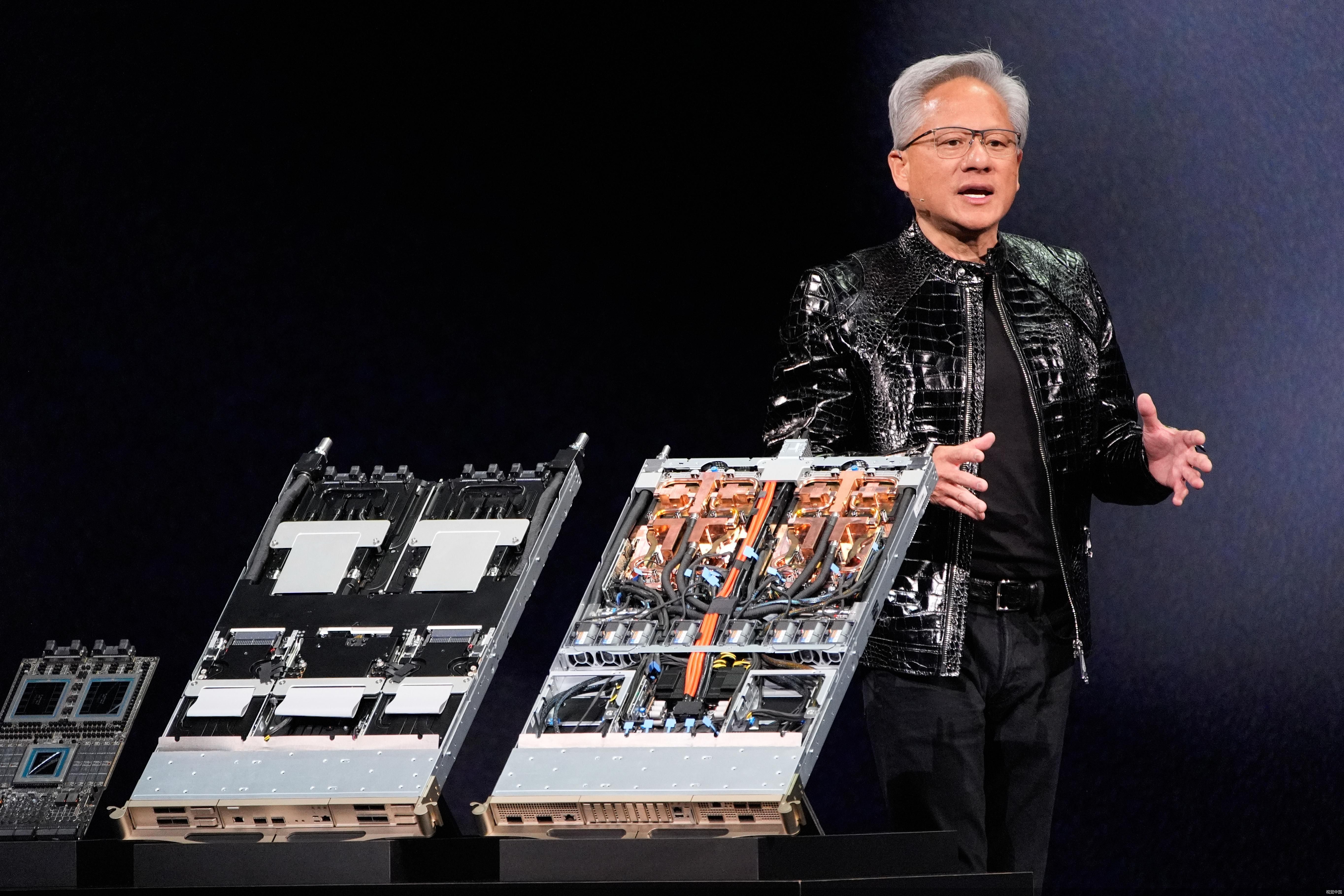
Core Insights - The 2026 CES marks a shift from traditional hardware competition to a focus on "AI embodiment," with NVIDIA unveiling its next-generation AI chip platform "Rubin" ahead of schedule [1][5][8] - NVIDIA's CEO Jensen Huang emphasized the urgent need for AI computing power, stating that Rubin represents a significant advancement in AI training and inference capabilities [5][6] Group 1: NVIDIA's Rubin Platform - The Rubin platform integrates six chips, including the NVIDIA Vera CPU and Rubin GPU, designed for enhanced performance across computing, networking, storage, and security [5][6] - Compared to the previous Blackwell architecture, Rubin accelerates AI training performance by 3.5 times and operational performance by 5 times, while reducing inference token costs by up to 10 times [6][7] - Major cloud providers and model companies, including AWS, Microsoft, and Google, are among the first adopters of the Rubin platform [7] Group 2: AI Evolution and Physical AI - Huang outlined a four-step evolution of AI: Perception, Generation, Agentic, and Physical AI, emphasizing the need for AI to understand physical world principles [9][10] - The focus on Physical AI aims to extend AI capabilities from data centers to real-world applications, such as robotics and autonomous driving [9][11] - The CES event highlighted that AI is no longer just about model parameters but is now integrated into hardware and real-world scenarios [10][11] Group 3: Future Trends in AI - The industry is expected to see trends such as model miniaturization, multi-modal interactions, and subscription-based AI services, indicating a shift in how AI will be deployed and monetized [11]

「中国式方案」点亮AI黄金时代|36氪2025 AI Partner百业大会核心看点剧透
3 6 Ke· 2025-08-25 03:34
Group 1 - The core viewpoint of the articles emphasizes China's leadership in AI technology and its unique "Chinese-style solution" that integrates rich application scenarios with large model technology iterations, reshaping the global AI industry landscape [2] - The "Chinese-style solution" is characterized by a complete closed loop of "technology research and development - scenario implementation - industry feedback," driven by scene demands to iterate technology and empower various industries through large-scale applications [2] - The upcoming "2025 AI Partner Conference" will focus on the deep integration of AI with the real economy, highlighting topics such as "Chinese-style innovation," "super intelligent agents," and the reshaping of global technology competition [2] Group 2 - AI "embodiment" requires breakthroughs in hardware, software, and computing power, with smart terminals and robotics being key areas for innovation [3] - Lenovo's launch of the Lenovo Baiying intelligent agent aims to assist small and medium-sized enterprises in embracing AI, providing a comprehensive intelligent service for marketing, office efficiency, and IT cost reduction [3] - The conference will feature discussions on the commercialization challenges of humanoid robots and the role of AI in enhancing industrial safety through intelligent perception and decision-making [4] Group 3 - The infrastructure needed to support the demands of full-domain intelligence includes optimizing computing power and data foundations, which are crucial for the implementation of AI technologies [5] - A roundtable discussion will explore the future driving forces of AI, focusing on the balance between software and hardware in the next hotspots of artificial intelligence [5] - The articles highlight the significant progress made in integrating AI with various industries, transforming it from a "show-off" technology to a "necessity" by aligning with industry scenarios [6] Group 4 - AI applications in human resources, healthcare, and marketing are discussed, showcasing how AI can enhance efficiency and innovation across these sectors [6] - The role of AI in carbon management and its contribution to achieving China's dual carbon goals is emphasized, indicating its importance in the context of global green development [7] - The articles also address the challenges and strategies for the commercialization of autonomous robots across different sectors, including retail and industrial applications [4][7] Group 5 - The balance between technological development, user experience, and commercial value in AI applications is a key discussion point, with a focus on how AI can redefine user experiences across industries [8] - The AI Partner initiative aims to create a platform for communication between AI application and scene providers, fostering innovation and addressing industry needs [8] - The articles conclude with a call to explore the new boundaries of the "Chinese-style solution" in AI, emphasizing the practical applications of technology in everyday life [8]