
AI广告模式

Search documents
OpenAI应用CEO首次深度访谈:ChatGPT广告将像Google而非Facebook,Code Red即将终结
3 6 Ke· 2026-02-13 00:20
Core Insights - OpenAI's advertising model will fundamentally differ from traditional social media, focusing on user intent rather than user profiles, allowing AI to provide neutral evaluations of ads [2][7][12] - The "Code Red" status at OpenAI is nearing its end, with plans to resume normal operations and previously delayed revenue plans following the release of a new model [15][17][19] - OpenAI is exploring a new direction with an AI Agent social network, aimed at enhancing human social relationships rather than replacing them [20][22][28] Advertising Model Transformation - Fidji Simo, CEO of OpenAI applications, emphasizes that the advertising model will resemble Google's intent-based system rather than Facebook's algorithm-driven approach [7][8] - The AI model will not recognize the existence of ads unless prompted by the user, ensuring that responses remain unbiased and focused on the conversation [10][11] - Simo states that advertising will likely remain a minor revenue source for OpenAI, indicating a lower reliance on ads compared to companies like Meta [8] Transparency in Advertising - The revolutionary aspect of OpenAI's advertising system is that the AI can critique ads when asked, providing users with transparent and neutral information [9][12] - This approach contrasts with traditional advertising models where brands control content, as OpenAI allows AI to independently assess and critique advertisements [11][12] Code Red Status - The "Code Red" was initiated in December 2025 to address competitive pressures from Google and Anthropic, impacting product teams but not long-term research efforts [16][18] - Simo confirms that the Code Red status will conclude with the upcoming release of a new model, allowing OpenAI to resume normal operations [15][17] AI Agent Social Network - OpenAI is investigating the concept of an AI Agent social network, where personal AI agents assist users in managing their social relationships [20][22] - This concept differs from existing AI-only social networks by focusing on enhancing human interactions rather than creating new AI relationships [21][22] Leadership and Structure - Simo and Sam Altman have clearly defined roles, with Altman overseeing research and Simo managing product deployment and commercialization [24][26] - This division of responsibilities ensures that long-term research remains unaffected by short-term competitive pressures [30]


前明星研究员警告:ChatGPT投放广告恐让OpenAI重蹈Facebook覆辙
Xin Lang Cai Jing· 2026-02-13 00:13
Core Viewpoint - The announcement of advertising testing on ChatGPT by OpenAI raises concerns about user privacy and potential manipulation, as users have shared sensitive information during interactions with the AI [1][2][8]. Group 1: Concerns about Advertising and User Data - OpenAI's strategy of incorporating advertising may lead to the exploitation of user data, which includes private thoughts and feelings shared during interactions with ChatGPT [2][4]. - The creation of a "human honesty archive" through user interactions poses risks if this data is used for targeted advertising, as there are currently no effective tools to understand or mitigate these risks [2][4]. - The potential for user manipulation increases if advertising is based on sensitive data, which could undermine the trust users have in the AI as a non-profit-driven entity [2][4]. Group 2: Alternatives to Advertising Models - The industry faces a dilemma between limiting access to transformative technology to those who can afford it or adopting an advertising model that exploits user vulnerabilities [3][11]. - A third option proposed is to maintain broad access to AI tools while restricting corporate surveillance and manipulation of users [3][11]. - OpenAI has stated that it will adhere to principles for advertising, ensuring clarity and non-intrusiveness, but there are concerns about future deviations from these principles as the company develops its economic engine [3][11]. Group 3: Governance and Oversight Mechanisms - The establishment of a governance structure that includes independent oversight of personal data usage is essential to prevent exploitation [6][13]. - Suggestions include implementing cross-subsidy mechanisms where profits from high-value commercial clients subsidize public access to AI tools [5][13]. - Another proposal is to manage user data through independent trusts or cooperatives, ensuring that user interests are prioritized [14]. Group 4: Potential Outcomes and Industry Implications - The trend of maximizing user engagement at the expense of ethical principles may already be occurring within OpenAI, with reports indicating a focus on daily active user metrics [4][12]. - The advertising revenue model could ensure that powerful AI tools remain accessible to a broader audience rather than just those who can afford high subscription fees [4][12]. - The industry must find a balance to avoid creating a system that either manipulates users or restricts access to technology based on financial capability [7][14].
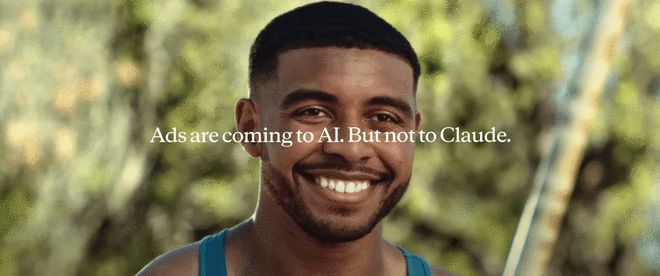
Claude豪掷千万在“美国春晚”打脸OpenAI,奥特曼回击:伪君子!
Xin Lang Cai Jing· 2026-02-05 04:47
Core Viewpoint - The article discusses a public confrontation between two leading AI companies, Anthropic and OpenAI, highlighting their differing philosophies on AI monetization and user experience, particularly in relation to advertising practices. Group 1: Public Confrontation - Anthropic spent tens of millions on a Super Bowl ad to mock OpenAI, portraying its AI as a disruptive "salesman" during serious inquiries [2][4] - OpenAI's CEO Sam Altman responded on social media, accusing Anthropic of elitism and hypocrisy, claiming that OpenAI aims to provide accessible AI for the masses [6][9] Group 2: Philosophical Divide - Anthropic believes AI should act as a "personal advisor" without interruptions from advertisements, while OpenAI argues that advertising is necessary for widespread access to AI [8][9] - The relationship between the two companies has evolved from shared origins to a stark contrast in their business models and ethical considerations regarding AI [6][8] Group 3: Market Dynamics - Anthropic's Claude Code has gained significant traction among developers, even leading some Microsoft employees to switch from OpenAI's Copilot to Claude Code [11] - The competition has impacted the software market, with the S&P 500 software and services index dropping nearly 9% over five days [11] Group 4: Revenue Models - Anthropic's revenue primarily comes from enterprise contracts and professional subscriptions, reportedly generating at least $1 billion [13] - OpenAI is facing financial pressures, with an expected burn rate of $9 billion this year to support its infrastructure investments [9] Group 5: Advertising Integrity - OpenAI is forming an "Ads Integrity Team" to manage its advertising strategy without compromising user trust, setting high entry barriers for advertisers [15][16] - Critics express concerns that the desire for advertising revenue may lead to more intrusive ad practices in the future [17] Group 6: Future of AI - The article raises fundamental questions about the nature of AI, debating whether it should function as a media platform with ads or as a pure productivity tool without distractions [18][19] - Anthropic bets on users valuing a distraction-free "thinking space," while OpenAI relies on scale and model strength to mitigate advertising discomfort [21]
ChatGPT和谷歌双双落地AI广告丨合规周报(第222期)
2 1 Shi Ji Jing Ji Bao Dao· 2026-01-18 09:45
Group 1: AI Advertising Models - OpenAI announced the testing of advertising in ChatGPT, targeting free and $8 subscription users, with ads presented at the bottom of conversations and only shown when highly relevant to user queries [2] - Google introduced a new shopping ad feature called "Direct Offers" within its Gemini AI model, allowing retailers to push exclusive discounts determined by AI, emphasizing a negotiation-like approach rather than standard advertising [3][4] Group 2: Regulatory Developments - The UK regulator Ofcom has launched an investigation into X and its AI chatbot Grok due to concerns over the misuse of deepfake technology for creating and distributing explicit content [5][6] - The U.S. Federal Trade Commission (FTC) is scrutinizing the "talent acquisition" practices of major tech companies, where firms hire employees from startups instead of acquiring them, to avoid antitrust scrutiny [7] Group 3: Domestic Regulatory Actions - Ctrip has been officially investigated for alleged monopolistic practices, including price fraud and restricting merchant pricing, as part of a broader regulatory crackdown in the OTA industry [9] - The second trial of the first AI-related criminal case involving the generation of explicit content is underway, focusing on the legal responsibilities of AI service providers [10][11]
