AI应用层

Search documents
QuestMobile 2025年AI应用层发展核心报告:原生App巨头筑墙,新锐破局,AI核心入口雏形初现,入口争夺战持续
QuestMobile· 2026-03-03 02:09
Core Insights - The article emphasizes that 2025 will be a pivotal year for AI applications, marking a significant transition from quantity to quality in the domestic AI application market, with mobile AI applications, smartphone manufacturers' AI assistants, and PC AI applications reaching monthly active user counts of 722 million, 559 million, and 205 million respectively, indicating a rapid adoption rate [4][35]. Group 1: AI Application Market Overview - The domestic AI application market is projected to achieve a qualitative leap by the end of 2025, with mobile AI applications and smartphone manufacturers' AI assistants capturing 56.6% and 57.7% of the overall user base respectively [4][35]. - The growth of AI applications is characterized by significant quarterly milestones, including open-source initiatives, performance comparisons, and the establishment of commercial value [4][19]. - The distribution of AI applications across various sectors shows that creative design, comprehensive assistants, efficiency office tools, and copywriting applications account for 11.7%, 10.7%, 9.2%, 8.7%, and 8.1% respectively, reflecting clear market demand and monetization pathways [4][25]. Group 2: Competitive Landscape - Major internet companies like Alibaba, Tencent, ByteDance, and Baidu are engaged in fierce competition across various platforms, with a notable "red envelope battle" during the Spring Festival highlighting the intense rivalry [5][54]. - The average monthly usage of native apps has reached 69.2 times per user, surpassing application plugins, indicating a shift in user habits towards native applications [5][35]. - The top five applications in December 2025, including Doubao and DeepSeek, have seen significant user growth, with Doubao achieving a compound growth rate of 9.7% [5][53]. Group 3: User Engagement and Experience - The article notes that the average monthly usage time for native apps has increased to 143.2 minutes, significantly higher than that of tool and photo editing apps [5][44]. - The user engagement metrics indicate a growing trend towards native applications, with the number of users engaging with two or more apps increasing by 27.5% compared to January 2024 [5][46]. - The rise of native apps is reshaping user digital experiences, suggesting a transition into a "reconstruction period" where users are actively seeking more efficient solutions [5][48]. Group 4: Future Trends and Opportunities - The article predicts that the competition for AI application entry points will intensify, with mobile scenarios becoming the core entry for AI experiences [5][35]. - The collaboration between smartphone manufacturers and internet companies is expected to deepen, driven by AI as a new connective tissue for ecosystem building [5][82]. - The potential emergence of three types of AI super entry points is anticipated, which will reshape the internet value chain as the flow of traffic evolves [5][89].





观察 | 万亿资金进场!2026年选对这几个赛道,比埋头努力更重要
未可知人工智能研究院· 2026-01-04 04:03
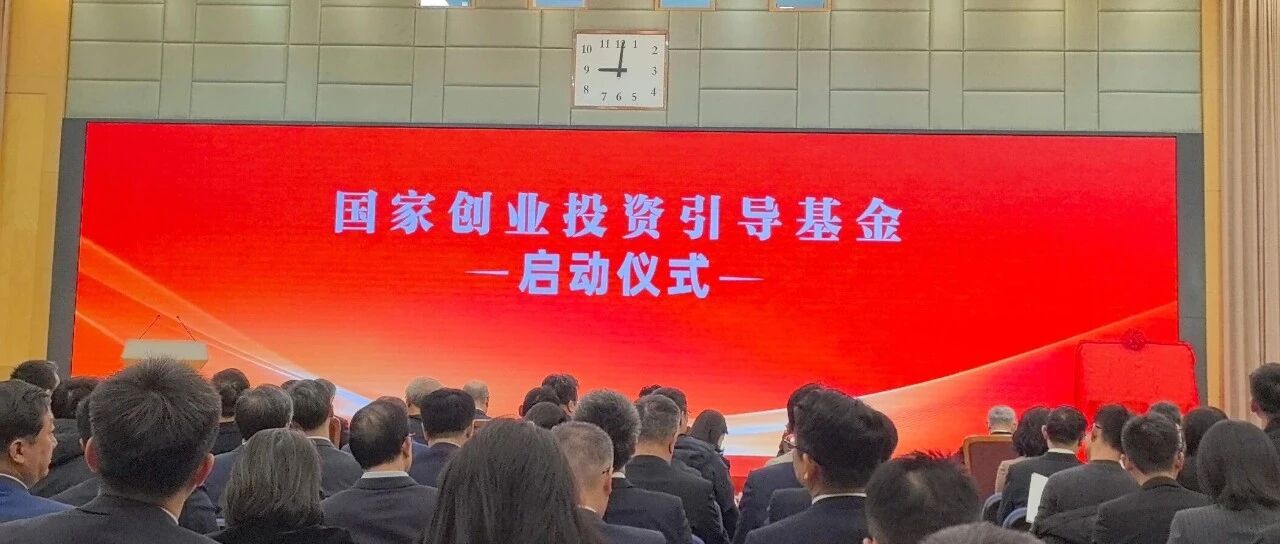
Group 1: Core Insights - The article discusses the launch of a national venture capital fund with a direct investment of 100 billion yuan to leverage over a trillion yuan in social capital, indicating a significant shift in the entrepreneurial landscape [1][2] - It emphasizes five key sectors that present real opportunities for wealth generation by 2026, highlighting the intersection of policy support and technological advancements [2][62] Group 2: Embodied Intelligence - The first opportunity is in embodied intelligence, specifically humanoid robots, with a notable company, UBTECH, reporting over 1.3 billion yuan in orders this year, surpassing the total industry sales from the previous year [7][8] - The article notes that 2025 is expected to be a financing year for embodied intelligence, while 2026 will focus on actual deliveries, with major companies like BYD and Foxconn placing orders [10][13] - Opportunities for ordinary entrepreneurs lie in components such as dexterous hands and sensors, as well as in robot maintenance and after-sales services, which are expected to become lucrative as robots are deployed in factories [15][18] Group 3: AI Application Layer - The second opportunity focuses on the AI application layer, particularly vertical industry AI tools, as the price war for large models has concluded, paving the way for a golden era of application [19][22] - Examples include an AI legal assistant that automates contract review for small businesses and an AI video editing tool for e-commerce, both demonstrating significant revenue potential [23][27] - The article advises against creating generic AI solutions and instead suggests developing specific industry applications that can save costs or generate revenue for businesses [29][30] Group 4: Low-altitude Economy - The third opportunity is in the low-altitude economy, projected to reach a market size of 3.5 trillion yuan, with recent developments like the launch of a manned eVTOL route between Shenzhen and Zhuhai [31][39] - Key opportunities include the development of supporting infrastructure such as landing pads and charging stations, as well as low-altitude logistics and tourism services [37][38] Group 5: Quantum Technology and Brain-Machine Interfaces - The fourth opportunity involves quantum technology and brain-machine interfaces, with the national venture capital fund focusing on these critical technologies [40][41] - There is potential for early-stage projects in quantum communication and medical rehabilitation using brain-machine interfaces, with significant market demand for rehabilitation services [44][45] - Entrepreneurs with access to medical or academic resources are encouraged to explore technology transfer services or invest in early-stage funds in these sectors [46][48] Group 6: Chinese Enterprises Going Global - The final opportunity is for Chinese enterprises to expand overseas, capitalizing on the significant market potential outside of China, particularly in Southeast Asia [50][51] - Successful examples include cross-border e-commerce and live-streaming sales, where Chinese products are in high demand due to a lack of local supply chains [52][53] - The article cautions that entering foreign markets requires understanding local regulations and consumer habits, suggesting partnerships with local experts or established companies [56][58]


《时代》周刊专访李彦宏:“AI应用层是机会最多的地方”
Xin Lang Cai Jing· 2025-12-12 04:10
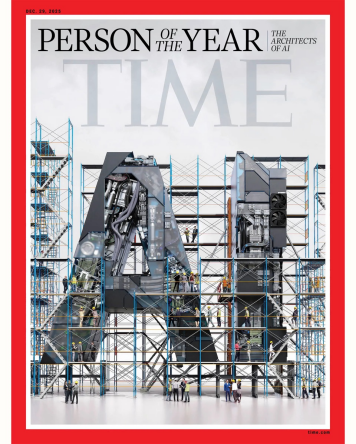
Core Insights - Time Magazine named "The Architects of AI" as the 2025 Person of the Year, highlighting the contributions of key figures in the tech industry, including Baidu's founder, Robin Li [1][3] Company Overview - Baidu, originally a search engine company, has transformed into a leading full-stack AI company in China, with a diverse portfolio that includes chips, cloud infrastructure, models, intelligent agents, applications, and consumer products [3] - The company showcased a series of advanced AI products at the Baidu World Conference on November 13, emphasizing its unique development path focused on application value [3] Industry Trends - The AI sector in China has rapidly evolved over the past year, positioning itself as a significant player on the international stage, with Baidu being a key representative of China's AI development [3] - Robin Li predicts that 2025 will be a pivotal year for AI application proliferation, suggesting that only a few foundational models will remain, while numerous successful participants will emerge in various application areas [3][6] Strategic Approach - Baidu adopts an "application-driven" strategy, focusing on specific application areas rather than creating a universal model [5] - Li emphasizes that the true value of AI lies in its applications, not in the foundational models or chips [5] Competitive Landscape - The global AI competition has intensified, with a notable difference in focus between the U.S. and China; while the U.S. invests heavily in AGI, China prioritizes practical applications [5] - Baidu's newly launched self-evolving intelligent agent, "Famu," aims to find optimal solutions in real industrial scenarios, showcasing its technological competitiveness [5] Future Outlook - Li anticipates that the most significant breakthroughs in the industry by 2025 will be in multimodal AI, with hopes for revolutionary changes in drug development through AI [6] - The challenges in drug development, particularly in verifying the effectiveness of solutions, are seen as a bottleneck that AI could potentially address in the next 10 to 20 years [6]