AI投资回报周期

Search documents
美股新常态?2026年才过几周,已上演5次“急跌后V字反转”
Hua Er Jie Jian Wen· 2026-02-05 03:22
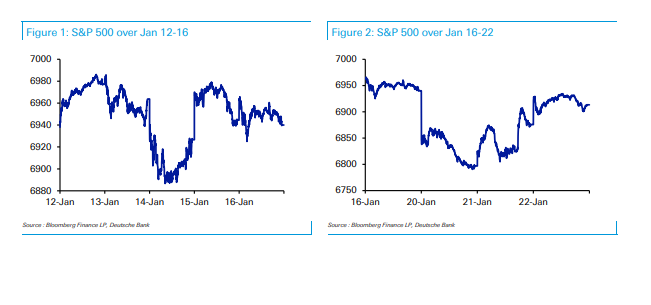
Core Viewpoint - The U.S. stock market is experiencing a "new normal" characterized by rapid declines followed by quick recoveries, with the S&P 500 index showing at least five instances of this pattern in January alone [1][2]. Group 1: Market Behavior - The S&P 500 index faced significant volatility in January, with notable declines due to geopolitical risks, tariff threats, and concerns over technology investments, yet these declines were followed by rapid recoveries [2][5]. - Each decline prompted discussions about whether it signaled the beginning of a major adjustment, but historical patterns indicate that emotional noise is high while trend disruption remains low [5]. Group 2: Macroeconomic Context - The key to determining whether the stock market will enter a sustained downturn lies not in short-term shocks but in whether macroeconomic expectations undergo a "structural downgrade" [6]. - Current macroeconomic conditions are favorable, with the U.S. economy maintaining a high growth rate, evidenced by a 4.4% annualized growth rate in Q3 and an ISM manufacturing index at its highest level since 2022 [8]. Group 3: Investor Sentiment - The market is increasingly prioritizing "real data" over "news narratives," as evidenced by the rise in all major asset classes in January, indicating that risk appetite remains intact [9]. - The pattern of rapid declines followed by recoveries reinforces a buy-the-dip strategy among investors, suggesting that the frequency of market fluctuations is increasing while the magnitude of trend changes is being suppressed [9].


Mag 7财报季明日启动,市场紧盯一件事——资本开支!
Hua Er Jie Jian Wen· 2026-01-28 08:20
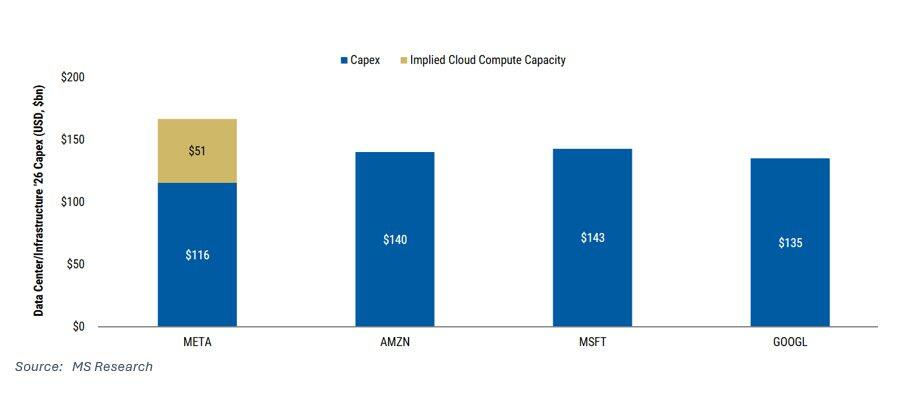
Core Viewpoint - The upcoming earnings season for the "Mag 7" tech giants, including Microsoft, Meta, and Tesla, will focus on spending trends, with expectations of a 20% profit growth in Q4, the slowest since early 2023 [1] Group 1: Earnings Expectations - The "Mag 7" companies have a combined market capitalization of $10.5 trillion, with significant investor focus on capital expenditure guidance [1] - Nearly 80% of S&P 500 companies have exceeded analyst expectations so far, with strong performance anticipated from tech stocks [1] - Wolfe Research indicates that companies exceeding both revenue and profit expectations have seen negative stock performance post-earnings, suggesting a potential unsustainability of this trend [1] Group 2: Capital Expenditure Focus - Morgan Stanley projects unprecedented investment expansions among tech giants, with Meta expected to guide capital expenditures of approximately $120 billion for 2026, significantly higher than the previous year's guidance [2] - Microsoft anticipates a capital expenditure increase exceeding $1.4 trillion for 2026, with a quarterly guidance indicating a growth of over $35 billion [2] - Google’s capital expenditure forecast for 2026 is around $1.35 trillion, potentially rising to $1.5 trillion due to growth in cloud and TPU businesses [2] - Amazon's capital expenditure remains less transparent, but estimates suggest a total of $175 billion for 2026, up from $125 billion in 2025 [2] Group 3: Company-Specific Insights - Microsoft is seen as "stuck between SaaS and OpenAI," with a need to accelerate Azure growth to over 40% to boost stock performance [3] - Meta faces cautious investor sentiment due to concerns over spending and AI strategy, despite revenue growth expectations of around $60 billion for Q4 [4] - Tesla's financial KPIs for Q4 and 2026 are highly variable, with stock performance hinging on updates regarding new technologies and product launches [5][6] - Amazon's stock remains under pressure, with investor focus on AWS revenue growth expected to be around 21% for Q4, while Google anticipates a search revenue growth of 15%-16% [7]