AI时代人才培养

Search documents
多地中小学取消“期末统考”引热议
Xin Lang Cai Jing· 2026-01-24 16:31
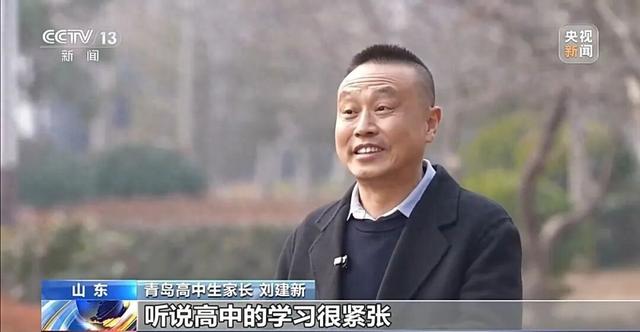
Core Viewpoint - The recent cancellation of regional or inter-school final exams for non-graduating grades in several Chinese cities aims to reduce academic pressure on students and shift the focus from competition to holistic education [1][10][22]. Group 1: Support for Cancellation - Many parents support the cancellation of final exams, believing it will alleviate academic pressure and promote students' mental and physical health [1][3]. - Parents express that for younger students, fostering interest and good study habits is more important than standardized testing [3][4]. Group 2: Concerns About Cancellation - Some parents worry that without standardized exams, they will lack a clear understanding of their children's academic standing compared to peers [4][5]. - Concerns arise regarding the quality and consistency of school-based assessments, with fears that some schools may create overly difficult tests, leading to new forms of competition [7][10]. Group 3: Underlying Reasons for Policy Change - The Ministry of Education's policy aims to prevent schools from falling into a "teaching to the test" mentality, where exams become tools for ranking rather than assessing learning [8][10]. - Frequent exams have been criticized for increasing anxiety among students and families, detracting from the educational process [10][12]. Group 4: Enhancing School Assessment Capabilities - Schools are being encouraged to improve their assessment capabilities through training and support from educational authorities [14][16]. - Initiatives include establishing research centers for test development and providing resources for schools with insufficient assessment skills [14][16]. Group 5: Educational Reform Direction - The cancellation of standardized exams reflects a broader shift in educational philosophy from "score-oriented" to "student-centered" learning [20][22]. - The Ministry of Education's reforms are aligned with the need to cultivate skills relevant to the AI era, emphasizing critical thinking, collaboration, and innovation over rote memorization [22][23][25].

多地中小学取消非毕业年级“期末统考”
Yang Shi Wang· 2026-01-23 06:28
Core Viewpoint - The recent cancellation of standardized exams for non-graduating grades in various cities aims to reduce academic pressure on students and promote their overall well-being [1][10]. Group 1: Support for Cancellation - Many parents support the cancellation of standardized exams, believing it will alleviate academic pressure and enhance students' mental health [2]. - Parents express that for younger students, fostering interest and good study habits is more important than standardized testing [4]. - Some parents feel that the removal of rankings will help reduce psychological stress associated with competition [3]. Group 2: Concerns About Cancellation - The absence of standardized exams raises concerns among some parents about the lack of a clear benchmark for assessing their children's academic performance [5][6]. - Parents worry that without standardized testing, the quality of school-based assessments may vary significantly, potentially leading to new forms of competition or "involution" [7][9]. - There are fears that schools may not provide adequate or consistent quality in their assessments, which could affect students' preparation for future exams [8][9]. Group 3: Rationale Behind the Policy - The Ministry of Education's policy aims to prevent schools from falling into a "teaching to the test" mentality, where exams become tools for ranking rather than genuine assessments of learning [11][12]. - The initiative seeks to restore the diagnostic function of exams and reduce the frequency of testing, which has been linked to increased anxiety and unhealthy competition among students [11][12]. Group 4: Implementation and Support Measures - Schools are being encouraged to enhance their assessment capabilities through training and support from educational authorities [13][14]. - Various regions are exploring new evaluation methods, including multi-dimensional assessment systems and data analysis tools to better understand student performance [15]. - The shift from standardized testing to more personalized assessments aims to foster a more holistic educational approach [15]. Group 5: Educational Reform Direction - The cancellation of standardized exams reflects a broader trend towards educational reform, emphasizing the development of critical thinking and problem-solving skills over rote memorization [16][17]. - Experts suggest that the focus should shift from merely achieving high scores to nurturing students' abilities to adapt and innovate in an AI-driven future [17].
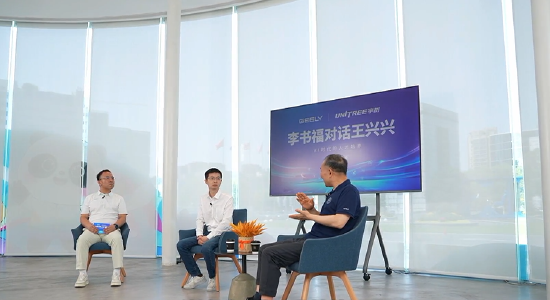
关于“人才” 李书福王兴兴观点碰撞!李书福:人人可成才 王兴兴:人才分三类
Xin Lang Zheng Quan· 2025-06-19 02:36
Group 1 - The discussion between Li Shufu, chairman of Geely Holding Group, and Wang Xingxing, founder of Yushu Technology, focused on the future of the AI industry and talent cultivation in the AI era [1] - Wang Xingxing categorized talent into three types: top talent, excellent talent, and ordinary talent, emphasizing the importance of each category in driving company and societal progress [3] - Li Shufu shared Geely's talent philosophy, stating that every employee plays a crucial role in the company, likening them to essential materials in building a structure, highlighting the importance of every position [4] Group 2 - Top talent is defined as individuals who can independently manage and operate projects across various aspects, including technology and product definition, and are capable of conducting research on emerging technologies like AI and robotics [3] - Excellent talent can execute projects with high quality within an established framework, representing a significant asset to any company [3] - Ordinary talent, while needing guidance, must approach tasks diligently to avoid deviations from goals, indicating the need for continuous improvement [3]