AI时代入口

Search documents
两个马年:中国互联网的十二年轮回
Hua Xia Shi Bao· 2026-02-21 10:58
Core Insights - The article discusses the cyclical nature of significant technological advancements in China, particularly focusing on the emergence of WeChat Red Packets in 2014 and the anticipated rise of AI Red Packets in 2026, highlighting the impact of these innovations on mobile payment and user engagement [2][15][19]. Group 1: Historical Context - In 2014, WeChat introduced the Red Packet feature, which unexpectedly transformed the mobile payment landscape in China, allowing WeChat to catch up with Alipay in user engagement [5][6]. - The introduction of the Red Packet feature led to a massive increase in user engagement, with families participating in Red Packet exchanges during the Spring Festival, significantly boosting WeChat's user base [6][8]. - Over the past twelve years, the mobile internet landscape has evolved, with various platforms competing for user attention during the Spring Festival, showcasing a shift from simple monetary exchanges to more complex social interactions [9][13]. Group 2: Current Trends and Future Outlook - In 2026, the focus shifts to AI Red Packets, with major companies like ByteDance, Alibaba, Tencent, and Baidu investing over 4.5 billion yuan to capture the next generation of user engagement [15][18]. - The strategy for AI Red Packets involves integrating AI with everyday services, such as food delivery and ticket booking, to create a more habitual use of AI technology among users [16][20]. - The article suggests that the next significant technological breakthrough will require a universally relatable scenario, similar to how WeChat Red Packets popularized mobile payments [19][22]. Group 3: User Engagement and Retention - Historical data indicates that while Red Packets attract users, they do not guarantee long-term retention, as evidenced by the low retention rates following significant investments by companies like Baidu and Kuaishou [10][11][12]. - The article emphasizes the importance of user engagement metrics post-Spring Festival, indicating that the success of AI Red Packets will depend on users' willingness to interact with AI technology in their daily lives [24].




春节AI红包大战,谁会是赢家?|财经早察
2 1 Shi Ji Jing Ji Bao Dao· 2026-02-03 10:51
Core Viewpoint - Major internet companies are engaging in a "money-splashing" strategy during the Chinese New Year, with Tencent, Baidu, and Alibaba announcing significant cash giveaways to secure their positions in the emerging AI landscape [2][3]. Group 1: Company Strategies - Tencent is leveraging social engagement by combining its red envelope initiative with a new "Yuanbao" social feature, encouraging group interactions and AI creativity [4]. - Baidu is focusing on maintaining search habits by integrating its red envelope activities within the Baidu App, aiming to transition users towards conversational AI [4]. - Alibaba is not offering red envelopes but has launched a 3 billion yuan "Spring Festival Treat" initiative, promoting its ecosystem services through various platforms like Taobao and Fliggy [4]. Group 2: Market Impact - The immediate effect of these cash giveaways is evident, with Tencent's Yuanbao quickly rising to the top of the Apple App Store's free chart, achieving nearly one million downloads [5]. - However, there are concerns about the sustainability of user engagement post-campaign, as the effectiveness of these strategies in fostering long-term AI usage habits remains uncertain [5][6]. Group 3: Future Implications - The competition for AI application dominance is seen as entering a critical phase, with the 2026 Spring Festival marking a significant moment in this ongoing battle [6]. - The challenge lies in retaining users beyond the initial attraction of cash incentives, emphasizing the need for robust AI functionalities and integration into daily life [6].
阿里成立千问C端事业群,吴嘉能成下一个旗帜吗?
3 6 Ke· 2025-12-11 11:51
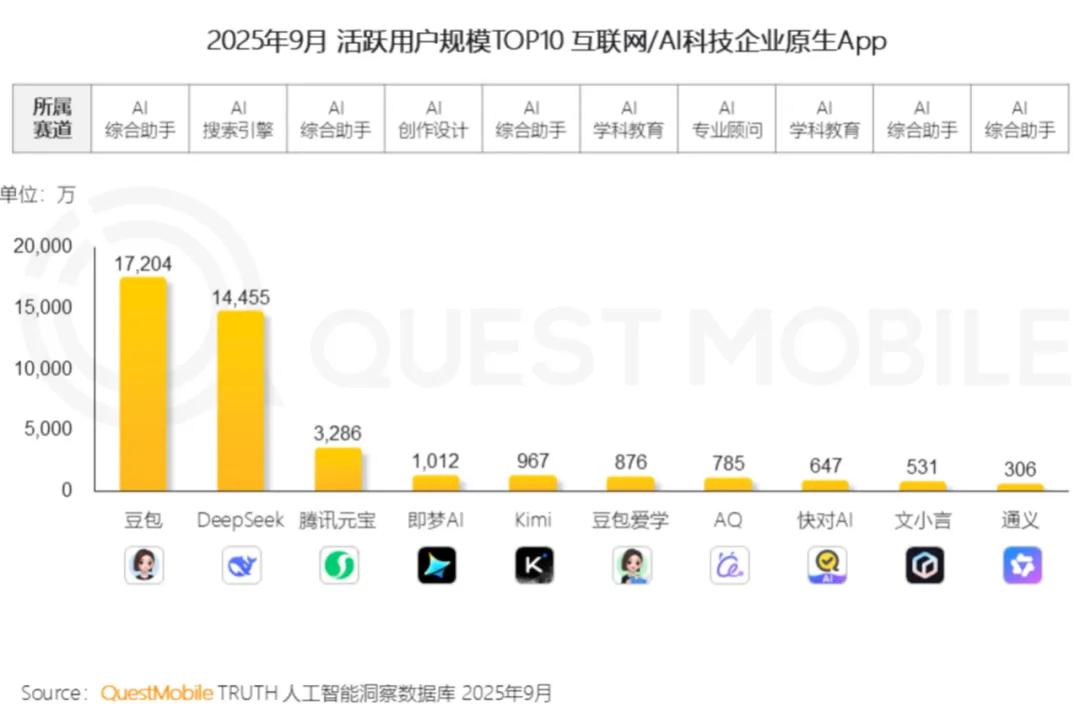
Core Viewpoint - Alibaba is restructuring to establish the Qianwen C-end Business Group, aiming to integrate its AI capabilities and create a new "super entrance" for users in the AI era, led by Wu Jia, who is expected to replicate the success of Jiang Fan in the mobile internet era [1][3][22]. Group 1: Organizational Changes - Alibaba announced a significant organizational adjustment on December 9, forming the Qianwen C-end Business Group, led by Vice President Wu Jia [1]. - The new group consolidates key products such as Qianwen APP, Quark, AI hardware, UC, and Shuqing, and plans to integrate various life services like maps, takeout, and health into the Qianwen ecosystem [1][5]. Group 2: Strategic Intent - The establishment of the Qianwen C-end Business Group is seen as a strategic move to secure a dominant position in the emerging AI landscape, similar to how Alibaba capitalized on mobile internet [2][4]. - The goal is to create a comprehensive AI super app that can dominate user engagement and traffic distribution in the AI era, addressing previous shortcomings in Alibaba's C-end traffic [6][21]. Group 3: Leadership and Background - Wu Jia, who has grown within Alibaba since 2010, is recognized for his successful leadership of the Quark product, which transformed from a simple browser to a leading AI search application with over 200% annual user growth from 2020 to 2023 [8][10]. - His experience in product development and understanding of technology positions him as a suitable leader for the Qianwen C-end Business Group [11][23]. Group 4: Market Context and Competition - The AI application market in China is highly competitive, with leading players like Doubao and DeepSeek, while Alibaba's Qianwen ranks lower in user engagement [17][20]. - Alibaba's need for a compelling C-end story in AI is critical, as its core e-commerce business faces pressure from competitors like Pinduoduo and Douyin [21][22].