微信红包

Search documents
腾讯元宝跌出下载榜前30,没能重现马化腾希望当年微信红包的“爆款效应”
Sou Hu Cai Jing· 2026-02-24 12:05
Core Insights - Tencent's Yuanbao app has seen a significant decline in downloads, dropping out of the top 30 on the App Store shortly after its peak during the Spring Festival promotional campaign [3][5] - In contrast, ByteDance and Alibaba's products dominate the app rankings, with their applications occupying 8 out of the top 10 spots [3] - The rapid decline in user engagement for Yuanbao highlights the challenges of maintaining user retention after short-term promotional activities [3][5] Group 1: Performance Metrics - During the Spring Festival, Yuanbao achieved a daily active user (DAU) count exceeding 50 million and a monthly active user (MAU) of 114 million, with over 3.6 billion lottery draws conducted [3] - Following the end of the promotional event, Yuanbao's user retention issues became apparent, as it fell from 10th place to outside the top 30 within a day [3] Group 2: Competitive Landscape - ByteDance's Doubao and Alibaba's Qianwen are leading the app rankings, with Doubao at the top and Qianwen in second place, indicating strong competition in the AI application sector [3] - The only other apps in the top 10 besides those from ByteDance and Alibaba are Yunshanfu and 12306, which have unique value propositions [3] Group 3: Market Expectations - Tencent's CEO expressed hopes for Yuanbao to replicate the success of WeChat's red envelope feature, but current market feedback suggests that this expectation has not been met [5]



两个马年:中国互联网的十二年轮回
Hua Xia Shi Bao· 2026-02-21 10:58
Core Insights - The article discusses the cyclical nature of significant technological advancements in China, particularly focusing on the emergence of WeChat Red Packets in 2014 and the anticipated rise of AI Red Packets in 2026, highlighting the impact of these innovations on mobile payment and user engagement [2][15][19]. Group 1: Historical Context - In 2014, WeChat introduced the Red Packet feature, which unexpectedly transformed the mobile payment landscape in China, allowing WeChat to catch up with Alipay in user engagement [5][6]. - The introduction of the Red Packet feature led to a massive increase in user engagement, with families participating in Red Packet exchanges during the Spring Festival, significantly boosting WeChat's user base [6][8]. - Over the past twelve years, the mobile internet landscape has evolved, with various platforms competing for user attention during the Spring Festival, showcasing a shift from simple monetary exchanges to more complex social interactions [9][13]. Group 2: Current Trends and Future Outlook - In 2026, the focus shifts to AI Red Packets, with major companies like ByteDance, Alibaba, Tencent, and Baidu investing over 4.5 billion yuan to capture the next generation of user engagement [15][18]. - The strategy for AI Red Packets involves integrating AI with everyday services, such as food delivery and ticket booking, to create a more habitual use of AI technology among users [16][20]. - The article suggests that the next significant technological breakthrough will require a universally relatable scenario, similar to how WeChat Red Packets popularized mobile payments [19][22]. Group 3: User Engagement and Retention - Historical data indicates that while Red Packets attract users, they do not guarantee long-term retention, as evidenced by the low retention rates following significant investments by companies like Baidu and Kuaishou [10][11][12]. - The article emphasizes the importance of user engagement metrics post-Spring Festival, indicating that the success of AI Red Packets will depend on users' willingness to interact with AI technology in their daily lives [24].



变化之中看年俗
Xin Hua Wang· 2026-02-21 03:54
Group 1 - The article discusses the evolution of traditional Chinese New Year customs influenced by technology, highlighting the shift from sending text messages to using AI for personalized greetings and the impact on social interactions [1] - The concept of "tech customs" is explored, indicating that the rapid advancement in technology has transformed how people celebrate the New Year, suggesting that future customs may include robots as gifts [1] - The article notes that despite technological changes, traditional family interactions remain significant, with parents and children finding common ground during the holiday [1] Group 2 - The article highlights the trend of outdoor activities during the Spring Festival, with an increase in hiking and nature exploration as a way to rejuvenate and connect with family [2] - It emphasizes the resurgence of hands-on activities during the holiday, where families engage in crafts and DIY projects, reflecting a shift in how younger generations celebrate [2] - The piece concludes that the essence of New Year customs is adaptable and will continue to evolve with technological advancements, encouraging creativity and imagination in celebrations [2]
春节红包,是中国人最大的一场资金再分配
虎嗅APP· 2026-02-18 03:38
Group 1 - The core viewpoint of the article is that the Chinese New Year red envelope tradition represents a decentralized, social relationship-driven annual fund redistribution system, with significant economic implications [11][12][13]. - The scale of the red envelope economy is massive, with estimates of funds flowing during the Spring Festival reaching the billion level, involving high-frequency transactions among billions of people [9][10]. - The red envelope system functions as a social accounting mechanism, where the exchange of money between families often results in a net zero settlement, highlighting the intricate social dynamics at play [15][16][18]. Group 2 - WeChat red envelopes are identified as one of the most successful financial product innovations in China over the past decade, significantly altering the mobile payment landscape [24][25]. - The introduction of WeChat red envelopes in 2014 led to a rapid increase in user engagement and payment binding, achieving in two days what Alipay took ten years to accomplish [26][30]. - Recent trends indicate a shift from traditional red envelopes to "blue envelopes," which represent a move from cash transfers to social-driven consumption, marking a transition in WeChat's business model [31][32]. Group 3 - The essence of red envelopes transcends monetary value; they serve as a minimal unit of relationship measurement, confirming social bonds and emotional connections among individuals [34][35][41]. - The cultural significance of red envelopes lies in their ability to express feelings and maintain relationships, which is a fundamental aspect of Chinese social interactions [38][42]. - The article concludes that the true return on investment from the red envelope tradition cannot be quantified in financial terms but is reflected in the emotional satisfaction and social connections fostered during the festivities [49][50].
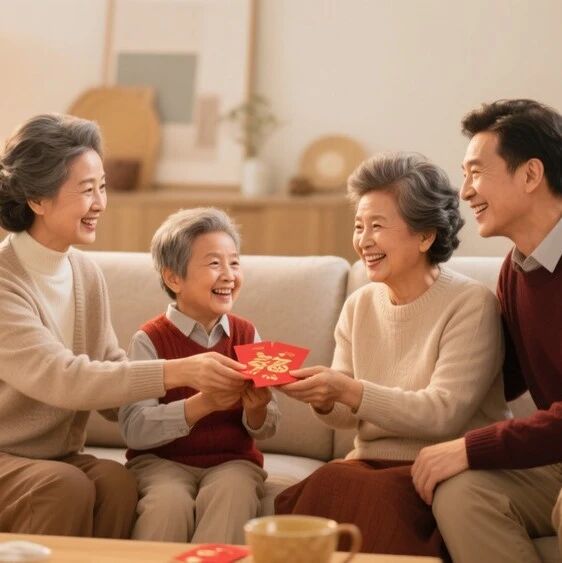
春晚40年赞助商变迁史,从康巴丝到机器人见证中国经济跃迁
Sou Hu Cai Jing· 2026-02-18 02:17
Group 1 - The article discusses the evolution of sponsorship in the CCTV Spring Festival Gala over the past 40 years, reflecting changes in Chinese society and consumer behavior [2][3] - The first sponsor, 康巴丝 (Kambas), set a precedent in 1984 by using 3,000 quartz watches as payment, marking the beginning of brand sponsorship in the gala [6][8] - The transition from watches to bicycles as the next major sponsor in 1995 illustrates the shift in consumer goods that represented status during the era of material scarcity [10][12] Group 2 - The late 1990s saw a surge in consumer spending on new household appliances, with 山东孔府宴酒 (Shandong Confucius Banquet Wine) becoming the first "mark king" of the gala in 1995, paying 30.79 million yuan [10][12] - The rapid growth of the liquor industry during this period was fueled by "human consumption," where premium liquor became a social currency [12][14] - The article highlights the consequences of over-reliance on advertising without maintaining product quality, as seen in the case of 秦池酒 (Qin Pool Wine), which faced a significant drop in sales after quality issues emerged [14][15] Group 3 - From the early 2000s, the focus shifted to home appliances, with 美的 (Midea) becoming a prominent sponsor, securing 16 sponsorships from 2003 to 2019 [17][19] - The cost of advertising during the gala increased significantly, with Midea's sponsorship fee rising from 6.8 million yuan in 2005 to 57.2 million yuan in 2011, reflecting the growing viewership [17][19] - The brand storytelling approach adopted by companies like 海尔 (Haier) and 格力 (Gree) during this period indicates a shift towards building emotional connections with consumers [20] Group 4 - The rise of internet companies post-2010 transformed the gala's advertising landscape, with platforms like WeChat leveraging the event for massive user engagement through interactive features like the "red envelope battle" [21][23] - The article notes that the 2015 Spring Festival Gala saw WeChat's user engagement peak, with over 10.1 billion red envelopes sent, showcasing the event's potential as a digital marketing platform [21][23] - The involvement of tech giants in the gala reflects a broader trend of digital economy reshaping traditional advertising methods, with companies like 快手 (Kuaishou) and 抖音 (Douyin) entering the sponsorship arena [25][27] Group 5 - The article concludes by emphasizing the transition from showcasing products to highlighting technological advancements, as seen with the introduction of robots in recent galas [27] - This shift signifies a broader change in China's economic landscape, moving from manufacturing to innovation-driven growth, with a focus on high-tech industries [27] - The future of the Spring Festival Gala sponsorship landscape remains uncertain, raising questions about which industries will dominate the next decade [27]




春晚广告位争夺战:四十年国民记忆与商业暗流
创业邦· 2026-02-17 10:32
Core Viewpoint - The evolution of the Spring Festival Gala sponsorship reflects the changing landscape of China's economy and consumer behavior over the past 40 years, showcasing the transition from material scarcity to technological innovation and brand storytelling [4][24]. Group 1: 1980s to Early 1990s - The 1980s marked a period of material scarcity, where items like watches and radios were symbols of wealth and status, leading to the first brand sponsorship by 康巴丝 (Kangbasi) at the Spring Festival Gala [5][7]. - 康巴丝 sponsored the gala by trading 3,000 quartz watches for advertising, which significantly boosted its brand recognition and sales, reaching an annual production of 1.26 million watches by 1987 [8]. - The sponsorship model evolved, with 中华自行车 (Zhonghua Bicycle) taking over the sponsorship in 1995, reflecting the changing consumer demands and economic conditions [9][14]. Group 2: Mid-1990s to Early 2000s - The mid-1990s saw a surge in consumer spending, with the emergence of "标王" (advertising king) sponsorships, particularly in the liquor industry, exemplified by 山东孔府宴酒 (Shandong Confucius Feast Wine) and 秦池酒 (Qinchijiu) [11][12]. - 秦池酒's sponsorship led to a dramatic increase in sales from 1.8 billion yuan in 1995 to 9.5 billion yuan in 1996, highlighting the impact of gala sponsorship on brand visibility and sales [16]. - The era was characterized by a shift towards consumerism, with brands leveraging the gala to enhance their market presence, although some faced backlash due to quality issues [16]. Group 3: 2000s to Early 2010s - The early 2000s marked the rise of home appliance brands, with 美的 (Midea) becoming a prominent sponsor, securing 11 sponsorships from 2003 to 2014, reflecting the growing importance of brand trust [17][19]. - The cost of advertising skyrocketed, with Midea's sponsorship fee increasing from 6.8 million yuan in 2005 to 57.2 million yuan in 2011, indicating the gala's significant viewership and advertising value [21]. - Brands began to focus on storytelling and emotional connections with consumers, moving beyond mere product promotion to build brand loyalty [23]. Group 4: Mid-2010s to Present - The 2010s saw the rise of internet companies as key players in the advertising space, with platforms like WeChat revolutionizing audience engagement through interactive features like the "red envelope battle" during the gala [25][26]. - The digital transformation of the gala allowed for unprecedented levels of interaction, with WeChat reporting 10.1 billion red envelope transactions on New Year's Eve, significantly enhancing its user base [26]. - The emergence of technology companies in the gala sponsorship landscape reflects a broader shift towards innovation and digital engagement, with brands like Xiaomi and AI robotics showcasing advancements in technology [32].





第二个抢红包手气最佳?微信回应了
Xin Lang Cai Jing· 2026-02-16 11:53
Core Viewpoint - The article discusses the popularity and mechanics of WeChat red envelopes, particularly during the Spring Festival, highlighting the balance between enjoyment and pressure in the amount users can send and receive [1][2]. Group 1: WeChat Red Envelope Mechanics - The maximum amount for a single WeChat red envelope is set at 200 yuan to ensure that sending and receiving does not create psychological pressure for users [1]. - During special occasions like Valentine's Day and the Qixi Festival, the limit can increase to 520 yuan to accommodate the expression of affection associated with these events [2]. - The randomness of the red envelope amounts is a key feature, with no preset rules or strategies influencing the distribution of funds, emphasizing the importance of quick reflexes for users [2]. Group 2: Usage Statistics - During the Spring Festival, WeChat red envelopes were sent over 4 billion times, showcasing the platform's significant engagement during this period [2]. - WeChat red envelopes have been in existence for 12 years, indicating their sustained popularity and integration into social practices [2].
为什么微信红包最多只能 200 元?官方终于说清了
程序员的那些事· 2026-02-15 14:40
Core Viewpoint - The limit of 200 yuan for WeChat red envelopes is not a technical constraint but a design choice aimed at promoting social interaction without the pressure of competition [1][2]. Group 1: Reasons for the 200 Yuan Limit - The limit helps to prevent comparison and maintain joy in social interactions, ensuring that red envelopes remain a fun activity rather than a display of wealth [2]. - The design encourages small, meaningful contributions, making it accessible for everyone and avoiding feelings of embarrassment or financial strain [3]. - Setting a limit of 200 yuan enhances financial security by reducing risks associated with fraud, gambling, and disputes, while still allowing for special exceptions on certain dates [4].
红包最佳手气攻略?微信:金额实时产生、无规律
Bei Ke Cai Jing· 2026-02-15 12:28
Group 1 - The core viewpoint of the article is that WeChat's red envelope feature is designed to enhance social connections during the Chinese New Year, with specific strategies to make the experience more enjoyable for users [1][2]. - WeChat's product manager mentioned that the red envelope amounts are generated as random numbers in real-time, indicating there is no optimal strategy for maximizing the chances of receiving larger amounts [1]. - The company observed a user demand for sending greetings to friends during the New Year, and the red envelope feature aims to alleviate any social awkwardness associated with such interactions [1]. Group 2 - WeChat has reported that during one year's Spring Festival, the number of red envelopes sent exceeded 4 billion, and this volume has remained consistent [2]. - The product manager emphasized that the inability to retract sent red envelopes is intentional, as it reduces the psychological burden on users and can lead to unexpected social interactions within group chats [1].
红包平时上限为什么是200元,微信回应
Xin Lang Cai Jing· 2026-02-15 02:10
Group 1 - The core idea of the article revolves around the popularity and mechanics of WeChat red envelopes during the Spring Festival, highlighting the balance between fun and user experience [1][6]. - WeChat's product manager, "Feige," explains that the maximum amount for a single red envelope is set at 200 yuan to avoid creating pressure for users while still allowing for meaningful expressions of sentiment [1][3]. - On February 14, WeChat increased the limit for one-on-one red envelopes from 200 yuan to 520 yuan, aligning with the significance of the date and similar festive occasions [3]. Group 2 - The randomness of red envelope amounts is a key feature that enhances the enjoyment of the experience, with faster internet speeds potentially leading to better outcomes in terms of the amounts received [5]. - "Feige" clarified that there are no preset rules or strategies for maximizing red envelope amounts; the most important factor is quick reflexes to claim them [6]. - During the Spring Festival, WeChat reported over 4 billion red envelope transactions, showcasing the platform's extensive usage and engagement over its 12-year history [6].