AI智能体(AI Agent)

Search documents
中国AI也开始“卷”,陷入消耗战
日经中文网· 2026-03-26 08:00
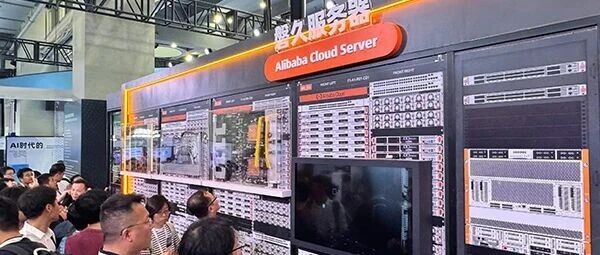
Core Viewpoint - The article discusses the significant increase in investment by major Chinese internet companies in AI and cloud infrastructure, highlighting the competitive landscape and the potential risks associated with these investments [2][5][8]. Group 1: Investment Trends - By 2027, the combined investment of Alibaba, Tencent, ByteDance, and Baidu in data centers and related infrastructure is expected to reach approximately $84 billion, a 60% increase from 2025 [2][5]. - Alibaba plans to invest nearly 9 trillion yen in AI and cloud infrastructure over the next three years, while Tencent aims to double its investment in AI services and model development to over 800 billion yen by 2026 [7]. Group 2: AI Development and Competition - Alibaba has developed generative AI models like "Qwen" and aims to increase annual sales from cloud services and AI-related businesses to $100 billion within five years, requiring an annual growth rate of over 40% [5]. - The competition in the AI service sector is intensifying, with major companies focusing on autonomous AI agents, spurred by government initiatives to expand AI applications [7][8]. - Both Alibaba and Tencent are launching AI agents to enhance user engagement and drive revenue, with Tencent planning to integrate AI capabilities into its WeChat platform [8]. Group 3: Financial Performance - Alibaba's net profit for the fourth quarter of 2025 fell by 67% year-on-year to 16.3 billion yuan, marking the second consecutive quarter of profit decline due to increased promotional expenses in the competitive food delivery sector [4]. - Despite the challenges, Alibaba's cloud business showed growth in sales and adjusted EBITA, indicating resilience amid the competitive landscape [4].


美股“两连阳”!“科技七巨头”齐涨,AI抛售潮临近尾声?
Di Yi Cai Jing· 2026-02-19 00:16
Market Overview - The short-term probability of interest rate cuts in the US stock market appears low, making it difficult to provide support [6] - After a recent sell-off in the artificial intelligence (AI) sector, US stocks have stabilized, with the S&P 500 index rising by 38.09 points, or 0.56%, to 6881.31 points as of February 18 [1] - The "Tech Seven" stocks, including Nvidia and Amazon, saw significant gains, with Nvidia's stock rising nearly 1.63% due to a new agreement with Meta [2] Technology Sector Insights - Despite some Wall Street firms believing the AI sell-off is nearing its end, skepticism remains among investors regarding the impact of large capital expenditures on tech giants' cash flow and buyback ratios [1][2] - The software sector has faced a significant decline, with a drop of approximately 24% over the past three months, although future earnings estimates are projected to be about 5% higher [2] - High capital expenditures from major cloud service providers are expected to account for 92% of their operating cash flow this year, surpassing investment intensity seen in the late 1990s [4] Earnings and Profitability - The S&P 500 is expected to report double-digit earnings growth for the fifth consecutive quarter, with profit margins reaching a record 12.6% [5] - The disparity in performance between the equal-weighted S&P 500 and the market-cap weighted index is attributed to the "Tech Seven" stocks' negative returns of -5.9% [4] AI and Software Market Dynamics - Traders are increasingly warming to the idea of buying software stocks at lower prices, despite the recent sell-off [3] - AI technology is viewed as a powerful enhancement rather than a fundamental replacement, relying heavily on existing record systems for data [3] Federal Reserve and Economic Outlook - The Federal Reserve's recent meeting minutes indicate a cautious approach to interest rate cuts, with a focus on inflation risks [7] - The labor market's stability and the anticipated growth in AI capital expenditures are expected to drive GDP beyond expectations, complicating the outlook for inflation [8]


如何在AI代理主导的世界里,做一个人类CEO ?
Hu Xiu· 2025-07-25 02:33
Core Insights - The article emphasizes the importance of developing unique judgment and taste in an era dominated by AI agents, suggesting that leaders must embrace unconventional approaches to gain a human advantage over algorithms [2][3][4] Group 1: AI and Business Operations - The concept of using AI agents to break down complex business challenges into smaller, specialized tasks is highlighted, paralleling the MapReduce model in data processing [9][10][11] - This approach aims to enhance performance and scalability within organizations, allowing for more efficient task management and integration of results [11][12][13] Group 2: Organizational Structure - Future organizational models may shift from traditional structures to systems where multiple AI agents work in parallel, each handling specific tasks [14][15] - The article suggests that companies need to redesign their architectures to accommodate a world of autonomous intelligent agents, transitioning from human agents to AI-driven ones [18][19] Group 3: Human Role in AI-Driven Environments - The critical role of humans in this new paradigm is to act as orchestrators, merging functions and making nuanced decisions that AI cannot easily automate [20][21] - Developing a unique taste and insight is essential for humans to maintain a competitive edge over general AI, requiring access to proprietary data and experiences [23][24]
字节跳动“扣子空间”测评:AI智能体正在抹平专业门槛,做一款游戏仅需3分钟
Tai Mei Ti A P P· 2025-04-27 04:23
Core Insights - The emergence of AI agents is predicted to create a new economic ecosystem, leading to a "density competition" era in global industries by 2025 [1] - ByteDance's "Coze Space" is evaluated as a potential "office digital worker," showcasing capabilities in document writing and data processing [2][3] Application in Office Scenarios - Coze Space can autonomously generate various document formats, including Markdown, Office documents, and PDFs, based on user-defined tasks [3] - It can create tables with stock data, such as the latest closing prices of the SSE 50 index components, and provide downloadable CSV files for further processing [3] Performance Evaluation - Coze Space utilizes deep learning and NLP technologies to automate the entire task process, from demand analysis to output generation [7] - It features a dual-mode mechanism: Exploration Mode for quick tasks and Planning Mode for complex scenarios, enhancing user control over task execution [7][13] Technical Innovations - The platform employs an open architecture, allowing for the integration of custom plugins and expanding the capabilities of AI agents [10] - Coze Space has a built-in expert agent system, including tools for stock analysis and user research, indicating a potential subscription model for advanced features [9] User Experience - The interface is designed to be intuitive, allowing users to input tasks easily and switch between modes for better control [14] - Users can view task breakdowns and intermediate results, enhancing transparency and user engagement in the AI process [15] Challenges and Future Directions - Coze Space faces challenges such as technical stability and the "hallucination" problem, where generated content may not always align with reality [16][17] - The platform aims to improve its performance and expand its expert agent ecosystem to meet growing user demands while exploring sustainable commercialization paths [17]