
千问(Qwen)

Search documents
中国AI也开始“卷”,陷入消耗战
日经中文网· 2026-03-26 08:00
Core Viewpoint - The article discusses the significant increase in investment by major Chinese internet companies in AI and cloud infrastructure, highlighting the competitive landscape and the potential risks associated with these investments [2][5][8]. Group 1: Investment Trends - By 2027, the combined investment of Alibaba, Tencent, ByteDance, and Baidu in data centers and related infrastructure is expected to reach approximately $84 billion, a 60% increase from 2025 [2][5]. - Alibaba plans to invest nearly 9 trillion yen in AI and cloud infrastructure over the next three years, while Tencent aims to double its investment in AI services and model development to over 800 billion yen by 2026 [7]. Group 2: AI Development and Competition - Alibaba has developed generative AI models like "Qwen" and aims to increase annual sales from cloud services and AI-related businesses to $100 billion within five years, requiring an annual growth rate of over 40% [5]. - The competition in the AI service sector is intensifying, with major companies focusing on autonomous AI agents, spurred by government initiatives to expand AI applications [7][8]. - Both Alibaba and Tencent are launching AI agents to enhance user engagement and drive revenue, with Tencent planning to integrate AI capabilities into its WeChat platform [8]. Group 3: Financial Performance - Alibaba's net profit for the fourth quarter of 2025 fell by 67% year-on-year to 16.3 billion yuan, marking the second consecutive quarter of profit decline due to increased promotional expenses in the competitive food delivery sector [4]. - Despite the challenges, Alibaba's cloud business showed growth in sales and adjusted EBITA, indicating resilience amid the competitive landscape [4].


雷军:未来每周或仅需工作3天,每天工作2个小时;林俊旸发文告别千问;飞驰人生3票房突破40亿;OpenClaw回应爆火丨邦早报
创业邦· 2026-03-08 01:11
Group 1 - OpenClaw has gained significant popularity in China, with nearly a thousand developers and AI enthusiasts participating in its cloud installation at Tencent's headquarters, indicating a new level of adoption in the market [3] - The film "Flying Life 3" has surpassed 4 billion yuan in box office revenue, positioning it among the top 10 in Chinese film history [3] Group 2 - Sushi restaurant Sushi Lang is addressing consumer reports of finding parasitic eggs in tuna, emphasizing its commitment to food safety and compliance with national standards [8] - Longhua Automobile's chairman Wei Jianjun apologized for a design controversy involving a promotional poster, pledging to take full legal and financial responsibility [8][9] Group 3 - Xiaomi's CEO Lei Jun predicts that in the AI era, work hours may reduce significantly, suggesting a future where individuals might only need to work three days a week for two hours each day, enhancing overall quality of life [10] - 360 Group's founder Zhou Hongyi believes that the rapid development of AI will create new job opportunities, particularly for liberal arts graduates who can address ethical and societal issues arising from technological advancements [10] Group 4 - Google has proposed a new compensation package for CEO Sundar Pichai, potentially worth $692 million over three years, making him one of the highest-paid CEOs globally [10] - Meituan and Lenovo have launched OpenClaw remote deployment services, reflecting a significant increase in related search volume by over 300% [10] Group 5 - DJI has made progress in addressing security vulnerabilities in its robotic vacuum, rewarding a researcher with $30,000 for discovering a significant issue affecting around 7,000 devices [12] - NetEase is reportedly halting funding for the studio led by Naoki Yoshida, with employees informed of this decision [12] Group 6 - Huang Renxun, CEO of NVIDIA, predicts that all software will become "agentic," transitioning from traditional licensing models to a system where companies rent out intelligent agents to perform tasks [12] - Tesla is set to build its largest supercharging station to date in California, featuring over 400 V4 charging stations, significantly expanding its charging infrastructure [13] Group 7 - The Ministry of Culture and Tourism of China forecasts that inbound tourist numbers will exceed 150 million by 2025, with a projected growth rate of over 17% [21] - A national representative has suggested measures to combat fraudulent online shopping practices targeting the elderly, highlighting the need for improved consumer protection in the aging population [21]

投资人开抢林俊旸
商业洞察· 2026-03-06 09:28
Core Viewpoint - The sudden departure of Lin Junyang, a key figure behind Alibaba's Qwen AI model, has sparked significant interest and speculation in the AI investment community, highlighting the ongoing competition and talent acquisition in the AI sector [5][9]. Group 1: Lin Junyang's Departure - Lin Junyang, born in 1993, graduated from Peking University in 2019 and joined Alibaba, where he became a core creator of the Qwen model, recently releasing the Qwen3.5 version [3][6]. - His unexpected announcement to step down has led to speculation about internal organizational changes at Alibaba, with the Qwen app stating that the personnel changes reflect tensions between technical ideals and organizational structure [5][12]. - Other key personnel from the Qwen team, including Yu Bowen and Hui Bin, have also left, indicating a broader trend of talent departure from Alibaba [8][9]. Group 2: Qwen's Growth and Impact - Under Lin's leadership, Qwen has become a leading open-source model, achieving over 200,000 derivative models and 1 billion downloads by January 2026, making it the first open-source model to reach this milestone [11][12]. - The Qwen app, launched in November, has rapidly gained traction, reaching 203 million monthly active users and becoming the third-largest AI application globally, with a 552% growth rate [12]. - The app's features, including various everyday functionalities, have contributed to its widespread adoption, with over 200 million transactions recorded shortly after its launch [12]. Group 3: Talent Acquisition in AI - The trend of AI leaders leaving major companies to start their own ventures is becoming increasingly common, with notable examples including former Alibaba and Baidu executives who have successfully raised significant funding for their startups [14][15]. - The competition for top AI talent has intensified, with many investors actively seeking to connect with these individuals to secure early investment opportunities in their new ventures [9][16]. - Over 20 former executives from major tech companies like Alibaba, Baidu, and ByteDance have transitioned into AI entrepreneurship, making them attractive targets for venture capitalists due to their expertise and industry connections [16][17].
中国AI大战:“百模大战”已结束,最大的利润池归属大厂,智谱和MiniMax如何突围?
华尔街见闻· 2026-02-10 11:52
Core Insights - The core viewpoint of the article emphasizes that the ability to convert AI models into cash flow is becoming the true scarcity in the industry, as the Chinese AI market transitions from a "model war" phase to one where commercial viability and global positioning are key determinants of success [1][2]. Industry Overview - The report indicates that the number of capable and well-funded model developers in China has decreased from over 200 to less than 10, highlighting a significant consolidation in the AI market [1]. - The largest profit pool in the domestic AI industry is expected to shift towards platform giants that control distribution, while independent firms must find survival niches through "structural neutrality" [1][4]. Profit Distribution - The report asserts that the long-term profit pool of generative AI will likely be concentrated among large internet platforms like Tencent and Alibaba, which have established distribution and monetization channels [5][6]. - Platforms have high-frequency user touchpoints and mature application scenarios, making it easier to internalize AI capabilities as features rather than standalone products [6][7]. Independent Model Companies - Independent model companies like Zhipu and MiniMax are seen as having opportunities not through direct competition with platforms but by providing "structural neutrality" [11][12]. - These independent providers can monetize their models through APIs and enterprise licensing without creating competitive dependencies with their clients [14]. Financial Insights - Zhipu's revenue model is heavily focused on localized deployment, which accounted for 85% of its total revenue in the first half of FY2025, with a gross margin of 59.1% [16]. - MiniMax's revenue structure is notably global, with over 73% of its total revenue coming from markets outside China, providing it with significant economic flexibility [24]. Growth Projections - Zhipu is expected to achieve a revenue CAGR of 127% from 2026 to 2030, with profitability anticipated by 2029 and a normalized net profit margin of 20% by 2030 [19][20]. - MiniMax is projected to have a revenue CAGR of 138% during the same period, with profitability also expected by 2029 and a normalized net profit margin of 24% by 2030 [29][30]. Cost Structure Changes - The report highlights a significant shift in cost structure from "training-driven" to "inference-driven," with inference costs expected to dominate future expenditures [32][39]. - For Zhipu, the proportion of training costs is projected to drop from 93% in 2025 to 32% by 2030, while inference costs will rise from 7% to 68% [34][37]. Conclusion - The competitive landscape is shifting, with the focus moving from who can train larger models to who can achieve cheaper inference and higher utilization rates [40]. - The value of Zhipu and MiniMax lies not in challenging the platforms but in occupying indispensable positions outside of them [41].





中国AI大战:“百模大战”已结束,最大的利润池归属大厂,智谱和MiniMax如何突围?
硬AI· 2026-02-10 07:03
Core Insights - The Chinese AI industry is transitioning from a "hundred model battle" to a phase where commercial viability, model innovation, and global layout are key determinants of success [3][4] - The largest profit pool in the AI sector is expected to flow to major platforms like Tencent and Alibaba, rather than model companies [9][10] - Independent firms like Zhipu and MiniMax are finding niches through localized deployment and global market expansion, respectively [2][29] Industry Overview - The number of capable and well-funded model developers in China has decreased from over 200 to less than 10 [3][4] - The industry is increasingly focused on the ability to generate cash flow from models rather than just developing them [4][5] Profit Distribution - The report emphasizes that the enduring profit pool in generative AI will likely be concentrated among large internet platforms due to their control over distribution and monetization channels [10][12] - Major platforms have established mechanisms for monetization across various sectors, making AI a tool to enhance average revenue per user (ARPU) and conversion rates [10][11] Independent Model Companies - Independent model companies like Zhipu and MiniMax are positioned to thrive by offering "structural neutrality," allowing them to empower client applications without competing directly with them [16][18] - Zhipu's business model is anchored in localized deployment, which currently accounts for 85% of its revenue with a gross margin of 59.1% [22][24] - MiniMax's revenue is significantly derived from international markets, with 73% of its total revenue coming from outside China [31][30] Financial Projections - Zhipu is expected to achieve a compound annual growth rate (CAGR) of 127% from 2026 to 2030, with profitability anticipated by 2029 [25][26] - MiniMax is projected to have a CAGR of 138% during the same period, also expecting to reach profitability by 2029 [35][36] Cost Structure Changes - The cost structure in the AI industry is shifting from training-driven expenses to inference-driven costs, with inference costs expected to dominate future expenditures [39][41] - For Zhipu, the proportion of training costs is predicted to drop from 93% in 2025 to 32% by 2030, while inference costs will rise from 7% to 68% [41][44] - MiniMax will see a similar trend, with training costs decreasing from 80% to 28% and inference costs increasing from 20% to 72% [42][45] Strategic Positioning - The future competition in the AI sector will focus on inference efficiency, pricing power, and utilization rates rather than merely the size of models [46][47] - Both Zhipu and MiniMax are seen as essential players that occupy a critical position outside of the major platforms, rather than directly challenging them [47]
摩根大通:中国AI大战,“百模大战”已结束,最大的利润池归属大厂,智谱和MiniMax如何突围?
美股IPO· 2026-02-10 04:36
Core Insights - The Chinese AI industry is transitioning from a "hundred model battle" to a phase where commercial viability, model innovation, and global layout are key determinants of success [3][4] - The largest profit pool in the AI sector is expected to flow to major platforms like Tencent and Alibaba, rather than model companies [6][10] - Independent firms like Zhipu and MiniMax are finding niches through "structural neutrality," with Zhipu focusing on localized deployment and MiniMax expanding into global markets [3][6] Group 1: Industry Overview - The number of capable and well-funded model developers in China has decreased from over 200 to less than 10 [3] - The industry is no longer rewarding the ability to create models but rather the ability to sustain operations long-term [3][6] - The competition is shifting from technical capabilities to the ability to build commercial systems [4] Group 2: Profit Distribution - The report emphasizes that the sustainable profit pool in generative AI will likely be concentrated among large internet platforms due to their control over distribution and monetization channels [6][10] - Major platforms have established mechanisms for monetization across various sectors, making AI a tool to enhance average revenue per user (ARPU) and conversion rates [6][10] Group 3: Independent Firms' Strategies - Zhipu's business model is divided into localized deployment and cloud-based services, with 85% of its revenue coming from localized deployment, which has a gross margin of 59.1% [14][16] - MiniMax has a global revenue structure, with 73% of its income coming from international markets, providing it with structural advantages [21][22] - Both companies are expected to achieve significant revenue growth, with Zhipu projected to have a compound annual growth rate (CAGR) of 127% from 2026 to 2030, and MiniMax at 138% [17][25] Group 4: Financial Projections - Zhipu is expected to achieve profitability by 2029, with a normalized net profit margin of 20% by 2030 [18] - MiniMax is also projected to become profitable by 2029, with a normalized net profit margin of 24% by 2030 [26] - Both companies are anticipated to require external financing in 2026 and 2027, with Zhipu needing 5 billion RMB annually and MiniMax needing 700 million USD [18][27] Group 5: Cost Structure Changes - The cost structure of AI companies is shifting from "training-driven" to "inference-driven," with inference costs expected to become the dominant expense [28][34] - Zhipu's inference-related computing cost is projected to rise from 7% in 2025 to 68% by 2030, while MiniMax's will increase from 20% to 72% [34][35] - This shift indicates that future competition will focus on inference efficiency and pricing power rather than merely the size of models [35]

中国AI大战:“百模大战”已结束,最大的利润池归属大厂,智谱和MiniMax如何突围?
Hua Er Jie Jian Wen· 2026-02-10 03:58
Core Insights - The Chinese AI industry is transitioning from a "hundred models war" phase to one where commercial viability, model innovation, and global layout are key determinants of success [1][2] - The number of capable and well-funded model developers in China has decreased from over 200 to less than 10 [1] - The largest profit pool in the domestic AI industry is expected to shift towards platform giants that control distribution, while independent firms must find survival niches through "structural neutrality" [1][12] Industry Overview - The competition in the AI sector is shifting from a technical race to the ability to build commercial systems [2][3] - The report highlights that model capabilities are becoming increasingly homogeneous, while funding consumption is rising exponentially [2] - Clients are now more focused on delivery capability, stability, and sustainability [2] Profit Distribution - The long-term profit pool in the generative AI sector is likely to be highly concentrated among large internet platforms like Tencent and Alibaba [5][6] - These platforms have advantages in distribution, monetization paths, and high-frequency transaction flows, making them more capable of internalizing AI capabilities as features rather than standalone products [6][7] Independent Model Companies - Independent model developers like Zhiyu and MiniMax are positioned to provide "structural neutrality" and avoid direct competition with platform giants [11][12] - Zhiyu's business model focuses on high-compliance localized deployments, while MiniMax aims for global market expansion with high-margin offerings [1][21] Zhiyu's Financials - Zhiyu's revenue is primarily derived from localized deployments, which accounted for 85% of total revenue in the first half of FY2025, with a gross margin of 59.1% [14] - The company is expected to transition to a recurring revenue model as foundational models become embedded in critical workflows [15] MiniMax's Global Strategy - MiniMax generates over 73% of its total revenue from international markets, having deployed in over 200 countries [22][23] - The company has a balanced revenue structure across its three main business lines: AI companionship, generative media, and an open platform [22][32] Growth Projections - MiniMax is projected to achieve a compound annual growth rate (CAGR) of 127% from 2026 to 2030, with profitability expected by 2029 [26][33] - Zhiyu is also expected to see significant growth in cloud-based API revenue starting in the second half of 2025 [17] Cost Structure Changes - The cost structure in the AI industry is shifting from "training-driven" to "inference-driven," with inference costs becoming the dominant expense [29][35] - By 2030, the percentage of total costs attributed to training will drop significantly for both Zhiyu and MiniMax, while inference-related costs will rise sharply [39]

全球AI巅峰角力,阿里“通云哥”坐上唯二顶级桌
Guan Cha Zhe Wang· 2026-01-29 14:00
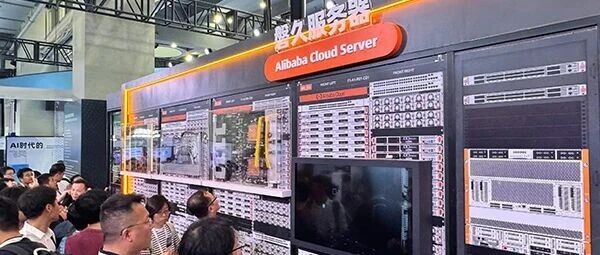
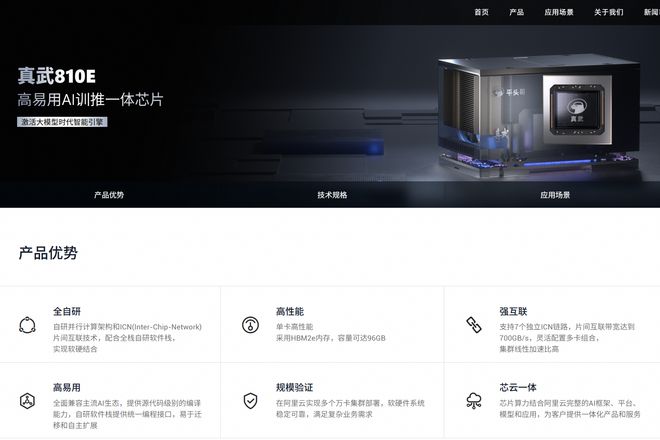
Core Insights - Alibaba's new AI chip "Zhenwu 810E" has been launched, marking a significant breakthrough in domestic AI chip performance and application scale [1][5] - Alibaba is now one of the only two companies globally, alongside Google, to achieve a full-stack AI integration of "AI + Cloud + Chip" [3][15] - The global cloud computing market is dominated by four major players: Microsoft, Amazon, Google, and Alibaba, collectively holding over 80% market share [4] Group 1: AI Chip Development - The "Zhenwu 810E" chip features impressive specifications, including 96GB HBM2e memory, 700GB/s interconnect bandwidth, and a PCIe 5.0×16 interface, surpassing NVIDIA's A800 [5][10] - Alibaba's chip development journey began in 2018, with the establishment of Pingtouge, aimed at overcoming chip supply challenges [9][10] - The chip is a culmination of Alibaba's 17 years of technological investment in building a "Cloud + AI + Chip" ecosystem [6][10] Group 2: Strategic Positioning - Alibaba's full-stack self-research approach contrasts with Microsoft and Amazon's reliance on external technologies, providing a more stable long-term strategy [4][5] - The company plans to invest at least 380 billion RMB over the next three years in cloud computing and AI infrastructure, exceeding its total investment in the past decade [14] - Alibaba's "Tongyun Ge" AI triangle, consisting of Pingtouge, Alibaba Cloud, and Tongyi Laboratory, creates a synergistic effect that enhances both chip performance and cloud service efficiency [10][15] Group 3: Market Impact - The launch of the "Zhenwu" chip and the "Tongyun Ge" AI triangle positions Alibaba as a key player in the global AI infrastructure competition [12][15] - Alibaba's advancements in AI technology are expected to lead to a shift in global AI standards, with the company emerging as a significant competitor against U.S. tech giants [12][15] - The collaboration between chips and cloud services allows for rapid iteration and cost advantages, enhancing Alibaba's competitive edge in the AI market [15]
港股速递|恒生科技、港股通科技走势分化,阿里宣布千问更新,百度筹备“入通”
Mei Ri Jing Ji Xin Wen· 2026-01-15 03:15
Group 1 - The Hong Kong stock market showed strong performance in the real estate and financial sectors, while the Hang Seng Technology Index exhibited mixed trends [1] - Leading stocks in the Hang Seng Technology Index included BYD Company, Sunny Optical Technology, Horizon Robotics, Li Auto, Midea Group, BYD Electronics, and Haier Smart Home [1] - Ctrip's stock price adjusted due to an antitrust investigation, with the company stating it will cooperate with regulatory authorities and work towards a sustainable market environment [1] Group 2 - Alibaba announced that its AI application, Qwen, will be fully integrated into its ecosystem, including Taobao, Alipay, and other services, enabling features like food delivery and flight booking [1] - Baidu's stock rose over 1% as it considers upgrading its secondary listing in Hong Kong to a "dual primary listing" to attract mainland capital [1] - The Hang Seng Internet ETF focuses on major Hong Kong internet companies, with expectations that the impact of the "subsidy war" on profitability may gradually diminish, leading to stronger performance driven by AI application commercialization [2]
恒生科技、港股通科技走势分化,阿里宣布千问更新,百度筹备“入通”
Mei Ri Jing Ji Xin Wen· 2026-01-15 03:08
Group 1 - The Hong Kong stock market showed strong performance in the real estate and financial sectors, while the Hang Seng Technology Index exhibited mixed trends [1] - Leading gainers among Hang Seng Technology constituents included BYD, Sunny Optical Technology, Horizon Robotics, Li Auto, Midea Group, BYD Electronics, and Haier Smart Home [1] - Ctrip's stock price adjusted due to an antitrust investigation, with the company stating it will actively cooperate with regulatory authorities [1] Group 2 - Alibaba announced that its AI application, Qwen, will be fully integrated into its ecosystem, including Taobao, Alipay, and other services, allowing users to order food and book flights with AI [1] - Baidu's stock rose over 1% as it considers upgrading its secondary listing in Hong Kong to a "dual primary listing" to attract mainland capital [1] - The Hang Seng Internet ETF focuses on major Hong Kong internet companies, with expectations that the impact of the "subsidy war" on profitability may gradually diminish, leading to stronger performance driven by AI application commercialization [2]