
AI玩具产业

Search documents
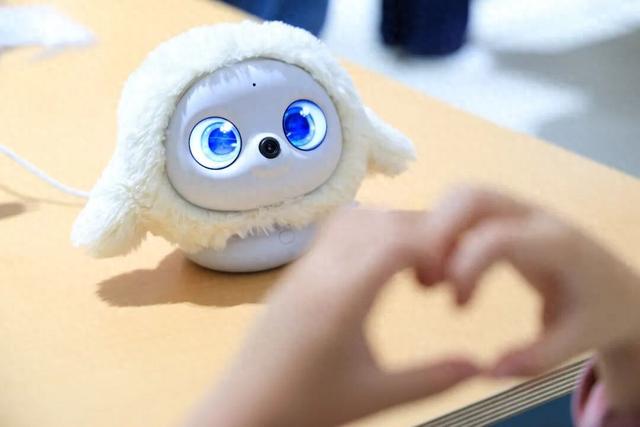
AI玩具哄孩子,效果如何?
Xin Lang Cai Jing· 2026-02-23 02:13
Core Insights - The emergence of AI toys is reshaping children's growth paths and educational practices, while also innovating family interaction models and exploring ethical boundaries in technology [1][5][10] Industry Overview - AI toys are defined as products that integrate artificial intelligence with traditional toys, enhancing their functionality to include education, companionship, and therapeutic roles [5][7] - The AI toy market in China is projected to grow from approximately 246 billion yuan in 2024 to 290 billion yuan in 2025, indicating a significant expansion in this sector [8] Technological Integration - Companies are utilizing a dual-layer model of "general large model + vertical small model" to enhance interaction, integrating both domestic and international AI models [4][5] - The development of AI toys is supported by advancements in technologies such as language models, voice recognition, computer vision, and emotional computing, allowing for multi-modal interactions [5][8] Market Dynamics - The demand for AI toys is driven by parents seeking companions for their children that can listen and respond, filling the emotional companionship gap [5][9] - Major tech companies are entering the AI toy market, with products like "智能憨憨" and platforms like JoyInside gaining popularity and selling out quickly [8] Consumer Experience - While AI toys are gaining traction, there are concerns regarding performance issues, such as lag and inadequate recognition rates, leading to a return rate of 30% to 40% [9][10] - The reliance on cloud-based models and the simplicity of many products have resulted in a homogenized market, where many toys merely serve as "smart story machines" [9][10] Ethical Considerations - The use of AI toys raises questions about emotional dependency and the impact on children's social skills, highlighting the need for a balance between technological companionship and real human interaction [10] - Privacy concerns are paramount, as the collection of data from children necessitates the establishment of regulatory standards to protect sensitive information [10]

整治“毒捏捏乐”,工信部发布系列强制国标
仪器信息网· 2025-11-27 09:07
Core Viewpoint - The newly revised GB 6675-2025 "Toy Safety" standards will enhance the safety and quality of toys for children under 14 years old, replacing the previous GB 6675-2014 version by November 1, 2026, with stricter compliance requirements [3][8]. Summary by Sections Overview of the New Standards - The GB 6675 series is the most authoritative safety standard system in China's toy industry, covering basic safety requirements, mechanical and physical performance, flammability, chemical properties, and electrical safety [5][7]. Key Changes in Standards - The new standards significantly increase the mandatory compliance requirements for toy products, akin to raising the passing score from 60 to 90 [3][8]. - The standards are aligned with international toy safety standards such as ISO8124, facilitating global product circulation [9]. Specific Changes in Technical Requirements - **Mechanical and Physical Performance**: New requirements include a magnetic flux limit for magnetic toys, a standardized drop test height of 85 cm, and revised speed limits for electric riding toys [10]. - **Flammability**: Changes include a maximum burning rate for plush toy fabrics and a minimum vertical burning time for filling materials [11]. - **Electrical Safety**: The standards now specify electromagnetic compatibility (EMC) and radiation monitoring, aligning with EU and US standards [12]. - **Chemical Safety**: The new standards introduce limits for 14 types of chemical substances, including formaldehyde and various volatile organic compounds (VOCs), enhancing the safety of toys [13]. Implementation and Transition - The transition period for the new mandatory national standards will adopt a "12+12" work plan, allowing for a structured implementation [8].

事关AI玩具,工业和信息化部明确
Shang Hai Zheng Quan Bao· 2025-11-19 09:32
Core Insights - The application of artificial intelligence (AI) and large models in the toy industry has significantly enhanced product interactivity, creating a new competitive landscape [1][3] - The Ministry of Industry and Information Technology plans to develop an implementation plan to promote the adaptation of supply and demand in consumer goods, guiding toy companies to leverage AI technology to create new demands [1][8] Industry Characteristics - The integration of AI technology into traditional toys is reshaping product forms and value chains, making AI toys a new engine for high-quality industry development [3][4] - AI toys exhibit stronger product integration, allowing them to "understand," "see," and "think," enhancing their cultural and technological value [3][4] - The role of toys is evolving from mere entertainment to becoming "smart companions" that integrate education, emotional support, and creativity stimulation [3][4] - AI toys have broken age barriers, catering to diverse consumer needs across all age groups, from children to the elderly [4] Market Growth - The AI toy market in China is projected to reach approximately 24.6 billion yuan in 2024, with an expected increase to 29 billion yuan in 2025 [4] Industry Dynamics - The explosive growth of the AI toy market is activating the vitality of the entire industry chain, leading to a multi-faceted competitive landscape involving both toy and technology companies [5][6] - Companies are actively pursuing AI transformation strategies, forming collaborations to enhance product offerings and market presence [5][6] - Domestic AI toy manufacturers possess significant advantages in manufacturing costs, R&D cycles, and supply chain integrity, positioning them to create globally influential products [7] Policy and Innovation Support - A comprehensive support system involving top-level design, innovation promotion, and safety regulation is essential for the sustainable development of the AI toy industry [8] - The Ministry of Industry and Information Technology will guide toy companies in applying AI technology to stimulate creativity and personalized experiences for children [8] - There is a focus on integrating traditional culture into AI toys to create popular products that lead consumer trends [8] Future Outlook - The AI toy industry is expected to transition from scale growth to quality enhancement, leveraging a complete industrial chain and continuous innovation to strengthen its global competitiveness [9]

AI玩具 开启产业“黄金时代”
Zheng Quan Ri Bao· 2025-10-20 23:43
Core Insights - The AI toy industry is experiencing rapid transformation, becoming a new consumer hotspot across all age groups and entering a "golden era" of development [1][9] - AI toys cater to the dual needs of education and entertainment for children, provide emotional companionship for Generation Z, and serve as memory aids for the elderly, leveraging advanced technologies like multimodal interaction and emotional computing [1][2] Market Trends - AI toys are perceived as "screen-free educational tools" by parents, significantly enhancing children's learning experiences through interactive and engaging methods [2] - Sales of AI toys surged dramatically, with a reported sixfold increase in sales in the first half of 2025 compared to the previous period, and over 200% year-on-year growth [2] - The global AI toy market is projected to grow from $18.1 billion in 2024 to $60 billion by 2033, with a compound annual growth rate (CAGR) of approximately 14% [1] Consumer Demographics - The target audience for AI toys has expanded beyond children to include the Z generation and older adults, indicating a broadening market appeal [2][3] - AI toys are designed to provide emotional support and companionship, particularly for young professionals and the elderly, enhancing their quality of life [2][3] Capital Investment - The AI toy sector has seen a significant increase in the number of companies and investment activities, with nearly a hundred investment institutions entering the market [4] - The market size for AI toys in China is expected to reach 29 billion yuan in 2025 and further grow to 85 billion yuan by 2030 [4] Competitive Landscape - The AI toy market is characterized by low industry concentration and diverse competition, with traditional toy companies beginning to integrate AI technologies into their products [6] - Companies are focusing on developing high-value products that emphasize emotional companionship and personalized growth, moving beyond basic entertainment functions [6] Challenges and Innovations - The industry faces challenges such as product homogenization and reliance on similar AI service providers, necessitating innovation to differentiate offerings [7][8] - Companies are encouraged to invest in research and development to create unique features and enhance user experience, thereby improving product competitiveness [9] Conclusion - The rise of AI toys represents a fusion of technology and human emotion, reshaping the toy industry and addressing societal emotional needs, marking the beginning of a new era in consumer products [9]

AI玩具开启产业“黄金时代”
Zheng Quan Ri Bao· 2025-10-20 17:09
Core Insights - The AI toy market is rapidly transforming the industry landscape, catering to various age groups and creating a "golden era" for development, driven by products that meet the dual needs of education and entertainment for children, emotional companionship for Generation Z, and memory assistance for the elderly [1][2][3] Market Trends - AI toys are perceived as "screen-free educational tools" by parents, significantly enhancing children's learning experiences through interactive and engaging methods, leading to a remarkable sales increase of 600% in the first half of 2025 compared to the previous year [2][3] - The target audience for AI toys has expanded beyond children to include Generation Z, with products being valued for their emotional support and companionship, indicating a shift in consumer behavior [2][3] Market Size and Growth - The global AI toy market is projected to grow from $18.1 billion in 2024 to $60 billion by 2033, with a compound annual growth rate (CAGR) of approximately 14% from 2024 to 2033, highlighting the potential for significant market expansion [1][4] Capital Investment - The AI toy sector has seen a surge in investment, with nearly a hundred investment firms entering the market and numerous startups securing multiple rounds of funding, indicating strong capital interest and growth potential [4][5] Competitive Landscape - The AI toy industry currently has low participant concentration and a diverse competitive landscape, with traditional toy companies beginning to integrate AI technologies into their products, thus accelerating the transition to smart toys [6][7] - Companies are focusing on enhancing user experience through emotional companionship and personalized growth advisory features, moving beyond basic entertainment functions [6][7] Challenges and Innovations - The industry faces challenges such as product homogenization and reliance on similar AI service providers, necessitating innovation to differentiate offerings and enhance user interaction [7][8] - Companies are encouraged to invest in research and development to create unique products tailored to specific age groups or scenarios, emphasizing the importance of user experience and brand differentiation [9]