
Commercial Space

Search documents
主力护盘结束,蛇年再见!不动如山过节啦,还有哪些投资机会?
Sou Hu Cai Jing· 2026-02-13 08:48
Group 1: Industry Trends - The high-tech manufacturing PMI is at 52.0%, indicating a sustained positive development trend in related industries such as electronics, software, and communication services [1] - Policies aimed at boosting domestic demand are being implemented, including a focus on promoting consumption of durable goods like automobiles and home appliances [1] - There is a shift from "involution" competition to value-oriented competition, creating investment opportunities in sectors like energy metals and specialty steel [1] Group 2: Investment Opportunities - The top five sectors with net inflows include shipbuilding, military industry, film and television, automotive parts, and semiconductors [1] - The leading concepts with net inflows are military groups, liquid-cooled servers, large fund concepts, drones, and Tencent-related stocks [1] - The top ten individual stocks with net inflows include Light Media, Bona Film Group, Invec, Daily Interaction, Hailanxin, China Shipbuilding, Huafeng Technology, Northern Huachuang, Zhongji Xuchuang, and Wangsu Technology [1] Group 3: AI and Technology Developments - The AI healthcare market in China is projected to reach 97.6 billion yuan by 2028, with significant applications in areas like consultation and medical report generation [3] - The global AI computing power center is experiencing explosive growth, leading to a scarcity of transformers, with delivery times in the U.S. extending from 50 weeks to 127 weeks [3] - Domestic large model manufacturers are leveraging major holiday events to enhance user engagement and accelerate commercialization in AI applications [5] Group 4: Market Overview - The overall market trend is weak, with limited new capital entering and a weak profit-making effect [7] - The Shanghai Composite Index saw a nearly 20% increase over the past year, but the market remains challenging for traders [11] - The valuation metrics indicate that the stock market is relatively low compared to historical averages, with the overall A-share index PE at 23.3 [11]


未知机构:周一舆情热度20260209①泛AI大厂开启春节AI应用流-20260210
未知机构· 2026-02-10 02:00
Summary of Key Points from the Conference Call Industry Overview - **AI Industry**: Major companies like Tencent and Alibaba are launching significant AI applications for the upcoming Spring Festival, indicating a competitive landscape in AI technology and applications [1] - **Commercial Space and Solar Power**: The commercial space industry is approaching a critical phase in 2026, with successful launches of reusable spacecraft in China. Tesla is reportedly expanding its solar battery manufacturing footprint across multiple states in the U.S. [2] - **Robotics**: Various companies are showcasing their robotics technologies during the Spring Festival, with a notable emphasis on the importance of dexterous robotic hands as highlighted by Elon Musk [3] - **AI Animation and Computing Power**: ByteDance has quietly launched its AI video generation model Seedance 2.0, which utilizes breakthrough technologies. The Ministry of Industry and Information Technology in China is promoting a national computing power interconnectivity system [4] - **Stablecoins**: The Hong Kong Monetary Authority is preparing to issue the first batch of stablecoin licenses by March, with a focus on maintaining stability in the issuance process [5] Core Insights and Arguments - **AI Applications**: The competition among major tech firms in AI applications is intensifying, with significant investments and innovations being made to capture market share during high-traffic events like the Spring Festival [1] - **Commercial Space Developments**: The advancements in reusable spacecraft technology are expected to revolutionize the commercial space sector, potentially leading to increased investment and growth opportunities [2] - **Robotics Innovation**: The emphasis on dexterous robotic hands suggests a shift towards more sophisticated robotic capabilities, which could enhance automation across various industries [3] - **AI and Computing Power**: The launch of Seedance 2.0 signifies a major advancement in AI capabilities, which could disrupt the video content creation industry and enhance user engagement [4] - **Stablecoin Regulation**: The cautious approach to stablecoin licensing in Hong Kong reflects a broader trend towards regulatory oversight in the cryptocurrency space, aiming to ensure market stability [5] Additional Important Content - **Collaborations in AI**: Companies like Huya and Kuaishou are partnering with AI cloud service providers for major events, indicating a trend towards collaborative efforts in enhancing AI capabilities [1] - **Investment Opportunities**: The developments in commercial space and solar power sectors present potential investment opportunities, particularly in companies involved in these technologies [2] - **Market Trends in Robotics**: The participation of various robotics companies in high-profile events suggests a growing market interest and potential for innovation in this field [3] - **Government Initiatives**: The push for a national computing power interconnectivity system indicates government support for technological advancements, which could benefit related industries [4] - **Stablecoin Market Dynamics**: The limited issuance of stablecoin licenses may create a competitive environment among a few players, impacting market dynamics and investment strategies [5]



【公告全知道】商业航天+光模块+芯片+军工!公司已成功参与多个商业航天项目配套
财联社· 2026-02-03 15:28
Group 1 - The article highlights significant announcements related to stock market activities, including suspensions, investments, acquisitions, performance reports, and other corporate actions, marked in red for easy identification [1] - A company has successfully participated in multiple commercial aerospace projects, providing samples to optical module manufacturers and achieving small-scale supply [1] - Another company has its products successfully applied in aerospace technology and aerospace industry enterprises, focusing on commercial aerospace, AI applications, robotics, computing power, and military [1] - A company has signed a contract worth 480 million yuan for robotics-related business [1]

计算机周观察20260201:AI入口大战开启,商业航天产业催化持续
CMS· 2026-02-01 11:06
Investment Rating - The industry investment rating is maintained as "Recommended" [2] Core Insights - The competition for AI entry points is intensifying, with major players like Baidu and Tencent launching cash red envelope activities during the Spring Festival [1] - The commercial aerospace industry is experiencing significant catalysts, with international space competition escalating [1] Industry Overview - The industry comprises 285 stocks, with a total market capitalization of 4,533.1 billion and a circulating market value of 4,028.0 billion [2] - The absolute performance over 1 month, 6 months, and 12 months is 10.9%, 14.0%, and 38.2% respectively, while the relative performance is 9.7%, 0.6%, and 14.9% [4] AI Sector Developments - Major AI companies are launching new products and initiatives, such as Alibaba's QoderWork, a desktop agent tool designed for local task execution without cloud data upload [17] - Investment suggestions include focusing on leading AI model manufacturers like Alibaba and various vertical AI application companies [19] Commercial Aerospace Developments - SpaceX is applying to deploy a constellation of up to 1 million satellites to support advanced AI applications, aiming to provide unprecedented computational capabilities [20] - The Artemis 2 mission is set to launch on February 6, 2026, marking a significant step in NASA's lunar exploration efforts [21] - The Chinese commercial rocket sector is emphasizing reusable technology as a key focus for 2026, aiming to enhance the country's capabilities in space access [23] Market Performance Review - In the third week of 2026, the computer sector experienced a decline of 4.77%, with notable gainers including *ST Lifan and Wangsu Science & Technology [24]
LP周报丨50亿,县域“顶级玩家”又出手了
投中网· 2026-01-31 07:05
Core Viewpoint - The article highlights the emergence of significant investment funds in China, particularly focusing on the AI and technology sectors, driven by local governments and state-owned enterprises, showcasing the potential of county-level economies like Kunshan to lead in industrial investment and innovation [6][7][9]. Group 1: Investment Funds and Their Focus - Kunshan Artificial Intelligence Industry Fund has a total scale of 5 billion RMB, with the first phase at 2 billion RMB, targeting AI core hardware, computing power, large models, and AI+ manufacturing [6]. - The fund is led by Kunshan Chuangkong Group and collaborates with notable partners like Su Chuangtou and Hua Ying Capital, indicating a strong resource allocation [6]. - In addition to Kunshan's fund, 13 new funds were established in the same week, including a 2 billion RMB CVC sub-fund and a 20 billion RMB energy storage fund, reflecting a broader trend of fund establishment across various regions [9]. Group 2: Economic Context of Kunshan - Kunshan has ranked first among China's top counties for over a decade, with a GDP of 538.017 billion RMB in 2024, surpassing several provincial capitals [7]. - The city has an industrial output value of 1.24 trillion RMB, making it the first county-level city in China to exceed a trillion in industrial output [7]. - Kunshan has developed a world-class industrial cluster in electronics and high-end manufacturing, producing about one-third of the world's laptops and one-tenth of smartphones [8]. Group 3: Strategic Advantages - Kunshan's geographical location between Shanghai and Suzhou allows it to leverage resources from both cities, enhancing its role in AI research and financial resource absorption [8]. - The city has established a robust financial ecosystem with over 130 billion RMB in fund matrices, demonstrating effective collaboration between government, state-owned enterprises, and private capital [9]. Group 4: Other Notable Funds - The Beijing Beigong Zhizhi Venture Capital Fund, with a scale of 200 million RMB, focuses on AI+, new information technology, and smart manufacturing [11]. - The Hunan Jiangyuan Xiangneng Investment Fund has been established with a capital of 1 billion RMB, targeting private equity investments and asset management [12]. - The Wuxi Xichuang Yingtai Equity Investment Fund has been set up with a scale of 500 million RMB, emphasizing local investment and capital flow [13].

长虹华丰科技预计2025年归母净利润增长超3.5亿元
Xin Hua Cai Jing· 2026-01-30 10:12
Core Viewpoint - Sichuan Huafeng Technology Co., Ltd., a subsidiary of Changhong Holding Group, expects to achieve a net profit attributable to shareholders of 338 million to 388 million yuan in 2025, marking an increase of 356 million to 406 million yuan compared to the previous year, successfully turning losses into profits [1] Group 1 - The company anticipates a net profit excluding non-recurring items of 302 million to 352 million yuan, a year-on-year increase of 380 million to 430 million yuan, also achieving profitability [1] - The primary reason for the performance change is the integration of artificial intelligence, cloud computing, and big data technologies, which has driven a surge in data center construction, thereby increasing demand for key equipment such as switches, AI servers, and core routers [1] - Huafeng Technology has long been engaged in the research, production, and sales of optical and electrical connectors and cable components, providing system solutions for clients across various industries [1] Group 2 - The company has mastered core connector technologies with independent intellectual property rights, supplying numerous supporting products to China's telecommunications and industrial sectors [1] - Huafeng Technology is actively positioning itself in the commercial satellite and deep space exploration connector fields, aligning with national policies on commercial aerospace development [1] - The self-developed JHD series high-speed connectors for satellites can support 100G link transmission for satellite payloads, showcasing the company's advanced technical capabilities [1] Group 3 - In the high-speed module/connector product segment, the company has initiated or advanced project collaborations with major manufacturers such as Huawei, Inspur, and ZTE, as well as internet application clients like Alibaba and Tencent [2] - Regarding CPU-related business, the company's CPU SOCKET products are currently in the product validation and small batch stage, with revenue expected to gradually increase starting this year [2]
商业航天28股封板,巨头密集砸钱入局
2 1 Shi Ji Jing Ji Bao Dao· 2026-01-23 10:53
Core Insights - The commercial space sector in China has seen significant growth since 2025, with 50 commercial launches accounting for 54% of total space launches that year [1] - The commercial space index (886078.TI) surged by 73.13% in 2025, indicating a strong market performance [1] - The traditional dominance of state-owned enterprises in the space sector is being challenged as private capital and venture capitalists increasingly enter the market [1][10] Investment Trends - Corporate venture capital (CVC) investments in commercial space have nearly doubled from 19 events in 2023 to 35 in 2025, reflecting a growing interest in the sector [3] - CVC investments are characterized by a trend towards earlier and smaller investments, with 9 seed and angel round investments and 16 A-round investments in 2025 [5] - The geographical distribution of CVC investments shows Beijing leading with 8 events, followed by Jiangsu with 6 and Guangdong with 4 [7] Notable Investments - The largest disclosed investment in 2025 was a 300 million yuan (approximately 43 million USD) Pre-A round for Shaanxi Xingyi Space Technology Co., backed by a consortium of 8 investors [7] - Beijing Lizheng Technology Co., which provides drone control solutions, also secured 300 million yuan in a C+ round from 7 institutions [7] Industry Expansion - CVC investments are expanding beyond traditional rocket and launch services to include areas such as engines, aerospace electronics, and downstream applications [8] - Notable investments include Shenzhen Xiandeng Aerospace Technology Co., which focuses on ground support for rockets, and Hunan Lanyue Electromechanical Technology Co., which manufactures satellite components [8] Investment Institutions - The investment landscape includes three main types of institutions: state-owned enterprises and national capital platforms, local state-owned capital, and industry leaders' investment platforms [9] - Examples include China Electronics Technology Group's investment arm and local funds like Shenzhen Innovation Capital [9] Cross-Industry Involvement - Increasingly, non-space industry giants from sectors like automotive, oil, and AI are investing in commercial space, indicating a shift in investment dynamics [12] - Companies like Huichuan Technology, a leader in industrial automation, have made significant investments in the space sector, reflecting a broader trend of cross-industry capital flow [13] Market Dynamics - The commercial space industry is evolving into a competitive landscape focused on large-scale delivery and system capabilities, with leading firms gaining market share through technological and operational advantages [15] - The entry of diverse capital sources is expected to enhance the growth potential of the commercial space sector, making it more integrated into the broader industrial ecosystem [10][15]



商业航天28股封板,巨头密集砸钱入局
21世纪经济报道· 2026-01-23 10:46
Core Viewpoint - The commercial aerospace sector in China has seen significant growth since 2025, with a notable increase in investment activities and market participation from various industries, indicating a shift towards commercialization and diversification in funding sources [1][10]. Investment Trends - The number of CVC investment events in commercial aerospace has increased from 19 in 2023 to 35 in 2025, nearly doubling within two years [3][5]. - CVC investments are showing a trend towards earlier and smaller investments, with 9 seed and angel round investments and 16 A-round investments in 2025, compared to only 15 such investments in 2024 [5][10]. Geographic Distribution - Beijing leads in CVC investment events with 8 occurrences, followed by Jiangsu with 6 and Guangdong with 4, all from Shenzhen [8]. Notable Investments - Shaanxi Xingyi Space Technology Co., a commercial aerospace service provider, received 300 million yuan in a Pre-A round, marking the largest CVC investment in commercial aerospace for 2025 [9]. - Beijing Lizheng Technology Co., which provides drone control solutions, also secured 300 million yuan in a C+ round from several investment firms, including a private equity fund under SAIC Group [9]. Investment Focus - CVC investments are expanding beyond traditional rocket and launch services to include areas such as engines, aerospace electronics, and downstream applications [9][10]. - The investment landscape includes three main types of investors: state-owned enterprises and national capital platforms, local state-owned capital, and industry leaders' investment platforms [10]. Cross-Industry Participation - Increasingly, non-aerospace industries such as automotive, energy, and AI are entering the commercial aerospace sector, indicating a broader interest in aerospace technologies and applications [11][12]. - For example, Huichuan Technology, a leader in industrial automation, has made multiple investments in commercial aerospace, reflecting a trend of cross-industry investment [12]. Market Dynamics - The commercial aerospace industry is transitioning into a competitive phase focused on large-scale delivery and system capabilities, where leading companies can leverage their technological and operational advantages for market share [13]. - The perception of commercial aerospace is evolving from a high-risk frontier technology to a long-term investment opportunity that can be integrated into existing industrial frameworks [14].
风向彻底变了!AI算力集体回调,资金猛攻“上天入地”新战场!
Sou Hu Cai Jing· 2026-01-23 04:46
Market Overview - The A-share market is experiencing typical index fluctuations and structural differentiation, with the Shanghai Composite Index up 0.27% and the Shenzhen Component Index up 0.24%, while the ChiNext Index slightly decreased by 0.17% [1] - The market's flat index performance contrasts sharply with the significant volatility in industry sectors, indicating a shift towards niche opportunities and a multi-faceted market dynamic [1] Fund Flow Dynamics - The trading volume in both markets increased to 1.91 trillion yuan, showing strong willingness for new capital inflow, characterized by a "buy low, sell high" behavior [1] - Funds are flowing out of sectors with short-term gains, such as telecommunications (-1.79%) and electronics, and rapidly entering new hotspots like defense and military (+2.77%) and power equipment (+2.56%) [1] Key Focus Areas - The high-end manufacturing sectors, particularly defense and photovoltaic industries, are the main focus of the market, driven by multiple converging factors [1] - The strength of the military industry is underpinned by long-term expectations for accelerated development in high-end equipment and aerospace during the 14th Five-Year Plan, with commercial space initiatives providing tangible catalysts [2] Technological Narratives - The expansion of technological narratives is creating new valuation spaces, particularly in the photovoltaic sector, where concepts like "space photovoltaics" are capturing market imagination [2] - Discussions around advanced photovoltaic technologies required for space environments are effectively outlining potential new growth curves for the industry [2] Global Macro Trends - The rise in the non-ferrous metals sector reflects a long-term demand logic driven by new energy vehicles and storage, alongside a bet on global inflation resilience and rising resource prices [3] - The recent highs in lithium carbonate futures and strengthening international gold prices provide short-term price support for this sector [3] Future Market Outlook - The keyword "structural" will be crucial for understanding market trends in the near future, with a macro backdrop of adequate monetary policy and ample market liquidity suggesting limited systemic risk [3] - However, the increasing speed of sector rotation may complicate investment strategies, making it essential to focus on core sectors with strong industrial trends while being aware of potential short-term adjustments in leading technology growth sectors [4] Investment Strategy - Investors are advised to adopt a strategy of "focusing on main lines while maintaining balanced allocations," keeping a close watch on sectors like defense, AI chip localization, and new energy technology innovations [4] - In periods of volatility in growth sectors, low-valuation and high-dividend sectors such as banking and coal may present defensive value [4]
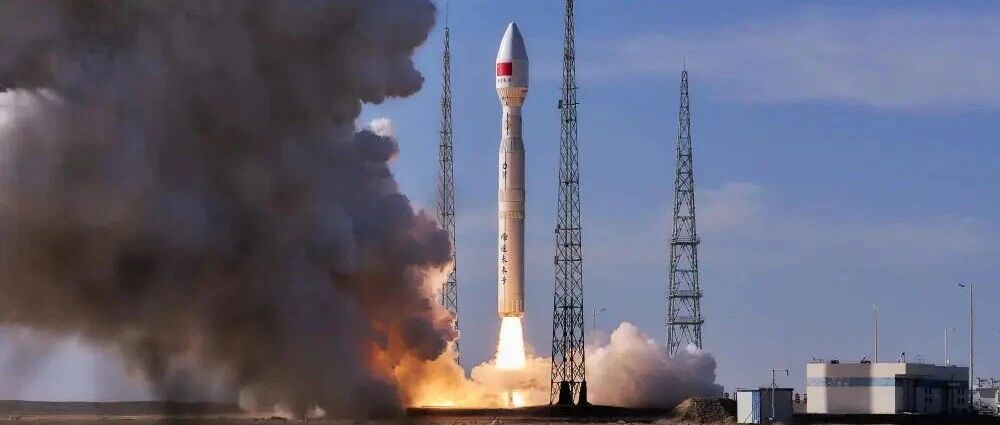
“太空”再添玩家 银行扎堆发卫星
Mei Ri Shang Bao· 2026-01-22 22:29
Group 1 - The banking industry is increasingly exploring space, with China Merchants Bank and Shanghai Pudong Development Bank successfully launching two satellites as part of the "Tianqi Constellation," China's first global low-orbit satellite IoT constellation [1][2] - China Merchants Bank has launched satellites for three consecutive years, with "Zhaoyin 1" and "Zhaoyin 2" launched in 2024 and 2025, respectively, while Ping An Bank has also launched its own satellites [1][2] - The recent launches aim to enhance global communication capabilities, improve data transmission, and support more terminal devices, marking the establishment of a comprehensive low-orbit satellite communication matrix for China Merchants Bank [2] Group 2 - The banking sector's involvement in space is driven by practical needs such as business upgrades, risk management, and supporting national strategies, rather than merely chasing trends [1][2] - The commercial space industry is entering a golden era, with multiple companies actively pursuing capital market opportunities and several firms updating their IPO progress [4] - The 14th Five-Year Plan has prioritized the construction of a strong space nation, which is expected to accelerate industry development [4][5] Group 3 - Data from the National Space Administration indicates that by 2025, China plans to complete 50 launches, with commercial rockets accounting for 25 of these, and a significant number of commercial satellites expected to be launched [5][6] - The commercial space sector is experiencing rapid growth, with a notable increase in stock prices for companies involved in this industry, reflecting strong market interest [6]
