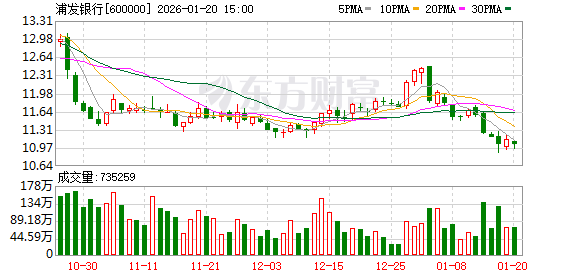
浦银数智卫星

Search documents
观察丨“卫星+银行”,改写传统风控逻辑
券商中国· 2026-02-02 09:32
Core Viewpoint - The recent successful launches of satellites by China Merchants Bank and Shanghai Pudong Development Bank signify a strategic move by domestic commercial banks to leverage satellite technology for smart risk control and to gain a competitive edge in financial technology [1][2]. Group 1: Satellite Launches and Applications - China has seen three commercial banks successfully launch satellites, marking a significant step in the integration of satellite technology into the banking sector [1]. - The application of satellite remote sensing technology is expected to transform traditional credit risk management practices in banking, particularly in rural finance [2][3]. Group 2: Challenges in Traditional Banking - Traditional banking heavily relies on real estate as collateral, making it difficult to assess and manage risks associated with movable assets like agricultural products and commercial inventories [3]. - The challenges in rural finance include personnel shortages, remote locations, and lengthy processes, which hinder large-scale credit operations [3]. Group 3: Innovations in Rural Finance - The application of satellite remote sensing technology in rural finance began with the need to address agricultural monitoring challenges, leading to the development of digital asset assessments for farmers [4][5]. - In 2020, Ant Bank launched the "Dashanque" system, utilizing satellite imagery and AI to evaluate farmers' assets, thereby facilitating credit provision [4]. Group 4: Broader Applications of Satellite Technology - The use of satellite remote sensing technology is expanding beyond agriculture, with banks exploring its application in various sectors, including forestry and renewable energy projects [6][9]. - Major banks like Industrial and Commercial Bank of China and Bank of China are focusing on post-loan management using satellite technology to enhance risk prevention capabilities [7]. Group 5: Future Prospects and Market Potential - The integration of satellite remote sensing with IoT technology opens new avenues for monitoring movable assets, potentially addressing long-standing challenges in asset financing [10][12]. - The recent policy measures in Beijing indicate a growing recognition of the commercial satellite remote sensing data market, which could be worth trillions [11].


除了太空打卡,还能监测楼盘施工进展
Qi Lu Wan Bao· 2026-01-27 15:43
Core Viewpoint - The rapid development of commercial space tourism and satellite technology is transforming the financial and agricultural sectors, with significant investments and advancements expected in the coming years [2][6][11]. Group 1: Space Tourism - Beijing's "Chuan Yue Zhe" company unveiled its manned spacecraft "Chuan Yue Zhe Yi Hao (CYZ1)" and has received over 20 reservations for space tourists, aiming for its first manned flight by 2028 [2][3]. - The initial list of space tourists includes notable figures such as academicians and entrepreneurs, indicating a broadening appeal of space travel beyond traditional demographics [2]. Group 2: Satellite Technology in Banking - The successful launch of satellites by China Merchants Bank and Shanghai Pudong Development Bank integrates them into China's first global low-orbit satellite IoT constellation, enhancing financial risk management [4]. - China Merchants Bank utilizes remote sensing technology for high-precision monitoring of construction projects, achieving over 95% accuracy in monitoring [4]. - Other banks, including Industrial and Commercial Bank of China and Bank of China, are also adopting satellite remote sensing for various applications, indicating a trend towards digital risk management in the banking sector [5]. Group 3: Commercial Space Industry Growth - The commercial space industry is experiencing rapid growth due to favorable policies, capital investment, and technological breakthroughs, with a projected industry financing total of 18.6 billion yuan in 2025, a 32% increase year-on-year [6][7]. - The establishment of dedicated regulatory bodies and supportive policies at both national and local levels is fostering the development of commercial space enterprises [6]. Group 4: Technological Advancements - 2025 is marked as the "Year of Reusable Rockets" in China, with 50 launches completed, accounting for 54% of the national total, indicating a significant shift towards operational efficiency in the industry [8]. - The development of large low-orbit satellite constellations is reducing manufacturing costs by approximately 30%, enhancing system reliability and service coverage [9]. Group 5: Challenges Ahead - The commercial space industry faces challenges in transitioning from concept to market viability, with questions about asset monetization and sustainable revenue generation [10]. - The industry is in a critical phase from 2025 to 2027, where establishing effective application scenarios and user willingness to pay will be essential for long-term success [10][11].



3家股份银行的卫星先后上天 除了楼盘风险监测,还有什么神通?
Mei Ri Jing Ji Xin Wen· 2026-01-25 12:44
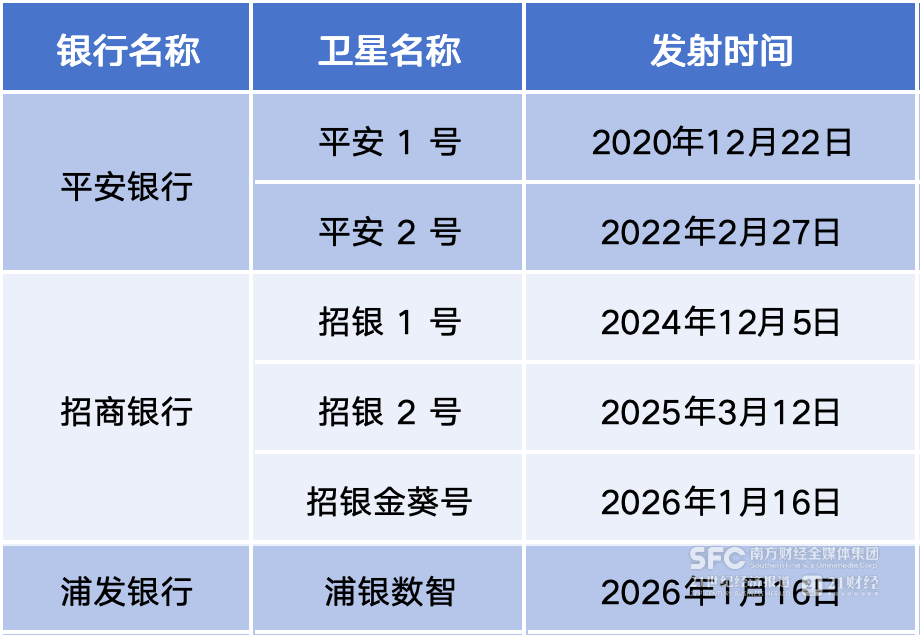
Core Viewpoint - The successful launch of "Zhaoyin Jinkui" and "Puyin Shuzhi" satellites marks a significant advancement in the banking sector's integration of satellite technology, enhancing financial services and risk management capabilities [1][2]. Group 1: Satellite Launches and Applications - The "Zhaoyin Jinkui" satellite and "Puyin Shuzhi" satellite are part of China's first global low-orbit satellite IoT constellation, "Tianqi Constellation," developed by Beijing Guodian Gaoke Technology Co., Ltd [1]. - Prior to this, China Merchants Bank launched "Zhaoyin 1" and "Zhaoyin 2" satellites in 2024 and 2025, respectively, while Ping An Bank launched "Ping An 1" and "Ping An 2" in 2020 and 2022 [1][2]. - The satellites are utilized in various fields such as supply chain finance, real estate risk monitoring, and cross-border asset and trade supervision, creating a digital risk control system and emergency communication network [1][2]. Group 2: Specific Applications and Innovations - Ping An Bank's "Ping An 1" satellite enables data transmission from remote areas, enhancing the bank's ability to monitor operational data from factories and farms [2]. - The "Ping An 2" satellite improves communication stability and helps the bank access real-time supply chain data, thereby enhancing its financial service capabilities [2][3]. - China Merchants Bank employs satellite technology for high-precision monitoring of real estate construction progress, achieving over 95% accuracy in risk management for mortgage projects [4]. Group 3: Emergency Communication and Risk Management - The banks emphasize the importance of satellite communication for emergency scenarios, allowing data transmission even in areas without ground signal coverage [6]. - China Merchants Bank has initiated tests for low-orbit satellite communication technology in its financial disaster recovery systems, enhancing business continuity in extreme situations [6]. - Ping An Bank and Shanghai Pudong Development Bank plan to leverage the "Tianqi Constellation" for innovative applications in financial asset lifecycle management and rapid recovery of essential financial services during disasters [6]. Group 4: Industry Trends and Future Directions - The banking sector's investment in satellite technology aligns with the rapid development of China's commercial space industry, with banks exploring various applications to enhance service delivery and reduce costs [7]. - China Merchants Bank's subsidiary has initiated the first domestic SPV satellite leasing business, addressing the financing needs of commercial space enterprises [7]. - Other banks, such as Industrial and Commercial Bank of China and Xingye Bank, are also integrating satellite remote sensing technology into their operations to improve risk management and monitoring capabilities [8].

“太空”再添玩家 银行扎堆发卫星
Mei Ri Shang Bao· 2026-01-22 22:29
Group 1 - The banking industry is increasingly exploring space, with China Merchants Bank and Shanghai Pudong Development Bank successfully launching two satellites as part of the "Tianqi Constellation," China's first global low-orbit satellite IoT constellation [1][2] - China Merchants Bank has launched satellites for three consecutive years, with "Zhaoyin 1" and "Zhaoyin 2" launched in 2024 and 2025, respectively, while Ping An Bank has also launched its own satellites [1][2] - The recent launches aim to enhance global communication capabilities, improve data transmission, and support more terminal devices, marking the establishment of a comprehensive low-orbit satellite communication matrix for China Merchants Bank [2] Group 2 - The banking sector's involvement in space is driven by practical needs such as business upgrades, risk management, and supporting national strategies, rather than merely chasing trends [1][2] - The commercial space industry is entering a golden era, with multiple companies actively pursuing capital market opportunities and several firms updating their IPO progress [4] - The 14th Five-Year Plan has prioritized the construction of a strong space nation, which is expected to accelerate industry development [4][5] Group 3 - Data from the National Space Administration indicates that by 2025, China plans to complete 50 launches, with commercial rockets accounting for 25 of these, and a significant number of commercial satellites expected to be launched [5][6] - The commercial space sector is experiencing rapid growth, with a notable increase in stock prices for companies involved in this industry, reflecting strong market interest [6]
尾焰划破夜空 金融机构为何爱上“发卫星”
2 1 Shi Ji Jing Ji Bao Dao· 2026-01-21 08:05
Core Viewpoint - The recent successful launch of satellites by major banks in China, including China Merchants Bank and Shanghai Pudong Development Bank, signifies a strategic shift towards utilizing satellite technology for enhancing financial services and risk management in the banking sector [1][2][3]. Group 1: Satellite Launches and Their Purpose - China Merchants Bank and Shanghai Pudong Development Bank have joined Ping An Bank in launching satellites, indicating a trend among banks to leverage space technology for business needs [2][4]. - The satellites are part of the "Tianqi Constellation," which aims to provide global coverage and enhance communication capabilities, thereby improving data transmission and supporting more devices [4][5]. - The "Zhaoyin Jinkui" satellite launched by China Merchants Bank is designed to enhance the density of the satellite constellation and reduce revisit intervals, which will significantly improve global communication capabilities [4][5]. Group 2: Business and Risk Management Enhancements - Banks are utilizing remote sensing satellite technology for precise monitoring of collateral and project progress, which enhances post-loan management efficiency and reduces credit risk [3][7]. - The integration of satellite technology into financial risk control systems allows banks to monitor real-time data from various sectors, addressing information asymmetry in lending [7][8]. - For instance, China Merchants Bank has implemented a high-precision construction monitoring system for mortgage projects, achieving over 95% accuracy in monitoring construction progress [8]. Group 3: Applications in Supply Chain and Disaster Recovery - Satellite technology is crucial for expanding supply chain finance by providing timely and effective data transmission, especially in remote areas where traditional communication may fail [9][10]. - In extreme scenarios, such as natural disasters, satellite communication ensures business continuity for banks by maintaining service availability when ground networks are disrupted [11][12]. - The banks' involvement in satellite launches also aligns with national strategies, enabling them to support the commercial space industry while enhancing their service offerings [12][13]. Group 4: Broader Industry Implications - The trend of banks launching satellites is not limited to a few institutions; it is gradually permeating various banking operations, enhancing risk management capabilities across sectors like agriculture and logistics [13][14]. - The adoption of satellite remote sensing technology is becoming a standard practice in the banking industry, reflecting a shift towards innovative financial services that integrate advanced technologies [14].
银行业迈向“太空时代”:两家银行相继发射自有卫星
Zhong Guo Jing Ying Bao· 2026-01-20 16:13
Core Insights - The banking industry is making significant strides into space technology with the successful launch of "Puyin Zhizhi" and "Zhaoyin Jinkui" satellites, aimed at enhancing financial services and risk management [2][4] Group 1: Satellite Technology Applications - Commercial banks are primarily utilizing satellite technology for credit risk management and agricultural supply chain finance, enabling remote monitoring of collateral and crop conditions [2][5] - The integration of satellite technology into financial risk control systems allows for high-precision monitoring of construction projects, significantly improving post-loan inspection efficiency [5] - The use of low-orbit satellites enhances communication capabilities in remote areas, addressing the challenges of traditional banking services [6][8] Group 2: Data and Risk Management - Satellite technology provides real-time, objective data that can mitigate traditional research challenges such as high costs and information delays, thereby strengthening credit risk and asset monitoring capabilities [6][7] - The ability to directly obtain data from satellites allows banks to move from relying on second-hand information to having first-hand insights into asset conditions [7] - High-resolution remote sensing images enable real-time monitoring of assets, reducing manual verification costs and risks associated with loan approvals [8][9] Group 3: Addressing Financial Service Challenges - Satellite technology addresses three core pain points in financial services: coverage issues in remote areas, inefficiencies in risk control, and information asymmetry [8][9] - In emergency scenarios, satellite networks can maintain communication for critical financial services, ensuring business continuity during natural disasters [10]