DCF定价

Search documents
股指连阳,“春季躁动”背后的逻辑
Xin Lang Cai Jing· 2026-01-12 12:28
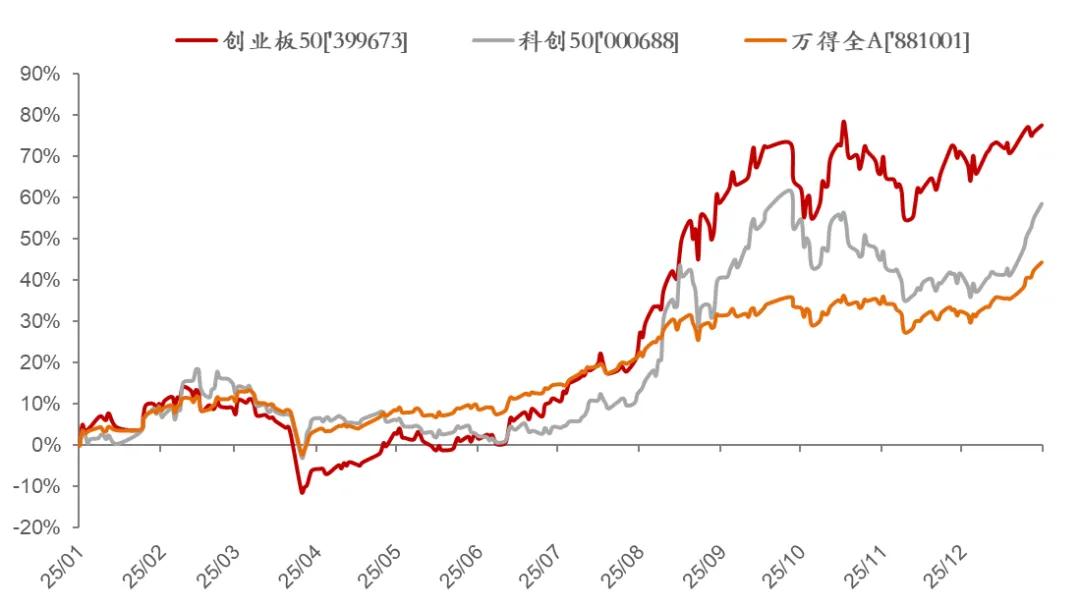
Group 1 - The core narrative driving the recent market rally is centered around the upcoming IPO of SpaceX, which is expected to exceed a valuation of $100 billion, alongside the ongoing U.S.-China tech competition [1][39] - The A-share market has shown robust performance, with key indices like the CSI 300 and STAR 50 experiencing significant gains, despite a downward revision in resident income expectations [1][39] - The current market dynamics suggest a decoupling of capital market pricing logic from traditional macroeconomic indicators, raising questions about the sustainability of strong stock performance amid weak real estate and consumer sectors [1][40] Group 2 - The pricing of stocks is increasingly focused on long-term growth expectations (g*) and risk premiums (ERP), rather than current earnings, indicating a shift in investor sentiment towards confidence in China's long-term competitiveness in key sectors [2][41] - Even companies with negative current earnings, like OpenAI, can achieve high valuations based on anticipated future cash flows from technological breakthroughs, reflecting a broader market trend where future potential is prioritized over present performance [3][42] - The A-share market's valuation is heavily influenced by a small number of leading companies, which contribute significantly to market capitalization and are less correlated with domestic consumer spending [4][43] Group 3 - Historical examples illustrate that stock markets can diverge from economic fundamentals, as seen in the U.S. during World War II and China's market performance from 2000 to 2005, where investor sentiment and risk perception played crucial roles in valuation [9][47][51] - The current market environment is characterized by a transition from a growth narrative to a competitiveness narrative, driven by geopolitical factors and a reassessment of China's capabilities in technology and manufacturing [15][53] - The ongoing adjustments in the market reflect a broader economic transformation, where corporate competitiveness is rising while resident income growth is stagnating, indicating a structural shift in the relationship between corporate performance and consumer economic conditions [26][62][68] Group 4 - The recent surge in commodity prices, particularly in metals like copper and aluminum, is linked to the demand driven by AI competition and infrastructure needs, rather than traditional economic recovery patterns [19][55] - The investment logic has shifted towards sectors like AI and energy, with significant capital expenditures leading to improved corporate earnings, although these do not translate into immediate benefits for consumer income [61][62] - The divergence between corporate profitability and consumer income growth is a reflection of the ongoing transformation in the economic growth model, where the focus is on structural changes rather than aggregate expansion [26][60]

李迅雷:股指连阳,“春季躁动”背后的逻辑
Xin Lang Cai Jing· 2026-01-12 11:23
Group 1 - The core narrative of the A-share market has shifted from "growth" to "competitiveness" since 2021, influenced by external factors such as the Trump administration's impact on international order [44][45] - The market increasingly believes in China's long-term competitiveness in key sectors like AI, semiconductors, and high-end manufacturing, leading to rising expectations for perpetual growth rates [44][45] - The A-share market's pricing logic is now more focused on the long-term competitiveness of leading companies rather than immediate economic pressures, indicating a decoupling from traditional macroeconomic indicators [45][46] Group 2 - The current economic pressures include a slowdown in real estate, stagnant income growth, and weak consumer confidence, yet the competitiveness of Chinese companies in high-end manufacturing and AI is improving [45][46] - The market's valuation is driven by the long-term success of leading firms in global competition, rather than current economic challenges, suggesting a dual narrative where economic stress and corporate strength coexist [45][46] - The historical context shows that market performance can diverge from economic fundamentals, as seen in past examples like the U.S. stock market during World War II and China's market from 2000 to 2005 [37][40][41] Group 3 - The investment logic has shifted towards AI, electricity, and critical resources, with capital expenditures in these areas growing rapidly, although they have limited impact on household income [52][53] - The relationship between corporate competitiveness and household income growth is becoming more differentiated, reflecting a broader economic transformation [53][54] - The ongoing structural changes in the economy are leading to a "temperature difference" where corporate profits rise while household income growth remains subdued [54][56]
股指连阳,“春季躁动”背后的逻辑
李迅雷金融与投资· 2026-01-12 11:15
Group 1 - The core narrative of the market has shifted from "growth" to "competitiveness," driven by external factors such as the U.S.-China tech competition and the need for self-sufficiency in key industries [17][33] - The A-share market has shown resilience despite economic pressures, with the performance of leading companies in global competition being a key driver of market valuation rather than domestic consumption or income growth [18][27] - The current investment logic emphasizes sectors like AI, power, and critical resources, which are experiencing rapid capital expenditure growth, while traditional consumer sectors face challenges [26][28] Group 2 - The divergence between corporate competitiveness and household income growth reflects a broader transformation in the economic structure, where companies are optimizing costs to enhance global competitiveness [28][31] - Historical examples illustrate that market performance can diverge from economic fundamentals, as seen in the U.S. during WWII and China's market in the early 2000s, where investor sentiment and risk premiums played significant roles [9][14][16] - The current market environment suggests that the valuation of leading companies is increasingly decoupled from traditional economic indicators, focusing instead on their long-term competitive advantages [5][8][18] Group 3 - The rise in valuations for sectors like commercial aerospace, AI, and semiconductors reflects a belief in China's ability to compete and innovate in critical areas, despite short-term economic challenges [18][19] - The shift in demand dynamics, particularly in the context of AI and energy infrastructure, is driving a new cycle of investment that differs from traditional recovery patterns [19][24] - The market's focus on a few core assets, which contribute significantly to overall market capitalization, indicates a concentration of value creation in leading firms rather than a broad-based economic recovery [5][8][18] Group 4 - The ongoing adjustments in corporate cost structures and labor compensation models are indicative of a strategic response to global competition, which may lead to increased income volatility for workers [28][31] - The institutional differences between China's centralized policy approach and the more fragmented Western model highlight the advantages of sustained support for key industries in fostering long-term competitiveness [33][34] - The current macroeconomic landscape is characterized by a complex interplay of geopolitical uncertainty, technological competition, and evolving consumer behaviors, necessitating a nuanced investment strategy [35][36]