
Delta值

Search documents
港交所短線分析:挑戰關鍵阻力,輪證部署講求「安全邊際」
Ge Long Hui· 2026-01-17 05:33
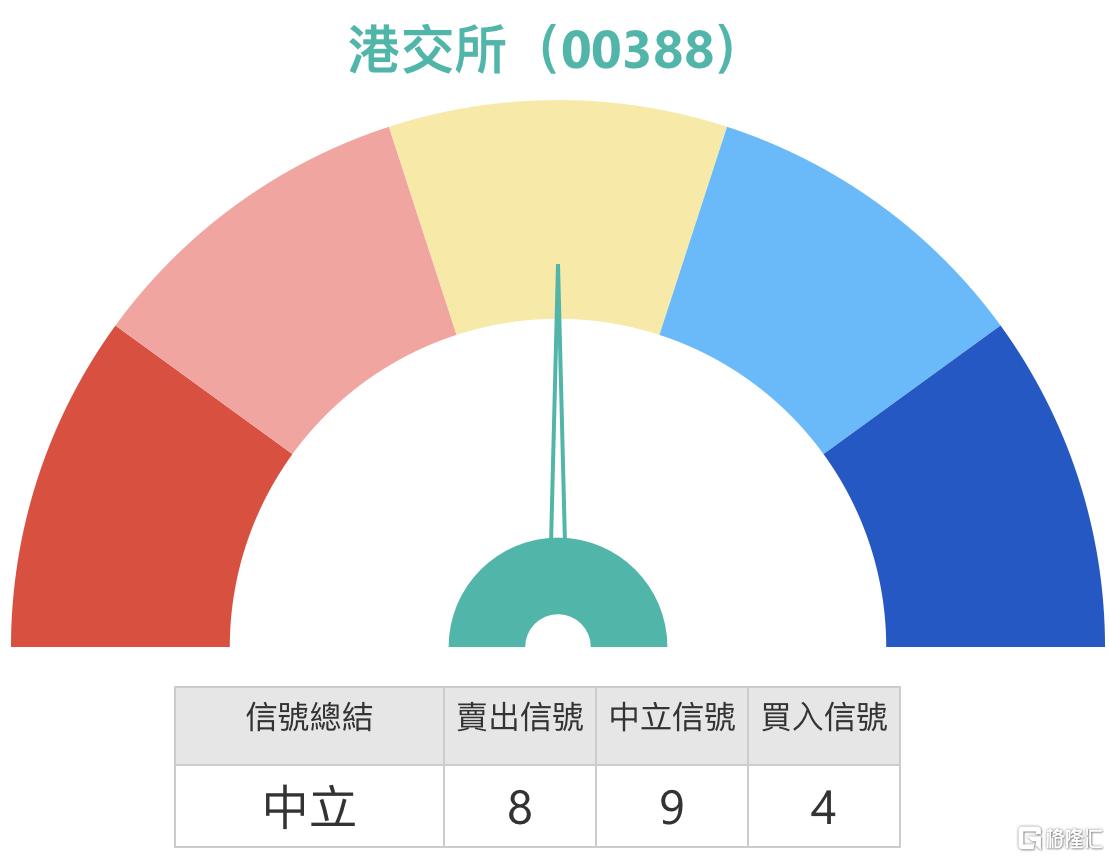
Core Viewpoint - Hong Kong Stock Exchange (HKEX) shares have shown a positive trend, with a price increase of approximately 10% since mid-December 2022, closing at 438.6 HKD on January 15, 2026, and reaching 438.8 HKD on January 16, 2026, indicating strong market momentum [1][5]. Technical Analysis - The technical analysis indicates a "medium-term positive" outlook for HKEX, with the stock price above all major moving averages, providing solid support. However, short-term indicators suggest overbought conditions, with the Relative Strength Index (RSI) at 68, indicating a potential need for price consolidation [1][2]. - Key resistance is identified at 443 HKD, with a potential target of 461 HKD if this level is broken. The first support level is at 424 HKD, which aligns with recent low points and the 10-day moving average [2][5]. Market Dynamics - The market has been active, providing short-term support for HKEX's fundamentals. However, investor sentiment is mixed, with some investors hedging against potential corrections by using bearish instruments. This reflects a cautious approach as the stock approaches key resistance levels [5][11]. - The performance of derivative products, such as warrants and bull/bear certificates, has been notable, with significant returns observed in the context of HKEX's price movements. For instance, certain products recorded returns of 18% and 17% following a 1.57% increase in HKEX shares [5][8]. Derivative Product Strategies - For bullish strategies, investors may consider call warrants or bull certificates, especially those with strike prices significantly above the second resistance level of 461 HKD, to capitalize on potential upward movements [8][11]. - Conversely, for bearish strategies, put warrants or bear certificates with strike prices below the second support level of 410 HKD are recommended, as they can provide effective hedging against potential declines [11][17].

【知识科普】为什么同类产品期货涨了看涨期权没涨?
Sou Hu Cai Jing· 2025-08-08 08:11
Core Viewpoint - The article explains why call options do not rise in price when the futures prices of similar products increase, highlighting significant differences in price-driving factors between futures and options [1]. Group 1: Option Status - Call options may be in an out-of-the-money state, meaning the strike price is significantly higher than the current futures price, resulting in zero intrinsic value [4]. - The Delta value of out-of-the-money options is low, indicating weak sensitivity to price changes in the underlying asset, which limits the price increase of options even when futures rise [4]. Group 2: Time Value Decay - Time value diminishes as the expiration date approaches, leading to a non-linear decay that can offset any gains from rising futures prices [7]. - Deep out-of-the-money options have minimal time value, making them vulnerable to complete erosion of any intrinsic value increase due to time decay [7][8]. Group 3: Implied Volatility - Implied volatility is a key parameter in option pricing; a decrease in implied volatility can lead to a decline in call option prices despite an increase in futures prices [8]. - The relationship between volatility and option prices is characterized by a "see-saw effect," where a drop in implied volatility negatively impacts option prices, counteracting gains from Delta [8]. Group 4: Market Liquidity and Transaction Costs - Poor liquidity in deep out-of-the-money options can widen bid-ask spreads, causing actual transaction prices to appear unchanged despite theoretical price increases [9]. - Large orders from institutional investors can push up market prices, but retail investors may struggle to execute trades at reasonable prices due to insufficient market depth [10]. Group 5: Other Factors - Changes in interest rates have a minimal impact on commodity options compared to stock options, with slight increases in call option prices possible due to higher holding costs [11]. - Differences in exercise styles (American vs. European options) affect time value decay, with European options experiencing more significant losses in time value when futures prices rise [12].

期权套保过程中遇到的实际问题解析
Qi Huo Ri Bao· 2025-05-09 13:39
Group A - The article discusses the flexibility of options trading and its widespread use in hedging, emphasizing the need for specific strategies based on individual circumstances [1] - Various options strategies are composed of four basic positions: buying calls, buying puts, selling calls, and selling puts, which can be combined according to actual needs [1][2] - The characteristics and functions of the buyer and seller positions are outlined, with buyers aiming for profit potential and sellers focusing on income from premiums [2][3] Group B - The article identifies key issues in hedging, including contract month selection, quantity and ratio selection, and strike price selection [5] - When selecting contract months, factors such as the timing of cash flow and the Delta value of options must be considered [6][8] - The article provides scenarios for choosing contract months based on the timing of cash flow relative to option expiration dates [9][10][11] Group C - The selection of hedging quantity is closely related to contract months, with a 1:1 ratio being appropriate when the option expiration aligns with cash flow [16] - The Delta value of options approaches ±1 as expiration nears, necessitating adjustments in hedging quantity based on the timing of cash flow [17] - Strike price selection is crucial, with buyers typically choosing at-the-money or slightly in-the-money options, while sellers opt for out-of-the-money options [18][20] Group D - Dynamic adjustment of positions is necessary after entering hedging strategies, particularly for seller positions, which may require adjustments based on market movements [21] - The article illustrates a case study of a manufacturer hedging against falling prices by selling call options and discusses various adjustment strategies based on market conditions [22][24][25][26][27] - Overall, the article aims to provide insights into the classification of primary and secondary hedging positions and the selection of contract months, quantities, and strike prices in options hedging [27]
