FOMO交易

Search documents
假期分享 | 论市场分析中基本面与技术面背离时刻的投研智慧
对冲研投· 2025-10-05 10:03
Core Insights - The market often prices in known information, leading to a disconnect between price movements and fundamental analysis, necessitating a search for new trading directions [1][3][4] Group 1: Market Dynamics - Market sentiment can lead to significant price movements before fundamental changes occur, with historical data showing that stock markets often bottom out over a year before economic recovery, while commodity markets may do so a quarter in advance [6][7] - The divergence between fundamental and technical analysis is a persistent issue, with extreme divergences often presenting significant opportunities, albeit requiring rigorous analysis to avoid irrational speculation [4][5] Group 2: Trading Strategies - Short-term divergences are typically driven by market emotions or sudden events, suggesting a cautious approach until the market aligns with fundamental logic [7] - Long-term divergences require careful evaluation, especially when fundamentals deteriorate while technical indicators remain strong, indicating potential market over-optimism [7][8] Group 3: Decision-Making Framework - Following technical signals is advisable when fundamental evidence lags and significant reversals occur, as exemplified by the behavior of aluminum futures in 2024 [11] - Conversely, if fundamentals are driven by new factors and technical corrections do not disrupt long-term trends, this may present buying opportunities [12] Group 4: Cognitive Biases - Overconfidence among traders often leads to significant losses, particularly when they ignore the need for timing in favor of long-term narratives [3][13][14] - Critical thinking is essential to navigate the complexities of market analysis, recognizing the potential lag in fundamental data and the susceptibility of technical indicators to manipulation [12][14]


从“巨头独秀”转向“多点开花”,美股这波反弹能走多远?
Hua Er Jie Jian Wen· 2025-06-29 07:29
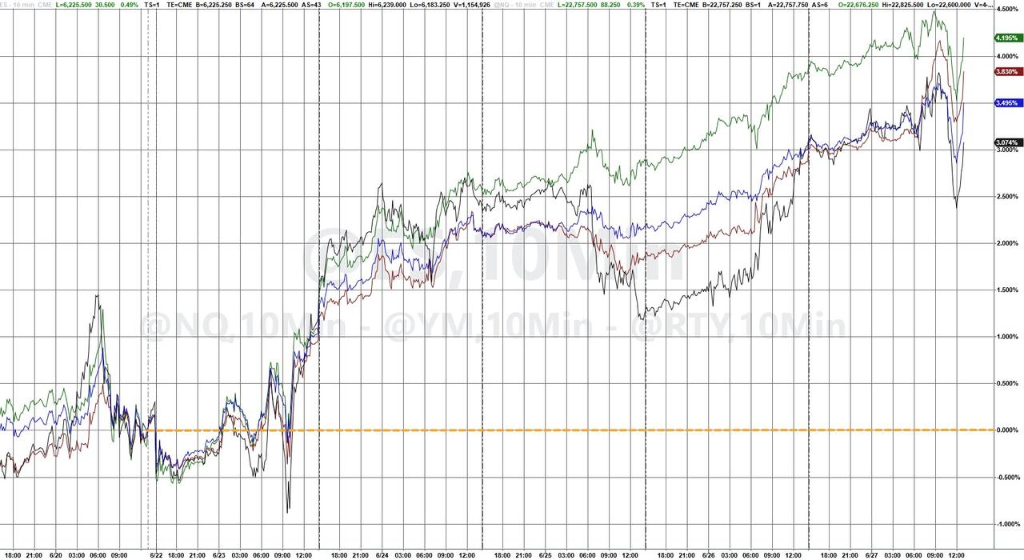
Core Insights - The recent surge in U.S. stock markets, particularly the NASDAQ and S&P 500 reaching all-time highs, is attributed not only to technology giants but also to broader sector participation, indicating potential for further gains throughout the summer [1][3]. Market Trends - Initially, U.S. stocks faced significant declines due to tariff concerns, with technology stocks leading the downturn. However, as fears of economic recession eased and trade relations improved, a strong rebound occurred, expanding beyond the tech sector to include financial, industrial, and utility sectors [3][4]. - Indicators show an expanding market participation, with the number of S&P 500 stocks closing above their 50-day moving average returning to levels seen during the 2016 election period, suggesting a strengthening technical outlook [3]. - The ratio of advancing to declining stocks reached a new high, further indicating broader market engagement [3]. Investment Strategies - Investors are increasingly diversifying their portfolios beyond technology stocks, with a focus on sectors previously overlooked. This shift is partly driven by concerns of missing out on market gains (FOMO trading) as tech valuations rise [4]. - Some professional investors are strategically reallocating their investments towards defense, finance, and international blue-chip stocks, seeking to reduce reliance on a single sector [4]. Sector Performance - Despite the overall market rally, small-cap stocks continue to lag behind major indices. Analysts suggest that a significant shift in investor risk appetite is necessary for small-cap stocks to catch up [6]. - Optimistic views exist regarding small-cap stocks, particularly local bank stocks, which are expected to benefit from lower financing costs due to potential Federal Reserve rate cuts and less exposure to tariff impacts [6]. Technology Sector Outlook - While other sectors are beginning to catch up, the dominance of technology giants remains strong in the short term, with AI optimism continuing to be a key theme supporting high valuations in the tech sector [5].