IP化长线运营

Search documents
《鹅鸭杀》手游爆火背后:游戏发行如何“破圈”?
Zhong Guo Jing Ying Bao· 2026-01-23 20:03
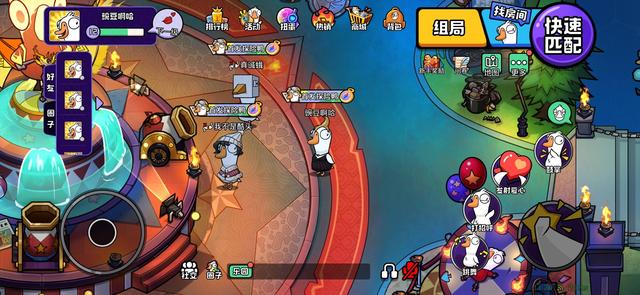
Core Insights - The multiplayer online social deduction game "Goose Duck" has gained immense popularity following its mobile launch, surpassing 10 million new users within just six days and achieving a peak concurrent user count that exceeded its Steam version's historical record [2][3] Group 1: Game Launch and Popularity - "Goose Duck" was developed by Gaggle Studios and first launched on Steam in 2021, featuring gameplay similar to "Werewolf" with multiple roles and a third-party interference mechanism [3] - The game has become a cultural phenomenon, trending on various platforms and generating significant online discussions and memes, contributing to its viral success [3][4] Group 2: Innovative Marketing Strategies - The collaboration between Kingsoft Game and Huya for the game's release has disrupted traditional user acquisition methods, focusing on content-driven marketing rather than conventional paid user acquisition [4][6] - The game has engaged popular streamers and content creators to enhance its visibility and community engagement, marking a shift from passive to active marketing strategies [4][6] Group 3: Financial Implications for Kingsoft - Kingsoft's gaming division, which includes Kingsoft Game and Kingsoft Online, has faced financial challenges, with a reported 17% decline in revenue and a 48% drop in net profit in Q3 2025 [7] - "Goose Duck" is seen as a crucial element for Kingsoft to reverse its declining gaming business performance [8] Group 4: Strategic Partnerships and Future Directions - Kingsoft Game has announced a strategic partnership with Rovio Entertainment to leverage the "Angry Birds" IP, indicating a shift towards long-term IP management and development [9] - The company aims to redefine its collaboration approach with overseas developers, focusing on acquiring full IP rights for deeper engagement and sustained user retention [9]


《鹅鸭杀》爆火,雷军的“金山系”又赢麻了?
Feng Huang Wang Cai Jing· 2026-01-07 07:33
Core Insights - The return of the game "Goose Duck" in China has generated significant social media buzz, with over 20 million pre-registrations and billions of views on related topics, indicating its potential as a new "social currency" for Generation Z [1][2][4] Group 1: Game Performance and Market Impact - "Goose Duck" has achieved a remarkable presence on social media, with its pre-registration surpassing 20 million and related topics trending on platforms like Weibo, accumulating hundreds of millions of views [2][3] - The game has strong social attributes, with nearly 80% of its players aged 18-25, highlighting its appeal among younger audiences [4] - Despite initial excitement, there have been complaints regarding server issues and user experience, indicating potential operational challenges [3][4] Group 2: Financial Performance of Kingsoft - Kingsoft's financial performance has been under pressure, with revenue and net profit declining in the first three quarters of 2025, showing a revenue drop of 8.34% to 7.065 billion yuan and a net profit decrease of 5.68% to 1.029 billion yuan [7][8] - The gaming segment has faced significant challenges, with revenue from network games dropping by 26.1% to 2.886 billion yuan, and a nearly 50% decline in the third quarter alone [7][8] - Increased marketing expenses, which rose by 55% year-on-year to 564 million yuan, have not translated into revenue growth, leading to a substantial decline in gaming income [7][8] Group 3: Strategic Challenges and Future Outlook - Kingsoft is transitioning from a short-term hit-driven model to a long-term IP-focused strategy, aiming to integrate games into users' daily lives [6][8] - The company faces a cycle of declining revenue from existing games while new titles have not met market expectations, raising concerns about future growth [8][9] - The CEO has acknowledged that the decline in revenue is primarily due to the aging of flagship games and the underperformance of new releases, alongside increased investments in AI and game development [8][9]

《鹅鸭杀》爆火,雷军的“金山系”又赢麻了?
凤凰网财经· 2026-01-07 07:20
Core Viewpoint - The return of the game "Goose Duck" in China has generated significant social media buzz, with over 20 million pre-registrations and billions of views on related topics, positioning it as a new "social currency" for Generation Z. However, the parent company, Kingsoft, is facing performance anxiety as its revenue and net profit have declined significantly, particularly in the gaming sector, which has seen a nearly 50% year-on-year drop in the third quarter [1][2][3][4]. Group 1: Game Popularity and Social Impact - "Goose Duck" has achieved a remarkable pre-launch presence, with over 20 million pre-registrations and significant engagement on social media platforms, especially Weibo [5][6]. - The game has become a cultural phenomenon, with players and streamers expressing excitement and sharing personal stories, indicating its strong social attributes [9][10]. - The game targets a young audience, with nearly 80% of its players aged 18-25, highlighting its appeal among Generation Z [10]. Group 2: Company Performance and Challenges - Kingsoft's financial performance has deteriorated, with total revenue of 7.065 billion yuan, a year-on-year decrease of 8.34%, and net profit of 1.029 billion yuan, down 5.68% [17]. - The gaming segment has been particularly hard hit, with revenues dropping by 26.1% to 2.886 billion yuan, and a significant decline of 47% in the third quarter alone [17][18]. - Increased marketing expenses, which rose by 55% year-on-year, have not translated into revenue growth, leading to a substantial impact on overall company performance [17][18]. Group 3: Strategic Direction and Future Outlook - Kingsoft is shifting from a short-term focus on hit games to a long-term strategy centered on IP development, aiming to integrate games into users' daily lives [13][14][16]. - The company faces a challenging cycle of declining revenues from existing games while new titles have not met market expectations, raising concerns about future growth [18][19]. - The CEO has acknowledged that the decline in revenue is due to reduced contributions from existing games and the need for new titles to establish market presence, while also investing heavily in AI and new game development [18][19].