解限机

Search documents
《鹅鸭杀》爆火,雷军的“金山系”又赢麻了?
凤凰网财经· 2026-01-07 07:20
Core Viewpoint - The return of the game "Goose Duck" in China has generated significant social media buzz, with over 20 million pre-registrations and billions of views on related topics, positioning it as a new "social currency" for Generation Z. However, the parent company, Kingsoft, is facing performance anxiety as its revenue and net profit have declined significantly, particularly in the gaming sector, which has seen a nearly 50% year-on-year drop in the third quarter [1][2][3][4]. Group 1: Game Popularity and Social Impact - "Goose Duck" has achieved a remarkable pre-launch presence, with over 20 million pre-registrations and significant engagement on social media platforms, especially Weibo [5][6]. - The game has become a cultural phenomenon, with players and streamers expressing excitement and sharing personal stories, indicating its strong social attributes [9][10]. - The game targets a young audience, with nearly 80% of its players aged 18-25, highlighting its appeal among Generation Z [10]. Group 2: Company Performance and Challenges - Kingsoft's financial performance has deteriorated, with total revenue of 7.065 billion yuan, a year-on-year decrease of 8.34%, and net profit of 1.029 billion yuan, down 5.68% [17]. - The gaming segment has been particularly hard hit, with revenues dropping by 26.1% to 2.886 billion yuan, and a significant decline of 47% in the third quarter alone [17][18]. - Increased marketing expenses, which rose by 55% year-on-year, have not translated into revenue growth, leading to a substantial impact on overall company performance [17][18]. Group 3: Strategic Direction and Future Outlook - Kingsoft is shifting from a short-term focus on hit games to a long-term strategy centered on IP development, aiming to integrate games into users' daily lives [13][14][16]. - The company faces a challenging cycle of declining revenues from existing games while new titles have not met market expectations, raising concerns about future growth [18][19]. - The CEO has acknowledged that the decline in revenue is due to reduced contributions from existing games and the need for new titles to establish market presence, while also investing heavily in AI and new game development [18][19].



游戏行业赚快钱的时代结束了
Di Yi Cai Jing· 2025-12-30 05:45
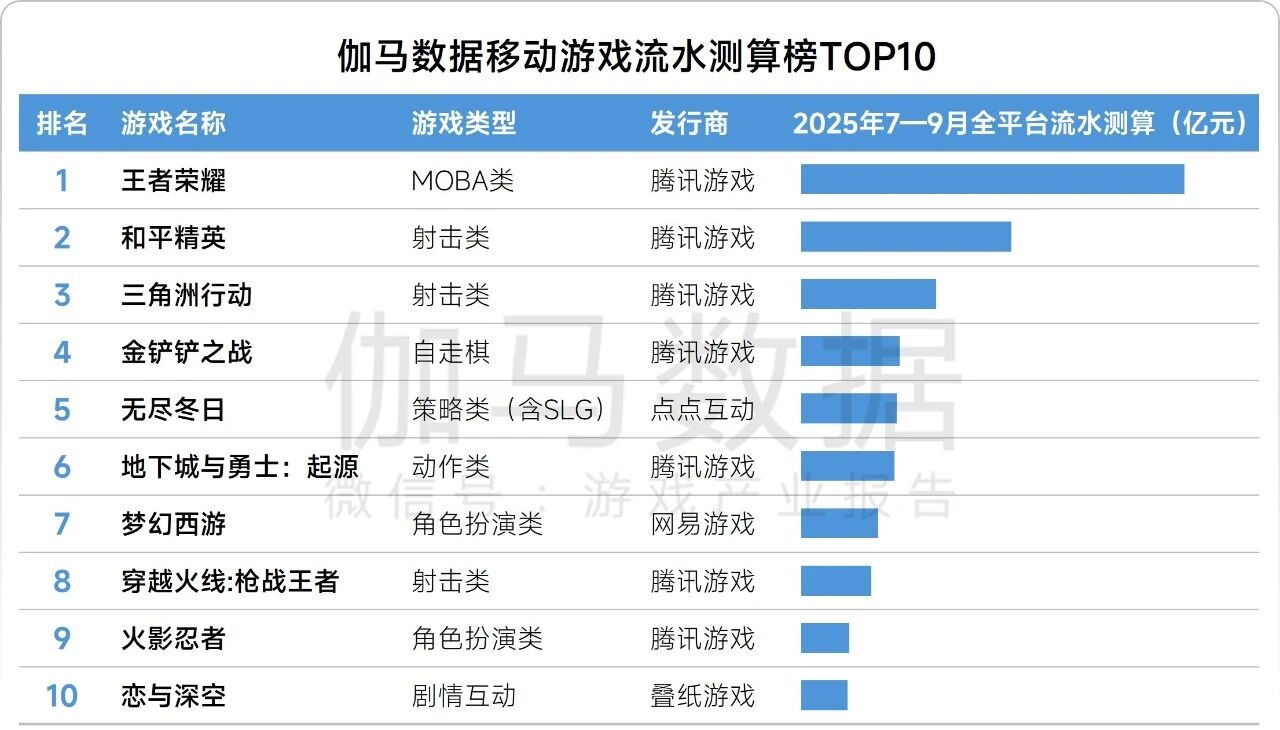
Core Insights - The Chinese gaming industry in 2025 is characterized by a complex landscape of "recovery" and "internal competition," with market revenue exceeding 350 billion yuan and user base surpassing 680 million, indicating a year of continued recovery despite intense competition [3][4][12] - The industry is experiencing a significant market divide, with the "winner-takes-all" trend intensifying, leading to a situation where a few leading companies dominate the market, while smaller teams find new opportunities in single-player and AI-native games [3][10][12] Market Performance - In 2025, the domestic gaming market revenue is approximately 350.8 billion yuan, reflecting a year-on-year growth of 7.7%, while the user base has grown by 1.4% to over 680 million [4][5] - Self-developed games have generated overseas revenue of about 20.46 billion USD, maintaining a scale exceeding 100 billion yuan for six consecutive years [4][5] - Despite the overall upward trend in the gaming and esports industry, the market has entered a phase of stock competition, with a saturated user base and increased self-developed game output [4][5] Industry Challenges - The competition among gaming companies has intensified, with many projects failing despite significant investments, as seen with NetEase's "射雕" and Kingsoft's "解限机," which faced substantial player drop-off and negative feedback [5][6] - The cost of developing successful mobile games has increased significantly, making it harder for companies to achieve profitability [6][9] Market Dynamics - The market recovery is largely driven by a few top-tier games from leading companies like Tencent and NetEase, which dominate the revenue charts [7][9] - Tencent's gaming revenue reached 636 billion yuan in Q3 2025, with total revenue for the first three quarters exceeding 1.8 trillion yuan, solidifying its position in the market [9][10] Future Trends - The rise of single-player games is a notable trend, with companies increasingly focusing on high-quality, creative content rather than just marketing [12][13] - AI technology is emerging as a potential game-changer, offering new opportunities for smaller developers to compete by lowering development costs and enhancing creativity [11][15] - The industry is expected to enter a new "golden decade" of growth, driven by improved game quality, expanded overseas markets, and supportive policies [12][15]


年终盘点|单机崛起、AI破局,游戏行业赚快钱的时代结束了
Di Yi Cai Jing· 2025-12-30 03:14
Core Insights - The Chinese gaming industry is experiencing a complex landscape of "recovery" and "internal competition," with market revenue surpassing 350 billion yuan and user base exceeding 680 million, indicating a year of continued recovery despite intense competition [2][3] - The industry is shifting from "Chinese production" to "Chinese creation," focusing on creativity rather than just sales, suggesting a new growth cycle for the gaming sector [2][12] Market Performance - In 2025, the domestic gaming market revenue is approximately 350.8 billion yuan, a year-on-year increase of 7.7%, while the user base has grown by 1.4% [3] - The self-developed games' overseas revenue reached approximately 20.46 billion USD, maintaining a scale exceeding 100 billion yuan for six consecutive years [3] Competitive Landscape - The gaming industry has entered a phase of stock competition, with a saturated user base and an exponential increase in self-developed game output, leading to heightened competition among companies [3][6] - The "80/20 rule" is evolving into a "90/10 rule," indicating that a small number of companies are capturing most of the market share, while many smaller firms struggle to survive [11] Major Players - Tencent continues to dominate the market, with its gaming revenue exceeding 636 billion yuan in Q3, and its total revenue for the first three quarters surpassing 1.8 trillion yuan [9][10] - NetEase's gaming revenue for the first three quarters is over 700 billion yuan, maintaining stable growth, but still lagging behind Tencent [10] Project Failures - High-profile game failures, such as NetEase's "射雕" and Kingsoft's "解限机," highlight the increasing difficulty of achieving success in the gaming market, even for major companies [4][5] - Kingsoft's gaming business revenue fell by 47% year-on-year to 900 million yuan, marking the largest decline since 2019 [4] Future Trends - The rise of single-player and AI-native games presents new opportunities for smaller teams to break through in the competitive landscape [2][12] - The success of "黑神话:悟空" has catalyzed a shift towards high-quality game development, with increasing investment in AAA titles [12][13] - AI technology is expected to lower development costs and enhance creativity, potentially leveling the playing field between large and small developers [11][14] Government Support - The Shanghai government is set to release policies to support the esports industry, which may further stimulate growth in the gaming sector [14]
次世代游戏公司,困在性别里
3 6 Ke· 2025-12-05 08:15
Core Viewpoint - The incident involving the content creator "逍遥散人" highlights the challenges faced by next-generation gaming companies in navigating gender issues and community expectations, particularly in relation to the game "Varsapura" [1][4][28]. Group 1: Incident Overview - The release of a gameplay video for "Varsapura" led to a significant backlash against the content creator, resulting in a loss of 450,000 followers and the termination of collaborations with brands [1][3]. - The creator's response to fans urging him to delete the video was perceived as a betrayal by his predominantly female audience, leading to further scrutiny of his past statements [3][4]. Group 2: Industry Trends - The gaming company miHoYo has shifted its strategy, releasing multiple game trailers in a year, contrasting with its previous approach of lengthy development cycles [7][8]. - The company has introduced diverse game types, yet the core narrative remains consistent with its established style, which may not meet the evolving expectations of its audience [9]. Group 3: Gender Dynamics in Gaming - The incident reflects a broader issue within the gaming industry where companies are labeled based on gender perceptions, impacting their ability to innovate and expand their offerings [19][21]. - Players' emotional investments in gendered branding create a challenging environment for companies attempting to diversify their game portfolios, often leading to backlash when they deviate from established norms [22][27]. Group 4: Consequences of Labeling - The labeling of companies as "female-friendly" or "male-oriented" can restrict their market strategies, making them hesitant to explore new genres or themes [28][34]. - The cycle of backlash against companies attempting to break gender norms can lead to a reduction in the diversity of games available to players, ultimately harming the gaming ecosystem [36].

金山软件旗下西山居高管变动 郭炜炜辞任CEO
Xi Niu Cai Jing· 2025-12-04 03:10
Group 1 - The CEO of Xishanju, Guo Weiwei, has submitted his resignation due to personal career planning, which has been accepted by the board of directors [2] - Guo Weiwei will continue to serve as the chief producer at Xishanju after stepping down as CEO, while Zou Tao, the CEO of Kingsoft, will act as the interim CEO of Xishanju [2] - Guo Weiwei has been with Xishanju since 2004, holding various positions including executive planner and CEO, and has been instrumental in the development of the game "Jian Wang 3" [3] Group 2 - Kingsoft's Q3 financial report indicates that revenue from online games and other businesses was 898 million yuan, representing a year-on-year decline of 47% and a quarter-on-quarter decline of 6% [3] - The decline in game revenue is attributed to decreased income from "Jian Wang 3" and "Chen Bai Jin Qu," while the new game "Jie Xian Ji" is still in its early development phase [3]

《剑网3》老化、《解限机》遇冷,郭炜炜卸任CEO能否改写西山居游戏困局?
Guo Ji Jin Rong Bao· 2025-12-01 12:04
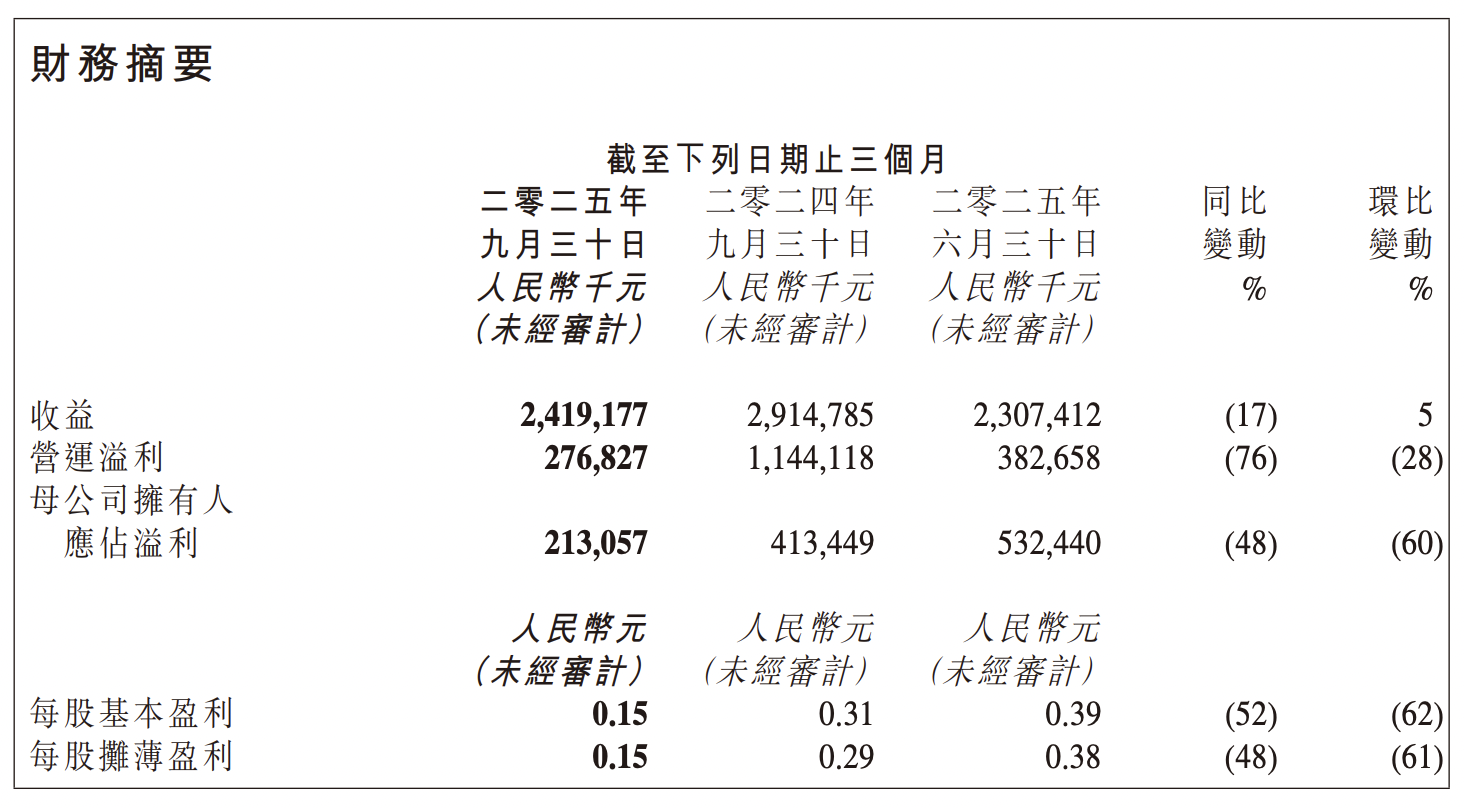
Core Viewpoint - The resignation of CEO Guo Weiwei from Xishanju is attributed to personal career planning, amidst declining performance in Kingsoft's Q3 financial results, particularly in the gaming sector [1][3]. Group 1: Leadership Changes - Guo Weiwei has resigned as CEO of Xishanju but will continue as Chief Producer, while Zou Tao, CEO of Kingsoft, will serve as acting CEO of Xishanju [1]. - Guo Weiwei has been a key figure in the development of the game "Jian Xia Qing Yuan Online" since joining Xishanju in 2004, holding various positions before becoming CEO in 2016 [1]. Group 2: Financial Performance - Kingsoft's Q3 total revenue was 2.419 billion yuan, a year-on-year decrease of 17%, with net profit dropping by 48% to 213 million yuan [3]. - The gaming segment saw a significant revenue decline of 47% to 898 million yuan, accounting for 37% of total revenue [3]. Group 3: Game Performance - The performance of "Jian Xia Qing Yuan Online" has been declining as it enters its 16th year, with both revenue and popularity decreasing [5]. - The newly developed sci-fi mech game "Jie Xian Ji" has underperformed since its launch, with peak online players dropping from 132,800 to below 4,000 within months [5][6]. - Player feedback indicates dissatisfaction with "Jie Xian Ji," citing issues such as poor design, weak narrative, and balance problems in gameplay [6].

金山软件三季度净利大幅下滑48%,游戏业务拖后腿
Xin Lang Cai Jing· 2025-11-19 13:36
Core Insights - Kingsoft Software (03888.HK) reported a significant decline in total revenue for Q3 2025, amounting to 2.42 billion RMB, a year-on-year decrease of 17%, with net profit dropping 48% to 213 million RMB [1][2] Financial Summary - Total revenue for Q3 2025: 2.42 billion RMB, down from 2.91 billion RMB in Q3 2024 [2] - Operating profit: 277 million RMB, a decrease from 1.14 billion RMB in the previous year [2] - Net profit attributable to shareholders: 213 million RMB, down from 413 million RMB in Q3 2024 [2] - Basic earnings per share: 0.15 RMB, compared to 0.31 RMB in the same quarter last year [2] Business Performance - Office software and services revenue reached 1.52 billion RMB, showing a growth of 26% year-on-year, driven by WPS software and WPS 365 [1][2] - Network gaming and other business revenue fell to 900 million RMB, a decline of 47% year-on-year, attributed to reduced contributions from existing games and the early-stage development of new titles [1][3] User Metrics - WPS Office monthly active devices reached 669 million, a 9% increase year-on-year [3] - Paid personal users for Kingsoft Office totaled 41.79 million, up 10% from the previous year [3] Gaming Segment Insights - The flagship game "Jian Wang 3" has been operational for over 16 years but faces challenges from new gaming genres [5] - New game "Jie Xian Ji" has gained attention in the mech game segment, while other international IP games are set to launch in upcoming quarters [5] - Marketing and distribution expenses increased by 55% year-on-year to 564 million RMB, reflecting higher promotional spending related to gaming [5]

ChinaJoy2025探访:腾讯、索尼、完美世界、西山居展台,实机体验《影之刃零》《解限机》《异环》
2 1 Shi Ji Jing Ji Bao Dao· 2025-08-02 06:28
Core Insights - The 22nd China International Digital Interactive Entertainment Exhibition (ChinaJoy) opened on August 1, 2025, in Shanghai, attracting 743 companies from over 30 countries, including major players like Tencent, NetEase, and Sony [1] Group 1: Industry Trends - The exhibition focuses on the empowerment of AI technology in gaming, domestic game development, and cross-terminal digital entertainment ecosystems [1] - The event showcases popular domestic titles such as "Shadow Blade Zero" and "Limitless Machine," reflecting the development trends of the Chinese gaming industry in 2025 [1] Group 2: Company Participation - Major companies like Tencent, Sony, and Perfect World have set up exhibition booths, indicating their active involvement in the evolving gaming landscape [1] - The presence of leading firms highlights the competitive nature of the gaming industry and the emphasis on innovation and technology integration [1]


腾讯莉莉丝鹰角库洛带头:一轮多达59款产品的“狂轰乱炸”来了
3 6 Ke· 2025-07-09 02:16
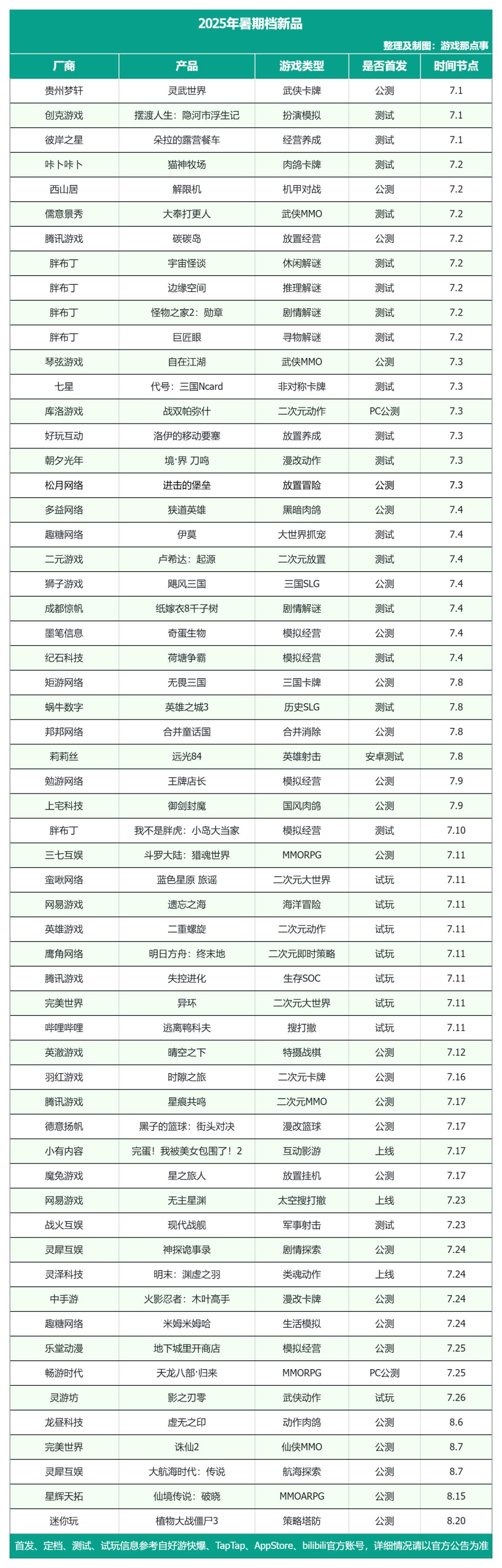
Core Insights - The summer game release schedule for 2025 is less competitive compared to previous years, with fewer standout titles expected to dominate the market [1] - A significant trend in the gaming industry for 2024 is a reduction in R&D spending, with approximately 67.6% of listed game companies cutting their development budgets by an average of 20.79% year-on-year [1] - Despite the reduced competition, there are still several promising titles in the 2025 summer lineup that have the potential to become hits [1] Industry Trends - The gaming industry is experiencing a "development contraction" trend, leading to reduced R&D expenditures among companies [1] - The impact of this contraction on the market is expected to have a delayed effect, suggesting that the current lineup may still yield successful titles despite the overall trend [1] Upcoming Titles - Notable titles for the 2025 summer release include: - "解限机" by 西山居, which has already shown strong performance with over 130,000 concurrent players on its launch day [5] - "远光84" by 莉莉丝, which aims to innovate within the shooting genre with new gameplay mechanics [10] - "碳碳岛" by 腾讯游戏, a low-carbon environmental management game that emphasizes educational elements [12] - "明末:渊虚之羽" by 灵泽科技, anticipated to be a leading title in the single-player market [19] Market Dynamics - The competitive landscape is shifting, with major companies like 腾讯 and 网易 adopting more conservative strategies in their game releases for 2025 [16][24] - The industry is witnessing a potential stagnation in gameplay innovation, as companies focus on refining existing concepts rather than introducing groundbreaking new ideas [47] - There is a growing interest in exploring new game genres and mechanics, particularly in response to the evolving demands of players and the influence of AI technology [47]


互联网传媒周报:游戏版号6月今年新高,关注暑期推广-20250629
Shenwan Hongyuan Securities· 2025-06-29 14:13
Investment Rating - The report maintains a "Positive" outlook on the gaming sector, highlighting a monthly high in game approvals and encouraging summer promotions [4]. Core Insights - The gaming sector is expected to benefit from a significant increase in new game approvals, with 158 new games (147 domestic and 11 imported) approved in June, marking a new monthly high for the year. This trend indicates a clear easing of regulatory constraints [4]. - The mid-term growth drivers include the expansion of overseas markets and the consumption demands of the post-90s and post-00s generations, improved competitive dynamics leading to better-than-expected profit margins, and AI developments enhancing valuation options [4]. - Key companies such as Giant Network, Huya, and others are expected to show strong performance, with new game launches and innovative strategies aimed at attracting younger users [4]. Summary by Sections Gaming Sector - The report emphasizes the ongoing recommendation for the gaming sector, driven by new game approvals and summer promotional activities. The mid-term logic includes overseas expansion and evolving consumer preferences [4]. - Notable companies like Tencent, NetEase, and Giant Network are highlighted for their expected revenue and profit growth, with specific projections for 2025 and 2026 [6]. AI and Internet Media - AI applications in platforms like Kuaishou and Meitu are showing better-than-expected commercialization, with significant user engagement and innovative content offerings [4]. - The report discusses the potential of AI in education and advertising, with companies like New Oriental launching AI educational products and Tencent enhancing ad efficiency through AI [4]. Consumer Trends - The report identifies high-demand consumer segments in collectibles, music, and live events, with companies like Pop Mart and NetEase Music showing strong growth trajectories [4]. - The report also notes the resilience of advertising platforms like Focus Media, which is expected to benefit from partnerships that enhance media value [4].