
Import Substitution

Search documents
瑞丰新材-业绩回顾:2025 年四季度受订单交付延迟及一次性利润率影响不及预期;2026 年展望将改善;维持买入评级
2026-04-01 09:59
Summary of Richful (300910.SZ) Earnings Call Company Overview - **Company**: Richful (300910.SZ) - **Industry**: China Advanced Materials & Construction - **Market Cap**: Rmb14.1 billion / $2.0 billion - **Enterprise Value**: Rmb14.0 billion / $2.0 billion - **Current Price**: Rmb47.67 - **Target Price**: Rmb73.00 - **Upside Potential**: 53.1% [1][4] Key Financial Highlights - **4Q25 Results**: - Net Profit (NP): Rmb162 million, down 27% YoY, and 29% below expectations [1] - Revenue: Rmb958 million, up 12% YoY, but 13% below expectations [21] - Gross Profit Margin (GPM): 31.3%, down 3.9 percentage points YoY, and 5.9 percentage points below expectations [1][21] - Free Cash Flow (FCF): Rmb151 million, strong cash generation supported by improved receivables management [1][21] - Cash Dividend: Rmb436 million, implying a 59% payout ratio [1] 2026 Outlook - **Management's Confidence**: - Anticipates notable sales acceleration starting in 2026, driven by OEM certification progress in automotive lubricants [2][20] - Expects domestic growth from sales team reorganization and overseas scaling up [22] - Key account strategy to mitigate supply chain volatility [22] - **Saudi Arabia Joint Venture**: - Viewed as a strategically advantageous production hub with lower costs, targeting both existing and new markets [2][22] - **Impact of Oil Prices**: - Limited impact expected in 1Q26, with raw material cost increases anticipated to align with product price hikes from 2Q26 [22] Financial Projections - **Revised EPS Estimates**: - 2026E: Rmb3.05 (down 13% from previous estimates) [2][25] - 2027E: Rmb3.85 - 2028E: Rmb4.80 - **Revenue Growth**: - 2026E: Rmb4,513 million - 2027E: Rmb5,538 million - 2028E: Rmb6,718 million [4][15] Risks and Challenges - **Market Risks**: - Faster-than-expected vehicle electrification and slower industrial production growth [28] - Potential rise in raw material prices due to crude oil price fluctuations [28] - Trade tensions affecting export business [28] Investment Thesis - **Growth Potential**: - Richful is positioned to double its volume share in China's lubricant additives market to approximately 15% by 2028E [30] - Expected to improve overseas market share to 8.4% by 2028E [30] - **Valuation Methodology**: - Target price based on a 13.5x 2028E EV/EBITDA, reflecting strong growth potential and margin profile compared to peers [27][30] Conclusion - **Recommendation**: Maintain Buy rating with a target price of Rmb73.00, reflecting confidence in Richful's growth trajectory and market positioning despite short-term challenges [2][30]

JPMorgan analysis finds Trump’s tariffs are working on China—at a huge cost to American small business
Yahoo Finance· 2026-02-19 17:18
Core Insights - The JPMorgan Chase Institute's analysis indicates that aggressive trade policies in 2025 have created a significant divide between midsize American businesses and Chinese suppliers, resulting in substantial costs for U.S. companies [1][2]. Group 1: Impact of Trade Policies - The report titled "Tracking international payments: How are midsize firms reacting to tariffs?" highlights that midsize firms are under historic pressure but are managing to adapt [2]. - Following tariff rate increases and new universal tariffs in April 2025, monthly tariff payments by midsize firms have tripled compared to early 2025 levels [3]. - Outflows from midsize U.S. firms to China have decreased by approximately 20% since 2024, indicating a successful reduction in reliance on Chinese manufacturing [4]. Group 2: Shifts in Supply Chains - Despite the reduction in payments to China, outflows to other regions such as Southeast Asia, Japan, and India have increased, suggesting a trend of "import substitution" as U.S. firms seek alternative suppliers [5]. - American businesses are not fully reshoring operations but are instead engaging in a costly search for new suppliers to avoid high tariffs [4]. Group 3: Financial Health of Midsize Firms - The financial health of midsize firms is at risk as they are often too large to evade regulatory scrutiny but lack the scale to absorb sustained cost increases compared to larger multinational corporations [6]. - The burden of new tariffs has disproportionately affected existing importers, with the majority of increased government revenue coming from firms already paying tariffs, intensifying financial pressure on them [7].

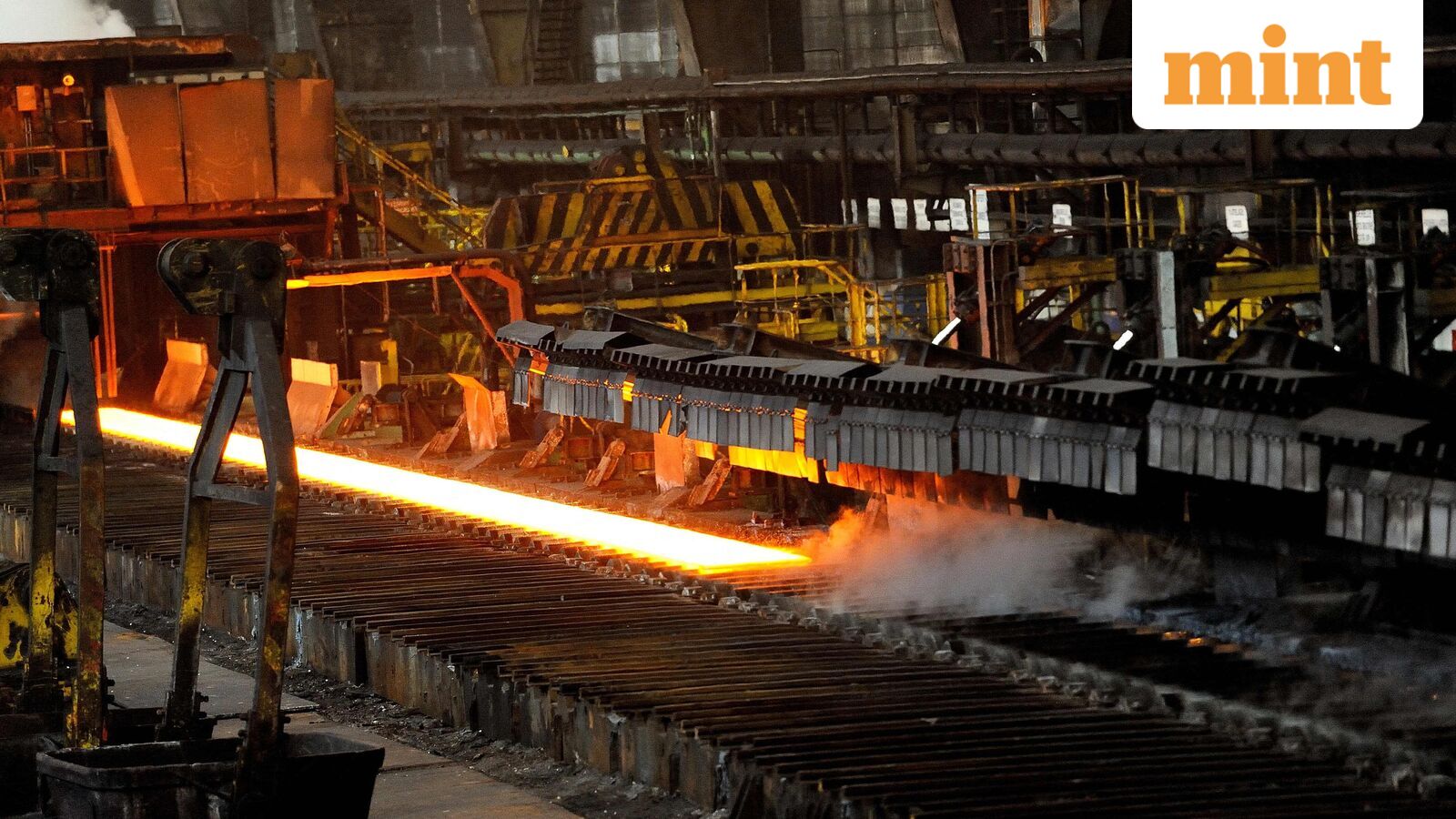
AM/NS India targets import substitution with new value-added steel for appliances
MINT· 2026-02-16 15:18
Core Insights - ArcelorMittal Nippon Steel India (AM/NS India) is expanding its value-added steel portfolio with two new products targeting the consumer appliance sector to reduce imports [1][5] Company Strategy - The company aims to increase its value-added steel portfolio contribution from 60-65% to over 70-75% in the next two to three years through new product launches [3] - AM/NS India's strategy focuses on downstream steel, which includes higher-value products for industries such as automobiles, appliances, and construction [2] Product Launch - The two new products are AM/NS Vibrance, a premium colour-coated steel for appliances, and AM/NS Optima, a non-colour-coated galvanized steel for outdoor units and panels [5] - These products are designed to meet the design-led needs of original equipment manufacturers (OEMs) in the appliance and industrial manufacturing sectors [7] Market Context - India imports approximately 100,000 tonnes of steel for appliances annually, and AM/NS India plans to substitute these imports at a lower cost [3][5] - The Indian consumer durables market is projected to become the world's fourth largest by FY27, with a demand for coated steel expected to grow at 8-10% annually [6] - Coated steel demand in the appliance segment is growing at roughly 10% per year, driven by consumer aspirations, urbanization, and government initiatives like the Production-Linked Incentive (PLI) scheme [6]


东兴证券:掘金AI创新周期 看好半导体存储等三大方向
智通财经网· 2025-12-17 08:10
Core Viewpoint - The report from Dongxing Securities highlights the strengthening AI logic, driven by rapid growth in computing power demand, the rise of AI chips, and the exponential increase in AI workloads, suggesting investment opportunities in the semiconductor sector, particularly in storage, testing equipment, and magnetic components [1] Semiconductor Storage - The storage industry is entering an upward cycle driven by AI, with explosive demand for AI infrastructure leading to a super cycle in prices, particularly for high-performance storage like HBM and DDR5 [2] - AI servers require significantly more storage than traditional servers, causing a surge in demand for high-performance storage solutions [2] - Major manufacturers are prioritizing production for high-margin products, leading to a supply squeeze for traditional storage products [2] - Beneficiaries include storage module companies like Shannon Microelectronics and Jiangbolong, and storage chip companies like Zhaoyi Innovation and Lanke Technology [2] Semiconductor Testing Equipment - The development of AI computing power is increasing the complexity and time required for testing, driving growth in the testing equipment market [3] - The global testing equipment market is expected to exceed $13.8 billion by 2025, with SoC testing machines and storage testing machines being core categories [3] - Domestic manufacturers with high-precision measurement and efficient parallel testing capabilities are accelerating breakthroughs in high-end testing [3] - Recommended companies include Jingzhida and beneficiaries like Changchuan Technology and Huafeng Measurement and Control [3] Magnetic Components - The power requirements of AI servers are increasing significantly, leading to a shift towards 800V high-voltage direct current (HVDC) architecture, which presents challenges for traditional power supply systems [4] - The SST (Solid State Transformer) solution is expected to accelerate the demand for magnetic components, with costs accounting for 15%-20% of the total [4] - The growth in server magnetic components is driven by the need for efficient power conversion and high-performance computing [4] - Beneficiaries include companies like Keliqi, Jingquan Technology, and Mingpu Optical Magnetics [4]

MetaX IPO surge is fueled by AI enthusiam and China's push to build Nvidia alternatives: Strategist
Youtube· 2025-12-17 06:25
Core Insights - The recent IPOs in China, particularly in the AI and semiconductor sectors, have generated significant enthusiasm among retail investors, leading to substantial stock price increases, such as a 400% debut for one stock [1][2] - Companies like More Threads are being compared to Nvidia, but it is noted that such comparisons may be premature due to the early-stage nature of these firms and their relatively short operational history [3][4] Industry Overview - The Chinese government is actively fostering the semiconductor industry, aiming to develop a domestic ecosystem that can compete with US-based chip manufacturers, which has led to increased investor interest in companies like More Threads and Meta X [5][6] - The government has a long-term investment strategy in the semiconductor sector, which has resulted in a mix of private and state-backed funding for these companies, although they are not state-owned enterprises [15][16] Company Analysis - More Threads is focused on GPU production and aims to create a general-purpose chip rather than application-specific ones, positioning itself closer to Nvidia in terms of product offerings [6][12] - The company has shown capital discipline by opting to park the funds raised from its IPO in liquid assets rather than immediate expenditures, indicating a structured approach to R&D and long-term planning [28][29] Market Dynamics - The Chinese stock market has seen a significant uptick in tech-related stocks, particularly around February and March, with a notable interest in AI-related companies, suggesting a thematic investment trend among Chinese investors [8][9] - There is a potential bifurcation in the Chinese IPO market, with core semiconductor companies listed on the A-share market and application-focused companies appearing on the H-share market, which may influence future investment dynamics [26][27]


X @Bloomberg
Bloomberg· 2025-11-04 09:10
Sun King expects that manufacturing plants it’s planning for Kenya and Nigeria will deliver import substitutions of $150 million each over the next five years https://t.co/QzkoaUUtdL ...
瑞丰新材- 业绩回顾:二季度因营收增长慢于预期低于预期;7 月出口大幅加速;维持买入评级
2025-08-27 01:12
Summary of Richful (300910.SZ) Earnings Review Company Overview - **Company**: Richful (300910.SZ) - **Industry**: Lubricant Additives - **Market Cap**: Rmb19.0 billion / $2.6 billion - **12-Month Price Target**: Rmb76.00 - **Current Price**: Rmb64.10 - **Upside Potential**: 18.6% [1][3] Key Financial Highlights - **2Q25 Net Profit**: Rmb175 million, up 6% year-over-year, but 9% below expectations [1] - **Top-line Growth**: 2Q25 revenue of Rmb813 million, a 3% increase year-over-year, but 6% below expectations [1] - **Gross Profit Margin (GPM)**: 37.3%, a historical high, driven by favorable raw material costs [1][15] - **EBIT Margin**: 24.0%, up 1.6 percentage points year-over-year, but 1.1 percentage points below expectations [15] - **Net Profit Margin (NPM)**: 21.6%, up 0.4 percentage points year-over-year, but 0.8 percentage points below expectations [15] Sales Performance - **Domestic Sales Growth**: Only 10% year-over-year in 1H25, significantly below the full-year expectation of 40% [1] - **Export Growth**: Notable re-acceleration in July with approximately 60% year-over-year growth in export value [1] - **Sales Breakdown**: Domestic sales accounted for over 30% of total sales in 1H25 [1] Future Outlook - **Revised EPS Estimates**: Small revisions down by 2% for 2025E-27E to reflect 2Q25 results [1] - **12-Month Target Price Raised**: Increased to Rmb76.0 from Rmb74.0 [1] - **Projected Revenue Growth**: Expected to achieve a revenue CAGR of +35% in domestic sales over the next three years [27] - **Volume Share Growth**: Anticipated increase in China's lubricant additives market share from 5.6% in 2024 to 13.5% by 2027E [27] Risks and Challenges - **Market Risks**: Potential faster-than-expected vehicle electrification and slower industrial production growth globally [26] - **Raw Material Price Risks**: Unexpected rises in raw material prices, particularly crude oil [26] - **Export Risks**: Potential tariffs on China exports from non-US countries could impact Richful's export business [26] Additional Insights - **Cash Flow**: Positive free cash flow generation of Rmb90 million in 2Q25, with net operating cash inflow covering 102% of net profit [15] - **Debt Position**: Net cash position decreased to Rmb104 million from Rmb120 million as of end-1Q25 [15] - **Investment Thesis**: Richful is positioned well for growth due to import substitution trends and a favorable margin outlook from lower oil prices [27] This summary encapsulates the key points from Richful's earnings review, highlighting financial performance, future outlook, and associated risks.
中国工业月度报告(2025 年 7 月)-整体需求不错,本土化进程加快IA Monthly (Jul 2025) – Overall Demand Not Bad, and Localization Accelerated
2025-08-18 02:53
Summary of Key Points from the Conference Call Industry Overview - The report focuses on the **Industrial Automation (IA)** sector in **China** and highlights the ongoing trends in demand and market dynamics as of **July 2025** [1][2][13]. Core Insights - **Demand Trends**: - Local IA suppliers experienced a sales growth of **+19% YoY** in July, up from **+18% YoY** in June and **+15% YoY** in May [2][13]. - Inovance's IA order growth improved to over **20% YoY** in July, up from **15% YoY** in June [2][13]. - Key sectors showing solid growth include **logistics, hoisting, battery, auto, woodworking, food & beverage, textile, machine tool, and packaging** [2][13]. - **Overseas Brands Performance**: - Sales growth for leading overseas IA suppliers moderated to **+1% YoY** in July from **+6% YoY** in June [3][13]. - Yaskawa's servo sales growth remained strong at **+25% YoY**, while inverter sales in China dropped to **-11% YoY** [3][13]. - ABB's inverter sales fell to **-6% YoY** from **+10% YoY**, indicating competitive pricing pressures [3][13]. - **Taiwanese Peers**: - Hiwin's sales were weak at **-6% YoY** in July, while Airtac maintained a firm growth of **+7% YoY** [4][13]. - Management expects automation demand to pick up in Q4 as interest rates are cut in the EU and US [4][13]. Macro Indicators - **Manufacturing PMI**: - The Manufacturing PMI declined slightly to **49.3** in July from **49.7** in June, indicating softened confidence in the manufacturing sector [5][67]. - High-end, large, and small companies' PMIs all dropped, while mid-sized companies' PMI recovered to **49.5** [5][67]. - **Business Conditions Index (BCI)**: - The BCI remained at **53.4** in July, down from a peak of **57.7** in April, reflecting cautious investment outlooks among SMEs [67]. - **Export Growth**: - Container export volumes in major ports increased to **+1.9%** in June from **+1.3%** in May, while total exports improved to **+7.2%** in July from **+5.9%** [67]. Sector-Specific Insights - **Servo and Inverter Demand**: - Projected servo demand growth remained at **+12% YoY** in July, while inverter demand fell back to **-2% YoY** [13][18]. - The top downstream applications for servos include **lithium battery, 3C electronics, industrial robots, solar, and machine tools** [24][30]. - **Downstream Demand Trends**: - Demand for servos from top applications slowed to **+15% YoY** in June from **+82% YoY** in May, primarily due to deteriorating solar demand [26][30]. - Inverter demand from top applications improved slightly to **+3% YoY** in June from **+2% YoY** in May, driven by recovery in machine tools and power sectors [26][30]. Conclusion - The IA sector in China is experiencing a divergence in growth between local and overseas suppliers, with local players showing stronger performance amid ongoing macroeconomic challenges. The outlook for the second half of 2025 remains cautiously optimistic, supported by favorable government policies and potential recovery in key sectors.