Intelligent Connected Vehicles

Search documents
【政策综述】2026年国家汽车相关政策取向分析
乘联分会· 2026-02-10 08:37
Core Viewpoint - The article emphasizes the importance of implementing new automotive policies in 2026 to promote high-quality development in the automotive industry, focusing on energy consumption standards, tax incentives for new energy vehicles, and the promotion of green consumption [4][5][15]. Summary by Sections 1. New Fuel Consumption Standards - Starting January 1, 2026, three mandatory national standards regarding fuel consumption for passenger cars and light commercial vehicles will be implemented, tightening requirements by approximately 18% for traditional and hybrid vehicles, with specific targets set for 2030 [7][8]. 2. Tax Incentives for New Energy Vehicles - The Ministry of Industry and Information Technology, along with other departments, will continue to implement tax exemptions for new energy vehicles from January 1, 2026, with specific technical requirements for vehicles to qualify for the tax exemption [9][10]. 3. Export License Management for Electric Vehicles - From January 1, 2026, a new export license management system for pure electric passenger vehicles will be established to promote healthy trade in new energy vehicles [10]. 4. Vehicle Tax Exemption Adjustments - New technical requirements for energy-saving and new energy vehicles to enjoy vehicle and vessel tax exemptions will be effective from January 1, 2026, aligning with updated fuel consumption standards [11]. 5. Average Fuel Consumption and New Energy Vehicle Points Management - For the years 2026 and 2027, the required proportion of new energy vehicle points will be 48% and 58%, respectively, with specific allowances for companies meeting fuel consumption reduction targets [11][12]. 6. Large-Scale Equipment Update and Trade-In Policies - A notification issued on December 29, 2025, outlines policies for supporting the replacement of old vehicles with new energy vehicles, including subsidies for consumers who trade in old cars for new ones [12][18]. 7. Green Consumption Promotion - A joint notification from multiple ministries aims to promote green consumption in the automotive sector, encouraging the purchase of new energy vehicles and the development of related services [16][17]. 8. Continued Implementation of Automotive Industry Growth Plans - The automotive industry growth plan for 2025-2026 will continue to emphasize the application of smart and connected technologies, with specific measures to enhance domestic consumption and improve supply quality [18][19]. 9. Financial Policies to Enhance Automotive Consumption - Financial and fiscal policies will be optimized to further promote automotive consumption, with a focus on enhancing the quality and efficiency of financial services to support the real economy [20].


AI应用重要阵地,Robotaxi还看中国
GUOTAI HAITONG SECURITIES· 2026-02-04 08:11
01 02 03 04 4 / 01 中国城市客运量统计口径包括出租车(含招手出租车和网约车)、轨道交通、公共汽电车、船运。2019年1月以来,中国城市客运量近年 来保持增加态势,2025年11月达到接近90亿人次,其中来自出租车的客运量占比不断提升,从2019年1月的15%提升至2025年11月的33%, 出租车正在成为城市客运的重要组成部分。 2 / CONTENTS 3 / 01 02 03 04 -200% -100% 0% 100% 200% 300% 400% 500% 600% 700% 800% 0.00 200,000.00 400,000.00 600,000.00 800,000.00 1,000,000.00 2019-01 2019-06 2019-11 2020-04 2020-09 2021-02 2021-07 2021-12 2022-05 2022-10 2023-03 2023-08 2024-01 2024-06 2024-11 2025-04 2025-09 中国:城市客运量:当月值 同比 图:中国城市客运量及同比(单位:万人次) 图:中国城市客运量-出租车及在中国城 ...

南京:招引高能级链主型项目
Xin Lang Cai Jing· 2026-01-26 07:00
Core Viewpoint - The Nanjing Municipal Government has issued policies aimed at accelerating the cultivation of new productive forces to promote high-quality development, focusing on attracting high-level chain-leading projects [1] Group 1: Policy Initiatives - The government plans to strengthen the city's industrial investment center and utilize specialized teams in industry, technology, and services for investment promotion [1] - Key events such as the JinQiao Conference and the World Intelligent Manufacturing Conference will be organized to enhance investment attraction [1] Group 2: Targeted Sectors - The focus will be on regions like Beijing-Tianjin-Hebei, the Yangtze River Delta, and the Guangdong-Hong Kong-Macao Greater Bay Area, with an emphasis on new sectors such as "Artificial Intelligence +", smart connected vehicles, robotics, and low-altitude economy [1] Group 3: Investment Goals - The initiative aims to explore market-oriented approaches to deepen cooperation with business associations, professional intermediaries, and leading enterprises in the industry chain [1] - The goal is to attract 30 projects with an investment of over 1 billion yuan each throughout the year [1]
从监管智驾到准许L3上路,十大事件解码多维博弈
Xin Jing Bao· 2026-01-08 08:29
Core Insights - The Chinese automotive market in 2025 is undergoing a multifaceted transformation driven by policy regulations, capital restructuring, technological breakthroughs, and safety standards. This transformation is not merely a technical iteration or market reshuffle but a comprehensive evolution that presents opportunities for industry restructuring and transformation [1] Regulatory Changes - The Ministry of Industry and Information Technology (MIIT) has mandated that automotive companies clarify system functionality and safety responses, moving away from exaggerated claims in intelligent driving promotions. This shift has led to a more rational understanding of "assisted driving" versus "autonomous driving" among consumers [2] Supply Chain Developments - The implementation of a 60-day payment term for large enterprises purchasing from small and medium-sized suppliers has significantly alleviated cash flow pressures on these suppliers. This change allows them to invest more in technology development, enhancing the quality and technical level of components [3] New Corporate Structures - The establishment of the China Changan Automobile Group as a new state-owned enterprise marks a significant shift in the industry landscape, enhancing decision-making autonomy and financing capabilities while focusing on new energy and intelligent technology [5] Asset Restructuring - Dongfeng Group has accelerated its transformation by divesting low-efficiency fuel assets and focusing on high-end new energy brands. This strategic move exemplifies how traditional automakers can innovate through capital restructuring [6][7] Safety Regulations - New regulations regarding hidden door handles require mechanical emergency functions to ensure safety in extreme conditions, reflecting a balance between innovation and safety in vehicle design [8] Market Performance - Chery Automobile's successful IPO, achieving a market value exceeding 200 billion HKD, highlights its strong performance with a 7.8% increase in total sales and a 54.9% surge in new energy vehicle sales [9] Autonomous Driving Milestones - The approval of L3-level conditional autonomous driving vehicles for real-world testing represents a significant milestone for the industry, allowing for data collection and setting safety boundaries for future developments [10] Corporate Integrations - The completion of the integration of Geely and Zeekr signifies a strategic elevation of Geely's market position, enhancing its technological capabilities and financial stability [11] Quality Concerns - A significant lawsuit against Xinwanda for quality issues in battery cells has raised alarms in the battery industry, emphasizing the need for improved quality management throughout the product lifecycle [12][13] Strategic Partnerships - FAW's investment in Leap Motor illustrates a strategic collaboration that combines manufacturing strength with innovative technology, potentially enhancing both companies' market positions [14]


新能源汽车如何跑赢“下半场”
Jing Ji Ri Bao· 2026-01-04 21:47
Core Insights - The development of new energy vehicles (NEVs) is a crucial direction for the global automotive industry's green transformation, and it is essential for China to transition from a major automotive country to a strong automotive nation [1] Industry Growth - NEV exports from China increased by 62% year-on-year in the first 11 months of 2025, with a remarkable 156% growth in November alone, significantly outpacing the overall automotive export growth [1] - China has established itself as the world's largest automotive producer and seller, enhancing its global competitiveness in the automotive sector [1] - The domestic market shows a penetration rate of approximately 80% for Chinese brands in NEV retail sales as of November 2025 [1] - The infrastructure for electric vehicle charging has surpassed 19 million units, supporting the rapid development of the NEV industry [1] Challenges and Solutions - The industry faces challenges such as supply structure optimization, reliance on external procurement for key battery materials like lithium, cobalt, and nickel, and limitations in core technologies like automotive chips and operating systems [2] - To address these issues, the industry aims to enhance global competitiveness through policy improvements, technological innovation, brand strengthening, and risk mitigation [2] - Expanding demand will lead to optimized NEV supply, with measures including reducing consumption restrictions and improving tax systems for NEVs [2] Technological Innovation - There is a push for breakthroughs in solid-state batteries and efficient drive technologies to enhance safety and range in NEVs [3] - The focus is on strengthening independent research and development of automotive chips and operating systems to improve smart driving capabilities [3] - The integration of NEVs with artificial intelligence, new materials, and resource recycling is encouraged to enhance competitive advantages [3] Enterprise Development - The industry is implementing policies that emphasize quality and efficiency, guiding companies to focus on profitability, technological strength, and brand value [3] - There is support for leading enterprises to grow and increase industry concentration, as well as encouragement for capable companies to engage in global mergers and acquisitions [3] Risk Management - Companies are encouraged to enhance their ability to respond to trade barriers and external shocks, promoting orderly international expansion to avoid concentrated investments in a few countries [3]
2026年汽车行业补贴政策展望:4000亿补贴金额助力汽车市场
数说新能源· 2025-12-15 04:00
Group 1: 2026 Automotive Industry Subsidy Policy Outlook - The continuation of the national vehicle replacement subsidy policy is confirmed, with subsidies starting from 2020 and lasting until 2025, and an extension into 2026 expected to be announced before the Spring Festival (January-February) [1] - The total scale of the vehicle replacement subsidy in 2026 is estimated to be around 400 billion, a slight increase from 300 billion in 2025, with approximately 10% allocated to the new energy vehicle sector, corresponding to a scale of 40 billion [3] - The subsidy optimization direction includes raising technical thresholds (such as battery capacity and range) and increasing the registration age/emission thresholds for old vehicles, while slightly reducing the subsidy amount per vehicle [4] Group 2: Local Subsidy Policies and Trends - Local subsidies in 2026 will be differentiated and characterized, moving away from a one-size-fits-all approach, with examples such as Guangdong linking subsidies to vehicle purchase tax exemptions [5] - The subsidy method will involve short-cycle, frequent disbursements, with one-time subsidies lasting 2-3 months and 2-3 concentrated subsidies introduced annually to stimulate off-season sales [6] - The focus will be on new energy vehicles, which currently account for over 50% of sales, with some localities adapting to support local production brands/models [7] Group 3: Government Procurement and Charging Infrastructure - By the end of 2024, government procurement of new energy vehicles is required to exceed 30%, with 2025 seeing the inclusion of this requirement in regulations against waste [11] - The third batch of county-level charging pile subsidies is expected to be launched in 2026, with an estimated budget of 3.2 billion [14] - The goal for 2027 includes the construction of over 100,000 high-power charging piles and a total of 28 million charging facilities to meet the charging needs of 80 million vehicles [15] Group 4: Intelligent Connected Vehicle Policy Developments - The revised draft of the Ministry of Industry and Information Technology's Order No. 50, which governs the access of intelligent connected vehicle products and enterprises, is set to be officially released in 2026 [18] - Mandatory testing standards for L2-level advanced driver assistance systems will be officially introduced in 2026 [19] - All new vehicles must complete sandbox testing before market launch, with a focus on selecting testing institutions and developing testing processes for new technologies [21] Group 5: "14th Five-Year" Automotive Industry Planning Directions - The core development direction emphasizes low-carbon, electrification, and intelligence, with a gradual shift of fuel vehicles towards high-efficiency hybrid models, aiming for full hybridization of passenger vehicles by 2035 [23] - By the end of the "14th Five-Year" period, new energy vehicles are expected to account for 70%-80% of total sales [24] - The goal for L3-level and above autonomous driving is to achieve a 30% penetration rate, with ongoing discussions [25]

调查!“灰领”崛起背后:二线城市起薪七千,AI+技能人才也有光明的未来
Hua Xia Shi Bao· 2025-12-06 03:37
Core Insights - The article discusses the transformation of vocational education and the evolving demand for skilled labor in the context of technological advancements, particularly in the semiconductor and automotive industries [2][3][10]. Group 1: Vocational Education and Training - Xiamen Technician College has trained hundreds of undergraduate students in integrated circuit technology through a collaboration with local human resource companies, emphasizing practical skills in manufacturing, testing, and maintenance [2]. - The trend of undergraduates returning to vocational training for skills in high-demand sectors like AI, digital technology, and integrated circuits has become common across China [2]. - The integration of AI and automation in factories has led to a redefinition of job roles, with a growing need for high-skilled, composite talents capable of diagnosing and resolving complex issues in automated production lines [3][10]. Group 2: Industry Transformation - The rise of "black factories" and fully automated production lines signifies a shift in the nature of work, moving from traditional blue-collar roles to more complex positions that require advanced technical skills [3][10]. - The manufacturing sector is undergoing rapid digital transformation, with smart factories now operating with high efficiency, often without human presence, showcasing the need for a workforce skilled in automation and AI [5][10]. - The integrated circuit industry in Xiamen has seen significant growth, with over 2,000 related enterprises and a total output value exceeding 50 billion yuan in 2023, projected to grow nearly 30% in 2024 [8][9]. Group 3: Skills and Employment Trends - The demand for skilled labor is changing, with a notable increase in the market value of technical talents due to the digitalization of industries [7]. - The World Economic Forum predicts that by 2030, 22% of existing jobs will undergo structural changes due to technological advancements, with a net increase of 7.8 million jobs despite the displacement of some roles [11]. - The automotive industry is also experiencing a shift, with the need for new skills related to electric and smart vehicles, necessitating adjustments in vocational training programs to meet future job market demands [10][11]. Group 4: Future of Skilled Labor - The emergence of new job roles in sectors like smart manufacturing and autonomous vehicles highlights the necessity for educational institutions to adapt their curricula to include advanced technologies and practical applications [12][13]. - The collaboration between research universities and vocational education is essential to ensure a comprehensive supply of skilled labor across all sectors of the economy [13]. - The narrative around skilled labor is evolving, with a focus on creating high-quality talent that combines theoretical knowledge with practical skills, reflecting the changing landscape of employment opportunities [13].
海南智能交通创新发展论坛举行
Hai Nan Ri Bao· 2025-09-29 01:00
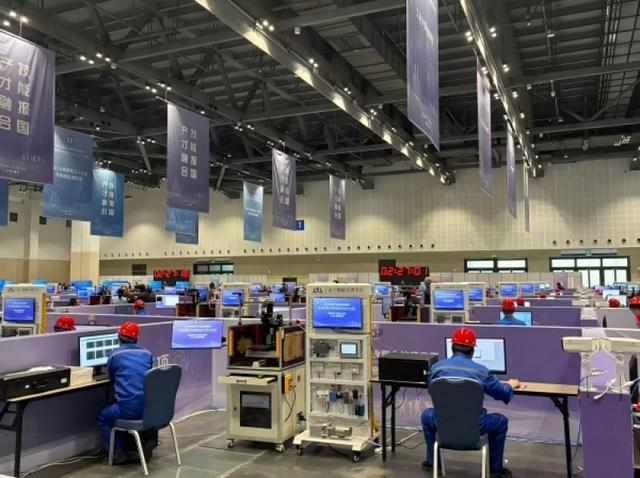
Group 1 - The "Hainan Intelligent Transportation Innovation Development Forum" was held on September 28, 2023, focusing on the innovative development of smart transportation in Hainan Free Trade Port [2] - The forum gathered government officials, academicians, industry experts, and corporate representatives to discuss the synergy between smart transportation and new energy vehicles, as well as the application of big data in the new energy vehicle sector [2] - A strategic cooperation agreement was signed among Hainan Provincial Transportation Investment Holding Co., Hainan Logistics Group Co., and China Mobile Communications Group Hainan Co. to develop a smart logistics model unique to Hainan, addressing issues of decentralization, high costs, and low efficiency in logistics [2] Group 2 - The forum was organized by the Hainan Provincial Department of Transportation and the Hainan Provincial Department of Industry and Information Technology [3] - Yang Guoqiang, a member of the provincial government party group, attended and delivered a speech at the forum [4]
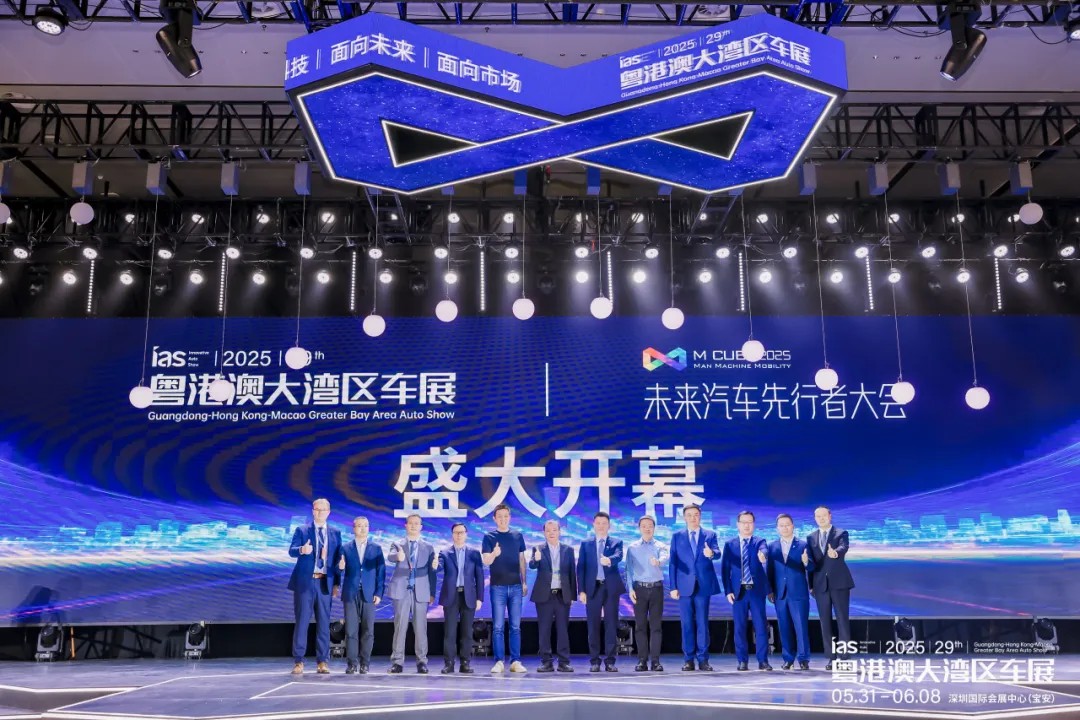
构筑汽车产业新生态引力场,2025粤港澳大湾区车展开幕
3 6 Ke· 2025-06-02 05:17
Core Insights - The 2025 Guangdong-Hong Kong-Macao Greater Bay Area Auto Show emphasizes a shift from traditional car exhibitions to a focus on technology and future mobility, showcasing 112 vehicle brands and 1,039 models [3][4] - The event aims to create an innovative ecosystem that integrates users, car manufacturers, tech companies, research institutions, and media, breaking the boundaries of conventional auto shows [4][5] - The show features a unique "Future Mobility Space Station" and various interactive zones, highlighting the transition of automobiles from mere transportation tools to lifestyle elements [3][4][9] Group 1: Event Overview - The auto show is held at the Shenzhen International Convention and Exhibition Center and is accompanied by the Future Automotive Pioneers Conference [1] - The theme "New A Show - Technology Alpha Auto Show" reflects a commitment to innovation and technology [4] - The event includes 50 new car launches and discussions on technological trends with industry experts [3][4] Group 2: Technological Focus - The show serves as a platform for showcasing advanced technologies such as AI, big data, and smart transportation, moving beyond just vehicle displays [10][11] - It aims to redefine the automotive industry by focusing on ecological definitions rather than just manufacturing [9][10] - The event highlights the importance of collaboration among various sectors, including chip manufacturers and software developers, to drive technological innovation [10][11] Group 3: Future Mobility - The auto show addresses future trends in mobility, including low-altitude economy initiatives, which are being pioneered in Shenzhen [11][12] - It features interactive demonstrations of integrated transportation solutions, showcasing the seamless connection between ground and aerial mobility [11][12] - The event aims to provide insights into consumer preferences and market opportunities for sustainable and innovative transportation solutions [12] Group 4: Industry Dialogue - The Future Automotive Pioneers Conference focuses on the competitive landscape of the automotive industry, emphasizing the need for ecological collaboration amid technological divergence [13][16] - Key industry leaders from traditional automakers and tech companies participate in discussions about the future of smart vehicles and the role of technology in shaping the industry [13][15] - The conference aims to establish strategic coordinates for the automotive industry, addressing challenges and opportunities in the evolving market [16]
【周度分析】车市扫描(2025年2月24日-2月28日)
乘联分会· 2025-03-05 09:06
Group 1 - The core viewpoint of the article highlights the recovery of the passenger car market in February 2025, driven by policies such as trade-in programs and the natural post-holiday market rebound, despite a decline in retail sales compared to the previous month [2][3][4] - In February 2025, the retail sales of passenger cars reached 1.397 million units, a year-on-year increase of 26%, but a month-on-month decrease of 22%. Cumulative retail sales for the year reached 3.191 million units, showing a 1% year-on-year growth [2][3] - The wholesale volume of passenger cars in February 2025 was 1.781 million units, reflecting a 35% year-on-year increase but a 15% decrease from the previous month. Cumulative wholesale for the year was 3.882 million units, up 13% year-on-year [2][3] Group 2 - The new energy vehicle (NEV) market saw retail sales of 720,000 units in February 2025, marking an 85% year-on-year increase, although it declined by 3% compared to the previous month. Cumulative retail sales for NEVs reached 1.465 million units, a 38% year-on-year growth [2][3] - The article indicates that the competition in the market remains intense, with leading companies aggressively capturing market share through pricing and configuration strategies [3][4] - The article anticipates that the passenger car market in February 2025 will continue to grow steadily, with NEVs being the main driving force, while traditional fuel vehicles are expected to decline [8] Group 3 - The government work report suggests that the production of new energy vehicles is expected to exceed 13 million units in 2024, with a total automobile production of 31.56 million units, reflecting a 5% year-on-year increase [8] - The charging infrastructure in China is rapidly developing, with a total of 3.76 million public charging piles as of January 2025, showing a 223% increase year-on-year [10] - The article notes that the competitive landscape for the automotive market is shifting, with Chinese manufacturers gaining significant market share in Russia, reaching over 60% in 2024 [12]