
极狐阿尔法S

Search documents
北汽蓝谷2025年预亏至少43亿元,同比收窄超32%
Guan Cha Zhe Wang· 2026-01-20 11:08
Core Viewpoint - Beiqi Blue Valley has announced a projected net loss for 2025, indicating a strategic focus on long-term investments in the new energy sector despite short-term financial pressures [1][3]. Financial Performance - The company expects a net profit attributable to shareholders of between -46.5 billion to -43.5 billion yuan for 2025, and a net profit excluding non-recurring losses of between -49.5 billion to -46.5 billion yuan [1]. - For 2024, the projected net loss is -69.48 billion yuan, with a net profit excluding non-recurring losses of -73.23 billion yuan, indicating an expected reduction in losses of at least 32% for 2025 [1]. Strategic Initiatives - Beiqi Blue Valley is implementing a "three-year leap" strategy, focusing on product development, brand enhancement, and sales channel expansion, which are seen as essential for building long-term competitiveness [3]. - The company anticipates a sales volume exceeding 200,000 units in 2025, representing a year-on-year increase of 84.06%, marking a significant milestone in its dual-brand strategy [3]. Technology and Innovation - The company is converting technological investments into competitive advantages, with the Alpha S (L3 version) undergoing large-scale road trials and plans for user access soon [3]. - A strategic partnership with Pony.ai is aimed at accelerating the commercialization of advanced autonomous driving technologies [3]. Future Outlook - Beiqi Blue Valley expects systematic improvement in profitability as new products are launched, cost reduction measures are implemented, and smart technologies enter the commercialization phase [5]. - The company emphasizes that achieving profitability is a systemic result driven by scale expansion, structural optimization, and operational quality improvements [5]. Operational Efficiency - The company reported a revenue of 5.87 billion yuan for Q3 2025, with a positive gross margin of 1.8%, and has seen revenue growth for three consecutive quarters [7]. - The ongoing improvement in profitability is attributed to steady sales growth, a shift towards higher-end product structures, and enhanced operational efficiencies [7].


L3,上路
Jing Ji Wang· 2026-01-18 04:23
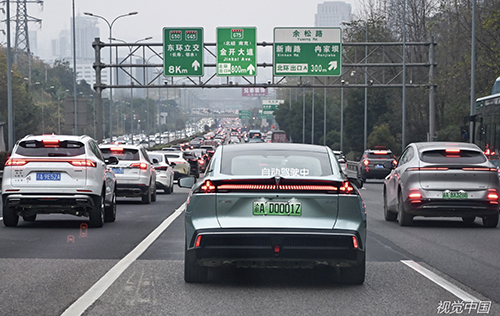
Core Insights - The first batch of L3-level conditional autonomous driving vehicles in China officially began road testing in Chongqing on December 26, 2023, following the Ministry of Industry and Information Technology's approval on December 15, 2023 [1][3] Group 1: L3 Autonomous Driving Vehicles - The first two models approved for L3-level conditional autonomous driving are the Deep Blue SL03 from Changan Automobile and the Arcfox Alpha S from BAIC, equipped with their respective intelligent driving systems [3][4] - The L3 autonomous driving function will initially be available on specific roads in Chongqing, with plans for expansion through OTA updates as policies evolve [3][4] - The approval of L3 vehicles marks a significant transition from technical validation to practical application, paving the way for future commercialization [4][9] Group 2: Consumer Access and Market Outlook - Currently, L3 vehicles are not available for consumer purchase, but consumers can experience the autonomous driving features through ride-hailing services [5] - Experts predict that L3-level autonomous driving will gradually achieve mass production in specific scenarios within the next two years, while widespread adoption may take 3 to 5 years or even longer due to technological, regulatory, and cost factors [5][6] - The recent approval is fundamentally different from previous temporary testing licenses, as it signifies that the vehicles have passed rigorous national evaluations and are qualified for legal road use [9] Group 3: Future of Autonomous Driving - L3-level autonomous driving is seen as a transitional phase, with L4-level expected to enable fully autonomous driving in specific environments, allowing drivers to focus on other activities [10] - The implementation of L4-level autonomous driving could revolutionize urban transportation, reducing congestion and accidents while lowering travel costs [10]


反“内卷”、闯关L3,十大热词看行业进化轨迹
Xin Jing Bao· 2026-01-14 00:14
Core Viewpoint - In 2025, the focus of competition in China's automotive industry shifts fundamentally from domestic market share battles to comprehensive competition on the global stage, centered around technology, systems, and regulations [1] Group 1: Order Restoration - A "revolution of order" is underway in the Chinese automotive industry, as a corrective governance action is launched to address the detrimental effects of endless price wars [2] - The average profit margin in the industry has dropped to around 4%, prompting the Ministry of Industry and Information Technology to take measures against "involution" competition [3] Group 2: Supply Chain Stability - A collective commitment by 17 automakers to limit payment terms to suppliers to 60 days aims to stabilize the supply chain and improve the financial health of component manufacturers [4] - This initiative is expected to create a fair and sustainable ecosystem, although the execution and supervision of this commitment pose significant challenges [4] Group 3: Export Regulation - The phenomenon of "zero-kilometer used cars" is being regulated, as some automakers have been exporting unsold new cars as used vehicles, disrupting local markets [5][6] - New regulations require that vehicles exported as "used cars" must provide after-sales service commitments and parts supply guarantees, closing loopholes for low-quality exports [6] Group 4: Intelligent Driving - The Chinese automotive industry is entering a new phase of intelligent driving, transitioning from demonstration to large-scale application and regulatory commercialization [7] - The penetration rate of L2-level advanced driver assistance systems in new cars reached approximately 64% by Q3 2025, enhancing consumer experience and data accumulation for algorithm improvement [8] Group 5: Advanced Driving Levels - The first batch of L3-level conditional autonomous driving vehicles has been approved for trial operation in designated areas, marking a significant legal milestone [9] - L3-level driving allows the system to take full control under specific conditions, establishing a clear responsibility framework for automakers [9] Group 6: Urban Navigation - The competition in intelligent driving is shifting focus from highways to complex urban environments, with "City NOA" becoming a key measure of technological capability [10] - Companies are investing heavily in R&D and data capabilities to enhance urban driving experiences, although challenges related to data compliance and privacy remain [10] Group 7: Battery Technology - Innovations in battery and charging technologies are addressing core concerns of electric vehicle range and charging anxiety [11] - Solid-state batteries are on a clear industrialization path, with major automakers announcing production timelines and breakthroughs in technology [12] Group 8: Fast Charging - The introduction of megawatt-level ultra-fast charging technology has transformed the charging experience, with significant advancements in charging power and infrastructure development [14] - National policies are encouraging the establishment of high-power charging facilities, aiming for over 100,000 units by the end of 2027 [14] Group 9: Globalization and Investment - The Chinese automotive industry is transitioning from being a global manufacturing hub to becoming an innovator and investor on the world stage [15] - Localized production bases are being established in international markets, such as BYD's plant in Brazil and NIO's energy factory in Hungary, enhancing responsiveness to regional demands [16] Group 10: Capital Market Engagement - A wave of listings focused on globalization is occurring, with companies like Chery and Seres raising significant capital through IPOs, indicating strong investor confidence [17] - These listings not only provide funding but also validate the companies' brand value and global strategies in the eyes of international investors [17]
车市2025|反“内卷”、闯关L3,十大热词看行业进化轨迹
Bei Ke Cai Jing· 2026-01-14 00:07
Core Insights - In 2025, the focus of competition in China's automotive industry shifts from domestic market share battles to global competition centered on technology, systems, and regulations [1] - The industry is moving towards sustainable value creation, with a significant emphasis on technological innovation and user experience [4] - Key developments include advancements in solid-state batteries and megawatt fast charging technology, aimed at addressing electric vehicle range and charging anxiety [1][16][20] - The trend of "going global" deepens into full value chain localization, while listings attract international capital to reshape the global industry landscape [1][22][24] Group 1: Order Restoration - A "revolution of order" is underway in the automotive industry, countering the detrimental effects of endless price wars that have driven profits to historical lows [2][3] - The government has initiated corrective actions against "involution" competition, with measures including price monitoring and cost investigations [3][4] Group 2: Anti-Involution Measures - The average profit margin in the industry fell to around 4% due to aggressive price wars, prompting a government response to restore healthy competition [3] - A collective commitment from 17 automakers to enforce a 60-day payment term for suppliers was established to stabilize the supply chain and improve cash flow for smaller enterprises [5][6] Group 3: Second-Hand Vehicle Regulations - The "zero-kilometer used car" issue has been addressed, with regulations requiring that exported vehicles labeled as "used" must provide after-sales service commitments and parts supply guarantees [7][8] Group 4: Intelligent Driving Advancements - The automotive industry in China is transitioning from the demonstration phase of intelligent driving to large-scale application and regulatory commercialization [9] - The penetration rate of L2-level assisted driving features in new vehicles reached approximately 64% by Q3 2025, with major automakers standardizing high-level assisted driving in key models [11][12] - The first L3-level automated driving models received conditional approval for road testing, marking a significant legal milestone in the industry [13][14] Group 5: Technological Innovations - The path to solid-state battery commercialization has become clearer, with major automakers announcing production timelines and breakthroughs in technology [17][18] - Megawatt-level ultra-fast charging technology has advanced significantly, with BYD achieving a charging power of 1 megawatt, enabling rapid charging capabilities [20] Group 6: Global Market Dynamics - Chinese automakers are entering a new phase of globalization, focusing on local production and high-end branding to navigate trade barriers [22][23] - A wave of listings in international capital markets is providing substantial funding for Chinese automakers, enhancing their global competitiveness [24][25]

车市2025|从监管智驾到准许L3上路 十大事件解码多维博弈
Xin Jing Bao· 2026-01-08 08:45
Core Insights - The Chinese automotive market in 2025 is undergoing a multifaceted transformation driven by policy regulations, capital restructuring, technological breakthroughs, and safety standards, marking a significant shift from mere technological iterations to a comprehensive industry evolution [1] Regulatory Changes - The Ministry of Industry and Information Technology (MIIT) has mandated that automotive companies clarify system functionalities and safety responses, effectively ending the use of vague terms like "L2.999" and "quasi-L3" in marketing, promoting a focus on safety over flashy terminology [2] - A new regulation requires large enterprises to pay small and medium-sized suppliers within 60 days, significantly reducing the previous average payment period of 170-200 days, thus improving cash flow for smaller suppliers and enhancing the overall supply chain stability [3][4] Industry Restructuring - The establishment of the China Changan Automobile Group as a new state-owned enterprise marks a significant shift in the industry landscape, enhancing decision-making autonomy and financing capabilities, and allowing a concentrated focus on new energy and intelligent vehicles [5] - Dongfeng Group has accelerated its transformation by divesting inefficient fuel assets and focusing on high-end new energy brands, exemplifying a successful capital operation strategy in the traditional automotive sector [6][7] Safety and Quality Standards - New safety regulations for hidden door handles in vehicles emphasize that aesthetics should not compromise safety, requiring mechanical emergency functions to be retained in designs, thus addressing safety concerns in the industry [8] - A significant lawsuit against battery manufacturer Xinwanda highlights the critical importance of quality in the battery sector, as a major claim for 2.314 billion yuan has been filed due to quality issues, prompting a shift towards prioritizing quality over mere scale in the industry [12][13] Strategic Collaborations - A partnership between FAW Group and Leap Motor, involving a 3.74 billion yuan investment, illustrates a strategic collaboration aimed at leveraging each other's strengths in manufacturing and technology, potentially enhancing both companies' market positions [14]
从监管智驾到准许L3上路,十大事件解码多维博弈
Xin Jing Bao· 2026-01-08 08:29
Core Insights - The Chinese automotive market in 2025 is undergoing a multifaceted transformation driven by policy regulations, capital restructuring, technological breakthroughs, and safety standards. This transformation is not merely a technical iteration or market reshuffle but a comprehensive evolution that presents opportunities for industry restructuring and transformation [1] Regulatory Changes - The Ministry of Industry and Information Technology (MIIT) has mandated that automotive companies clarify system functionality and safety responses, moving away from exaggerated claims in intelligent driving promotions. This shift has led to a more rational understanding of "assisted driving" versus "autonomous driving" among consumers [2] Supply Chain Developments - The implementation of a 60-day payment term for large enterprises purchasing from small and medium-sized suppliers has significantly alleviated cash flow pressures on these suppliers. This change allows them to invest more in technology development, enhancing the quality and technical level of components [3] New Corporate Structures - The establishment of the China Changan Automobile Group as a new state-owned enterprise marks a significant shift in the industry landscape, enhancing decision-making autonomy and financing capabilities while focusing on new energy and intelligent technology [5] Asset Restructuring - Dongfeng Group has accelerated its transformation by divesting low-efficiency fuel assets and focusing on high-end new energy brands. This strategic move exemplifies how traditional automakers can innovate through capital restructuring [6][7] Safety Regulations - New regulations regarding hidden door handles require mechanical emergency functions to ensure safety in extreme conditions, reflecting a balance between innovation and safety in vehicle design [8] Market Performance - Chery Automobile's successful IPO, achieving a market value exceeding 200 billion HKD, highlights its strong performance with a 7.8% increase in total sales and a 54.9% surge in new energy vehicle sales [9] Autonomous Driving Milestones - The approval of L3-level conditional autonomous driving vehicles for real-world testing represents a significant milestone for the industry, allowing for data collection and setting safety boundaries for future developments [10] Corporate Integrations - The completion of the integration of Geely and Zeekr signifies a strategic elevation of Geely's market position, enhancing its technological capabilities and financial stability [11] Quality Concerns - A significant lawsuit against Xinwanda for quality issues in battery cells has raised alarms in the battery industry, emphasizing the need for improved quality management throughout the product lifecycle [12][13] Strategic Partnerships - FAW's investment in Leap Motor illustrates a strategic collaboration that combines manufacturing strength with innovative technology, potentially enhancing both companies' market positions [14]

DeepSeek一夜爆火、Labubu引爆全球抢购潮、“史诗级”外卖大战……2025年中国十大商业事件全盘点
硬AI· 2025-12-29 14:24
Core Viewpoint - The year 2025 marks a transformative period for Chinese business, driven by technological advancements and strategic market maneuvers, including DeepSeek's cost paradigm shift in AI, the establishment of a "stabilization fund" by state-owned enterprises, and fierce competition in various sectors like food delivery and consumer products [2][3][4]. Group 1: AI and Technology - DeepSeek's R1 model demonstrated a significant cost advantage, achieving comparable performance to OpenAI's models at a fraction of the cost, leading to a reevaluation of AI asset values globally [10]. - The Chinese stock market reacted positively to the implications of DeepSeek's success, with the Nasdaq China Golden Dragon Index rising over 4% shortly after [10]. - The launch of L3 autonomous driving vehicles in China signifies a major milestone in the commercialization of advanced driving technologies, with expectations of a market size exceeding 1 trillion yuan by 2030 [49][51]. Group 2: Market Stability Measures - In response to external economic pressures, the "national team" intervened in the stock market by establishing a "stabilization fund," which included significant investments from state-owned enterprises to restore market confidence [12][14][18]. - The People's Bank of China supported these efforts by promising sufficient liquidity to stabilize the market, reinforcing the government's commitment to maintaining financial security [14][18]. Group 3: Consumer and Service Sector Developments - JD.com entered the food delivery market, intensifying competition with Alibaba and Meituan, leading to aggressive pricing strategies and significant order volume growth [26][30]. - Pop Mart's Labubu character achieved global popularity, resulting in a revenue surge of 170%-175% in Q1 2025, with notable growth in international markets [20][22]. - The competition in the food delivery sector is characterized by substantial subsidies and promotional offers, indicating a shift towards efficiency and market share acquisition among major players [28][30]. Group 4: Capital Market Movements - The collective IPO efforts of China's "four little dragons" in the GPU sector highlight a significant moment for domestic chip manufacturers, with substantial market valuations and growth expectations [52][54]. - The stock prices of Pop Mart surged over 200% in the first half of 2025, reflecting strong market interest and future growth potential, despite a subsequent correction [22][25]. Group 5: Breakthroughs in Energy and Aerospace - China achieved significant milestones in nuclear fusion research, with advancements in plasma physics and the development of the next-generation fusion energy experimental device [58][59]. - The successful test flights of reusable rockets by both private and state-owned enterprises mark a new era in China's commercial space industry, aiming for cost reductions and increased launch frequency [60][63].





DeepSeek一夜爆火、Labubu引爆全球抢购潮、“史诗级”外卖大战……2025年中国十大商业事件全盘点
华尔街见闻· 2025-12-29 10:24
Core Insights - The year 2025 is marked as a transformative year in business, driven by significant advancements in AI and technology, particularly highlighted by DeepSeek's cost-effective AI model that challenges existing market paradigms [1][3][4]. Group 1: AI and Technology Developments - DeepSeek's R1 model, launched on January 20, 2025, achieved performance comparable to OpenAI's models at a fraction of the cost, using only 2,000 GPUs and approximately $600,000 in training expenses, less than one-tenth of OpenAI's costs [5][8]. - The market reacted dramatically to DeepSeek's success, leading to a significant drop in Nvidia's stock, with a loss of nearly $600 billion in market value, marking a historic event in the stock market [10][12]. - The Chinese tech sector saw a resurgence, with the Nasdaq China Golden Dragon Index rising over 4% shortly after DeepSeek's impact, indicating a shift in investor focus towards Chinese tech companies [11][12]. Group 2: Market Dynamics and Competition - The entry of JD.com into the food delivery market initiated a fierce competition with Alibaba and Meituan, leading to aggressive subsidy wars and a new competitive landscape in the industry [24][27]. - The battle for market share in food delivery is characterized by significant discounts and promotional offers, with Meituan experiencing record order volumes amid the competition [29]. Group 3: Innovations in Consumer Products - Pop Mart's Labubu character gained global popularity, leading to a 170%-175% year-on-year revenue increase in Q1 2025, with significant growth in international markets [20][23]. - The stock price of Pop Mart surged over 200% in the first half of 2025, reflecting strong market interest and investment confidence in the brand's potential [20][23]. Group 4: Regulatory and Economic Responses - In response to external economic pressures, the Chinese government implemented a "stabilization fund" strategy to support the capital market, demonstrating a proactive approach to maintain market confidence [15][17]. - The People's Bank of China provided liquidity support to stabilize the market, showcasing a coordinated effort to mitigate the impact of geopolitical tensions on the economy [15][17]. Group 5: Advancements in Autonomous Driving and GPU Technology - China officially approved L3 autonomous driving vehicles for commercial use, marking a significant milestone in the automotive industry and setting the stage for a market expected to exceed 1.2 trillion yuan by 2030 [40][41]. - The emergence of domestic GPU manufacturers, referred to as the "Four Little Dragons," is reshaping the semiconductor landscape, with significant IPO activity and competitive differentiation among companies [42][44].

首批L3级自动驾驶车型获准入许可,全球首条具身智能机器人电池产线在宁德时代规模化落地 | 投研报告
Zhong Guo Neng Yuan Wang· 2025-12-22 02:03
Core Viewpoint - The automotive sector shows mixed performance with the overall market declining, while certain segments like automotive parts exhibit growth, indicating potential investment opportunities in specific companies and technologies [1][2]. Industry Key News - China's first batch of L3 autonomous driving models, including Deep Blue SL03 and Arcfox Alpha S, has received approval for pilot testing in Beijing and Chongqing [1]. - Changan Automobile's annual sales of new energy vehicles have surpassed one million, with a target of five million by 2030 [1]. - Lantu Motors and CATL have signed a ten-year deepening cooperation agreement to prioritize advanced battery technology [1]. - Ford has terminated a battery supply agreement worth 9.6 trillion KRW with LG Energy Solution, indicating a contraction in its electrification business [1]. - The domestically produced Tesla Model Y L has received EU certification and is expected to enter the international market in 2026 [1]. - Xiaomi has invested over 100 million yuan to subsidize dealers, accelerating its nationwide channel layout [1]. - BYD is leveraging its cloud system as a core competitive advantage in the robotics sector [1]. Market Review - The CSI 300 index fell by 0.28% this week, while the automotive sector rose by 0.13%, ranking 19th among A-share primary industries [2]. - The passenger vehicle index decreased by 1.64%, with BAIC BluePark and Xpeng Motors leading the gains [2]. - The commercial vehicle index fell by 0.43%, with Shuguang Co. and Foton Motor leading the gains [2]. - The automotive parts index increased by 1.12%, with Zhejiang Shibao and Haon Automotive Electric leading the gains [2]. Investment Recommendations - In the passenger vehicle segment, the demand for domestic high-end luxury cars is exceeding expectations, with a favorable competitive landscape. Companies recommended include JAC Motors and Seres, with Geely Automotive as a beneficiary [3]. - In the parts sector, the profitability is expected to improve against a backdrop of reduced competition, with growth potential remaining high. Recommended companies include Desay SV, Zhejiang Xiantong, and Meili Technology, with beneficiaries including Weichai Power and Huayu Automotive [3].

智通决策参考︱热点呈现多元化 情绪正在回暖
智通财经网· 2025-12-22 00:07
Market Overview - The Hong Kong stock market is currently digesting negative factors, including the U.S. non-farm payroll data and Japan's central bank raising its benchmark interest rate from 0.50% to 0.75%, the highest in 30 years, leading to a rebound in the market [1] - The upcoming Western Christmas holiday is expected to limit negative market disturbances, while the selection of the Federal Reserve Chairman may provide a positive boost to the market [1] Investment Opportunities - China Shenhua is planning to acquire assets from the State Energy Group and its wholly-owned subsidiary, Western Energy, for a transaction price of 133.598 billion [1] - The acquisition will involve issuing shares to raise funds, which may exert pressure on market liquidity and dilute equity [1] Industry Trends - The market is witnessing a diversification of hot topics, indicating a warming sentiment [2] - The Ministry of Commerce is focusing on boosting consumption and encouraging cultural enterprises to expand globally, particularly in sectors like animation and online gaming [2] - SpaceX is in talks with banks regarding an IPO, with Morgan Stanley as a leading candidate, highlighting the growing interest in commercial space travel [2] - The introduction of L3-level autonomous driving in China is marked by the issuance of the first dedicated license plate for such vehicles, indicating a significant advancement in the automotive industry [5] Company Developments - Minhua Holdings announced the acquisition of the U.S. brand and manufacturer Gainline for $32 million, which is expected to enhance its global supply chain and competitiveness [3] - The acquired company has a projected revenue of $188 million for FY25, despite a net loss of $9.6867 million, indicating potential for future profitability through cost synergies [3] - Minhua's dividend payout ratio remains at 50%, with a dividend yield of 6.2%, providing a solid margin of safety [4] Autonomous Driving and Technology - The automotive industry is set to grow significantly, with a target of 32.3 million vehicle sales in 2025, including 15.5 million electric vehicles, reflecting a 20% year-on-year increase [6] - The penetration rate of L2-level and above autonomous driving features in passenger vehicles is expected to rise from 51% at the end of 2024 to 59% in the first half of 2025 [6] - Companies involved in autonomous driving technology, such as Horizon Robotics and Black Sesame Intelligence, are expected to benefit from the increasing demand for smart driving solutions [7] Market Sentiment - The Hang Seng Index is currently positioned at 25,691 points, with a bullish sentiment expected despite concerns over potential financial crises due to rising interest rates in Japan and the U.S. [8] - Historical data shows an 80% probability of the Hang Seng Index rising during the Christmas to Spring Festival period, with a median increase of 4.7% [9]