
Intrinsic value

Search documents
Berkshire Hathaway Is Buying Back Its Own Stock for the First Time Since 2024. Here's What It Signals.
Yahoo Finance· 2026-03-23 15:50
There's good news for Berkshire Hathaway (NYSE: BRKA)(NYSE: BRKB) shareholders who've been growing increasingly frustrated with the company's ever-growing pile of cash. It's finally doing something with it! It's not the something most shareholders were likely expecting. But something is better than nothing. That is, for the first time since May 2024, Berkshire is repurchasing its own stock, making any shares remaining in investors' hands worth at least a little more. It's not a massive buyback, for the r ...
Berkshire Hathaway CEO Greg Abel on resuming buyback program: I absolutely talked to Warren
Youtube· 2026-03-05 14:41
Core Viewpoint - Berkshire Hathaway has recommenced share repurchases under its long-standing policy, indicating that the intrinsic value of the company exceeds its current market price [2][3][4] Share Repurchase Details - The company has initiated a $20 billion buyback program, with half of it already executed [11] - The last share repurchase occurred in May 2024, and the decision to buy back shares was made after consulting with Warren Buffett [5][6] - The company will continue to repurchase shares as long as the intrinsic value exceeds the market value, although specific amounts and timing will not be disclosed [9][10] Leadership Transition - The share repurchase announcement is significant as it marks the first under the new CEO, Greg Ael, following Warren Buffett's leadership [4][10] - The communication of this buyback is intended to reassure shareholders about the company's direction during the leadership transition [4][10] Capital Allocation Strategy - Berkshire Hathaway evaluates capital allocation across three main areas: existing businesses, acquisitions of whole companies, and share repurchases [13] - The company maintains that share repurchases do not detract from other investment opportunities [14]


Insider trading alert for Berkshire Hathaway stock
Finbold· 2026-03-05 14:33
Core Insights - Berkshire Hathaway CEO Greg Abel has made a significant personal investment in the company's stock, purchasing $15 million worth, which is equivalent to his after-tax annual salary [1] - Abel plans to use his entire salary annually to buy Berkshire shares for at least the next 20 years, indicating strong confidence in the company's future [1][2] Group 1: Insider Trading and Market Reaction - This marks the first instance of insider share repurchases since 2024, leading to a 1% increase in Berkshire's Class B shares during early trading [2][4] - Abel emphasized the importance of aligning with shareholders and maintaining continuity with Warren Buffett's investment philosophy [2][5] Group 2: Company Values and Leadership - Abel has highlighted the enduring culture and values of Berkshire Hathaway, which have helped the company navigate market cycles and disruptions [6] - Prior to this purchase, Abel held approximately $164.4 million in Berkshire stock, while Buffett owns about 37.5% of Berkshire's Class A shares [6]
Berkshire CEO Abel on resuming buyback program: 'I absolutely talked to Warren'
CNBC Television· 2026-03-05 14:19
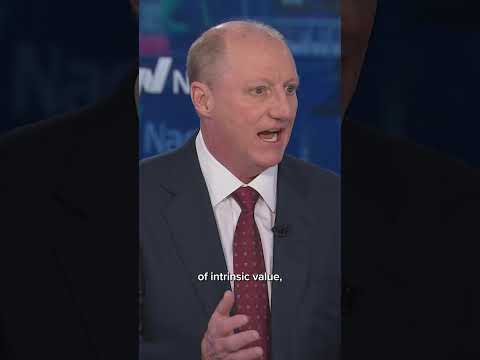
Bergkshire has always acquired shares. That's been our la long-standing policy. We highlighted that in the 10K and in my letter that that remained in place and we've just recommenced yesterday.So the the point being we see value the intrinsic value exceeds the current market value and we started uh recommence purchasing and we felt it was important to communicate to our shareholders our partners our owners that with the transition uh of leadership and that this is the first time we're purchasing shares. It ...
Berkshire CEO Abel on resuming buyback program: 'I absolutely talked to Warren'
Youtube· 2026-03-05 14:19
Bergkshire has always acquired shares. That's been our la long-standing policy. We highlighted that in the 10K and in my letter that that remained in place and we've just recommenced yesterday.So the the point being we see value the intrinsic value exceeds the current market value and we started uh recommence purchasing and we felt it was important to communicate to our shareholders our partners our owners that with the transition uh of leadership and that this is the first time we're purchasing shares. It ...

Onex Q4 Earnings Call Highlights
Yahoo Finance· 2026-02-24 10:36
Core Insights - Onex's acquisition of Convex is expected to significantly enhance value creation, with Convex's tangible book value at $3.8 billion and an effective acquisition multiple of 1.8x tangible book value and 10x 2025 net income [1][5] - Convex reported a gross premium written of $5.9 billion in 2025, reflecting a 14% year-over-year increase, and maintained a combined ratio of 89% for the third consecutive year [2] - Onex's ownership of Convex is approximately 63%, with Convex's net income for 2025 reported at $711 million, a 25% increase from the previous year [3][4] Financial Performance - Convex's net income increased by 40% from $506 million in 2024 to $711 million in 2025, resulting in a 20% return on equity [3] - Onex's total distributions from Onex Partners reached $7.7 billion in 2025, with significant realizations contributing to this figure [10] - The asset management segment generated earnings of $49 million in Q4, with fee-generating AUM ending the quarter at nearly $44 billion, a 24% increase during the year [15] Strategic Outlook - Onex plans to focus on direct investments with strong risk-adjusted returns and low leverage, supporting a transition towards consistent net income and free cash flow growth [7] - The company is utilizing a sum-of-the-parts framework to reflect intrinsic value, estimating it at $174 based on the Convex acquisition valuation [8] - Onex expects firm-wide run-rate FRE to exceed $17 million by the end of 2026, with projections indicating growth in the low- to mid-$20 million range for that year [16] Capital Allocation and Liquidity - Onex drew $700 million under a NAV loan facility at closing, retaining approximately $400 million in cash and near-cash, resulting in total liquidity of about $900 million [17] - The company has nearly $5 billion in private equity investments against $735 million in unfunded commitments, indicating a strong position to fund capital needs [18] - Onex's structured credit team successfully priced 28 CLOs in 2025, raising over $6 billion in new fee-generating AUM [12]
These Are The 3 Stock Split Candidates Heading Into 2026
247Wallst· 2025-12-31 14:57
Core Insights - Stock splits do not alter a company's intrinsic value but attract significant attention from investors [1] Group 1 - Stock splits are often perceived positively by the market, leading to increased trading activity and investor interest [1]


Defining the Value of an Investment
Yahoo Finance· 2025-12-05 11:20
Core Concepts of Investment Valuation - Enterprise Value (EV) is a comprehensive measure of a company's total value, calculated by adding the market value of equity and total debt, then subtracting cash on hand [1][6] - Book Value represents the accounting value of a company, defined as total assets minus total liabilities, and is also known as shareholders' equity [3] - Market Value is the price agreed upon by buyers and sellers for a security at any given moment, contributing to market capitalization [4] Valuation Metrics - Price-to-Book (P/B) ratio is used to identify undervalued stocks, with a P/B ratio less than 1 indicating potential undervaluation, though other factors may influence this [2] - EV/EBITDA ratio provides a more complete valuation comparison than the traditional price-to-earnings (P/E) ratio, allowing for better comparisons across companies with different debt levels [6] - Intrinsic Value is an estimate of an investment's true worth based on fundamentals, serving as a benchmark for assessing whether a stock or bond is undervalued, overvalued, or fairly valued [7][8] Yield and Net Asset Value - Yield reflects the income earned on an investment without selling it, commonly calculated for bonds and stocks, and is influenced by price fluctuations [10][12] - Net Asset Value (NAV) is the per-share value of securities held by mutual funds and ETFs, with open-end funds traded at NAV and closed-end funds trading based on market supply and demand [13] Investment Evaluation - Using multiple valuation measurements provides a fuller picture of investment value, with context being crucial as different industries have varying normal values [14][15] - Comparing current metrics to historical values and industry averages is essential to avoid value traps, where a security appears undervalued but may reflect deteriorating business conditions [15] - Qualitative factors, such as management competence and competitive advantages, are also important in the valuation process, indicating that valuation is both an art and a science [16]
大空头Michael Burry-股权激励的 “悲剧代数”:拆解股权稀释背后的价值损耗逻辑-The Tragic Algebra of Stock-Based Compensation
2025-12-04 02:21
Summary of Key Points from the Conference Call Industry and Company Involvement - The discussion primarily revolves around the **technology sector**, particularly focusing on **stock-based compensation (SBC)** practices within companies like **Tesla**, **Palantir**, **Amazon**, and **Nvidia** [4][5][19][35]. Core Insights and Arguments - **Valuation Methodology**: The traditional discounted cash flow (DCF) approach is deemed inadequate for companies that frequently issue stock-based compensation, leading to a misrepresentation of their true value [4][7]. - **SBC Practices**: There is a significant increase in stock-based compensation costs over the last decade, which are often not accurately reflected in GAAP or adjusted earnings reported by companies [7][8]. - **Dilution Impact**: The dilution caused by SBC is a critical factor that negatively affects shareholder value. Companies that utilize SBC dilute ownership, which must be accounted for in valuation models [12][26]. - **Warren Buffett's Perspective**: Buffett's critique highlights that SBC should be considered an expense, as it represents a transfer of value from shareholders to employees [10][11]. - **Growth vs. Dilution**: Higher growth rates do not necessarily mitigate the negative effects of dilution. Companies with high growth can still suffer significant value loss due to SBC [30][32]. Additional Important Content - **Examples of Companies**: - **Tesla** dilutes shareholders at approximately 3.6% annually without buybacks, leading to substantial present value destruction [32][33]. - **Palantir** has a dilution rate of about 4.6% annually and has no earnings after adjusting for SBC [34]. - **Amazon** has diluted shareholders at around 1.3% annually, with the dilution value exceeding its net income since 2018 [35][36]. - **Nvidia** has repurchased $91 billion of its stock since 2018, but its cumulative operating cash flow is less than its net income due to working capital changes [43][44]. - **Market Dynamics**: The analysis suggests that many popular companies engage in buybacks that do not effectively reduce share count, leading to a false sense of security regarding shareholder value [38][39]. - **Long-term Viability**: The discussion emphasizes that predicting long-term growth rates, especially at levels like 15%, is overly optimistic and often unrealistic [13][23]. This summary encapsulates the critical insights and arguments presented in the conference call, focusing on the implications of stock-based compensation in the technology sector and its impact on company valuations and shareholder interests.



Is This 1 New Problem for XRP, or 1 Reason to Buy It?
Yahoo Finance· 2025-12-01 12:00
Core Insights - XRP is currently facing scrutiny due to its low daily fee revenue, which is approximately $300 across all XRPL decentralized applications, raising concerns about its valuation compared to other protocols that generate millions in fees daily [1][3][4] Group 1: Fee Structure and Implications - The minimal fee revenue generated by XRP suggests it may be overvalued, as traditional valuation logic equates higher revenue with stronger fundamentals [3] - XRP's fee mechanism is designed to burn a small amount of XRP per transaction, which does not create a revenue stream for validators or tokenholders, indicating a lack of financial incentive for network participants [4][5] - The daily burn of XRP is estimated to be between 163 to 750 XRP, which is negligible compared to the total supply of 100 billion and circulating supply of over 60 billion [5] Group 2: Target Market and Design Philosophy - XRP was engineered as a low-cost financial infrastructure aimed at financial institutions, focusing on payment processing and regulatory compliance rather than maximizing transaction fees [8] - Some investors view the low fee structure as a positive aspect, suggesting it aligns with XRP's intended use case as a cost-effective solution for financial transactions [7]