
MSCI发达市场指数

Search documents
国际金融市场早知道:12月31日
Xin Hua Cai Jing· 2025-12-30 23:53
Group 1 - The Federal Reserve shows internal divisions regarding interest rate cuts, with some officials suggesting a delicate balance in decision-making, indicating a cautious and uncertain policy environment [1] - India's GDP has reached $4.18 trillion, surpassing Japan to become the world's fourth-largest economy, with potential to overtake Germany in 2-3 years and achieve a target of $7.3 trillion by 2030 [1] - The Bank of Korea plans to issue 20 trillion KRW (approximately $13.9 billion) in government bonds to individual investors in 2026, a significant increase from 12 trillion KRW in 2025, aimed at broadening financing channels and enhancing public participation [2] Group 2 - The Chicago PMI rose to 43.5 in December, exceeding expectations and indicating a gradual stabilization in U.S. manufacturing activity, despite still being in contraction territory [2] - The FHFA House Price Index increased by 1.7% year-on-year in October, significantly above the expected 0.1%, suggesting resilience in the housing market [2] - The S&P/CS 20-City Composite Home Price Index showed a year-on-year increase of 1.3% in October, with a smaller month-on-month decline of 0.3%, indicating a reduction in downward pressure on the housing market [2]
韩国政府计划明年初公布争取被纳入MSCI发达市场指数的路线图
Xin Lang Cai Jing· 2025-12-30 07:30
韩国财政部第一副部长Lee hyung -il是在主持一个政府范围的特别工作组会议时发表上述讲话的,会议 的重点是争取韩国被纳入MSCI发达市场指数,以及改善外国投资者进入韩国股票和外汇市场的计划。 韩国财政部高级官员周二表示,政府将在明年初公布确保韩国被纳入MSCI发达市场指数的综合路线 图。 经济财政部、韩国银行、金融委员会、金融监督院等有关人士参加了当天的会议。 韩国政府正在寻求通过将韩国纳入MSCI发达市场指数等措施来增加外国投资,以此作为重振股市的整 体努力的一部分,并开创所谓的"KOSPI 5000时代"。 今年早些时候,MNSCI将韩国保留在其新兴市场分类中,理由是韩国在离岸外汇市场的可兑换性有 限,这是韩国被重新归类为发达市场并被纳入该全球指数的一个关键障碍。 责任编辑:于健 SF069 韩国财政部高级官员周二表示,政府将在明年初公布确保韩国被纳入MSCI发达市场指数的综合路线 图。 韩国政府正在寻求通过将韩国纳入MSCI发达市场指数等措施来增加外国投资,以此作为重振股市的整 体努力的一部分,并开创所谓的"KOSPI 5000时代"。 今年早些时候,MNSCI将韩国保留在其新兴市场分类中,理由 ...
韩国计划很快启动24小时外汇市场 完善离岸韩元市场
Di Yi Cai Jing· 2025-09-26 06:33
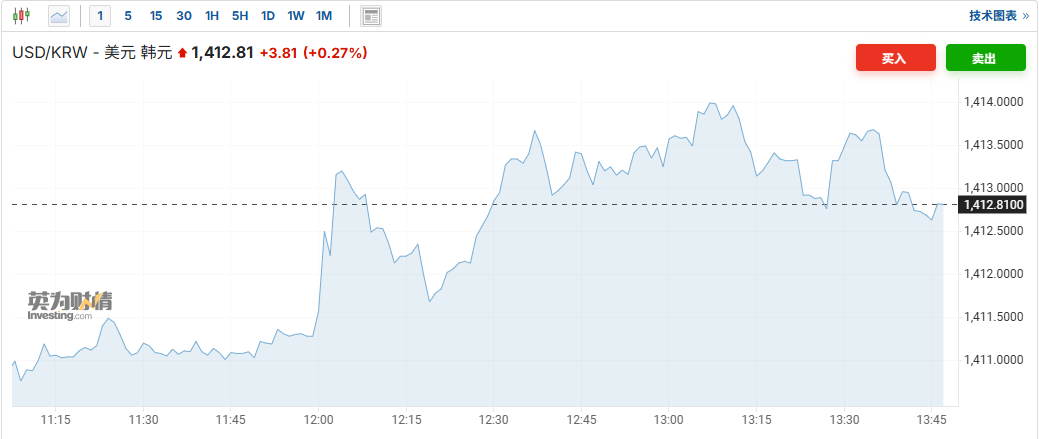
Core Viewpoint - The South Korean government is preparing to transition to a 24-hour trading system for its foreign exchange market, aiming to enhance market accessibility for foreign investors and address the lack of an offshore won market [1][2]. Group 1: Market Opening and Regulatory Changes - South Korea plans to open its foreign exchange market 24 hours a day and relax restrictions on won trading among non-residents, with a roadmap expected by the end of the year [2]. - The current trading hours are from 9 AM to 2 AM the next day, and the government aims to implement these changes sometime next year [2]. - A new settlement system will be established to facilitate 24-hour processing of won payments [2]. Group 2: MSCI and FTSE Russell Inclusion Efforts - The lack of an offshore won market has been a key factor in MSCI classifying South Korea as an emerging market, and the government is making reforms to meet the criteria for inclusion in the MSCI developed markets index [3]. - MSCI has indicated that full currency convertibility and the removal of capital controls are necessary for South Korea to be recognized as a developed market [3]. - The South Korean government is also working towards inclusion in the FTSE Russell Global Government Bond Index, with the timeline for inclusion pushed to April 2026 [5]. Group 3: Market Reactions - Following the announcement, the won depreciated against the dollar, reaching its lowest level since mid-May at 1410.8, with further declines observed [4].

韩国计划很快启动24小时外汇市场,完善离岸韩元市场
Di Yi Cai Jing· 2025-09-26 06:24
Core Viewpoint - The South Korean government is preparing to transition to a 24-hour trading system for its foreign exchange market, aiming to enhance market accessibility and attract foreign investment [1][3][4]. Group 1: Government Initiatives - President Lee Jae-myung announced plans for a 24-hour foreign exchange market and the removal of restrictions on the Korean won trading [1][3]. - The Ministry of Finance is set to release a roadmap by the end of the year to implement these changes, which include allowing offshore trading of the Korean won [3][4]. - The government aims to eliminate regulatory barriers that currently restrict non-resident foreign exchange trading [3]. Group 2: Market Classification Efforts - The move is part of South Korea's efforts to be included in the MSCI developed market index, which requires fully convertible currency and a more active offshore market [4]. - MSCI has previously indicated that South Korea's gradual measures do not fully meet the criteria for developed market status [4]. - The government has implemented reforms to boost the stock market, with the KOSPI index recently reaching a historical high [4]. Group 3: Currency Market Impact - Following the announcement, the Korean won fell to its lowest level against the US dollar since mid-May, indicating market reactions to the news [5]. - The government is also working towards inclusion in the FTSE Russell Global Government Bond Index, with a phased approach expected to start in April 2026 [7].
短线下挫!
Zhong Guo Ji Jin Bao· 2025-06-25 02:10
Group 1: Market Overview - The South Korean KOSPI index opened high but subsequently fell to 3091.01 points [3] - The Japanese Nikkei 225 index opened high and showed fluctuations, currently up 0.09% at 38826.37 points [5] Group 2: South Korean Market Insights - South Korea was not included in the MSCI developed market index or its watchlist, which was announced on June 24 [3] - MSCI noted improvements in South Korea's market regulations and technical issues, but investor concerns about regulatory risks remain [3] - South Korea must resolve all disputes and complete market reforms before being reconsidered for inclusion in the developed market index, with eligibility for review only in June next year [3] Group 3: Japanese Market Insights - Electronic and brokerage stocks led gains in Japan, with companies like Mitsubishi Electric and Tokyo Electron rising over 2% [6] - Olympus's stock fell over 10% due to an FDA import warning on its products [7] - The yield on Japan's 10-year government bonds dropped to 1.4%, while the 20-year yield fell by 2 basis points to 2.32% [8] Group 4: Economic Commentary - A Bank of Japan committee member emphasized the need for normalization of government bond holdings, noting the economy is at a crossroads between growth driven by wage increases and investment, and stagnation [9] - Despite the lack of direct impact from U.S. tariff policies observed so far, Japan's economy appears to be stagnating [9] - The committee member indicated that inflation pressures may arise as the economy transitions, with consumer price index (CPI) levels higher than expected [9]
