
OMO(线上线下融合)

Search documents
林清轩上市后,创始人孙来春回应三点关切
经济观察报· 2026-01-05 10:38
Core Viewpoint - Lin Qingxuan's listing process has raised concerns regarding its reliance on a single product, the synergy between online and offline channels, and the personal focus of founder Sun Laichun [1][4]. Group 1: Company Overview - Lin Qingxuan Biotechnology Co., Ltd. (02657.HK) debuted on the Hong Kong Stock Exchange on December 30, 2025, achieving a first-day increase of 9.3%, with a closing price of 81.05 HKD per share, resulting in a total market capitalization of 11.3 billion HKD [2]. - The company reported revenues of 1.052 billion CNY in the first half of 2025, ranking it tenth among domestic beauty companies [2]. Group 2: Business Transformation - Founded in 2003, Lin Qingxuan initially focused on offline sales through over 300 stores, but the COVID-19 pandemic forced a shift to online sales, which now account for over 60% of revenue [3][5]. - The company has embraced live-streaming e-commerce, with family members, including Sun Laichun, acting as "key opinion leaders" to promote products [4]. Group 3: Financial Performance - Lin Qingxuan's revenue grew from 691 million CNY in 2022 to 1.21 billion CNY in 2024, with net profit recovering from a loss of 5.93 million CNY in 2022 to a profit of 187 million CNY in 2024 [4][5]. - The core product, Camellia Oil Anti-Wrinkle Essence, has consistently contributed around 35% to the company's revenue over the past three years [4]. Group 4: Future Strategy - Sun Laichun indicated plans for a multi-brand strategy to expand product offerings, including targeting younger consumers and developing community beauty service brands [5]. - Lin Qingxuan aims to enhance its online-offline integration (OMO) ecosystem, with plans to increase the number of stores from 366 in 2022 to 506 by 2024 [6][7]. - The company is set to implement a "Double Hundred Strategy" in 2026, focusing on nurturing internal talent and recruiting new graduates [8].


林清轩上市后,创始人孙来春回应三点关切
Jing Ji Guan Cha Bao· 2026-01-05 09:32
Core Viewpoint - Lin Qingxuan, a high-end skincare company, successfully listed on the Hong Kong Stock Exchange, marking a significant milestone in the domestic beauty industry, with a notable initial stock performance and a market capitalization of HKD 11.3 billion [1][2] Company Overview - Founded in 2003, Lin Qingxuan focuses on "oil-based skincare" and anti-wrinkle products, initially relying heavily on offline sales with over 300 stores nationwide before pivoting to online channels due to the pandemic [2][3] - The company experienced a financial crisis during the pandemic, leading to a strategic shift towards e-commerce and securing multiple rounds of financing to support its growth and eventual listing [2][3] Financial Performance - Lin Qingxuan's revenue grew from CNY 6.91 billion in 2022 to CNY 12.1 billion in 2024, with a net profit turnaround from a loss of CNY 5.93 million in 2022 to a profit of CNY 18.7 million in 2024 [3][4] - The company's core product, Camellia Oil Anti-Wrinkle Essence, has consistently contributed around 35% to its revenue over the past three years [3][4] Market Strategy - Lin Qingxuan is expanding its product line and brand strategy, planning to introduce sub-brands targeting younger consumers and community beauty services, while also enhancing the application of Camellia oil in various products [3][4] - The company has successfully integrated online and offline sales channels, with online sales now exceeding offline, and plans to continue expanding its store presence while enhancing service quality [5][6] Management and Organizational Structure - The founder, Sun Laichun, has shifted his role to focus on empowering a younger team, allowing them to take the lead in product development and strategy, which has led to successful product launches like the "Little Gold Pearl" essence [6] - Lin Qingxuan has established two management systems to streamline product development and marketing, aiming to replicate the success of its star products [6]
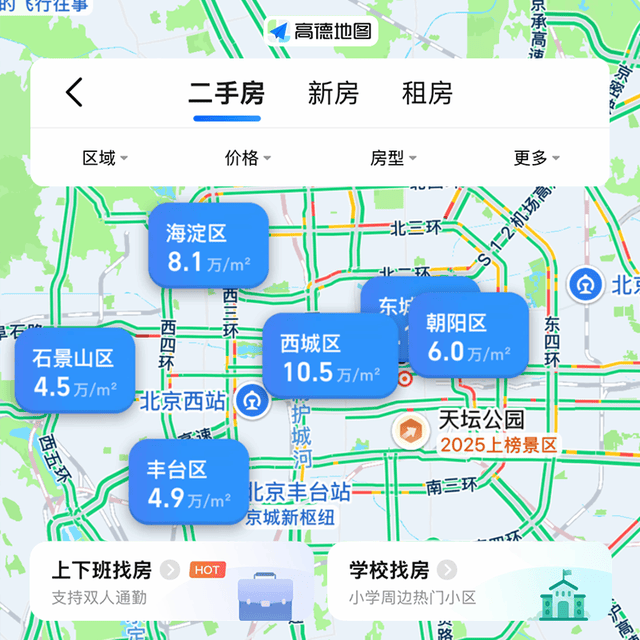
高德地图的“空间围猎”:重构房产交易的“人、场、货”
Sou Hu Cai Jing· 2026-01-02 11:57
Core Insights - The article discusses how Gaode Map, with its 940 million monthly active users, is transforming the real estate market by leveraging its location-based services (LBS) to capture "action traffic" rather than traditional "search traffic" [2][4] Group 1: Market Dynamics - Gaode Map is entering the real estate sector not as a traditional platform but as an infrastructure-level player, changing the rules of engagement in a market characterized by "sea tactics" and "traffic anxiety" [2] - Traditional real estate platforms rely on a centralized flow distribution mechanism, leading to resource wastage and poor service experiences due to competition among agents for the same pool of clients [4][6] - Gaode's approach focuses on capturing user behavior signals, allowing it to proactively predict demand rather than waiting for users to search for properties [3][4] Group 2: User Behavior and Decision-Making - The decision-making process for significant purchases like housing is heavily influenced by geographic location, with factors such as commuting distance and local amenities being critical [2][4] - 83% of users who visit properties utilize maps for spatial positioning or route navigation, indicating that maps play a crucial role in the transaction process [4] - Gaode's model allows agents to connect with "pure" new users who have not been approached by other intermediaries, creating a unique flow distribution that reduces client overlap [6][8] Group 3: Conversion Efficiency - Gaode's entry into the real estate market has resulted in significantly improved conversion rates, with some clients being able to schedule viewings or sign contracts on the same day, reducing the average conversion cycle by over 40% compared to traditional channels [6][8] - The dynamic recommendation system integrates property information seamlessly into navigation suggestions, minimizing the psychological distance from seeing information to establishing contact [8] - The article emphasizes that the future of commercial competition lies in accurately identifying and serving users' real behaviors rather than merely competing for their attention [8]
新东方2025财年第四季度业绩:总营收12.4亿美元,新教育业务同比增长33%
3 6 Ke· 2025-07-31 00:30
Financial Performance - The company reported total net revenue of $1.24 billion for Q4 FY2025, a year-on-year increase of 9.4%. Excluding non-core business revenues, the core education business net revenue was $1.09 billion, reflecting an 18.7% increase, indicating a recovery in the education sector [2][3] - For the full fiscal year 2025, total net revenue reached $4.9 billion, a 13.6% year-on-year growth, maintaining double-digit growth for two consecutive years, outperforming the industry average [2][3] - The company experienced an operating loss of $8.7 million in Q4, compared to an operating profit of $10.5 million in the same period last year, with net profit declining by 73.7% to $7.1 million due to short-term losses in the Oriental Selection segment and goodwill impairment [3][4] Cost Structure - Total operating costs and expenses for Q4 amounted to $1.25 billion, a year-on-year increase of 11.2%, slightly above revenue growth, primarily due to new business expansion and technology investment [4] - The cost of revenue was $570 million, growing by 5.1%, which is lower than revenue growth, indicating improved resource utilization [4] - Sales and marketing expenses were $210 million, up 1.8%, significantly lower than revenue growth, reflecting enhanced brand influence and customer retention [4] Business Segments - The overseas business showed resilience with a 14.6% year-on-year increase in revenue from overseas exam preparation and an 8.2% increase from overseas learning consulting [5][6] - Domestic core business targeting adults and university students grew by 17.0%, aligning with the increasing demand for higher education due to competitive job markets [7] - New education initiatives, particularly non-subject tutoring and intelligent learning systems, saw a 32.5% revenue increase, with significant student engagement in various educational fields [8] Strategic Upgrades - The company is focusing on improving its OMO (Online-Merge-Offline) teaching system and investing in AI technology across its educational ecosystem, enhancing product capabilities and operational efficiency [10] - A three-year shareholder return plan was approved, committing at least 50% of net profit for dividends and stock buybacks starting from FY2026, reflecting confidence in future cash flows [11][12] Future Outlook - The company projects total net revenue for FY2026 to be between $5.1453 billion and $5.3903 billion, representing a growth of 5%-10%, with cautious optimism due to seasonal factors and geopolitical influences [14] - Despite positive growth expectations, the company faces challenges such as intensified industry competition, regulatory uncertainties, and risks associated with overseas operations [15]