
海洋能发电

Search documents
以发展“含绿量”提升增长“含金量” 看浙江三“变”|活力中国调研行
Ren Min Ri Bao· 2026-01-19 06:43
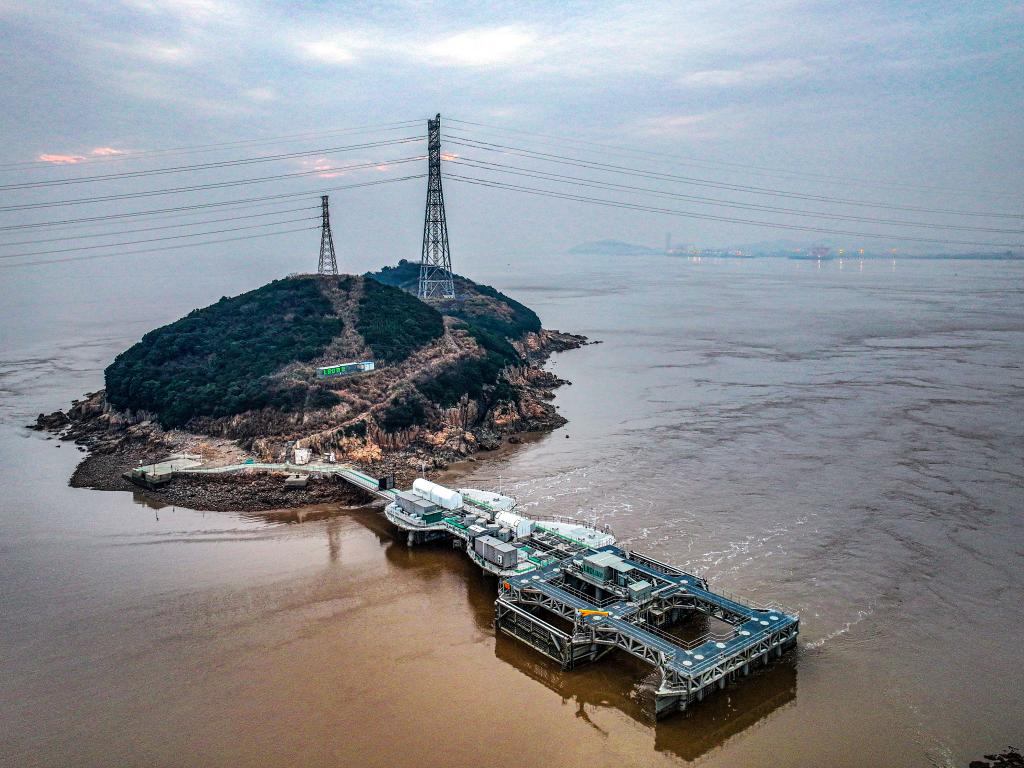
Group 1: Energy Transformation - The Zhoushan LHD marine tidal energy power station utilizes underwater "wind turbines" to convert tidal movements into green electricity [1] - The Meishan Port area has achieved a container throughput of 7.4782 million TEUs from January to July 2025, a year-on-year increase of 14.66% [2] - The Meishan Port's wind-solar-storage integrated project has generated over 40 million kilowatt-hours of electricity since its operation, reducing carbon emissions by approximately 24,000 tons [2] Group 2: Industrial Upgrading - The Huzhou "transformation financial loan" supports Hongchang Aluminum's production line upgrade, enhancing energy efficiency and productivity [1] - The Jiaxing Port area has deployed 100 hydrogen-powered trucks, saving approximately 3 million yuan annually compared to traditional fuel vehicles and reducing carbon emissions by about 5,000 tons [3] - The Shaoxing Shangyu District has transformed a traditional chemical park into a hub for strategic emerging industries, with the new materials industry expected to exceed 100 billion yuan in output value by 2024 [4] Group 3: Waste to Resource - Agricultural waste such as straw and citrus peels is being converted into bio-based fuels, contributing to carbon reduction efforts [7] - The "blue circular" model for marine plastic waste management has successfully recovered 58,000 tons of marine plastic waste, reducing carbon emissions by 52,200 tons [7] Group 4: Green Industry Development - Zhejiang is actively cultivating green low-carbon industries, with a focus on developing green technologies and products, leading to the emergence of several hundred billion yuan recycling resource industries [8] - The region emphasizes ecological priority and green low-carbon development, driving a transformation in production and economic structure [8]
“潮流”领跑者!我国“蓝色能源”取得新突破
Yang Shi Xin Wen Ke Hu Duan· 2025-11-14 01:15
Core Viewpoint - Ocean energy, particularly tidal energy, is a significant green renewable energy source, with China's LHD tidal power station achieving a generation milestone of over 6 million kilowatt-hours, marking a pivotal advancement in the sector [1][12]. Group 1: Tidal Energy Overview - Tidal energy is generated from the natural rise and fall of tides, utilizing underwater turbines that can harness energy from currents regardless of their direction [3][5]. - Compared to wind and solar energy, tidal energy is recognized for its strong predictability, high energy density, minimal land use, and low ecological impact, earning it the title of "blue oil field" in the international energy community [5]. Group 2: Technological Innovations - The LHD tidal power station employs a "platform + modular" design, allowing for easy maintenance and replacement of components, significantly reducing operational costs [9]. - Advanced materials and structural designs enable the generator units to withstand typhoons and corrosive seawater, ensuring safe operation for over five years in harsh marine conditions [9]. - The station's fourth-generation units have a capacity of 1.6 megawatts, making them the largest in the world, with ongoing development for a fifth generation aimed at reducing generation costs to 0.3 yuan per kilowatt-hour, making it cheaper than coal power [9][17]. Group 3: Achievements and Future Plans - The LHD tidal power project has successfully operated for over eight years, generating more than 9 million kilowatt-hours, which is the longest continuous operation record globally for tidal energy [19]. - A new 100-megawatt tidal power station is set to begin construction in Zhoushan by the end of this year, which is expected to provide significant energy to local residents [12][15]. - The project aims to create a "mother port" for tidal energy in Zhoushan, integrating manufacturing, research, testing, and demonstration, thereby fostering a billion-level marine energy industry cluster [19][22]. Group 4: Economic Impact - The anticipated 100-megawatt tidal power station will generate approximately 610,000 kilowatt-hours daily, sufficient to meet the energy needs of over 8,000 households for 8 to 10 days [15]. - The cost of generating electricity from tidal energy has dramatically decreased from 106 yuan per kilowatt-hour in the first generation to an expected 0.3 yuan, showcasing significant technological advancements [17][19].

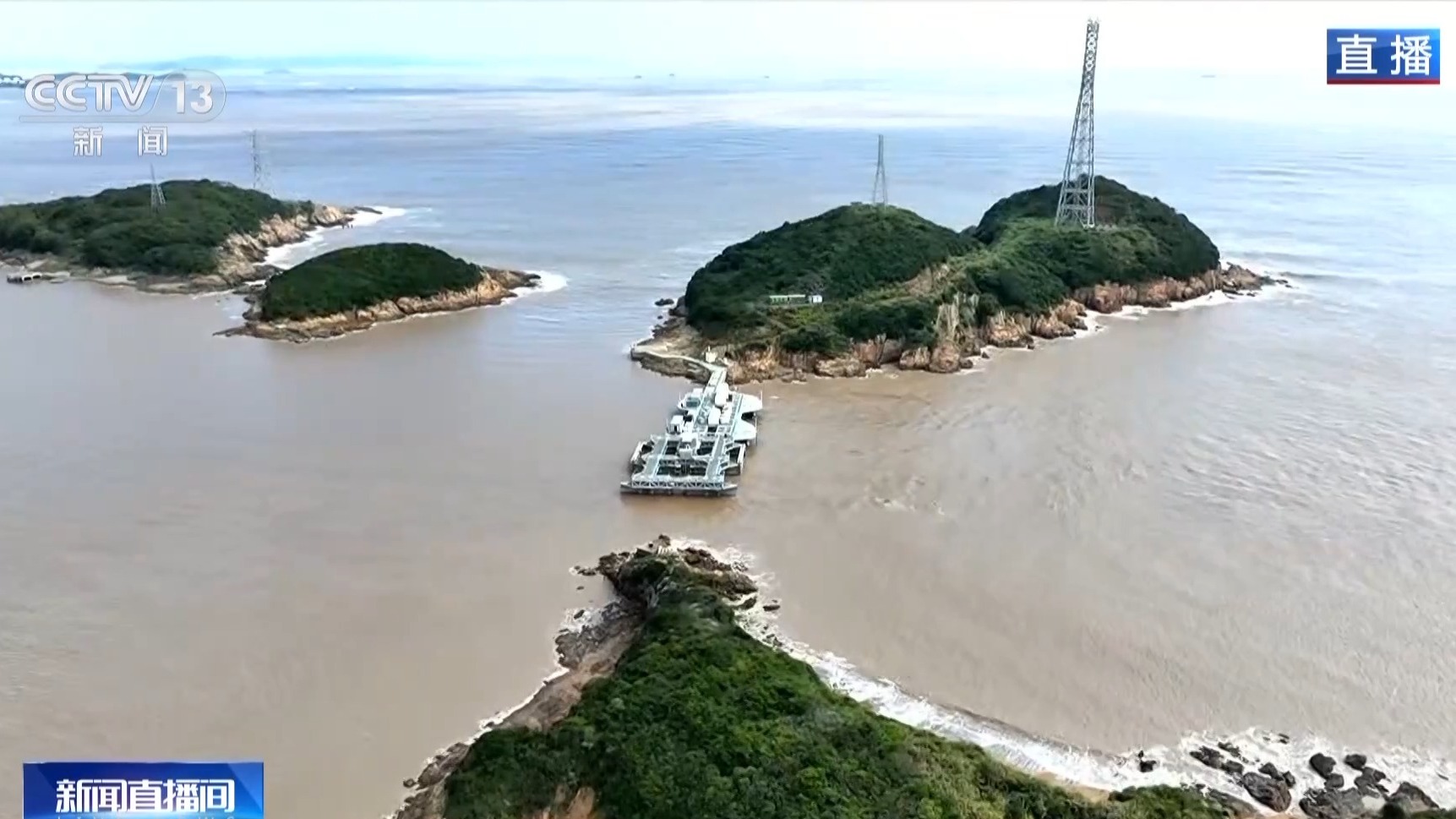
视频丨“潮流”领跑者!我国“蓝色能源”取得新突破
Yang Shi Xin Wen Ke Hu Duan· 2025-11-14 00:35
Core Viewpoint - Ocean energy, particularly tidal energy, is a significant green renewable energy source, with China's LHD tidal power station achieving a remarkable milestone of over 6 million kilowatt-hours of electricity generation, showcasing advancements in technology and commercial viability [1][12]. Group 1: Tidal Energy Overview - Tidal energy is generated from the natural rise and fall of tides, utilizing underwater turbines that can harness energy from currents regardless of their direction [3][5]. - Compared to wind and solar energy, tidal energy is recognized for its strong predictability, high energy density, minimal land use, and low ecological impact, earning it the title of "blue oil field" in the international energy community [5]. Group 2: Technological Innovations - The LHD tidal power station employs a "platform + modular" design, allowing for easy maintenance and replacement of components, significantly reducing operational costs [9]. - Advanced materials and structural designs enable the generator units to withstand typhoons and corrosive seawater, ensuring safe operation for over five years in harsh marine conditions [9]. - The station has achieved a power generation capacity of 1.6 megawatts per unit, making it the largest in the world, with ongoing development of the fifth-generation units aimed at further reducing costs [9][17]. Group 3: Achievements and Future Plans - The LHD tidal power station has been operational for over eight years, generating more than 9 million kilowatt-hours of electricity, which is the longest continuous operation record globally for tidal energy systems [19]. - A new 100-megawatt tidal power station is set to begin construction in Zhoushan by the end of the year, which is expected to provide significant energy to local residents [12][15]. - The cost of electricity generation from tidal energy has dramatically decreased from 106 yuan per kilowatt-hour in the first generation to an anticipated 0.3 yuan per kilowatt-hour with the new developments, making it cheaper than coal-fired power [17][19]. Group 4: Industry Development - The establishment of a "Tidal Energy Mother Port" in Zhoushan aims to create a comprehensive marine energy industry cluster, integrating manufacturing, research, testing, and demonstration [19][22]. - The tidal energy sector in China is transitioning from a "follower" to a "leader" in the global market, with increasing international interest and orders for Chinese tidal energy technology [11][22].
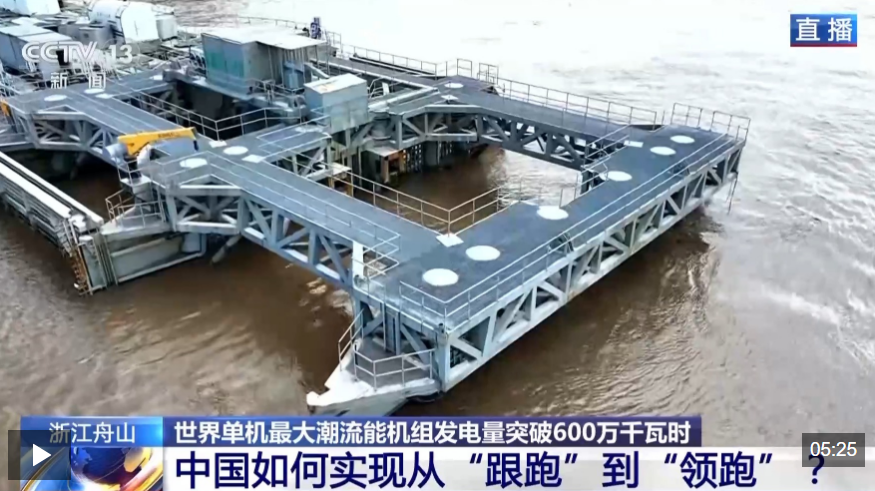
直击海洋能规模化应用 潮起潮落间打造“蓝色能源基地”
Yang Shi Wang· 2025-11-13 05:46
Core Viewpoint - Marine energy is becoming a crucial area in international energy competition, with major economies like the EU, UK, and the US aiming to develop it as the next offshore energy industry after wind power. China is accelerating the large-scale development of marine energy, targeting an installed capacity of 400,000 kilowatts by 2030 [1][21]. Group 1: Marine Energy Development - Marine energy, derived from physical ocean processes such as tides, waves, and ocean currents, includes tidal energy, wave energy, temperature difference energy, and salinity difference energy [1]. - China's marine energy utilization is still in the industry cultivation stage, with significant advancements being made in experimental setups to explore the synergy between wind and wave energy [3][5]. - The LHD tidal energy station in Zhoushan has achieved a generation capacity of over 6 million kilowatt-hours, marking a significant milestone in tidal energy development [10][12]. Group 2: Technological Innovations - The LHD tidal energy project employs a modular design that allows for easy maintenance and replacement of components, significantly reducing operational costs [18]. - Advanced technologies have been developed to withstand severe weather conditions, such as typhoons, and to ensure long-term stability in energy generation [15][18]. - The project has seen a reduction in the cost of electricity generation from 106 yuan per kilowatt-hour in its first generation to 1.1 yuan in the fourth generation, with ongoing efforts to further decrease costs [26][30]. Group 3: Future Prospects - A new 100-megawatt tidal energy station is set to begin construction in Zhoushan by the end of this year, which is expected to generate 610,000 kilowatt-hours daily, sufficient for the energy needs of over 8,000 households [21][25]. - The establishment of a "mother port" for tidal energy in Zhoushan aims to create a comprehensive marine energy industry cluster, enhancing the development of technology, equipment, and services [34]. - The continuous operation of the LHD tidal energy generator for over eight years has set a global record, positioning China as a leader in tidal energy technology [32].
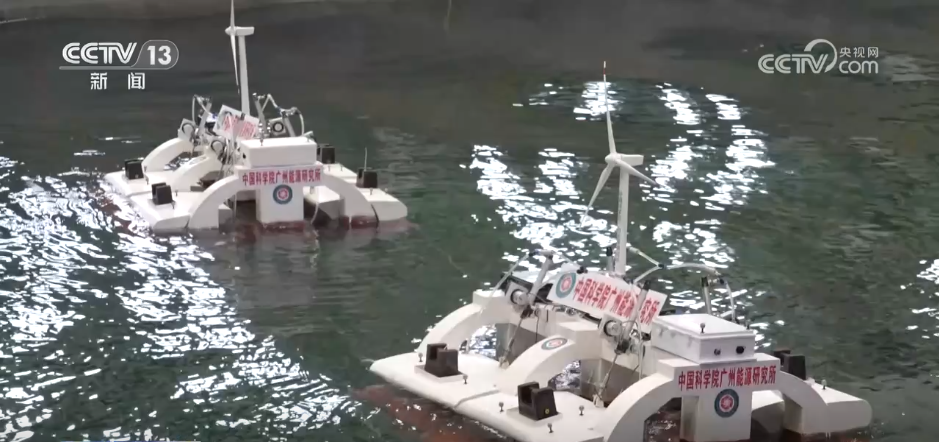
向蓝海要绿电
Ren Min Ri Bao Hai Wai Ban· 2025-11-11 01:31
Core Viewpoint - The LHD Ocean Tidal Energy Power Station, China's first megawatt-level tidal energy generator, has been operating smoothly for years, leading the world in continuous power generation and grid connection time [4][9]. Group 1: Technology and Innovation - Tidal energy generation utilizes the kinetic energy of tidal movements, similar to wind energy, but with higher energy output due to the density of water [5]. - The design of the tidal energy system employs a "platform + modular" approach, allowing for independent operation and maintenance of each module, enhancing efficiency and flexibility [6][8]. - The generator's blades are equipped with an automatic pitch adjustment technology, optimizing power generation based on varying water flow conditions [6]. Group 2: Project Development and Achievements - The LHD tidal energy project has successfully integrated multiple generations of tidal energy generators into the national grid, marking China's entry into the "megawatt era" of tidal energy [8][10]. - As of October 2023, the project has generated over 8.34 million kilowatt-hours of electricity, equivalent to reducing the use of 2,359 tons of standard coal, contributing to carbon neutrality goals [9][11]. - A new 100-megawatt tidal energy project has been initiated, with plans for a comprehensive industrial park dedicated to tidal energy equipment manufacturing and innovation [10][11]. Group 3: Future Prospects - The Zhejiang Ocean Tidal Energy Mother Port aims to become a global hub for tidal energy innovation and equipment manufacturing, covering key areas such as technology research, equipment production, and operational services [11]. - The anticipated reduction in tidal energy generation costs to below 0.3 yuan per kilowatt-hour by the seventh generation of generators indicates a promising future for the industry [11].
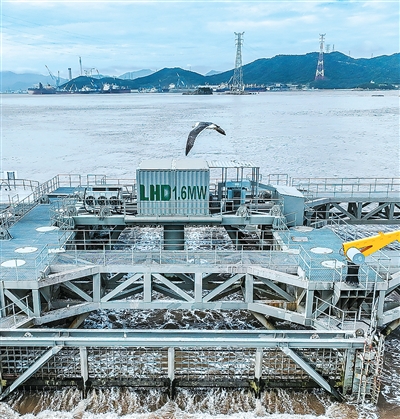
百兆瓦级潮流能规模化利用项目在浙江舟山签约
Zhong Guo Xin Wen Wang· 2025-10-23 01:58
Core Insights - China is advancing a 100 MW tidal energy project, which is seen as a demonstration for global tidal energy development [1][4] - The first Marine Tidal Energy Development Conference was held in Zhoushan, Zhejiang [2][4] Project Details - The tidal energy project has a total installed capacity of 100 MW, with the first phase involving the installation of 20 units of 2.5 MW each, totaling 50 MW and an investment of 1.83 billion yuan [4] - The project is expected to commence construction by the end of the year, with preliminary work progressing steadily [4] Market Potential - Tidal energy is considered one of the most marketable marine energy technologies, with global resources primarily located in Europe and North America, while China has advantages in technological innovation and equipment manufacturing [4] - The demonstration project aims to cultivate competitive technologies and equipment that can enter the European and American markets, positioning China as a significant player in the global marine energy industry [4] Regional Advantages - Zhoushan, as China's first national-level new area focused on the marine economy, has a unique geographical advantage for developing tidal energy, with over 50% of the country's exploitable tidal energy resources located in its waters [4][5] Technological Achievements - The Zhejiang LHD Marine Tidal Energy Power Station has developed and validated a "platform + modular" approach to tidal energy utilization, achieving breakthroughs in stable grid connection technology for high-capacity tidal energy units [5] - As of September this year, the power station has been operational for over 8 years, generating more than 8.19 million kWh of electricity, maintaining the largest single-unit scale and continuous operation time globally [5]

获两份电力参数能力验证证书
Zhong Guo Zi Ran Zi Yuan Bao· 2025-09-17 02:20
Core Viewpoint - The National Ocean Technology Center has successfully passed the power parameter capability verification organized by the China National Institute of Metrology and Shanghai Electrical Equipment Testing Co., Ltd, enhancing its testing service capabilities in the field of marine energy generation [1] Group 1: Capability Verification - The capability verification focuses on core power parameters in marine energy generation device testing, including harmonic voltage, harmonic current, power, and frequency deviation [1] - The successful verification strengthens the CMA qualification effectiveness of the National Ocean Technology Center in the detection of marine energy generation devices [1] Group 2: Future Development - The center aims to continue focusing on the marine energy generation field, enhancing its testing service capabilities to support the operationalization of the national marine comprehensive test site and promote marine technology innovation and industrialization [1]
浪涌生绿电 深海养“白金”——探访广东珠海半潜式波浪能养殖平台
Zhong Guo Zi Ran Zi Yuan Bao· 2025-09-08 01:00
Core Viewpoint - The development of China's marine economy must focus on high-quality growth and innovation, as emphasized by President Xi Jinping during the Central Financial Committee meeting [1] Group 1: Marine Economy Development - The Ministry of Natural Resources and the National Development and Reform Commission have released 19 tasks and policy measures to promote the large-scale utilization of marine energy [1] - The "Penghu" platform, China's first semi-submersible wave energy aquaculture platform, demonstrates how to achieve green power supply and intelligent deep-sea aquaculture [1] Group 2: Aquaculture Innovations - The "Penghu" platform has successfully harvested 150,000 pounds of the valuable fish species, red drum, showcasing its effectiveness in aquaculture [4] - The platform's design allows for a significant reduction in labor, with the operational workforce decreasing from five to two for one "Penghu" platform, and from nine to three for the larger "Gesheng 1" platform [3][4] Group 3: Technological Advancements - The "Penghu" platform is equipped with a wave energy generation system of 60 kW and solar power generation of 60 kW, along with energy storage devices and automated feeding systems [3] - The research and development of wave energy technology began over 40 years ago, with significant advancements made since 2010, including the establishment of a marine renewable energy fund [6][7] Group 4: Resilience and Future Plans - The "Penghu" platform successfully withstood the impact of Super Typhoon "Sula," demonstrating its stability and resilience in extreme weather conditions [10][11] - Future plans include the development of a large floating multi-energy complementary platform that integrates wave, wind, and solar energy, aiming to enhance economic efficiency and sustainability in marine operations [11]
海浪发电、废塑成衣、污水变湿地:中国沿海省份的生态经济密码
Xin Hua Wang· 2025-08-13 13:45
Core Viewpoint - The article highlights the innovative practices in Zhejiang, China, focusing on ecological economy through clean energy generation, waste recycling, and environmental restoration, showcasing a model for high-quality development that integrates nature conservation with economic growth [2][5]. Group 1: Clean Energy Generation - The Zhejiang LHD ocean current power station, developed independently by China, is recognized as the world's first operational ocean current power station, generating over 783,000 kilowatt-hours of electricity [3][5]. - The project has achieved a significant reduction in energy costs, with the cost per kilowatt-hour decreasing from 106 yuan to 1.1 yuan, aiming to further reduce it to 0.3 yuan, making it competitive with traditional coal power [5][6]. Group 2: Waste Recycling and Environmental Restoration - The "blue circular economy" initiative in Taizhou involves the collection and recycling of marine plastic waste, transforming it into high-value consumer products, with 54,500 tons of plastic waste recovered to date [6][9]. - The ecological restoration efforts in Wuyi County's Tantou Village have led to a transformation from polluted land to beautiful wetlands, resulting in a 168% increase in collective economic income and a 70% rise in per capita disposable income for villagers [8][9].
海浪变身“移动充电宝”:走近全球首台兆瓦级漂浮式波浪能发电装置
Ren Min Ri Bao· 2025-08-13 10:00
Core Insights - The "Nankun" floating wave energy generator, developed in China, is the world's first megawatt-level device of its kind, capable of generating an average of 10,000 kWh daily, sufficient to power approximately 1,500 households [1] - The global potential for wave energy is estimated to be between 2 billion to 3 billion kW, which could exceed the capacity of 100 Three Gorges Hydropower Stations [1] - The device utilizes adaptive wave energy technology to optimize energy capture efficiency, achieving approximately 28%, which is considered internationally leading [2] Group 1: Technology and Design - The "Nankun" is designed in a triangular shape to maximize wave absorption while maintaining stability [2] - It features a self-adaptive system that adjusts the generator's operation based on wave size, ensuring continuous and stable electricity generation [2] - The device has been tested against severe weather conditions, including typhoons, and can withstand waves up to 5.5 meters high [2] Group 2: Industry Context and Future Plans - China's installed capacity for wave energy, tidal energy, and ocean current energy ranks first, second, and third globally, respectively, indicating a strong position in marine renewable energy [2] - The government aims to achieve an installed capacity of 400,000 kW for ocean energy by 2030, promoting pilot projects to enhance industry development and cost reduction [3] - The National Energy Administration plans to conduct resource surveys and promote the development of marine energy alongside offshore wind power to improve efficiency [3]