
创新药研发

Search documents
创新药,大消息!
中国基金报· 2025-10-27 04:17
Core Viewpoint - The new round of the "National Major Science and Technology Project for Innovative Drug Development" has officially launched, aiming for leapfrog development in China's pharmaceutical industry by 2025 [1][2]. Summary by Sections Background and Achievements - From 2008 to 2020, the "Major New Drug Creation" project achieved significant results, transitioning China's drug development from imitation to innovation and enhancing the pharmaceutical industry from large-scale to strong [1]. Current Challenges - The Chinese biopharmaceutical industry faces challenges, including weak original innovation capabilities, with the number of First-in-Class (FIC) drugs in China's top 20 companies being only one-third of that in the global top 20 [2]. - There is a lack of core technologies driving new drug development, and the discovery of new targets and treatment strategies lags behind developed countries [2]. - International clinical research participation is low, with only 2.6% of clinical studies conducted by Chinese companies being international multi-center studies, compared to 24.9% for foreign companies [2]. Innovations in Project Management - The new project introduces a "two generals and two offices" management structure to enhance professional management and collaborative efficiency [3]. - The project organization model shifts from universities and research institutions to innovative R&D enterprises, forming large teams across institutions and disciplines to address fragmentation issues [3]. - There is a focus on strengthening collaboration with national-level scientific plans and enhancing the regulatory science system to improve the review capabilities for innovative drugs [3]. Future Goals and Directions - The project aims for four transformations by 2035: from focusing on variety development to building new drug creation capabilities; from emphasizing downstream industrial chains to focusing on upstream innovation chains; from supporting generic drugs to prioritizing original drug development; and from targeting 10 major diseases to addressing diseases based on China's disease spectrum and market failures [3][4]. - The guidelines for 2025 and 2026 will focus on new targets, technologies, and theories, including AI-driven original target discovery and new paradigms for traditional Chinese medicine [3][4]. Expected Outcomes - By 2035, the goal is to establish a self-controlled, efficient national drug innovation system, breakthrough key technologies in various drug categories, and create high-level innovative drugs with clinical value tailored to China's disease spectrum [4]. - The aim is to cultivate leading international enterprises with strong innovation capabilities and to position China as a global center for new drug creation and biopharmaceutical industry [4].


映恩生物官宣”回A” 港股上市以来最高涨幅接近5倍
Zheng Quan Shi Bao Wang· 2025-10-20 14:32
Core Viewpoint - The company, Innovent Biologics-B (09606.HK), is initiating a dual capital market strategy by planning to issue RMB ordinary shares and list on the Shanghai Stock Exchange's Sci-Tech Innovation Board, marking a significant move in its capital market activities [1][2]. Group 1: Capital Market Actions - Innovent Biologics-B's stock price rose over 5% on October 20, closing up 1.74% at 340 HKD, with a market capitalization nearing 30 billion HKD following the announcement of its plan to list on the Sci-Tech Innovation Board [2]. - The company went public on the Hong Kong Stock Exchange on April 15, raising over 1.5 billion HKD, making it one of the largest IPOs in the Hong Kong 18A sector in the past four years [2]. - The stock price peaked at 563.5 HKD in September, representing an increase of nearly 5 times from its IPO price of 94.6 HKD [2]. Group 2: Financial Performance - For the six months ending June 30, 2025, Innovent Biologics-B reported a revenue of 1.229 billion RMB, reflecting a year-on-year growth of 22.9%, primarily driven by external licensing and collaboration agreements [3]. - The company has a cash reserve of 3.75 billion RMB, sufficient to support its R&D activities for the next 3 to 5 years [3]. - Innovent Biologics-B is collaborating with BioNTech to advance its "ADC+IO" strategy, with several ADCs entering clinical trials [3]. Group 3: Strategic Focus - The company is dedicated to developing next-generation ADC innovative drugs for cancer and autoimmune diseases, with significant progress in pipeline development and business operations since early 2025 [3]. - Innovent Biologics-B aims to accelerate the global development and commercialization of its clinical projects to unlock their commercial value [3]. - The company plans to enhance its expertise in global research, clinical development, and regulatory affairs to drive future ADC innovations [3].
创新驱动重塑经济“肌体”
Shan Xi Ri Bao· 2025-10-19 22:53
Core Insights - Shaanxi is leveraging its advantages to drive high-quality development through innovation, integrating technological and industrial innovation to build a modern industrial system [1][5] - The province is witnessing a surge in technology-driven enterprises and the transformation of scientific research achievements into marketable products [1][5] Group 1: Technological Innovations - Intelligent non-destructive testing technology developed by Xi'an Shuhua Information Technology Co., Ltd. can detect micro-defects in industrial equipment with a speed 40 times faster than traditional methods, achieving nearly 100% detection rate for defects [2][4] - The company has rapidly become a leader in multi-modal AI quality inspection solutions in the high-end manufacturing sector, supported by strategic partnerships and resource allocation from local initiatives [4][5] Group 2: Policy and Support - Shaanxi is implementing three reform policies to enhance the transformation of scientific achievements into products, focusing on investment, talent, and support for technology-driven enterprises [4][5] - By 2024, Shaanxi will have 201 pilot units for these reforms, with over 10.6 million scientific achievements recorded and 3.6 million successfully transferred to market applications [5] Group 3: Pharmaceutical Innovations - Xi'an New Tong Pharmaceutical Research Co., Ltd. has developed the world's first targeted innovative drug for hepatitis B, marking a significant breakthrough for Shaanxi's pharmaceutical industry [6][7] - The drug has shown superior efficacy compared to existing imported treatments, highlighting the province's potential in biopharmaceutical innovation [7][8] Group 4: Emerging Industries - Shaanxi is focusing on developing strategic emerging industries such as new energy vehicles and solar photovoltaics, aiming to enhance its industrial chain and promote high-quality growth [9][10] - The province's strategic emerging industries have seen rapid growth, contributing to the formation of a modern industrial system [9][10] Group 5: Entrepreneurial Ecosystem - The supportive policies in Shaanxi have fostered a conducive environment for innovation and entrepreneurship, leading to the rapid growth of technology-based enterprises [11][12] - The number of high-tech enterprises in Shaanxi has been growing at over 30% annually, indicating a robust innovation ecosystem [12]
创新药审评跑出“北京速度”
Bei Jing Ri Bao Ke Hu Duan· 2025-10-16 22:50
Core Insights - Beijing is leading in the development and approval of innovative drugs, with significant reforms in the pharmaceutical and medical device regulatory framework to promote high-quality development in the industry [2][3][4] Group 1: Innovative Drug Development - Beijing is the first city in China with a pharmaceutical and health industry exceeding 10 trillion yuan, hosting 12,000 medical institutions and over 80 clinical trial institutions, accounting for one-third of national clinical trial projects [2] - The city has a strong foundation for innovative drug research, with approximately 40% of national life sciences research outcomes originating from Beijing [2][3] - The number of innovative drug projects in Beijing consistently ranks first in the country, with thousands of international multi-center clinical trials conducted annually [2][3] Group 2: Clinical Trial Efficiency - The National Medical Products Administration (NMPA) has launched a pilot program to optimize the review and approval process for innovative drug clinical trials, with Beijing selected as a trial region [4] - In the pilot program, 14 innovative drug projects were guided by the Beijing Drug Administration, achieving a 100% approval rate for clinical trials, with an average review time of 24.6 working days [4] - The efficiency of clinical trial initiation has significantly improved, with the time from approval to initiation reduced to an average of 5 weeks, and some projects initiated in as little as one week [4] Group 3: Import and Accessibility of Innovative Drugs - The import of innovative drugs has been facilitated by expedited customs processes, with Beijing's import of pharmaceutical materials and drugs reaching 748.44 billion yuan from January to August, accounting for 32.2% of the national total [6] - The import value of rare disease drugs in Beijing reached 2.66 billion yuan, marking a 59.1% increase, making it the highest in the country [6] - The dual-channel mechanism for newly approved drugs ensures better accessibility for patients, with the average time from drug approval to inclusion in the medical insurance directory reduced from 5 years to about 1 year [7] Group 4: Supportive Policies and Future Directions - The Beijing government has implemented a series of supportive measures for innovative drug development, including the "32 measures" and a three-year action plan for collaborative innovation in the pharmaceutical sector [3][7] - The city aims to continue enhancing the synergy between technology and the healthcare system, focusing on comprehensive services, policies, funding, and talent to foster an internationally competitive industry ecosystem [7]
生物医药企业必贝特开启申购 5个产品处于I期临床试验阶段
Zhi Tong Cai Jing· 2025-10-16 22:41
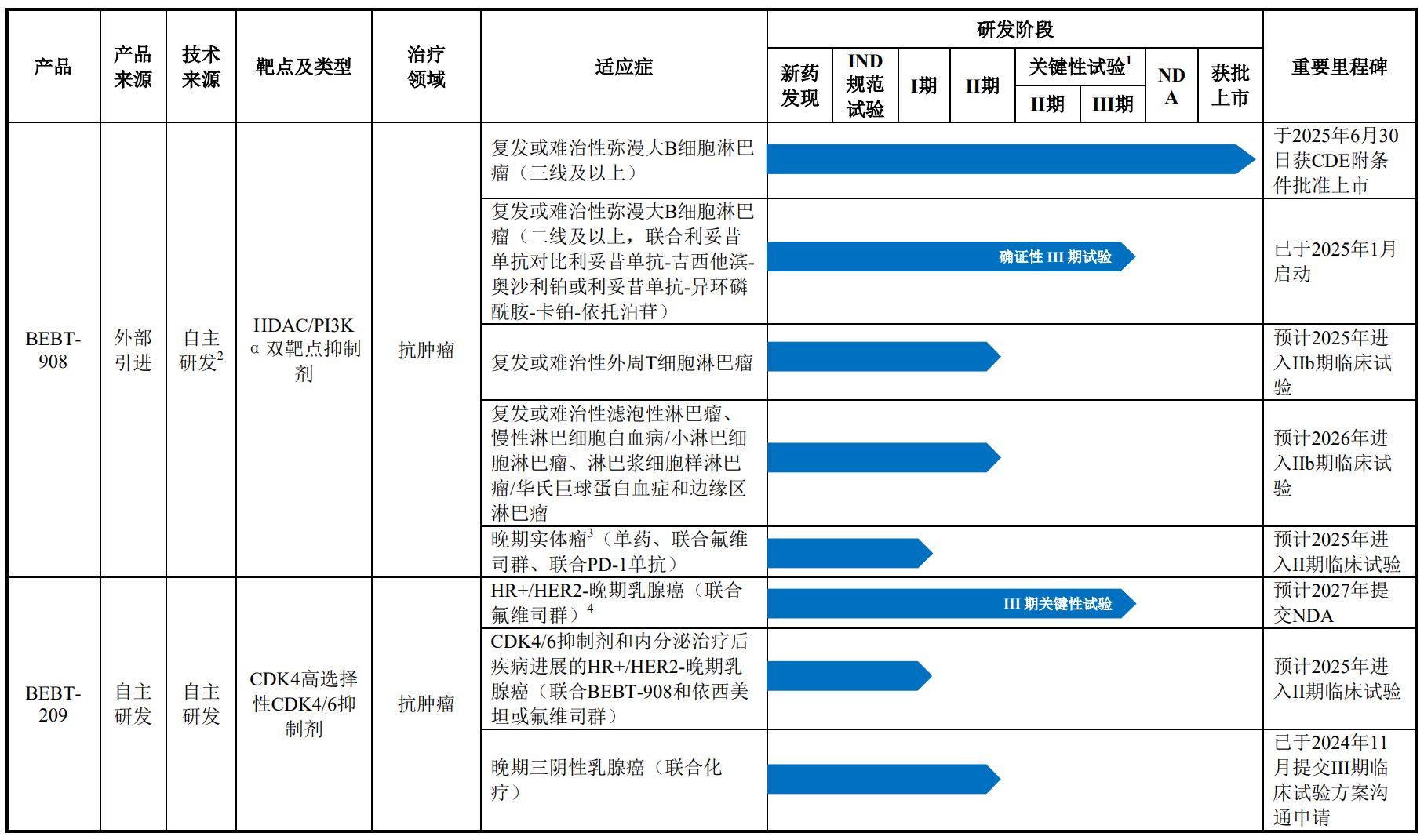
Core Viewpoint - Bibet (688759.SH) has initiated its subscription with an issue price of 17.78 yuan per share, focusing on innovative drug development for major diseases such as cancer and autoimmune disorders [1] Company Overview - Bibet is a biopharmaceutical company that emphasizes clinical value and is dedicated to the independent research and development of innovative drugs [1] - The company has one approved breakthrough therapy drug, BEBT-908, for the treatment of r/r DLBCL, and several other products in various stages of clinical trials [1][2] Product Pipeline - BEBT-908 is the first-in-class small molecule dual-target inhibitor designed for HDAC/PI3Kα, approved for multiple hematological malignancies and solid tumors [1] - BEBT-209 is in Phase III clinical trials, while BEBT-109 has been approved to start Phase III trials, and five other products are in Phase I clinical trials [1][3] - The company has multiple innovative drug candidates in preclinical research [1] Financial Performance - The company reported net losses of approximately 188 million yuan, 173 million yuan, and 55.998 million yuan for the years 2022, 2023, and 2024, respectively [4] - Bibet has not yet achieved profitability and anticipates significant ongoing R&D investments, which will likely prevent profit distribution or cash dividends in the short term [4] Assets and Equity - As of December 31, 2024, the total assets of the company are approximately 332.48 million yuan, with equity attributable to the parent company at around 290.22 million yuan [4] - The asset-liability ratio for the parent company is reported at 12.38% [4]
A股申购 | 生物医药企业必贝特(688759.SH)开启申购 5个产品处于I期临床试验阶段
智通财经网· 2025-10-16 22:37
Core Viewpoint - The company Bibeite (688759.SH) has initiated its subscription with an issue price of 17.78 yuan per share, focusing on innovative drug development for major diseases such as cancer and autoimmune disorders [1]. Company Overview - Bibeite is a biopharmaceutical company that emphasizes clinical value and is dedicated to the independent research and development of innovative drugs [1]. - The company has one approved breakthrough therapy drug, BEBT-908, for the treatment of relapsed or refractory diffuse large B-cell lymphoma (r/r DLBCL) and several other products in various stages of clinical trials [1][2]. Product Pipeline - BEBT-908 is the first-in-class small molecule dual-target inhibitor designed for HDAC/PI3Kα, approved for multiple hematologic malignancies and solid tumors [1]. - Other products include: - BEBT-209, currently in Phase III clinical trials [1]. - BEBT-109, which has been approved to start Phase III clinical trials [1]. - Five additional products are in Phase I clinical trials, and several more are in preclinical research [1][3]. Financial Performance - The company reported net losses of approximately 188 million yuan in 2022, 173 million yuan in 2023, and an expected loss of 55.998 million yuan in 2024 [4]. - Bibeite has not yet achieved profitability and anticipates significant ongoing research and development expenditures, which will likely prevent any profit distribution or cash dividends in the short term [4]. Financial Metrics - Total assets as of December 31, 2024, are projected to be 332.4771 million yuan, down from 441.8725 million yuan in 2023 and 587.2168 million yuan in 2022 [4]. - The company's equity attributable to shareholders is expected to be 290.2201 million yuan in 2024, compared to 318.1196 million yuan in 2023 and 468.3349 million yuan in 2022 [4]. - The debt-to-asset ratio for the parent company is projected to be 12.38% in 2024, a decrease from 27.77% in 2023 and 20.23% in 2022 [4].
港股收评:三大指数涨跌不一!新能源车企、机器人板块承压,教育股强势
Ge Long Hui· 2025-10-16 08:56
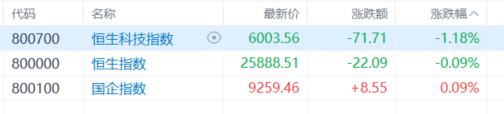
Market Overview - The Hong Kong stock market showed mixed performance on October 16, with the Hang Seng Index slightly down by 0.09%, the Hang Seng China Enterprises Index up by 0.09%, and the Hang Seng Tech Index down by 1.18% [1][2]. Technology Sector - Major technology stocks experienced a downturn, with Xiaomi down by 3.6%, Baidu, Meituan, and Tencent Holdings each down over 1%, while JD.com, Kuaishou, and Alibaba also saw slight declines [2][3][4]. - The overall performance of the technology sector was weak, contributing to the decline of the Hang Seng Tech Index [2][3]. New Energy Vehicle Sector - The new energy vehicle sector faced significant declines, with NIO down nearly 9% and other companies like Li Auto, Xpeng, and BYD also experiencing losses [5][6]. - Data from the China Passenger Car Association indicated that retail sales of new energy vehicles in October were 367,000 units, a year-on-year decrease of 1% [6]. Education Sector - The education sector showed strong performance, with companies like Think Academy seeing a remarkable increase of 26.5% in stock price, driven by plans to raise approximately HKD 241 million for future AI projects [9][10]. - The sector's rebound is attributed to positive policy signals and the adoption of AI technology by educational companies [10]. Apple Concept Stocks - Apple-related stocks performed well, with BYD Electronics rising nearly 5% following discussions between Apple's CEO Tim Cook and China's Ministry of Industry and Information Technology regarding business development in China [11][12]. Coal Sector - Coal stocks saw gains, with China Qinfa up over 8%, driven by increased demand for coal as winter approaches and a report indicating a rise in coal production [13][14]. Shipping Sector - The shipping sector was active, with stocks like Orient Overseas International and COSCO Shipping rising nearly 4% following the announcement of a special port fee for ships from the U.S. [14][16]. Innovative Drug Sector - The innovative drug sector experienced growth, with companies like 3SBio and Innovent Biologics rising nearly 6%, ahead of the European Society for Medical Oncology (ESMO) annual meeting [16][17]. Insurance Sector - Insurance stocks were active, with China Life Insurance rising nearly 5% after a positive earnings forecast from New China Life Insurance [18][19]. IPO Activity - Cloudwalk Technology debuted on the Hong Kong stock market, closing up 26.05% with a market capitalization of HKD 8.281 billion, following a highly oversubscribed IPO [20][23]. Market Outlook - Analysts expect the Hong Kong stock market to experience wide fluctuations, with a focus on sectors such as precious metals and the AI industry due to ongoing geopolitical tensions and trade issues [25].




大涨126.72%!四环医药旗下轩竹生物登陆港交所,尚未实现盈利
Bei Jing Shang Bao· 2025-10-15 12:12
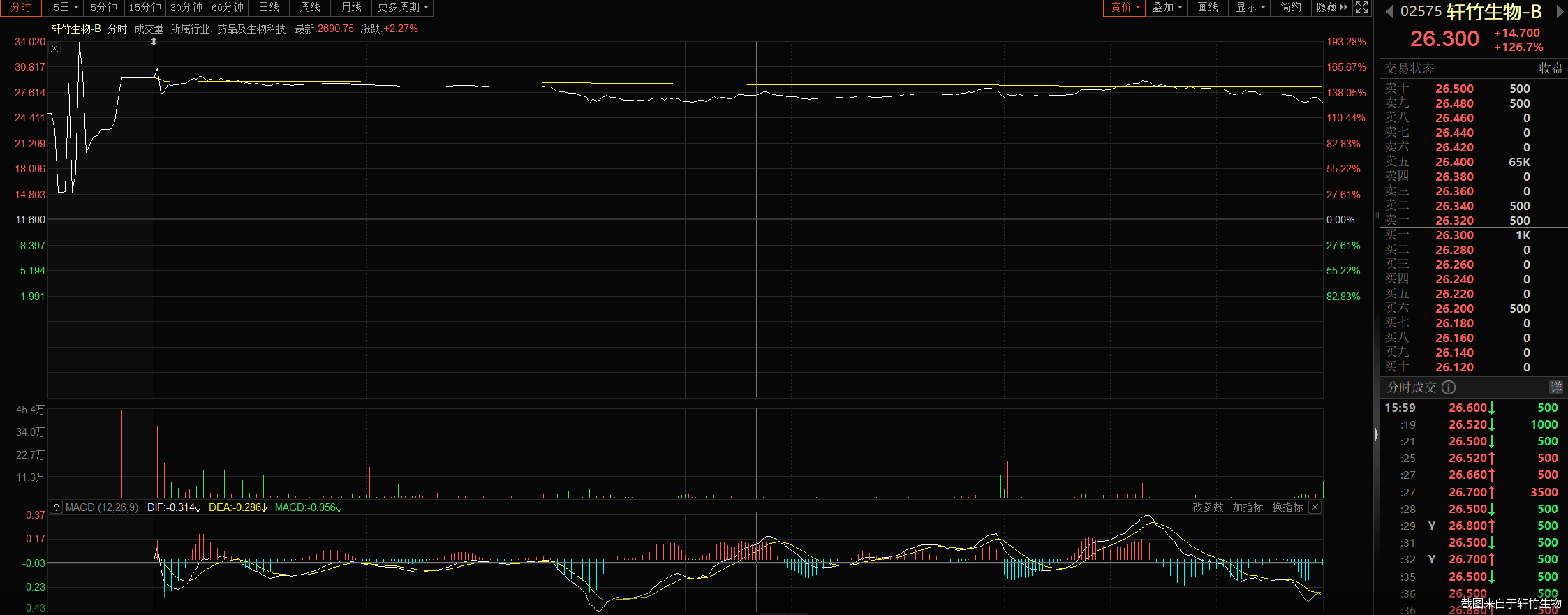
Core Viewpoint - The successful debut of Xuan Bamboo Biotech (02575.HK) on the Hong Kong Stock Exchange, with a first-day surge of 126.72%, reflects a positive market sentiment towards biotech stocks, particularly those listed under the 18A category [1][3][7] Company Overview - Xuan Bamboo Biotech is a subsidiary of Sihuan Pharmaceutical (00460.HK) and has previously attempted to list on the STAR Market without success [1][3] - The company has three approved products and is actively developing over ten drug assets targeting various diseases, including gastrointestinal disorders, tumors, and non-alcoholic fatty liver disease [3][4] Financial Performance - Despite the successful listing, Xuan Bamboo Biotech reported continuous losses, with projected losses increasing in 2024. Revenue figures for 2023 and 2024 are 29,000 yuan and 30.09 million yuan, respectively, with losses of 301 million yuan and 556 million yuan for the same periods [5][6] - The increase in losses is attributed to reduced revenue and rising administrative expenses, particularly due to stock-based compensation for management and staff [6] Market Sentiment and Trends - The recent performance of 18A new stocks, including Xuan Bamboo Biotech, indicates a recovery in investor confidence in the biotech sector, with several stocks experiencing significant first-day gains [1][7] - The overall market sentiment towards the biotech industry has improved, driven by increased global focus on biopharmaceutical research and technological advancements [7]
首批!新注册科创成长层新股来了,核心要点一文速览
Zheng Quan Shi Bao· 2025-10-15 00:16
Core Viewpoint - The first batch of newly registered companies in the Sci-Tech Innovation Growth Sector is set to debut, with three companies, He Yuan Bio, Xi'an Yicai, and Biobetter, expected to be included despite currently being unprofitable [1][2][3] Group 1: Company Details - He Yuan Bio is the first company to initiate the issuance process under the fifth set of standards for the Sci-Tech Innovation Board, focusing on innovative drug development with eight drugs in its pipeline [2][3] - Biobetter has one innovative drug product approved for market and several others in various clinical trial phases, also adhering to the fifth set of standards [2] - Xi'an Yicai, a leading manufacturer of 12-inch silicon wafers, is the first unprofitable company to be accepted and approved under the fourth set of standards [3] Group 2: Financial Performance - As of the first half of 2025, He Yuan Bio, Biobetter, and Xi'an Yicai reported losses of approximately 81.63 million, 73.89 million, and 340 million respectively [3] Group 3: Issuance and Subscription Details - The subscription limits for online purchases are set at 53,500 shares for Xi'an Yicai and 14,000 shares for Biobetter, with corresponding market value requirements of 535,000 and 140,000 respectively [1] - He Yuan Bio's online issuance saw over 3.35 million investors participating, with an initial subscription rate of about 0.036% and a final rate of approximately 0.054% after adjustments [6] Group 4: Regulatory Changes - The new issuance rules allow for differentiated lock-up and allocation arrangements for unprofitable companies, encouraging institutional investors to play a larger role in pricing [4][5] - New registered stocks in the Sci-Tech Innovation Growth Sector will be marked with a special identifier "U" to distinguish them from existing stocks [7]
首批!新注册科创成长层新股来了!核心要点一文速览
Zheng Quan Shi Bao· 2025-10-15 00:00
Group 1 - The core point of the article is the introduction of the first batch of newly registered stocks in the Sci-Tech Innovation Growth Layer, with companies like He Yuan Bio, Xi'an Yicai, and Biobetter set to launch their online subscriptions [1][2][3] - He Yuan Bio is the first company to initiate the issuance process among the new registered companies, focusing on innovative drug development with eight drugs in its pipeline [3][4] - Xi'an Yicai is recognized as the first unprofitable company to be accepted and approved under the "Eight Guidelines" of the Sci-Tech Innovation Board, specializing in 12-inch silicon wafers [4] Group 2 - All three companies are currently in a loss-making state, with losses reported for the first half of 2025: He Yuan Bio at 81.63 million yuan, Biobetter at 73.89 million yuan, and Xi'an Yicai at 340 million yuan [4] - The new registered unprofitable companies will be included in the Sci-Tech Innovation Growth Layer from the date of their listing, following the guidelines set by the Shanghai Stock Exchange [4] Group 3 - The three companies are the first to adopt differentiated lock-up and allocation arrangements for offline issuance, encouraging professional institutions to play a larger role in the pricing of new stock issuances [6][7] - He Yuan Bio has set a minimum lock-up ratio of 70% for the highest lock-up tier, while Xi'an Yicai and Biobetter have similar tiered lock-up arrangements [6][7] Group 4 - Over 5 million investors have opened trading permissions for the Sci-Tech Innovation Growth Layer, with 3.36 million participating in He Yuan Bio's online subscription, resulting in an initial winning rate of approximately 0.036% [9][8] - New registered stocks in the Sci-Tech Innovation Growth Layer will have a special identifier "U" added to their stock names for differentiation [10]