加密资产

Search documents
美国加密资产发展趋势及对我国的启示|封面专题
清华金融评论· 2025-08-08 08:54
Group 1 - The article discusses the evolving landscape of the global cryptocurrency market, influenced by the U.S. government's policy shifts under the Trump administration and the implementation of the EU's MiCA regulation, highlighting the need for a reassessment of the balance between value and security in cryptocurrency regulation [2][3]. - The concept of cryptocurrency has evolved since the release of the Bitcoin white paper in 2008, with a focus on its payment functionality and the emergence of different paths for development, including account-based and token-based systems [4]. - The article defines cryptocurrency in a narrow sense, including four categories: 1) cryptocurrencies like Bitcoin for asset storage, 2) stablecoins like USDT and USDC for payments, 3) cryptocurrencies like Ethereum and Solana for DeFi innovations, and 4) security token offerings (STOs) and real-world asset tokenization [5]. Group 2 - The article outlines the motivations behind the evolution of U.S. cryptocurrency policy, including the economic interests of the Trump family, which have grown significantly with their involvement in various NFT projects and the launch of a stablecoin [8][9]. - The support from the cryptocurrency community for Trump's election campaign is highlighted, with over $245 million raised for pro-cryptocurrency political action committees in the 2024 election cycle, indicating a strategic move to attract younger voters [9]. - The article contrasts the regulatory philosophies of the Republican and Democratic parties, noting that the Republican approach aligns more closely with the decentralized nature of cryptocurrencies, advocating for reduced regulation [9][10]. Group 3 - The dominance of fiat-backed stablecoins, particularly those pegged to the U.S. dollar, is emphasized, with a total supply of stablecoins reaching $234.9 billion as of May 2025, and the processing volume of stablecoin transactions projected to reach $14 trillion in 2024 [10]. - The cryptocurrency industry has become a significant revenue source for the U.S. government, with SEC enforcement fines reaching $4.7 billion in 2024, a dramatic increase from $150.3 million in the previous fiscal year [10]. - The article discusses Trump's vision of making the U.S. a "global cryptocurrency hub," aiming to attract capital and enhance economic vitality while addressing government debt and reinforcing the dollar's status [10].


250%,Figma上市首日股价暴涨,美国科技IPO市场迎来复苏
Di Yi Cai Jing· 2025-08-01 01:11
Group 1 - The U.S. IPO market is experiencing a significant resurgence, highlighted by Figma's successful debut on the New York Stock Exchange, with its opening price at $83, more than double the $33 issue price, and a closing price of $115.5, marking a 250% increase on its first day [1][3][4] - Figma's strong performance is seen as a pivotal moment for the tech IPO market, potentially encouraging more AI-related tech companies to restart their listing plans, which could lead to a transformative recovery in the U.S. IPO market by 2025 [1][4][5] Group 2 - Figma, a platform for collaborative design tools, has notable clients including Netflix, Airbnb, and Duolingo, and its early investors include prominent venture capital firms like Sequoia Capital and Kleiner Perkins [3][4] - The company raised $1.2 billion by selling 36.9 million shares at an adjusted issue price of $33, which was above the previously set range of $30-$32 [3][4] - The successful IPO of Figma is viewed as a symbol of the recovery of the tech IPO market, with analysts noting that the demand for rapidly growing software companies has been absent for years [4][5] Group 3 - Figma's IPO coincides with a strong rebound in the U.S. tech sector, driven by robust earnings reports from major companies like Microsoft and Meta, alongside a surge in investment interest in generative AI [3][4] - The overall IPO market in the U.S. is showing signs of substantial recovery, with 59 IPOs completed in Q2 2025, raising a total of $15.02 billion, surpassing the 45 IPOs and $11.23 billion raised in Q1 2025 [4][5] Group 4 - Figma is accelerating its AI capabilities to maintain its competitive edge in the design software industry, having launched several AI features aimed at enhancing design efficiency and lowering barriers to use [7][8] - The competitive landscape is intensifying, with other design platforms like Canva and Adobe rapidly integrating AI functionalities to capture market share [7][8] - Figma's improved AI capabilities are seen as a key factor in its valuation reassessment, especially after the failed acquisition attempt by Adobe at a $20 billion valuation [8]

香港稳定币条例最新!
证券时报· 2025-08-01 00:14
Core Viewpoint - The implementation of the Stablecoin Regulation in Hong Kong is expected to inject compliance momentum into the cryptocurrency market, reshape the competitive landscape of cross-border payments, digital asset investments, and financial infrastructure, and further solidify Hong Kong's status as an international financial center [1]. Group 1: Stablecoin Regulation and Market Impact - The Stablecoin Regulation officially took effect on August 1, following its passage by the Legislative Council in May, leading to a surge of interest in stablecoins in Hong Kong [1]. - The Hong Kong Monetary Authority (HKMA) has emphasized the need for a rational perspective on the development of stablecoins, despite the market's enthusiasm [1]. - The regulation is seen as a means to enhance compliance and competitiveness in the cryptocurrency sector, particularly in cross-border payments and digital asset investments [1]. Group 2: Key Players and Applications - Round Coin Group plans to launch the HKD stablecoin, primarily aimed at improving cross-border payment efficiency and reducing transaction costs [3]. - Other companies, including JD Coin Chain and Ant International, are also pursuing stablecoin licenses, focusing on traditional cross-border trade settlement rather than crypto-native applications [4]. - The initial focus of stablecoin issuers will be on HKD stablecoins, but competition from established players like Tether and Circle poses significant challenges [11]. Group 3: Market Dynamics and Future Prospects - In July alone, nearly 10 Hong Kong-listed companies announced plans to apply for stablecoin licenses or upgrade existing licenses to virtual asset trading licenses [6]. - The global stablecoin market has seen significant growth, with a total market value exceeding $250 billion, and Tether and USDC dominating the market with an 86.5% share [10]. - The demand for real transaction needs is identified as a core driver for the stablecoin market's development, with major e-commerce platforms like JD and Ant Group leveraging their transaction volumes to enhance stablecoin efficiency [11][12].

香港稳定币条例生效 立足真实交易需求是关键
Zheng Quan Shi Bao· 2025-07-31 17:57
Core Viewpoint - The implementation of the Stablecoin Regulation in Hong Kong is expected to inject compliance momentum into the cryptocurrency market and reshape the competitive landscape of cross-border payments, digital asset investment, and financial infrastructure, thereby enhancing Hong Kong's status as an international financial center [1] Group 1: Regulatory Environment - The Stablecoin Regulation officially took effect on August 1, following the Legislative Council's approval in May, leading to a surge in interest in stablecoins in Hong Kong [1] - The Hong Kong Monetary Authority (HKMA) has emphasized the need for a rational perspective on the development of stablecoins, despite the market's enthusiasm [1] Group 2: Market Participants and Innovations - Companies like Round Coin Group and JD Coin Chain are among the first to apply for stablecoin licenses, focusing on cross-border payment applications and retail scenarios [2][3] - Round Coin Group's HKDR stablecoin aims to enhance merchant payment efficiency and reduce transaction costs, while JD Coin Chain plans to integrate stablecoin usage in its e-commerce platform [2][3] Group 3: Ecosystem Development - The issuance of stablecoin licenses is seen as just the starting point for issuers, who must invest in ecosystem development, including wallet management and fiat conversion processes [4] - The value of a stablecoin license is tied to the issuer's business model and the ability to build a comprehensive ecosystem rather than merely holding a license [4] Group 4: Market Dynamics and Competition - The dominance of USD stablecoins, which account for over 90% of the global market, poses significant competition for Hong Kong's proposed HKD stablecoins [6] - The initial focus on HKD stablecoins may face challenges as merchants find it more convenient to use USD stablecoins directly [6] Group 5: Future Outlook - The future of stablecoins may depend on the performance of the USD and the emergence of real transaction demands, with major e-commerce platforms like JD and Ant Group leveraging their transaction volumes to enhance stablecoin efficiency [7][8] - A healthy development of stablecoins requires a foundation of scale, frequency, and liquidity [8]

智云国际控股(08521)拟折让约16.48%配售合共6300万股 净筹约4762万港元
智通财经网· 2025-07-29 15:13
Core Viewpoint - Zhiyun International Holdings (08521) announced a subscription agreement to issue 63 million shares at a subscription price of HKD 0.760 per share, representing a discount of approximately 16.48% compared to the closing price of HKD 0.91 on the date of the agreement [1] Fund Utilization - The net proceeds of approximately HKD 47.62 million from the subscription will be utilized as follows: (i) up to 10% for supplementing the group's working capital; and (ii) 90% or more for establishing a cryptocurrency inventory, particularly in Bitcoin and Bitcoin-related instruments [1]
智云国际(08521.HK)拟折让约16.48%配发合共6300万股 净筹约4762万港元
Ge Long Hui· 2025-07-29 14:34
Core Viewpoint - The company, Zhiyun International (08521.HK), has entered into a subscription agreement to issue a total of 63 million shares at a subscription price of HKD 0.760 per share, representing a discount of approximately 16.48% compared to the closing price of HKD 0.91 on the date of the agreement [1] Financial Summary - The net proceeds from the subscription are expected to be approximately HKD 47.62 million [1] - The company plans to allocate the proceeds as follows: up to 10% for supplementing the group's working capital and 90% or more for establishing a cryptocurrency inventory, particularly in Bitcoin and related instruments [1]
稳定币稳得住美元霸权吗?
Zhong Guo Xin Wen Wang· 2025-07-29 06:34
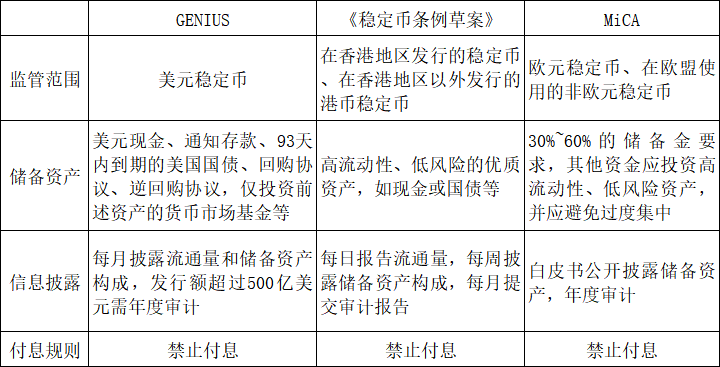
《天才法案》来了,稳定币火了。 美国总统特朗普7月18日签署名为《指导与建立美国稳定币国家创新法案》的稳定币监管法案,因其英 文首字母缩写刚好是GENIUS(天才)一词,也被称为《天才法案》。 这是美国在联邦层面的首个稳定币监管立法,将为支付型稳定币的发行、支持资产储备和监管执法等提 供监管框架。 稳定币是有锚定物或抵押品的加密资产,美元稳定币锚定美元,1稳定币相当于1美元。稳定币币值波动 相对稳定,且交易无需经过银行或第三方平台,能够提升交易效率,深受市场特别是跨境交易的青睐。 美国推出这一法案,绝非简单的市场规范行为,其背后的战略算计,水很深。 《天才法案》明确要求,稳定币必须以美元或美国短期国债等流动资产作为支撑。 这一规定看似是为了保障稳定币的价值稳定,实则暗藏经济逻辑玄机。美国财政部长贝森特直言,以美 国国债为支撑的稳定币生态系统,将推动私人部门对美国国债的需求,而这种需求的增加,有望降低政 府借贷成本,并帮助控制国家债务规模。 按照特朗普政府设想,由于稳定币背后有真实资产作抵押,用户会产生等值兑换的稳定预期,从而愿意 购买和使用;稳定币发行商则可以将用户投入的资金用于购买美债;而对美国政府来说,稳 ...
中金:稳定币自身的潜在风险会影响金融市场的稳定
news flash· 2025-07-25 01:03
Core Viewpoint - The potential risks associated with stablecoins can impact the stability of financial markets, including liquidity risks, financial disintermediation, and price volatility linked to market dynamics [1] Group 1: Liquidity Risks - Stablecoins are issued by private entities, and their stability relies on the quality and transparency of their reserve assets. Insufficient reserve mechanisms or declining asset quality can lead to a trust crisis, causing a run on stablecoins and subsequent asset sell-offs, which may indirectly affect the stability of the traditional financial system and trigger broader liquidity risks [1] Group 2: Financial Disintermediation - Stablecoins may divert business from traditional banking services such as deposits, loans, and remittances. In high-inflation countries, residents may prefer holding stablecoins over bank deposits. Additionally, stablecoins facilitate cross-border payments that bypass traditional banking systems. The further development of decentralized finance could exacerbate the loss of business for traditional financial institutions, leading to financial disintermediation [1] Group 3: Price Volatility and Market Linkage - There is a high correlation between stablecoins and the cryptocurrency market. The boundaries between cryptocurrencies and traditional stocks are becoming increasingly blurred, evidenced by the emergence of crypto assets in traditional financial markets (e.g., listings of companies like Circle) and traditional financial institutions entering the crypto space (e.g., offering crypto trading services, issuing tokenized stock products). This trend enhances the price transmission and linkage effects between the entire crypto asset market and traditional financial markets [1]
美股行情聚焦大而美法案细节,XBIT持续迭代技术栈应对政策
Sou Hu Cai Jing· 2025-07-23 02:39
Core Viewpoint - The recent passage of the "One Big Beautiful Bill Act" by the U.S. Congress has led to structural market adjustments, impacting both the stock and cryptocurrency markets, with significant implications for capital allocation and investor sentiment [1][2][5]. Economic Impact - The bill is expected to provide long-term benefits for corporate capital expenditures, potentially supporting GDP growth by 0.7% to 1.2%, but will increase federal deficits by approximately $2.8 to $5 trillion in the short term, raising concerns about public debt sustainability [2][6]. - The Congressional Budget Office (CBO) estimates that cuts to health programs could result in over 11 million people losing health insurance, highlighting potential market risks [2]. Market Reactions - Following the bill's announcement, major U.S. stock indices experienced initial gains before entering a period of volatility, with the S&P 500 briefly rising by nearly 0.3% before retreating [1]. - The 10-year U.S. Treasury yield surged to around 4.3%, reflecting increased borrowing costs and impacting growth stocks, while financial, industrial, and defense stocks saw a rotation in investor interest [1][5]. Cryptocurrency Market Dynamics - The cryptocurrency market has seen a notable increase in activity, with XBIT decentralized exchange reporting a more than 60% rise in trading volume within two hours of the bill's announcement, driven by a shift towards risk-averse assets and multi-chain arbitrage opportunities [2][5]. - XBIT's daily active addresses increased by approximately 25%, and asset reallocation ratios rose by 30%, indicating heightened demand for multi-chain combinations [5][8]. Structural Changes in Investment Strategies - The market is shifting from technology growth stocks to value stocks and financial cyclicals, with traditional financial institutions warning of potential real estate bubble risks and increased debt levels due to the bill [5][6]. - The evolving landscape of fiscal, monetary, energy, and technological policies in the U.S. is prompting investors to reassess their strategies, with cryptocurrencies being viewed as alternative hedging tools [6][8]. Future Outlook - The focus will be on the specific implementation details of the bill, such as capital expenditure deductions and tax adjustments for small businesses, as well as the Federal Reserve's future policy direction [6]. - If the pressure on the U.S. dollar continues, the cryptocurrency market may see a rebalancing opportunity, with decentralized platforms like XBIT becoming increasingly relevant in mainstream asset allocation [6][8].

对各经济体加强稳定币监管的初步分析
Sou Hu Cai Jing· 2025-07-14 03:32
Group 1: Market Size and Regulatory Environment - The stablecoin market has rapidly grown, exceeding $220 billion by June 2025, with Tether (USDT) and USD Coin (USDC) accounting for approximately 90% of the market share [2][5] - Active stablecoin wallets surpassed 260 million since June 2024, indicating a rapid increase in adoption [2] - Stablecoins are primarily used as trading mediums for cryptocurrencies, with an annual transaction volume reaching $5.67 trillion in 2024, comparable to major credit card networks [3] Group 2: Regulatory Developments - Recent legislative efforts in various regions, including the U.S. and Hong Kong, aim to regulate stablecoins, with the U.S. Senate passing the GENIUS Act and Hong Kong's Stablecoin Ordinance being approved [5][6] - Regulatory frameworks will impose strict requirements on reserve assets, information disclosure, and anti-money laundering (AML) measures, promoting financial stability while fostering innovation [5][6] Group 3: Implications of Regulation - Inclusion of stablecoins in financial regulation may transform them into "tokenized deposits," providing some level of protection to holders and enhancing their role as transaction mediums [7] - Clear regulatory requirements are expected to attract more financial institutions to issue stablecoins, leading to greater mainstream adoption [8] Group 4: Future Outlook - The demand for stablecoins is likely to diversify beyond the U.S. dollar, with increasing issuance of stablecoins pegged to other currencies like the euro and yen [9] - Regulatory clarity may support the U.S. dollar's dominance in the short term, while also potentially leading to a more diversified international monetary system in the long run [9][10]