化肥

Search documents
《化工周报26/3/2-26/3/6》:地缘冲突下煤气化工套利空间提升,MDI、TDI、蛋氨酸等价格上涨,农药板块或迎涨价潮-20260309
Shenwan Hongyuan Securities· 2026-03-09 06:40
Investment Rating - The report maintains an "Optimistic" rating for the chemical industry [2][3]. Core Insights - The report highlights that geopolitical conflicts have led to a significant increase in oil prices, with Brent crude reaching $93 per barrel as of March 6, 2026. If the Strait remains blocked for 4-6 weeks, prices may rise above $120, impacting the chemical sector positively in the short term [2][3]. - The report indicates that the chemical sector is experiencing upward price trends for MDI, TDI, and methionine due to increased costs and supply constraints, suggesting a potential price surge in the pesticide sector as well [2][3]. - The report emphasizes the importance of focusing on key materials for growth, particularly in semiconductor materials and packaging materials, as well as the impact of "anti-involution" policies accelerating the exit of outdated capacities [2][3]. Summary by Sections Macro Economic Analysis - Oil prices have surged due to geopolitical tensions, with Brent crude at $93 per barrel. If the situation persists, prices could exceed $120, which would have significant implications for the chemical industry [3][4]. - Coal prices are stabilizing, and natural gas prices are expected to decline as the U.S. accelerates its export facilities [3]. Chemical Sector Dynamics - The report notes that MDI and TDI prices are rising due to sustained cost pressures and supply constraints, with domestic companies controlling shipment volumes [2][3]. - The methionine market is expected to recover, with prices increasing to 22.5 yuan/kg, driven by geopolitical disruptions affecting supply [2][3]. Investment Recommendations - The report suggests focusing on various chains, including textile, agricultural chemicals, and export-related sectors, with specific companies highlighted for potential investment [2][3]. - Key companies to watch include Wanhua Chemical, Cangzhou Dahua, and others in the agricultural sector like Yangnong Chemical and Runfeng Co., which are expected to benefit from rising prices [2][3]. Company Valuation Insights - The report provides a valuation table for key companies, indicating their market capitalization and projected earnings, with specific recommendations for buy, hold, or sell based on their performance [14][15].




山东地区化肥市场调研报告
Nan Hua Qi Huo· 2026-03-09 06:25
Report Industry Investment Rating - The short - term outlook for the urea market is that the upside space is limited; the medium - term view is bearish; the long - term view requires attention to policy changes. It is recommended to short the 2605 contract in the range of RMB 1,850 - 1,900 per ton, wait for the short - selling drive in the range of RMB 1,820 - 1,850 per ton, and focus on the support level of RMB 1,700 per ton and export policy changes [1][20]. Core View - The compound fertilizer industry has a high - inventory situation of both finished products and raw materials, which, combined with the marginal decline in demand, may become a market risk trigger. Based on the fundamentals and policy aspects of urea, it is expected that the upside space of urea is limited, and a bearish view is taken in the medium term [1][16]. Summary by Directory 1. Research Area Agricultural Background Analysis - **Lunan Plain Agricultural Area**: The core research areas such as Zaozhuang, Linyi, and Ningyang are in this area, covering 15,200 square kilometers, accounting for 9.7% of the province, with a high cultivated land rate of 53.5%. It has superior hydro - thermal conditions and is an important production base for grains, cotton, oil, and vegetables in Shandong [3]. - **Zaozhuang City**: By 2024, it had 2.535 million mu of high - standard farmland, a 24.6% increase from 2020. The grain output reached 1.893 million tons, with the output of wheat and corn ranking among the top in the province. The pomegranate and potato industries have significant advantages [4]. - **Linyi City**: It is an important supply base for grain, oil, fruits, vegetables, and livestock products in China. In 2024, the total output value of agriculture, forestry, animal husbandry, fishery, and related services reached RMB 103.76 billion. It has 24 characteristic industries with an output value of over RMB 1 billion, with a total output value of RMB 180 billion [4][5]. - **Ningyang, Dongping, and Jinan**: Ningyang has 16 rural revitalization demonstration areas; Dongping has 28 demonstration areas with rapid development of facility agriculture; Jinan's grain production has increased in area, yield per unit, and total output for six consecutive years, with a total output of 3.057 million tons in 2024 [5]. - **Dezhou City**: It is famous for the "one - and - a - half - ton grain" production capacity construction, with a core area meeting the standard of 1.58 million mu, and its yield per unit ranks first in the province. The "Technical Specifications for Annual Yield Increase of Wheat and Maize in the Huang - Huai - Hai Region" has become a national agricultural industry standard [6]. 2. Research Content Details - **Compound Fertilizer Industry Chain Inventory Status** - **Production Enterprises**: Most enterprises have a much higher finished - product inventory than the historical average, with some having a capacity utilization rate of over 90%. The average raw - material inventory days are over 30, and some reach 45 days, with a large amount of in - transit goods [7][9]. - **Mid - and - Downstream**: Dealers' inventories are generally high, with an average of 70% - 80% of warehouse capacity in Zaozhuang and Linyi. The inventory turnover days are significantly longer [9]. - **Agricultural Demand Tracking** - **Winter Wheat Top - Dressing Progress**: There is a north - south differentiation. In the Lunan area, top - dressing is basically completed, while in the Luzhong area, it is in progress and will end by mid - to - late March [10]. - **Approaching Agricultural Demand Gap**: From late March, the region will enter a demand gap period until mid - to - late April, adding pressure to the high - inventory market [10]. - **Analysis of Grass - Roots Farmers' Behavior** - **Full Awareness of Price - Limit Policy**: Farmers have a high awareness of the national fertilizer price - limit policy, which enhances their bargaining power [11]. - **Price Sensitivity and Purchasing Mentality**: Farmers are highly sensitive to fertilizer prices, preferring to wait for price drops before purchasing. Some farmers purchased winter wheat fertilizers before the Spring Festival, which overdrafted post - festival demand [12]. - **Stable Mentality and Clear Expectations**: Farmers' mentality is more stable this year, and they believe the price - limit policy will be implemented, waiting for prices to fall below RMB 1,800 per ton to buy [12]. 3. Problem Analysis and Logical Deduction - **Verification of Demand Front - Loading Effect**: Farmers' pre - festival purchases and dealers' early stocking have led to demand front - loading, reducing post - festival top - dressing demand and causing inventory backlog in the compound fertilizer industry [14]. - **Formation Mechanism of Compound Fertilizer "Pressure Minefield"**: High inventories of finished products and raw materials in the compound fertilizer industry are the result of multiple factors. The interaction between the production, channel, and demand sides forms a positive cycle of inventory pressure, which may become a market risk trigger [15][16]. - **Analysis of Urea Fundamentals** - **Supply Side**: The daily output of the urea industry has reached a record high of over 220,000 tons, which suppresses urea prices [16]. - **Demand Side**: Agricultural demand is entering a gap period, and industrial demand from compound fertilizer enterprises is weakening [16][17]. - **Policy Side**: The domestic urea spot price limit is around RMB 1,840 per ton, and the guiding price from March to June remains unchanged, which stabilizes market expectations [17]. - **International Factors**: Although international urea prices have risen due to the Iranian situation, the domestic urea futures market is less sensitive to international factors [17]. 4. Conclusion and Strategy Suggestions - **Market Judgment**: The short - term upside of urea prices is limited; the medium - term market is bearish; in the long - term, attention should be paid to policy changes, with RMB 1,700 per ton being an important support level [20]. - **Strategy Layout Suggestion**: Short the 05 contract in the range of RMB 1,850 - 1,900 per ton; wait for the driving force to short in the range of RMB 1,820 - 1,850 per ton; consider taking profit on short positions when the price approaches RMB 1,700 per ton if there are signals of export policy relaxation [21]. - **Subsequent Tracking Points**: Focus on changes in compound fertilizer enterprises' operating rates, finished - product sales progress, dealers' restocking intentions, actual agricultural demand release, and policy trends [21][22][23].
地缘冲突下煤气化工套利空间提升,MDI、TDI、蛋氨酸等价格上涨,农药板块或迎涨价潮
Shenwan Hongyuan Securities· 2026-03-09 03:08
Investment Rating - The report maintains an "Optimistic" rating for the chemical industry [3][4]. Core Insights - The geopolitical conflicts have led to a significant increase in oil prices, with Brent crude reaching $93 per barrel, which positively impacts the chemical sector if the blockade lasts for 4-6 weeks. If it extends beyond that, prices could exceed $120 per barrel, creating potential price transmission issues for the industry [3][4]. - The report highlights the rising prices of MDI, TDI, and methionine, suggesting a potential price surge in the pesticide sector due to low global inventory levels and increased demand as the spring farming season approaches [3][4]. - The report suggests focusing on companies like Hualu Hengsheng, Luxi Chemical, and Wanhua Chemical due to their strong supply-side support and market dynamics [3][4]. Industry Dynamics - Oil prices have risen significantly, with Brent crude increasing by 27.5% and WTI by 36.5% as of March 6 [9]. - The PPI for industrial products showed a year-on-year decrease of 1.4% but a month-on-month increase of 0.4%, indicating a slight recovery in the chemical sector [4][6]. - The report notes that the agricultural sector is likely to see a price increase due to low inventory levels and the upcoming spring planting season, with companies like Yangnong Chemical and Runfeng Co. being highlighted for potential investment [3][4]. Investment Analysis - The report recommends a diversified investment approach across various chains, including textile, agricultural chemicals, and export-related sectors, with specific companies identified for each category [3][4]. - Key materials for growth are emphasized, particularly in semiconductor and panel materials, with companies like Yake Technology and Ruilian New Materials being noted for their potential [3][4]. - The report suggests that the chemical sector is well-positioned for growth, with a focus on companies that can benefit from the current market dynamics and geopolitical influences [3][4].
南华期货尿素产业周报:地缘左右-20260309
Nan Hua Qi Huo· 2026-03-09 00:50
南华期货尿素产业周报 ——地缘左右 2026/3/8 联系人 张博(投资咨询证号:Z0021070) 投资咨询业务资格:证监许可【2011】1290号 第一章 核心矛盾及策略建议 1.1 核心矛盾 ∗ 近端交易逻辑 尿素现货日产销与尿素期货收盘价 source: 南华研究,同花顺 元/吨 尿素平均产销(右轴) 尿素期货主力合约收盘价 23/12 24/06 24/12 25/06 25/12 1 2 3 1600 1800 2000 2200 2400 尿素山东产销季节性 source: 南华研究 2023 2024 2025 2026 03/01 05/01 07/01 09/01 11/01 0 2 4 6 资金席位回测一览 * 远端交易预期 国内尿素行情高位整理,个别涨10-40元/吨,主流区域中小颗粒价格参考1700-1830元/吨。尿素期货价格连 续两日偏弱,部分区域现货行情表现僵持。关注月底、月初国储货源出货情况。短线国内尿素行情继续高位 整理运行,工厂价格稳定为主 尿素出口量(万吨) source: 南华研究 万吨 2021 2022 2023 2024 2025 02/01 03/01 04/ ...
原油狂飙冲击100美元,A股受益板块大盘点
21世纪经济报道· 2026-03-08 15:24
Core Viewpoint - The ongoing conflict between the U.S. and Iran is driving oil prices towards a potential $100 per barrel, with significant implications for various industries and investment opportunities arising from the energy crisis [1][2]. Oil Price Surge and Its Impact - International oil prices have surged dramatically, with U.S. oil and Brent crude both surpassing $90 per barrel, marking the largest weekly increases since 1983 and 1991, respectively [1]. - The conflict has severely affected the shipping traffic through the Strait of Hormuz, with daily vessel traffic plummeting by 94%, leading to a significant loss in global oil supply estimated between 7 million to 11 million barrels per day [1][5]. Beneficiary Sectors in A-Share Market - The oil and gas extraction sector is expected to benefit directly from rising oil prices, with companies like China National Petroleum and China National Offshore Oil Corporation showing strong performance [3]. - Other sectors such as coal chemical and energy-related companies are also positioned to gain from the current high oil price environment, with companies like Baofeng Energy and China Coal Energy showing promising growth [4][5]. Energy Sector Valuation Reassessment - The surge in oil prices is reshaping the internal valuation system of the energy sector, with upstream oil and gas extraction companies experiencing the most direct benefits [5]. - Analysts suggest that the geopolitical tensions may sustain high oil prices, benefiting major state-owned enterprises in the oil and gas sector [5]. Coal Chemical Industry Dynamics - The rising oil prices are expected to enhance the competitiveness of coal chemical products, as companies in this sector can leverage stable raw material costs while benefiting from rising product prices [6]. - The coal chemical sector is seen as having clear upward momentum in the current high oil price environment, making it a focal point for investment [6]. Chemical Supply Chain Disruptions - The conflict is causing significant disruptions in the global chemical supply chain, particularly affecting methanol production, with Iran being a major supplier [8][9]. - The rising costs of raw materials, including natural gas and shipping, are expected to push up prices for various chemical products, including bromine and methanol [10][11]. Agricultural Sector Implications - The energy crisis is impacting agricultural production costs, particularly through rising fertilizer prices, which could lead to reduced fertilizer usage and potential declines in crop yields [12][13]. - The geopolitical tensions are also expected to affect the supply of key agricultural inputs like urea and potash, with potential price increases anticipated [14].





国泰君安期货·能源化工尿素周度报告-20260308
Guo Tai Jun An Qi Huo· 2026-03-08 08:38
国泰君安期货·能源化工 尿素周度报告 国泰君安期货研究所 杨鈜汉 投资咨询从业资格号:Z0021541 日期:2026年03月08日 Guotai Junan Futures all rights reserved, please do not reprint 资料来源:钢联,隆众资讯,国泰君安期货研究 本周尿素观点:震荡有支撑 | | • | 本周(20260226-0304),中国尿素生产企业产量:153.79万吨,较上期涨0.24万吨,环比涨0.16%。周期内新增1家企业装置短时停车,3家停车装 | | --- | --- | --- | | 供应 | | 置恢复生产,同时延续上周期的装置变化,本周产量小幅增加。下周,中国尿素周产量预计154-155万吨附近,较本期小幅增加。下个周期可 | | | | 能1家企业装置计划停车,1-2家停车企业装置可能恢复生产,考虑到短时的企业故障发生,延续上周期的变化,预期下个周期产量增加概率 | | | | 较大。(隆众资讯) | | 需求 | • | 内需方面,短期来看,3月上旬,中原地区农业春耕需求逐步启动,整体内需对价格形成支撑。 | | | • | 出口方面, ...
银河期货尿素日报-20260306
Yin He Qi Huo· 2026-03-06 11:12
Group 1: Report Overview - The report focuses on the urea market and provides a daily analysis for March 6, 2026 [2] - It covers market review, important information, logical analysis, and trading strategies Group 2: Market Review - **Futures Market**: Urea futures fluctuated widely, closing at 1830 (+6/+0.33%) [3] - **Spot Market**: Factory prices were stable, with different price ranges in various regions such as Henan (1810 - 1840 yuan/ton), Shandong (1820 - 1840 yuan/ton), etc. [3] Group 3: Important Information - On March 6, 2026, the daily urea production was 22.05 million tons, a decrease of 0.17 million tons from the previous day but an increase of 2.39 million tons compared to the same period last year [4] - The current operating rate was 93.65%, a rise of 6.27% compared to 87.38% last year [4] Group 4: Logical Analysis - **Regional Market Analysis**: In Shandong, the mainstream factory - quoted prices were firm, with good market sentiment. In Henan, the market sentiment cooled, but the factory - quoted prices remained firm. In the delivery area, the factory prices were stable [5] - **Supply and Demand**: Domestic gas - fired maintenance units returned, and the daily output rose to around 22.3 million tons. The international market price was firm, but the impact on the domestic market was limited due to the lack of new quotas. After the Spring Festival, the compound fertilizer production rate increased, but procurement almost stopped due to high raw material inventory. The urea enterprise inventory started to decline slightly this week [5] - **Market Outlook**: The domestic policy still suppresses the urea price. As agricultural top - dressing ends and industrial demand is tepid, the market atmosphere has weakened rapidly. The short - term futures are expected to remain weak [5] Group 5: Trading Strategies - **Unilateral**: Short at high levels [7] - **Arbitrage**: Hold off [7] - **Options**: Hold off [7]
霍尔木兹海峡局势变化,十大产业链危机脉络梳理
财联社· 2026-03-06 05:33
Core Viewpoint - The modern world order is built around efficiency and minimal costs, creating a highly interdependent system that can lead to widespread crises from localized disruptions, particularly in energy supplies like oil and LNG, which can trigger inflation and food shortages [1] Group 1: Supply Chain Vulnerabilities - The global polyester supply chain starts with petrochemical products, and disruptions in raw materials like naphtha or PTA can lead to significant reductions in polyester production, affecting the apparel industry [2][3] - The nitrogen fertilizer chain begins with natural gas; interruptions can lead to increased costs for farming inputs and pressure on the food system within a single planting cycle [3] - The extraction of copper and cobalt relies on sulfuric acid, which is dependent on the supply of sulfur; any disruption can halt copper extraction operations, impacting electrical and automotive sectors [4] - The polypropylene supply chain, starting from propylene, faces shortages in packaging and medical supplies if propylene supply is interrupted [5] - The chlor-alkali industry, reliant on salt and electricity, will see immediate pressure on water treatment and PVC production if disrupted [6] - The tire industry, starting from natural and synthetic rubber, will face production cuts and extended replacement cycles due to supply interruptions [7] - The steel industry, dependent on iron ore and metallurgical coal, will experience production cuts and delays in construction and manufacturing if raw materials are restricted [8] - The aluminum supply chain, starting from bauxite and requiring significant electricity, will see reduced smelting capacity affecting packaging and transportation sectors [9] - The flat glass supply chain, reliant on soda ash and natural gas, will face production challenges impacting construction and solar energy sectors if inputs are disrupted [10] - The semiconductor supply chain, starting from ultra-pure gases and stable electricity, will see yield issues and delivery delays if these inputs are affected [11] Group 2: Impact Timeline - The first level of impact involves disruptions in maritime energy transport, with significant daily oil and LNG logistics bottlenecks [13] - The second level involves shortages in refining and industrial chemicals due to the depletion of sour crude oil, leading to immediate sulfur shortages [15] - The third level sees mining and metal extraction affected by sulfur shortages, halting copper and cobalt extraction processes [17] - The fourth level indicates a worsening copper shortage affecting power transformers and electrical hardware, leading to extended delivery times [19] - The fifth level highlights semiconductor supply chain disruptions due to LNG shortages in Taiwan, causing voltage drops in manufacturing equipment [21] - The sixth level indicates a freeze in data center expansion due to silicon supply constraints and transformer unavailability [23] - The seventh level focuses on capital markets, where raw material cost inflation leads to severe profit compression and stock revaluation [25] - The eighth level discusses national responses involving strategic oil reserves, constrained by physical limitations [27] - The ninth level addresses the restructuring of trade frameworks, marked by a shift towards non-dollar energy settlements [29] - The tenth level emphasizes social stability, where energy and fertilizer inflation leads to structural food crises in emerging markets [30] - The eleventh level indicates a shift in industrial structure, with aluminum replacing copper facing engineering limits [31] - The twelfth level represents a long-term redesign of social civilization, prioritizing resource security over economic efficiency [33]
异动盘点0306 | 创新药概念早盘走强,中信资源复牌涨超3%;热门中概股普跌,维多利亚的秘密股价显著下挫
贝塔投资智库· 2026-03-06 04:03
Group 1 - Boreton (01333) shares rose by 4.08% after announcing a construction contract for the Jin Chuan Ru Wa Xi digital energy project, set to be executed by 2026 [1] - CITIC Resources (01205) resumed trading with a 3.57% increase, following the sale of 1.9 million shares of Alcoa at an average price of $62.451 per share, totaling approximately $119 million [1] - Weichai Power (02338) saw a rise of over 1% as a report highlighted the increasing market share of domestic brands in the data center market, driven by capacity and cost advantages [2] Group 2 - Xirui (02507) shares increased by over 4% after being included in the Hang Seng Composite Index, with a projected delivery of 797 aircraft in 2025, a 9% year-on-year increase [2] - China Heart-Linked Fertilizer (01866) shares surged by 8.16% amid rising concerns over fertilizer supply shortages due to escalating conflicts in the Middle East, a key region for global fertilizer supply [2] - Black Sesame Intelligence (02533) shares rose by 1.79% after announcing a revenue forecast exceeding RMB 800 million for 2025, representing a growth of over 68.7% [3] Group 3 - Meitu (01357) shares jumped nearly 8% as the company announced the integration of the Seedance 2.0 video creation model, enhancing its capabilities in e-commerce video content [3] - CSPC Pharmaceutical Group (01093) shares increased by 3.41% after receiving approval for clinical trials of a new inhalation powder [3] - Dazhu CNC (03200) shares rose by 3.54% following adjustments to the Hong Kong Stock Connect securities list [3] Group 4 - The innovative drug sector saw strong performance, with notable increases in shares of companies like Hutchison China MediTech (00013) up 8.64% and 3SBio (01530) up 10.94%, following the recognition of biomedicine as a key emerging industry in the national government report [4] Group 5 - Victoria's Secret (VSCO.US) shares fell by 12.16% despite strong earnings, attributed to rising tariff costs and acquisition-related expenses [5] - The Nasdaq Golden Dragon Index dropped by 1.53%, with major Chinese stocks like Alibaba (BABA.US) and Li Auto (LI.US) experiencing declines [5] - Copper mining stocks fell sharply, with Southern Copper (SCCO.US) down 7.16% as copper prices declined [5] Group 6 - Broadcom (AVGO.US) shares rose by 4.8% after reporting a 29% year-on-year revenue increase to $19.3 billion, driven by a doubling of AI-related revenue [6] - Alibaba (BABA.US) shares fell by 2.19% following the resignation of a key technology executive, raising market concerns [6]

中东风险正在波及工业原材料
日经中文网· 2026-03-06 02:58
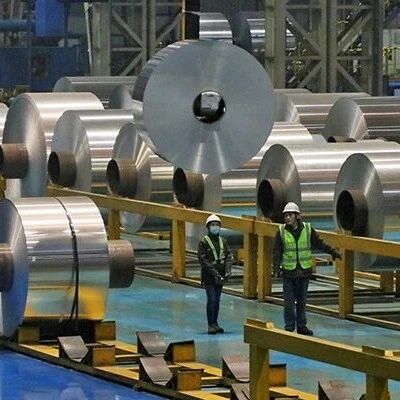
Core Viewpoint - The ongoing tensions in the Middle East are driving up international aluminum prices and causing supply shortages for industrial raw materials, including fertilizers and LNG [2][4]. Group 1: Supply Chain Disruptions - QatarEnergy has declared a "Force Majeure" affecting LNG and its derivatives due to damage from drone attacks, impacting aluminum production as well [4]. - Petronet LNG, India's largest LNG importer, has also issued a "Force Majeure" statement due to the blockade of the Strait of Hormuz, complicating LNG procurement from Qatar [4]. - Norsk Hydro's aluminum smelting plant in Qatar has halted production due to the inability to procure LNG, which is essential for power generation in aluminum production [5]. Group 2: Price Increases - The LME three-month aluminum futures price surged to approximately $3,418 per ton, marking a four-year high due to supply disruptions [5]. - Asian urea prices have increased by 20% compared to the previous week, driven by supply concerns from the Middle East, which accounts for 40% of global urea production [6]. - The price of naphtha, a key raw material for producing plastics, has risen by 23% in Japan, with about 40% of Japan's naphtha imports sourced from the Middle East [7]. Group 3: Market Implications - If the Strait of Hormuz remains blocked for an extended period, there may be significant challenges in procuring urea, leading to potential price hikes in fertilizers [6]. - The supply of helium, crucial for semiconductor manufacturing, has been affected as QatarEnergy has ceased helium supplies, although companies have alternative sources and inventories [8].