区块链金融

Search documents
华检医疗港股市场的稀缺标的,以太坊金库战略驱动价值重塑
Sou Hu Cai Jing· 2025-08-11 06:21
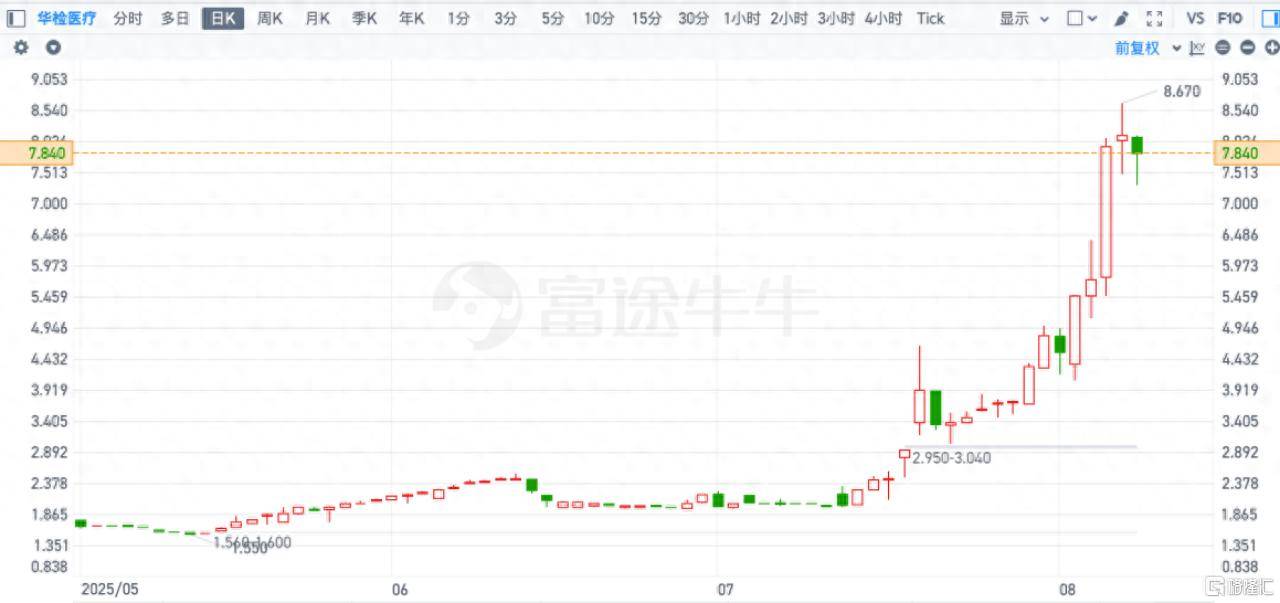
Core Viewpoint - The recent significant stock price increase of Huajian Medical (01931.HK) is closely linked to its strategic initiatives, including plans for dual primary listing on NASDAQ and the introduction of innovative financial products in the medical sector [1][2]. Group 1: Stock Price Volatility Drivers - The stock price of Huajian Medical has seen a cumulative increase of approximately 120% in July and an additional 62% since August, with a single-day increase of 38.43% on August 6, leading to a market capitalization exceeding 12.8 billion HKD [1][2]. - Key strategic announcements include the initiation of a dual primary listing plan on NASDAQ on July 14, aimed at expanding the international shareholder base and enhancing participation in global capital markets [2]. - The launch of the medical innovation drug RWA Exchange and the associated stablecoin IVDDollar on July 17 addresses issues of liquidity and financing cycles in the medical sector, attracting market attention [2]. - Establishment of a wholly-owned subsidiary, IVD GROUP INC., in New York and submission of stablecoin license applications to SEC and CFTC on July 20, positioning the company as a rare player in the Hong Kong market with dual stablecoin licensing [2]. Group 2: Ethereum Vault Strategy - On August 8, the company announced the initiation of its Ethereum Vault strategy, including the purchase of 5,190 Ether, marking the largest reserve among Hong Kong-listed companies [3]. - The Ethereum Vault strategy consists of two main components: the Ether reserve and the Ether creation engine (medical RWA), utilizing blockchain technology for the tokenization of medical assets [3][10]. - The strategy is compared to successful U.S. companies like MicroStrategy and Summit Therapeutics, indicating potential for significant value growth if market recognition continues [4]. Group 3: Market Context and Competitive Landscape - The U.S. regulatory environment for cryptocurrencies is becoming clearer, providing a stable policy outlook for Ethereum and decentralized finance (DeFi) applications, which enhances the intrinsic value of Ether as a core reserve asset [5]. - Companies like MicroStrategy have successfully integrated cryptocurrency reserves into their capital operations, achieving substantial market capitalization growth, which serves as a model for Huajian Medical [6]. - The Ethereum Vault strategy of Huajian Medical is noted for its unique approach, focusing on long-term, stable asset reserves through diversified funding sources, contrasting with other companies' strategies [9][10]. Group 4: Medical RWA Platform Development - Huajian Medical's extensive experience in the medical field, with over 20 years of operation and a network covering 1,674 tertiary hospitals in China, supports the establishment of its medical RWA platform [11]. - The company's proactive compliance strategy, including early license application disclosures and establishment of a subsidiary in New York, positions it favorably in the evolving global regulatory landscape [11]. - The integration of traditional medical assets with blockchain finance through the medical RWA platform addresses funding efficiency issues in the medical innovation sector, a relatively rare model in the Hong Kong market [12].

华检医疗(01931)与HashKey集团达成全球战略合作 8月11日香港发布会揭幕Web3医疗金融新纪元
智通财经网· 2025-08-11 06:08
Core Viewpoint - Huajian Medical Holdings Limited (01931) has officially launched the "Global Enhanced Ethereum (ETH) Vault" strategy and entered into a global strategic partnership with HashKey Group, marking a significant step into the Web3 financial sector for the healthcare industry [1][4]. Group 1: Strategic Collaboration - The partnership will involve signing a global strategic cooperation framework agreement, leveraging HashKey Group's fully licensed compliance ecosystem to provide Huajian Medical with comprehensive digital asset management services [1]. - The collaboration will focus on large-scale Ethereum (ETH) trading execution and cost optimization, global market liquidity support, and exploring the tokenization of real-world assets (RWA) related to innovative medical drug intellectual property [1][4]. Group 2: Global Enhanced Ethereum Vault Strategy Upgrade - The upgrade of the "Global Enhanced Ethereum (ETH) Vault" will be announced, aiming to create a safer, more efficient, and compliant digital asset service system, providing innovative asset allocation paths for global investors [2]. Group 3: Industry Impact - This collaboration is expected to reshape the financial infrastructure of the healthcare industry, injecting real economic value into the digital asset sector and promoting the globalization of innovative drug research and development [6]. - By utilizing blockchain technology's traceability and transparency, the partnership aims to establish a trust bridge between medical intellectual property and digital assets, offering new pathways for global investors to engage in medical innovation [6]. Group 4: Event Details - The signing ceremony and strategic upgrade announcement will take place on August 11, 2025, at 14:00 in Hong Kong [7]. Group 5: Company Background - Huajian Medical focuses on innovative drug research and development, digital healthcare solutions, and global resource integration, aiming to enhance the accessibility of medical services through technology [8]. - HashKey Group is a leading blockchain ecosystem platform in Asia, holding a virtual asset trading platform license from the Hong Kong Securities and Futures Commission, providing compliant digital asset trading, custody, and asset management services [8].
平台上线、标准立项,香港为何积极构筑RWA基础设施?
Guo Ji Jin Rong Bao· 2025-08-09 07:20
Core Viewpoint - Hong Kong is seizing the opportunity to develop the Real World Asset (RWA) industry by launching the world's first RWA registration platform and establishing three Web3.0 standards to facilitate the tokenization of RWA assets [1][4][7] Group 1: RWA Registration Platform and Standards - The RWA registration platform in Hong Kong will provide comprehensive lifecycle services for RWA asset tokenization, including compliance registration, information disclosure, and circulation support [1][4] - The three Web3.0 standards aim to address key challenges in asset confirmation, valuation, and cross-border payments, promoting standardized processes and technical implementations for RWA tokenization [1][4][7] - The platform is expected to enhance the transparency and global adaptability of RWA financial services, establishing a standardized technical system for coding, classification, identification, and evaluation of RWA assets [4][5] Group 2: Challenges in RWA Development - The RWA industry faces structural barriers, including a lack of unified regulatory standards for asset definition, confirmation, registration, and token issuance, particularly in cross-border transactions [2][3] - Technical bottlenecks such as data disconnection between on-chain and off-chain assets hinder the development of RWA, making it difficult to quantify risks and establish trust [2][3] - High upfront costs associated with due diligence, auditing, and technical development pose significant challenges for small and medium-sized enterprises, limiting their participation in RWA [3][5] Group 3: Global Implications and Future Prospects - The launch of the RWA registration platform is expected to accelerate the global digitalization of assets, providing a clear institutional model and technical template for other jurisdictions [7][8] - Hong Kong's initiative may establish a "Hong Kong standard" for RWA compliance, integrating financial regulation with blockchain technology, thereby enhancing its strategic position as a global financial hub [7][8] - The platform aims to create new pathways for global capital allocation and financing efficiency, facilitating the transition of Web3.0 from virtual narratives to real-world value [8]
华检医疗(01931):打造“全球增强版以太坊(ETH)金库”、升维公司全球战略、为生态参与者创造价值
智通财经网· 2025-08-08 09:36
Core Viewpoint - The company has officially launched a strategic upgrade to create a "Global Enhanced Ethereum (ETH) Treasury" with a focus on medical innovation and asset tokenization [1][2]. Group 1: Strategic Overview - The company aims to integrate Ethereum (ETH) as a core reserve asset to enhance the efficiency of medical innovation drug development and asset allocation [3][7]. - The new "ivd.xyz" exchange will focus on high-tech assets in global medical innovation, facilitating the tokenization of real-world assets (RWA) [1][2]. Group 2: Mechanisms and Protection Strategies - The board has authorized the management to establish a "verifiable, executable, and quantifiable" seven-layer protection mechanism to safeguard shareholders and RWA holders [5]. - Additional strategies include a "three-layer enhancement engine" to transform ETH assets from passive holding to active income generation and reinvestment [5][6]. Group 3: Market Context and Trends - The strategic move aligns with global trends in cryptocurrency asset allocation, particularly among institutional investors, and responds to regulatory frameworks in regions like Hong Kong and the U.S. [4][6]. - The company has drawn insights from leading practices in the cryptocurrency asset reserve field, referencing successful models from various global firms [6][7].
专访MyStonks:获美SEC备案突破 解密RWA合规化进程
Xin Lang Zheng Quan· 2025-08-08 03:32
Core Viewpoint - The recent initiative by the U.S. Securities and Exchange Commission (SEC) to integrate traditional finance with blockchain technology is a significant step towards regulatory acceptance of on-chain finance, exemplified by MyStonks' successful filing of a key STO document, allowing them to operate tokenized stock services globally [1][5]. Group 1: MyStonks' Business Model - MyStonks has completed the SEC STO filing, indicating compliance with U.S. securities laws, which differentiates it from unregulated digital currency projects [1][4]. - The concept of "tokenization" is explained as creating a digital certificate for real-world assets, recorded on the blockchain, which enhances security and efficiency in trading [2][3]. - MyStonks targets three main user groups: "crypto-native" users familiar with blockchain, global retail investors facing barriers in traditional markets, and professional investors seeking efficiency and transparency [3][4]. Group 2: Market Trends and Growth - The SEC's "crypto plan" signals a shift where regulation will drive innovation rather than hinder it, aligning with MyStonks' approach to embrace compliance while leveraging blockchain technology [4][5]. - MyStonks has experienced a remarkable growth in daily trading volume, achieving a 2000-fold increase, with current daily trading around $12 million and a user base of 18,000, attributed to strategic market understanding and compliance efforts [6][7]. - The collaboration with Fidelity for asset custody ensures that each tokenized stock is backed by real assets, enhancing trust and demonstrating that on-chain and off-chain systems can complement each other [7]. Group 3: Future Challenges and Goals - MyStonks anticipates challenges in maintaining compliance while expanding its services to a broader U.S. user base, with ongoing attention to regulatory developments [7]. - The company aims to become a leading infrastructure for on-chain U.S. stock trading, addressing traditional financial barriers and promoting financial inclusivity through innovative solutions [7].
蚂蚁数科合作香港持牌金融机构,一站式代币化发行生态成型|最前线
3 6 Ke· 2025-08-08 03:12
Core Insights - Ant Group's Ant Financial is expanding its Real World Asset (RWA) business beyond renewable energy assets to include computing power and broader financial assets, indicating a maturation of its RWA technology platform and ecosystem [1][4] Group 1: RWA Business Expansion - Ant Financial's RWA business initially focused on renewable energy assets but is now exploring computing power and financial assets, supported by a year of practical validation in the renewable sector [1] - The RWA practice was recognized as a representative case in the Hong Kong Monetary Authority's Ensemble sandbox, highlighting its significance in the market [1] - The company is accelerating its layout across technology, industry, and ecosystem dimensions, aiming for a comprehensive approach to RWA [1] Group 2: Technological Framework - Ant Financial has developed a complete technological closed loop for digital assets, focusing on trustworthiness, efficient circulation, transaction security, and compliance [2] - The "AntChain Inside" framework utilizes a proprietary "blockchain + IoT" architecture, managing over 15 million renewable energy devices, establishing the largest on-chain renewable energy device network globally [2] - The "Two Chains, One Bridge" architecture facilitates efficient connections between domestic assets and global capital, while the Layer 2 blockchain Jovay enhances RWA transaction throughput and reduces user response time to under one second [2] Group 3: Market Strategy and Caution - Ant Financial is selectively expanding its RWA portfolio, emphasizing a cautious approach to asset selection, akin to transplanting trees, ensuring a solid foundation before scaling [4] - The company has rejected numerous RWA requests in sectors like agriculture and fine art, focusing on assets that meet specific criteria for stability, legal clarity, and verifiable off-chain data [4] - The rise of AI and the digitalization of computing power align well with RWA requirements, making financial assets ideal candidates for tokenization [4] Group 4: Ecosystem Development - Ant Financial is building a one-stop tokenization issuance ecosystem in Hong Kong, collaborating with licensed institutions to cover all aspects of securities trading, investment consulting, asset management, and digital asset custody [5] - The company is also working with the China Academy of Information and Communications Technology and over 20 enterprises to establish asset on-chain standards, which will be released soon [5][6] - Ant Financial has made significant moves in Hong Kong, including becoming a key enterprise partner of the Hong Kong government and establishing an AI + Web3 laboratory in collaboration with Hong Kong Polytechnic University [6]
蚂蚁数科合作香港持牌金融机构 一站式代币化发行生态成型
Sou Hu Cai Jing· 2025-08-07 22:52
Core Viewpoint - Ant Group's Ant Technology is expanding its Real World Asset (RWA) business beyond renewable energy to include computing power and financial assets, leveraging its established technology platform and ecosystem [1][3]. Group 1: RWA Business Expansion - Ant Technology's RWA business initially focused on renewable energy assets and is now exploring computing power and broader financial assets [1][3]. - The company has been recognized by the Hong Kong Monetary Authority's Ensemble sandbox for its RWA practices, marking a year of significant progress [3]. - Ant Technology is collaborating with over 20 enterprises and the China Academy of Information and Communications Technology to promote the "AntChain Inside" standard for asset tokenization [3][7]. Group 2: Technological Advancements - The company has developed a complete technological closed loop for digital assets, focusing on trustworthiness, efficiency, security, and compliance [4]. - Ant Technology's "AntChain Inside" utilizes a proprietary "blockchain + IoT" architecture to manage asset data throughout its lifecycle, linking over 15 million renewable energy devices [4]. - The "Two Chains and One Bridge" framework facilitates efficient connections between domestic assets and global capital, while the Layer 2 blockchain Jovay enhances RWA transaction throughput and reduces user response time to under one second [4]. Group 3: Cautious Asset Selection - Ant Technology is selectively expanding its RWA portfolio, emphasizing the importance of stability, legal clarity, and verifiable off-chain data for asset selection [6]. - The company has rejected numerous RWA requests in sectors like agriculture and fine art, focusing instead on areas with proven technological validation and scalability [6]. - The rise of AI and the digitalization of computing power align well with RWA requirements, making financial assets ideal candidates for tokenization [6]. Group 4: Compliance and Ecosystem Development - Ant Technology has established a comprehensive ecosystem for compliant asset issuance by collaborating with licensed institutions in Hong Kong [7]. - The company integrates various services, including securities trading, investment consulting, asset management, and digital asset custody, to facilitate the entire RWA process [7].
参与香港金管局沙盒一年 蚂蚁数科首度披露!
Zhong Guo Ji Jin Bao· 2025-08-07 15:04
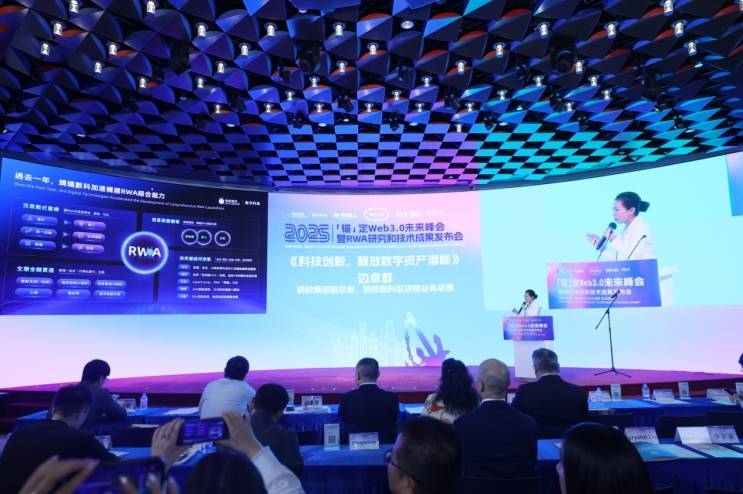
Core Insights - Ant Group's subsidiary, Ant Financial Technology, has successfully developed its Real World Asset (RWA) business over the past year, particularly in the renewable energy sector, and is now exploring broader financial asset applications [1][5] - The Hong Kong Monetary Authority (HKMA) launched the Ensemble project sandbox in August 2024 to test blockchain-based financial market infrastructure, focusing on the interoperability of tokenized assets and wholesale Central Bank Digital Currency (wCBDC) [3] Group 1: RWA Business Development - Ant Financial Technology's RWA technology platform and ecosystem have matured, allowing for stable exploration of computing power and financial assets [1][5] - The company has linked over 15 million renewable energy devices, creating the largest on-chain renewable energy device network globally [5] - The "Two Chains and One Bridge" architecture facilitates efficient connections between domestic assets and global capital [5] Group 2: Technological Innovations - Ant Financial Technology has introduced the Layer 2 blockchain Jovay, which significantly enhances RWA transaction throughput and reduces user response time to under one second [5] - The company employs advanced technologies such as AI models, homomorphic encryption, and zero-knowledge proofs to ensure asset privacy and compliance [5] Group 3: Market Strategy and Compliance - Ant Financial Technology is committed to deepening its engagement with the Hong Kong market through open-source code, ecosystem collaboration, and partnerships with academic institutions [6][10] - The company has focused on specific asset types for RWA, avoiding sectors like agricultural products and fine art to ensure stability and legal clarity [8] - A comprehensive ecosystem for tokenized issuance has been established, connecting various financial services and regulatory compliance [10] Group 4: Industry Standards and Collaborations - Ant Financial Technology is collaborating with over 20 companies to establish technical standards for asset tokenization, which is anticipated to be released soon [10] - The company has signed agreements with the Hong Kong government and local universities to enhance its presence and capabilities in the region [10]
参与香港金管局沙盒一年 蚂蚁数科首度披露!
中国基金报· 2025-08-07 14:59
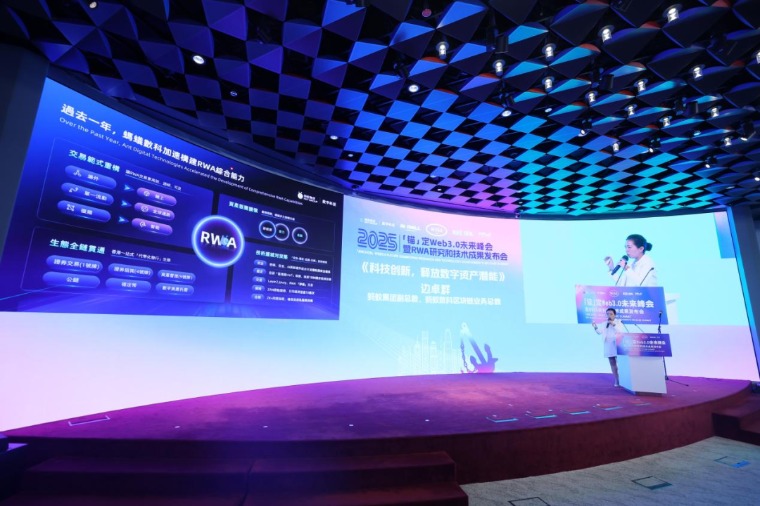
Core Viewpoint - Ant Group's subsidiary, Ant Technology, has made significant progress in Real World Asset (RWA) business development over the past year, particularly in the context of the Hong Kong Monetary Authority's Ensemble sandbox initiative [2][4]. Group 1: RWA Business Development - Ant Technology's RWA technology platform and business model have matured, leading to new explorations in computing power and broader financial assets [2][6]. - The company has linked over 15 million new energy devices, creating the world's largest on-chain new energy device network [6]. - The RWA platform utilizes a "two chains, one bridge" architecture to efficiently connect domestic assets with global capital [6]. Group 2: Technological Innovations - Ant Technology has introduced the Layer 2 blockchain Jovay, which significantly enhances RWA transaction throughput and reduces user response time to under one second [6]. - The company employs advanced technologies such as AI models, homomorphic encryption, and zero-knowledge proofs to ensure asset privacy and compliance [6]. Group 3: Market Engagement and Compliance - Ant Technology is actively engaging with the Hong Kong market through open-source code, ecosystem openness, tool sharing, and industry-academic collaboration [7]. - The company has established a comprehensive tokenization issuance ecosystem by collaborating with licensed institutions in Hong Kong, covering all aspects from securities trading to digital asset custody [11]. Group 4: Strategic Focus - Ant Technology has selectively pursued RWA projects, focusing on stable value assets with clear legal rights and verifiable off-chain data, while rejecting less stable asset classes [9]. - The company aims to set industry standards for asset tokenization, with a technical specification for on-chain asset standards expected to be released soon [11].
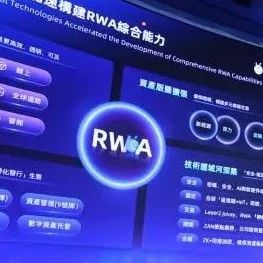
杨涛:新形势下RWA产业需在创新与规范中寻找平衡|金融与科技
清华金融评论· 2025-08-07 11:41
Core Viewpoint - The report highlights the rapid expansion of the Real World Assets (RWA) market, emphasizing the need for clear theoretical frameworks and regulatory guidelines to manage the associated risks and innovations [3]. Financial Function Perspective on RWA Market - RWA provides new financing channels for illiquid assets, addressing traditional financing challenges [5]. - It lowers investment barriers, allowing ordinary investors to access high-value projects previously available only to institutional investors [5]. - RWA initiators benefit from flexible financial management, improving asset-liability management [5]. - The market enhances transaction efficiency and transparency, enabling global access and reducing fraud risks [5]. - RWA contributes to the stability of on-chain financial activities by providing quality underlying assets for DeFi protocols [5]. Challenges in RWA Market Development - The complexity of modern financial markets increases risks associated with structured financial products [8]. - Historical asset securitization has evolved, but the combination of structured financial derivatives and securitization raises systemic risks [10]. - RWA encompasses both financial and non-financial assets, inheriting risks from traditional financial innovations [11]. Strategies for Healthy RWA Market Development - Identifying RWA-related risk characteristics is crucial, ensuring asset ownership clarity and value stability [13]. - Regulatory frameworks need to evolve, establishing a classification system based on asset attributes and market circulation [14]. - Standardization of RWA is essential, focusing on asset mapping, data interfaces, and regulatory compliance [15]. - Encouraging innovation that serves the real economy is vital, with a focus on high-value scenarios and sandbox testing mechanisms [16].