显示技术

Search documents
茅台金石基金旗下企业入股MicroLED微显示公司JBD
Zheng Quan Shi Bao Wang· 2025-10-28 04:56
Group 1 - The core point of the article is that Shanghai Xianyao Display Technology Co., Ltd. has recently increased its registered capital to 66.448 million yuan and has added new shareholders, including Moutai Jinshi Fund and Zhejiang Youjin Venture Capital [1] - The company was established in October 2015 and is focused on the research and innovation of MicroLED micro-display technology [1] - Changes in the company's main personnel have also been reported alongside the capital increase and new shareholders [1]
郑智化就“连滚带爬”表述致歉;春秋航空招聘已婚已育空嫂;宗馥莉心腹祝丽丹离职;安徽成汽车产量第一省;长安汽车一4S店起火丨邦早报
创业邦· 2025-10-28 00:10
Group 1 - Zhu Lidan, the legal representative of Hongsheng Group controlled by Zong Fuli, has left the company, with her office now assigned to Kou Jing [3][4] - Zhu Lidan has been a core member of Hongsheng Group and has had a long-standing working relationship with Zong Fuli [3] - There are reports that Zhu Lidan was summoned by relevant authorities twice since September, and her position was previously marked as "to be determined" [4] Group 2 - Changan Automobile confirmed a fire incident at a 4S store in Anhui, but no information on the cause of the fire has been provided [6] - Meituan announced a nationwide rollout of pension insurance subsidies for delivery riders starting in November, marking the first such scheme available to all riders [12][13] - Spring Airlines has launched a recruitment campaign for "air sisters," targeting married women with children and expanding the age limit to 40 years [13] Group 3 - JD.com has been granted an insurance brokerage license in Hong Kong, marking its entry into the financial market [13] - Tesla's board chair warned that if Elon Musk's $1 trillion compensation plan is not approved, the company may face significant value loss [13] - High-profile education company Gaotu is under investigation for allegedly organizing illegal offline subject training in Beijing [13] Group 4 - Amazon plans to invest over €1.4 billion in the Netherlands over the next three years, the largest investment commitment since entering the market [14] - Porsche responded to reports of multiple gasoline vehicle discontinuations, clarifying that the fuel version of Macan is not included in the changes [15] - AI startup Mercor raised $350 million at a valuation of $10 billion, with participation from notable investors [15][16] Group 5 - The global mobile game in-app purchase revenue is expected to increase by 6% to $85.4 billion by 2025 [20] - China is projected to generate over 400 million discarded mobile phones annually, with low recycling prices and privacy concerns hindering recovery efforts [20] - Anhui has become the top province in automobile production, with 15 provinces expected to produce over one million vehicles this year [20]


超10亿元融资,刷新全球MicroLED微显示单笔融资纪录!
Sou Hu Cai Jing· 2025-10-27 16:24
Core Insights - JBD has successfully completed a B2 round financing exceeding 1 billion RMB, setting a record for single financing in the global MicroLED micro-display sector [1] - The funding will accelerate JBD's innovation in MicroLED technology and product iteration, aiming to transform its technological advantages into large-scale industrial capabilities for the global market [1][3] Company Development - JBD is celebrating its 10th anniversary in 2025, having established a strong technical moat through continuous innovation in MicroLED technology, achieving large-scale production and breakthroughs in key metrics like brightness and power consumption [3][4] - JBD's MicroLED products are currently utilized in nearly 50 models of smart glasses globally, positioning MicroLED as a key driver for the popularization of consumer-grade AR smart glasses [3] Technological Innovation - The recent financing provides robust support for JBD's ongoing technological innovation, including the launch of the "Hummingbird II," the smallest mass-produced color light engine, which enhances design flexibility and display quality while reducing power consumption [4] - The introduction of the MicroLED 2.5-micron pixel pitch "Zoujuan" platform addresses long-standing industry challenges, paving the way for next-generation compact, wide-field light engines and improving the user experience of consumer-grade AR smart glasses [4] Investment Perspective - Investors recognize AR glasses as a crucial product in the AI development process, with JBD being a leading company in the MicroLED micro-display sector, having built a deep moat through customer recognition, product iteration capabilities, and early large-scale production [5] - The investment aligns with strategies to capture leading companies in core industry segments, supporting JBD's position in the AR supply chain and its role in defining the next generation of human-computer interaction [5]
JBD完成超10亿元B2轮融资,新进张佳佳、张建伟为董事
Sou Hu Cai Jing· 2025-10-27 08:39
Group 1 - JBD has completed a Series B financing round exceeding 1 billion RMB, setting a record for the largest single financing in the global MicroLED micro-display sector [1] - The financing round was led by Chaos Investment and CITIC Jinshi, with participation from multiple investors including CITIC Securities International Capital and others [1] - The funds will be used to accelerate innovation and product iteration in MicroLED micro-display technology [1] Group 2 - JBD was established in 2015 with a registered capital of 66.448 million RMB and is a member of the Gallium Semiconductor [1] - The chairman and general manager of the company is Li Qiming, who holds a 13% stake [1] - On October 22, 2025, the company underwent a registered capital change, increasing from approximately 58.223 million RMB to 66.448 million RMB [2]

JBD完成超十亿元B2轮融资,混沌投资和中信金石领投
Sou Hu Cai Jing· 2025-10-27 01:48
Core Insights - JBD has completed a B2 round financing exceeding 1 billion yuan, setting a record for single financing in the global MicroLED micro-display sector [1] - The funding will accelerate JBD's innovation in MicroLED technology and product iteration, aiming to build a consumer-grade AR ecosystem [1][8] - JBD has established a comprehensive technology system around MicroLED micro-displays, positioning itself as a leader in the industry [1][6] Financing Details - The financing round was led by Chaos Investment and CITIC Jinshi, with participation from various investors including CITIC Securities International Capital and Lightspeed [1] - This investment reflects a strategic focus on cutting-edge technology and leading companies in the industry [8] Product Innovations - JBD launched the "Hummingbird II" color light engine, which is compact and lightweight, enhancing the design flexibility of AR glasses [5] - The new "Zou Juan" MicroLED micro-display platform features a pixel pitch of 2.5 micrometers, significantly increasing pixel density to 10160 PPI [5][6] - Innovations in the platform have improved luminous efficiency and reduced power consumption, contributing to longer battery life for AR devices [6] Market Position and Future Outlook - JBD's MicroLED products are already integrated into nearly 50 smart glasses, including models from well-known brands like Rokid and Alibaba [6] - The company has received mass production orders from international tech giants, indicating strong market demand [6] - JBD is recognized as a leading company in the AR glasses MicroLED sector, with a robust competitive advantage and deep industry insights [7][8]

B2轮融资超10亿,国内头部MicroLED厂商乘上智能眼镜东风|硬氪独家
3 6 Ke· 2025-10-27 01:16
Core Insights - JBD has completed a record-breaking B2 round financing exceeding 1 billion yuan, marking the largest single financing in the global MicroLED micro-display sector [1] - The funding will accelerate JBD's innovation in MicroLED technology and product iteration, as well as promote the construction of a consumer-grade AR ecosystem [1][3] - JBD has established a comprehensive technical system around MicroLED micro-display panels, positioning itself as a leader in the industry [1][5] Company Overview - Founded in 2015, JBD focuses on MicroLED micro-display technology, aiming to provide innovative AR near-eye display solutions [1] - The company has developed the "Hummingbird II" color light engine, which is compact and lightweight, enhancing the design flexibility of AR glasses [5] - JBD's latest "Zou Juan" MicroLED micro-display platform achieves a pixel density of 10160 PPI, addressing efficiency challenges and reducing power consumption [5][7] Industry Trends - The integration of AI and AR is becoming a key driver for the next generation of smart terminals, with significant investments from hardware OEMs and internet giants [3] - MicroLED technology is recognized as a leading solution for AR glasses due to its high brightness, small size, and long battery life [3][7] - JBD's MicroLED products are already utilized in nearly 50 smart glasses, indicating strong market adoption and future growth potential [7] Investment Perspective - Investors view AR glasses as a crucial product in the AI development process, with JBD being a leading company in the MicroLED micro-display space [8][9] - JBD's established partnerships with top global clients and its ability to achieve large-scale production of MicroLED technology provide a significant competitive advantage [9] - The investment aligns with strategies to capture opportunities in cutting-edge technology and support JBD's leadership in the AR supply chain [9]

2850万!深圳OLED模组相关企业竞得一处用地
WitsView睿智显示· 2025-10-24 10:23
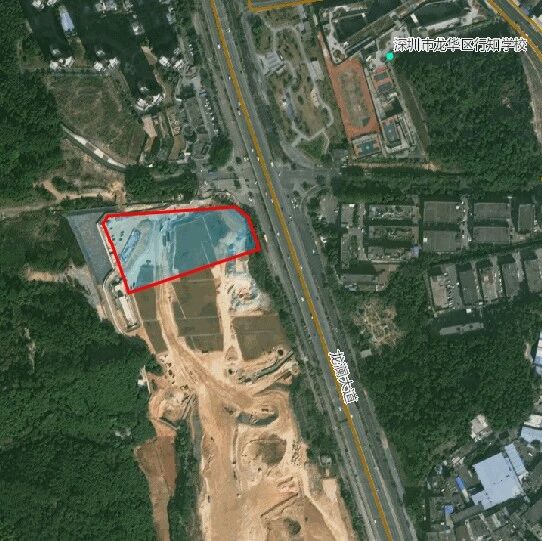
Core Viewpoint - Shenzhen Kola Intelligent Display Co., Ltd. has successfully acquired a land parcel in Longhua District for 28.5 million yuan to establish a smart manufacturing R&D base for flexible OLED and Mini LED display modules, with an expected annual output value of 6 billion yuan once operational [2][4]. Group 1: Project Details - The project will cover an area of approximately 1.5 hectares, with a planned construction area of about 75,000 square meters, including a factory area of 65,000 square meters and supporting facilities of around 10,000 square meters [4]. - Construction is required to commence within 1.5 years and be fully operational within 3.5 years, with an investment intensity of no less than 42.4 million yuan per hectare and a minimum output of 89 million yuan per hectare in the first year of production [5]. Group 2: Company Background - Kola Intelligent focuses on the consumer and professional display markets for mobile smart terminals, with applications in access control, communication, medical devices, home appliances, and wearable smart devices [5]. - The company is a subsidiary of Shenzhen Kola Electronics Co., Ltd., which specializes in the R&D, manufacturing, and sales of LCD display modules and smart display terminals, operating 10 fully automated production lines with a monthly capacity of 2 million units [5].
维信诺科技股份有限公司关于为公司向金融机构申请新型政策性金融工具借款提供担保的进展公告
Shang Hai Zheng Quan Bao· 2025-10-22 18:30
登录新浪财经APP 搜索【信披】查看更多考评等级 本公司及董事会全体成员保证信息披露的内容真实、准确、完整,无虚假记载、误导性陈述或者重大遗 漏。 特别提示: 截至目前,维信诺科技股份有限公司(以下简称"公司")及控股公司对外担保总额(含对合并报表范围 内子公司担保)已超过公司最近一期经审计净资产的100%,担保金额超过公司最近一期经审计净资产 的50%,公司对合并报表外单位担保金额超过最近一期经审计净资产的30%,敬请广大投资者注意投资 风险。 一、担保情况概述 证券代码:002387 证券简称:维信诺 公告编号:2025-102 维信诺科技股份有限公司关于为公司向金融机构申请 新型政策性金融工具借款提供担保的进展公告 公司分别于2025年3月20日和2025年4月10日召开第七届董事会第十七次会议和2024年度股东大会,审议 通过了《关于2025年度为公司及子公司提供担保额度预计的议案》,同意2025年度为公司及控股子公司 提供总额度不超过等值人民币226.2亿元的担保,包括公司为子公司担保、子公司之间互相担保、子公 司为公司担保及前述复合担保等。担保额度有效期为公司2024年度股东大会审议通过之日起的1 ...

外资抢先机投未来 中国经济转型升级释放新机遇 多领域孕育万亿级大市场
Yang Shi Wang· 2025-10-22 06:12
央视网消息:投资是拉动经济增长的"三驾马车"之一。透视中国经济三季报数据,2025年以来,中国持续扩大有效投资,低空经 济、算力、电力基础设施等"新基建"投资增长强劲。"新基建"是新技术、新产业、新业态、新模式快速成长的关键支柱,外资企业 持续加码投资中国,对中国经济韧性与市场机遇投下信任票。 驱动效应凸显 今年前三季度工业投资同比增6.4% 2025年前三季度,工业投资同比增长6.4%,拉动全部投资增长2.1个百分点。中国重点产业链高质量发展稳步推进,工业投资驱动 效应凸显。互联网和相关服务业投资增长20.6%。 设备购置投资成拉动投资增长主要动力 2025年以来,大规模设备更新政策显效发力,设备购置投资增速始终保持10%以上,是拉动投资增长的主要动力。 展望四季度,国内投资将重点在民生、科技领域发力,国家发改委推出新型政策性金融工具规模5000亿元有望撬动约3万亿元投 资。 国家信息中心经济预测部产业经济研究室主任魏琪嘉表示,科技领域的创新投资,起到的作用不仅仅是在当下的积累,对中长期形 成自身发展优势,加快形成新质生产力也起到了重要的作用。 现代化产业体系加快构建 抢先机投未来 算力电力等"新基建"投资 ...
“新基建”增长强劲释放数智新活力 多重利好为投资提供可预期未来
Yang Shi Wang· 2025-10-22 03:11
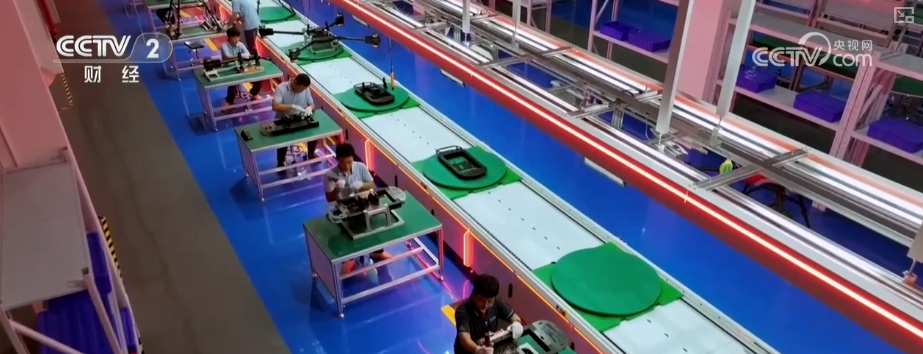
Core Insights - The construction and renovation of traditional infrastructure can release long-term economic and social benefits, while new infrastructure is a key pillar for the rapid growth of new technologies, industries, business formats, and models [1] Group 1: New Infrastructure Investment - Since 2025, investments in new infrastructure such as low-altitude economy, computing power, and electric power infrastructure have shown strong growth [1] - In Hubei Yichang, a low-altitude economy equipment production line has started operations in Q3, with an annual production capacity of 2,000 firefighting drones and associated automated airports [3] - The market revenue for the drone business is expected to be three to five times that of 2024, with significant expansion planned in the firefighting sector by 2026 [5] Group 2: Technological Advancements - In Tianjin, the North Chen low-altitude airspace Internet of Things project has been launched, establishing a three-dimensional airspace grid and management systems for low-altitude flights [7] - A professor from Peking University is developing a low-altitude intelligent network system that integrates aerial vehicles into a communication-based network, indicating a pre-explosion phase for the industry [9] Group 3: Computing Power Infrastructure - In Jiangsu Yangzhou, the construction of a green computing power base is progressing, with total investment exceeding 10 billion yuan, aiming to become a significant computing power hub in the Yangtze River Delta [11] - The overall electricity demand in the park is projected to reach 360 megawatts by 2026, supporting the deployment of at least 15,000 high-power cabinets [13] Group 4: Investment Opportunities - TCL Huaxing has commenced construction of the world's first 8.6-generation printed OLED production line in Guangzhou, with an investment of approximately 29.5 billion yuan, expected to be completed by Q4 2027 [15] - China possesses a large-scale market, a complete industrial system, an optimized business environment, and stable macro policies, providing predictable future investment opportunities [17] Group 5: Key Performance Indicators - As of mid-2025, investments in new infrastructure such as computing networks and mobile communications are rapidly increasing, with over 40 billion yuan invested in 5G networks by the three major telecom operators [19] - China has built over 4.6 million 5G base stations, leading globally in technology and user numbers, with over 20,000 "5G + industrial internet" construction projects [21] - By September 2025, the number of electric vehicle charging infrastructure units reached 18.063 million, a year-on-year increase of 54.5% [22]