高等教育

Search documents
“欧中合作具有广阔空间”
Ren Min Ri Bao· 2025-10-05 21:52
Core Viewpoint - The article emphasizes the importance of enhancing cooperation between Europe and China in various fields such as technology, education, and industry to achieve mutual benefits and understanding [2]. Group 1: Educational Cooperation - European and Chinese higher education institutions have established deep collaborative relationships, with universities acting as "civilian embassies" to foster understanding and cooperation despite complex international circumstances [2]. - The cooperation has not only improved international research levels but also enhanced cultural understanding among youth, laying a foundation for future collaborative projects [2]. Group 2: Research and Innovation - Recent research collaborations, such as the establishment of the "Joint Center for Plant and Environmental Interactions," focus on sustainable agricultural development and food security through gene modification technology [2]. - The practical and grounded nature of current Sino-European research cooperation reflects a deeper engagement compared to previous years [2]. Group 3: Entrepreneurship and Market Opportunities - The launch of the Tongji Entrepreneurship Valley project has facilitated the incubation of domestic and international entrepreneurial projects, showcasing the potential of cross-border collaboration in fostering innovation [3]. - A Spanish engineering student at Tongji University successfully established a startup related to electric vehicle motors, highlighting the market success and technological breakthroughs achieved through this initiative [3]. Group 4: Future Prospects - There is a strong belief in the vast potential for Sino-European cooperation, particularly in dual degree programs, joint research, and technology transfer, which create significant opportunities for collaboration [3]. - The role of education in broadening international perspectives for students is seen as crucial for nurturing future cooperation between Europe and China [3].


“欧中合作具有广阔空间”——访西班牙马德里理工大学驻华代表费可迪
Ren Min Ri Bao· 2025-10-05 21:38
Core Viewpoint - The article emphasizes the importance of enhancing cooperation between Europe and China in various fields such as technology, education, and industry to achieve mutual benefits and shared growth [1]. Group 1: Educational Cooperation - European and Chinese higher education institutions have established deep collaborative relationships, with universities acting as "civilian embassies" to foster understanding and cooperation despite complex international circumstances [1]. - The cooperation has not only improved international research standards but also enhanced cultural understanding among youth, laying a foundation for future collaborative projects [1]. Group 2: Research and Innovation - Recent research collaborations, such as the establishment of the "Joint Center for Plant and Environmental Interactions," focus on sustainable agricultural development and food security through gene modification technology [2]. - The practical approach to research and development in response to real-world needs has opened broader avenues for Sino-European higher education cooperation [2]. Group 3: Entrepreneurship and Market Opportunities - The launch of the Tongji Entrepreneurship Valley project has facilitated the incubation of domestic and international entrepreneurial projects, showcasing the potential of cross-border collaboration in fostering innovation [2]. - A Spanish engineering student at Tongji University successfully established a startup related to electric vehicle motors, highlighting the market success and breakthroughs in technology and business models achieved through this initiative [2]. Group 4: Future Prospects - There is a strong belief in the vast potential for Sino-European cooperation, particularly in dual degree programs, joint research, and technology transfer, which create significant opportunities for collaboration [2]. - The commitment to broadening international perspectives for students is seen as essential for nurturing future leaders in Sino-European cooperation [2].
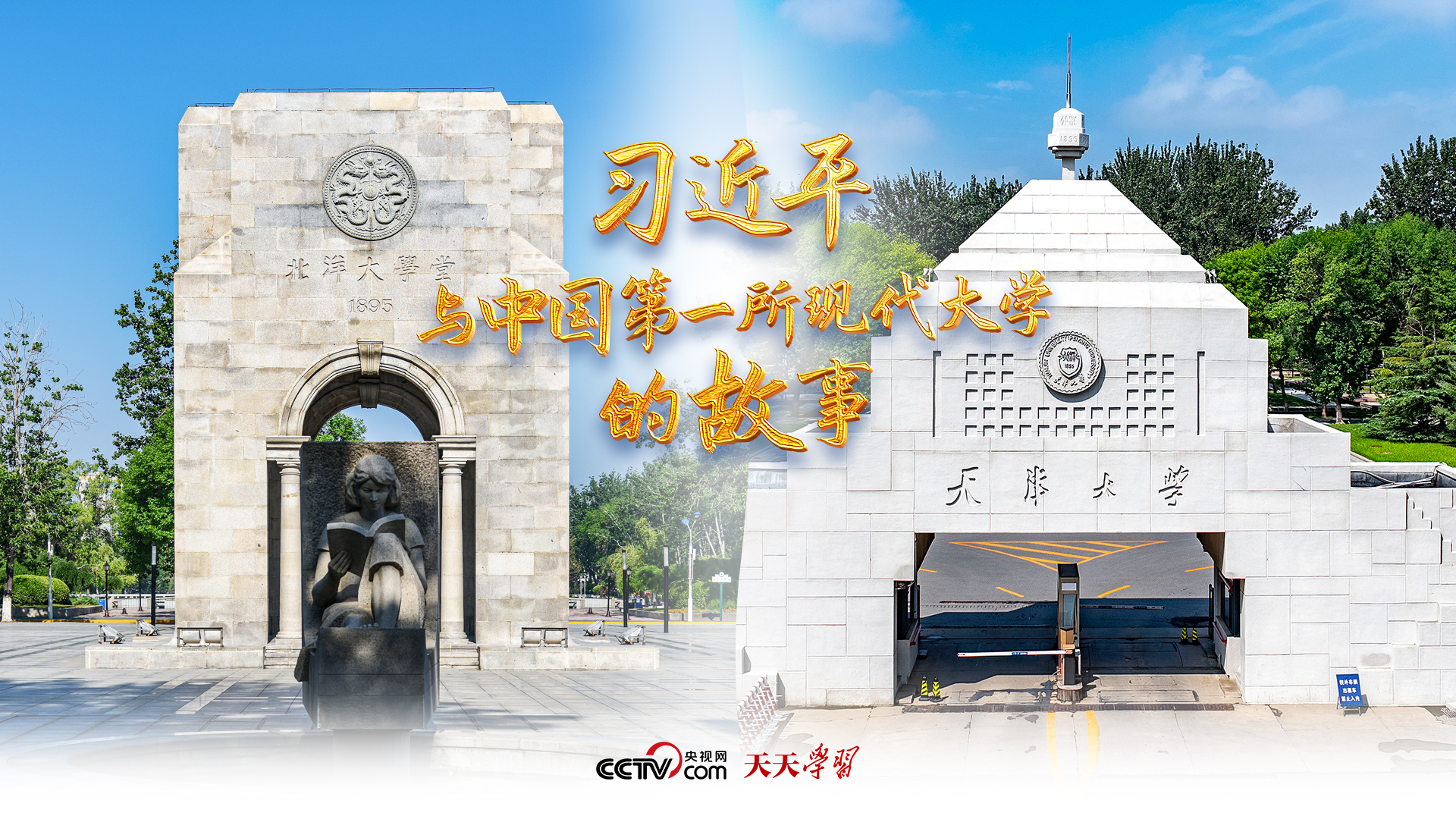
习近平与中国第一所现代大学的故事
Yang Shi Wang· 2025-10-05 12:28
Core Viewpoint - The news highlights the significance of Tianjin University in China's higher education landscape, emphasizing its historical contributions and ongoing commitment to innovation and international collaboration [2][6]. Group 1: Historical Significance - Tianjin University, founded in 1895 as Beiyang University, is recognized as China's first modern university, rooted in the mission of nurturing talent for national strength [2]. - The university has played a pivotal role in the development of China's modern education and industrial system, producing the first batch of undergraduate and graduate students in engineering [2]. Group 2: Innovation and Achievements - The university has been at the forefront of technological innovation, exemplified by the development of the "offshore wind power composite tubular foundation integrated installation" technology, which is 45% cheaper than similar technologies and has filled a significant gap in China's offshore wind power sector [5]. - This technology has been successfully applied in Jiangsu's Dafeng offshore wind farm and has been recognized as one of the most advanced offshore wind installation technologies globally [5]. Group 3: International Collaboration - Tianjin University has been a pioneer in receiving and educating international students, celebrating 70 years of international student education in 2024, coinciding with the 50th anniversary of diplomatic relations between China and Malaysia [6]. - The university has expanded its international reach, currently hosting 636 students from Shanghai Cooperation Organization member countries and establishing partnerships with over 260 institutions across 50 countries [7]. Group 4: Future Aspirations - The university aims to align its educational mission with national strategic needs and the development of a strong educational and technological nation, as emphasized by the university's leadership [7].
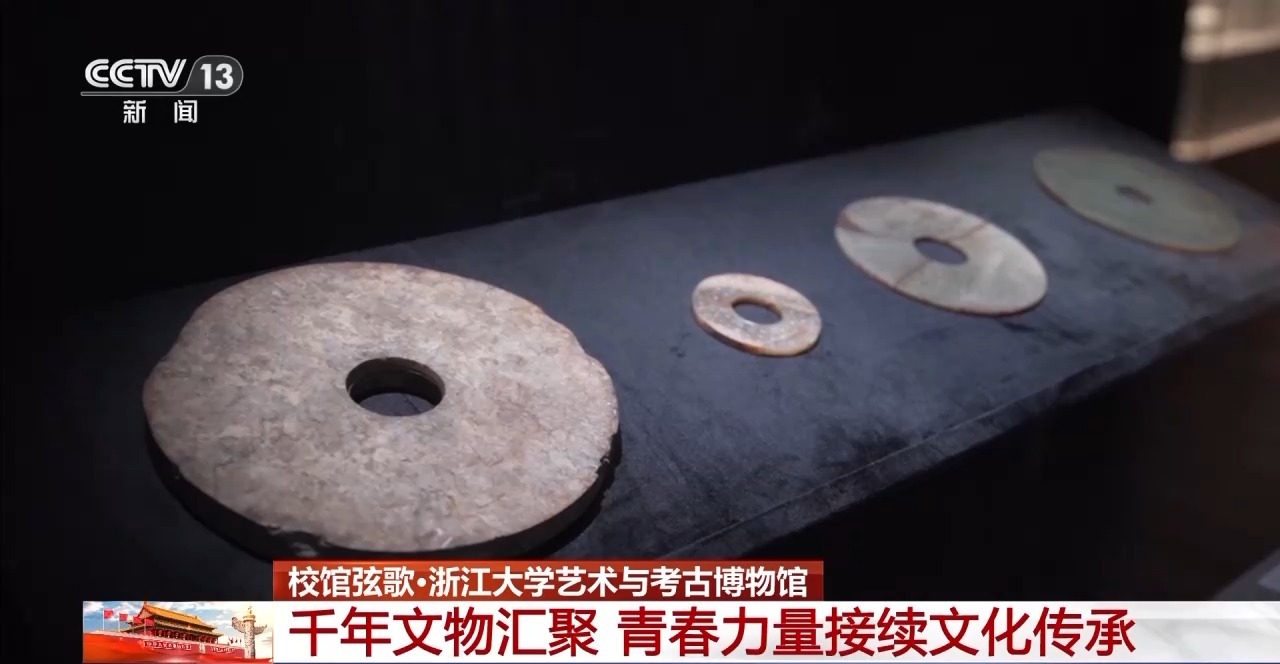
校馆弦歌丨千年文物汇聚浙大艺博馆 青春力量接续文化传承
Yang Shi Xin Wen Ke Hu Duan· 2025-10-04 12:57
Core Insights - The Zhejiang University Art and Archaeology Museum serves as a national first-class museum, aiming to showcase history through artifacts, spanning from prehistoric civilization to modern art, and igniting cultural interest among youth [1] Group 1: Museum Overview - The museum features a blend of modern and historical architecture, located in the southwest corner of Zhejiang University’s Zijingang Campus [1] - It has become a popular destination for young visitors, with exhibits that evoke respect and resonance for history through various artifacts [1] Group 2: Educational Initiatives - The museum adopts the philosophy of "one exhibition equals one course," providing free access to the public and creating a university without walls [5] - It has developed practical teaching courses in collaboration with multiple departments, allowing students to engage directly with artifacts [7] - The museum has established a teaching collection system covering 15 categories, from the Stone Age to modern art [8] Group 3: Student Engagement - Students express a deep emotional connection to the artifacts, emphasizing the importance of experiencing history firsthand rather than through glass [10] - The museum's permanent exhibition, "The Great Series of Chinese Painting," includes over 12,400 pieces, making it a favored spot for students [12] - A new general education course titled "Chinese Civilization in Historical Paintings" has gained popularity among undergraduates, enhancing their understanding of traditional culture [14] Group 4: Technological Integration - The integration of AI technology in art restoration has significantly reduced the time required for traditional restoration processes from one year to three months [14][16] - Researchers are exploring the intersection of computer science and traditional art, aiming to revitalize ancient cultural treasures [18]
为建设教育强国科技强国、推进中国式现代化贡献更多力量——习近平总书记给天津大学全体师生的回信引发热烈反响
Yang Guang Wang· 2025-10-04 09:01
Core Viewpoint - The letter from General Secretary Xi Jinping to Tianjin University emphasizes the importance of focusing on national strategic needs and enhancing talent cultivation and technological self-reliance to contribute to the construction of a strong educational and technological nation, as well as to advance Chinese-style modernization [1][2]. Group 1: Educational and Research Focus - Tianjin University is encouraged to deepen teaching and research reforms, strengthen basic research, and improve talent training quality to better serve economic and social development [1][2]. - The university aims to cultivate outstanding talents with a sense of national responsibility, global vision, innovative spirit, and practical ability [1][2]. Group 2: Technological Development - The focus will be on key core technologies, leveraging Tianjin University's disciplinary advantages to enhance original innovation capabilities, particularly in fields like artificial intelligence and synthetic biology [2]. - The university's efforts will contribute to the development of critical technologies that support national modernization [3]. Group 3: Institutional Commitment - Educational institutions, including Tianjin University, are expected to engage more deeply in teaching and research, fostering a generation of talents that can contribute to the nation's goals [2][3]. - The commitment to integrating technological innovation with industrial development is highlighted as essential for national progress [2].
每个学生150元“过节费”:一场有关尊重的教育实践
Nan Fang Du Shi Bao· 2025-10-02 12:21
Core Viewpoint - The unexpected issuance of a 150 yuan "temporary living subsidy" to students at Anhui Normal University has generated significant positive reactions, highlighting a more personal and direct approach to student support compared to traditional methods of distributing gifts like mooncakes during festivals [1][2]. Group 1: Subsidy Distribution - Anhui Normal University distributed 150 yuan to each of the tens of thousands of students without prior notice, creating a sense of surprise and appreciation among the students [1]. - The university also prepared 39,983 mooncakes for students, but the cash subsidy was seen as a more effective way to meet individual needs [1][2]. Group 2: Student Empowerment - The cash subsidy allows students to choose how to use the funds, whether for purchasing mooncakes, gifts, or daily expenses, reflecting respect for students as independent individuals [2][3]. - This approach contrasts with traditional gift-giving, which may not cater to the diverse preferences and dietary restrictions of all students [1][2]. Group 3: Emotional Connection - The initiative fosters a sense of connection and care from the university, emphasizing that the institution is concerned about students' overall well-being and emotional experiences [3]. - Positive feedback from students and the community indicates that such thoughtful gestures contribute significantly to a warm and inclusive campus culture [3].
活水润泽 文明赓续
Zhong Guo Jing Ji Wang· 2025-10-02 03:54
Core Points - Water is essential for survival and civilization, with irrigation playing a crucial role in the development of Chinese agricultural civilization [1][2] - China has successfully added four irrigation projects to the 2025 World Irrigation Heritage List, bringing the total to 42 [1] - The projects include the Yunnan Yuanyang Hani Terraces, Jiangsu Jurong Chishan Lake Irrigation Project, Sichuan Pengzhou Qianjiang Weir, and Beijing Mentougou Yongding River Ancient Canal Irrigation Project [1] - The technical support for these projects was provided by a team led by Professor Chen Jing from Hohai University [1] Group 1: Historical Significance - China is the country with the richest and most widely distributed irrigation engineering heritage, with many ancient projects still in use today [2] - The preservation and scientific utilization of these irrigation heritage sites are vital for inheriting and promoting traditional Chinese culture [2] - The Jiangsu Jurong Chishan Lake Irrigation Project exemplifies the evolution of water management in China, showcasing historical techniques and innovations [2] Group 2: Technological Advancements - Hohai University has been a leader in water-saving irrigation research for over 40 years, achieving significant water savings and increased rice yields [1][4] - The university's irrigation technology has been applied in over 10% of China's rice planting areas, resulting in over 40% water savings and more than 14% yield increase [1] - The team employs various methods, including remote sensing and field surveys, to support the application for World Irrigation Heritage status [4] Group 3: Cultural Impact - The irrigation systems reflect the cultural and philosophical values of the Hani ethnic group, integrating agricultural practices with their traditions [2] - The historical context of these irrigation projects illustrates the relationship between engineering, nature, and societal needs, providing valuable insights for modern water management [2]
青春华章|活水润泽 文明赓续
Zhong Guo Jing Ji Wang· 2025-10-02 03:44
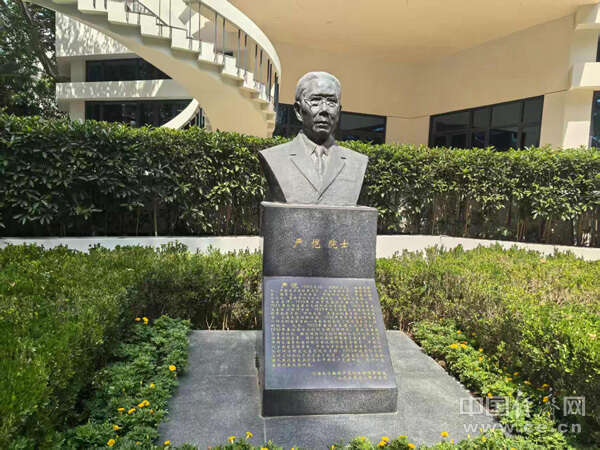
Core Viewpoint - The recent inclusion of China's irrigation projects in the World Irrigation Heritage List highlights the country's rich history and expertise in irrigation engineering, emphasizing the importance of water management in agricultural development and cultural heritage [2][3]. Group 1: Irrigation Heritage - China's successful application for the World Irrigation Heritage List includes four projects: Yunnan's Honghe Hani Rice Terraces, Jiangsu's Chishan Lake Irrigation Project, Sichuan's Qianjiang Weir, and Beijing's Yongding River Ancient Canal, bringing the total to 42 heritage sites [2]. - The preservation and scientific utilization of these irrigation heritage sites are crucial for inheriting and promoting traditional Chinese culture, showcasing the relationship between engineering, nature, and social needs [3]. Group 2: Technological Support and Research - The technical support for the heritage applications was provided by Professor Chen Jing's team from Hohai University, which has been engaged in water-saving irrigation research for over 40 years, achieving significant water savings and increased rice yields [2][4]. - The team employs a multidisciplinary approach, utilizing methods such as remote sensing and field surveys to overcome challenges in the application process, reflecting the depth of Chinese civilization and the vitality of its water management [4]. Group 3: Historical Context - Hohai University, founded 110 years ago, has a legacy rooted in national pride and practical contributions to water management, evolving from the first water conservancy school in China to a leading institution in the field [4]. - The historical figures associated with the university, such as Zhang Jian and Yan Kai, exemplify a commitment to water management and national development, which continues to inspire current students and researchers [4].
校馆弦歌丨心有大我 至诚报国——感受高校科学精神
Xin Hua Wang· 2025-10-01 08:22
Core Insights - The article emphasizes the integration of scientific spirit into education at various universities, fostering a sense of national pride and responsibility among students [1][2][3] Group 1: Educational Initiatives - Shanghai Jiao Tong University launched a series of scientific activities titled "The Return of the Wall Breakers Across the Ocean" to commemorate the 70th anniversary of alumni Qian Xuesen's return to China, using diverse formats to promote scientific spirit [1] - Tsinghua University's Science Museum showcases thousands of scientific artifacts, aiming to convey the stories of scientists and the underlying scientific spirit and national sentiment [2] - Zhejiang University's Art and Archaeology Museum hosts exhibitions that transform art history into an interactive experience, encouraging students to engage as active participants in cultural heritage [3] Group 2: Student Engagement - Students at Shanghai Jiao Tong University actively participate in historical experiences, deepening their understanding of Qian Xuesen's choices and contributions to science [1] - Tsinghua University aims to build a permanent science museum by 2027, with a vision to connect local, national, and global scientific narratives [2] - The educational approach at Zhejiang University emphasizes the role of museums as platforms for inquiry and cultural transmission, fostering critical thinking among students [3]
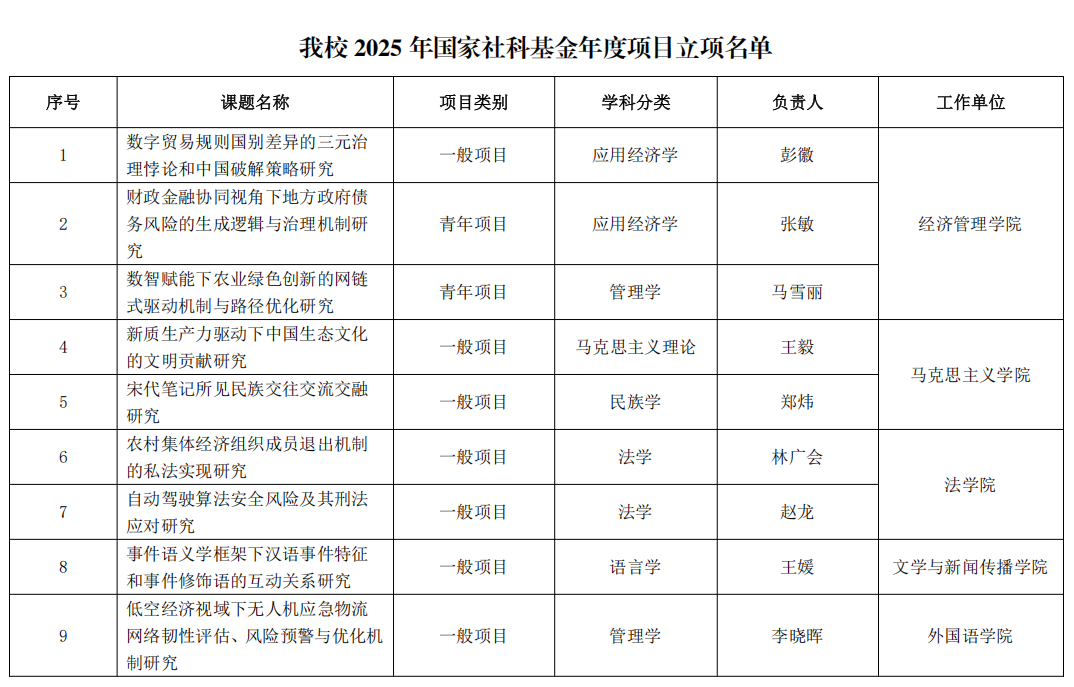
烟台大学2025年国家社科基金年度项目立项再创佳绩
Qi Lu Wan Bao Wang· 2025-10-01 02:23
Group 1 - The core viewpoint of the article highlights that Yantai University has achieved a record high in the number of approved projects under the National Social Science Fund for 2025, with a total of 9 projects, ranking 8th among provincial universities and 171st nationally out of 601 universities [1][4] Group 2 - The approved projects include 7 general projects and 2 youth projects, covering various disciplines such as applied economics, management, Marxist theory, and law [2] - Specific project titles include studies on digital trade rules, local government debt risks, agricultural green innovation, and automatic driving algorithm safety [2] Group 3 - The National Social Science Fund projects are considered the highest level of research projects in the field of philosophy and social sciences in China, serving as a core indicator of academic research strength and level for universities and research institutions [4] - Yantai University emphasizes the organization of project applications, collaborating closely with various colleges to enhance the quality of project proposals and increase faculty engagement [4]