
软件与信息技术服务

Search documents
思特奇: 关于董事会换届选举的公告
Zheng Quan Zhi Xing· 2025-06-12 12:17
证券代码:300608 证券简称:思特奇 公告编号:2025-035 债券代码:123054 债券简称:思特转债 张权利先生、赵德武先生已取得深圳证券交易所认可的独立董事资格证书, 其中赵德武先生为会计专业人士。上述独立董事候选人的任职资格和独立性尚需 经深圳证券交易所审核无异议后方可提交公司股东会审议,并采用累积投票方式 选举产生 4 名非独立董事、3 名独立董事,与经职工代表大会选举产生的 1 名职 工代表董事共同组成公司第五届董事会,任期自公司股东会审议通过之日起三年。 北京思特奇信息技术股份有限公司 本公司及董事会全体成员保证信息披露的内容真实、准确、完整,没有 虚假记载、误导性陈述或重大遗漏。 北京思特奇信息技术股份有限公司(以下简称"公司")第四届董事会任期 届满,根据《公司法》《深圳证券交易所创业板股票上市规则》《深圳证券交易 所上市公司自律监管指引第 2 号——创业板上市公司规范运作》等法律、法规、 规范性文件,公司董事会拟进行换届选举。 一、董事会换届选举情况 公司于 2025 年 6 月 12 日召开第四届董事会第三十一次会议,审议通过了 《关于董事会换届选举暨提名第五届董事会非独立董事候 ...

光庭信息拟3.6亿收购楷码科技 标的年赚3318万将助力增厚业绩
Chang Jiang Shang Bao· 2025-06-11 23:42
Core Viewpoint - The company, Guangting Information, is expanding its overseas market and industry applications by acquiring 100% equity of Chengdu Kaimate Technology Co., Ltd. for 360 million yuan, marking a significant step in its strategic layout in the intelligent connected vehicle sector and international markets [1][2]. Group 1: Acquisition Details - The acquisition price for Kaimate Technology is set at 360 million yuan, with Guangting Information planning to use 180 million yuan of raised funds for part of the payment, while the remainder will be covered by its own or self-raised funds [2]. - Kaimate Technology is a comprehensive software and information technology service provider focusing on the automotive supply chain, fintech, and healthcare sectors, primarily serving Japanese enterprises [2]. - Post-acquisition, Kaimate Technology is expected to contribute significantly to Guangting Information's profit growth, with performance commitments of net profits of no less than 38 million yuan, 45 million yuan, and 52 million yuan for the years 2025 to 2027 [2]. Group 2: Financial Performance - In the first quarter of 2025, Guangting Information reported a revenue of 134 million yuan, a year-on-year increase of 10.52%, and a net profit of 24.03 million yuan, marking a significant turnaround with an increase of 835.28% compared to the previous year [4]. - The company's intelligent connected vehicle testing services, particularly for Honda's overseas models, have seen substantial growth, contributing to the overall revenue increase [4]. - The fluctuation in the Japanese yen has resulted in significant exchange gains, with financial expenses for the first quarter of 2025 reported at -13.26 million yuan, a decrease of 338.69% from the previous year [4]. Group 3: Technological Advancements - Guangting Information has developed the "Super Software Workshop" SDW 2.0 platform, which has been piloted among mainstream clients, significantly enhancing software delivery efficiency [5]. - The company is accelerating the productization of core technologies such as the virtual testing platform "Digital Car" and the 3D intelligent cockpit platform UEA, establishing a solid technological moat [5]. - The company plans to continue deepening its "AI + automotive software" strategy, increasing R&D investment, optimizing its business structure, and accelerating internationalization [5].
上市后业绩显著下滑,这家公司拟进行收购……
IPO日报· 2025-06-11 11:52
Core Viewpoint - The acquisition of 100% equity in Chengdu Kaimate Technology Co., Ltd. by Wuhan Guangting Information Technology Co., Ltd. for a total consideration of 360 million yuan is aimed at enhancing the company's service capabilities and expanding its overseas business, particularly in the Japanese market [1][6][8]. Group 1: Acquisition Details - Guangting Information plans to use 180 million yuan of raised funds to partially finance the acquisition, with the remainder sourced from its own or self-raised funds [1]. - After the transaction, Kaimate Technology will become a wholly-owned subsidiary of Guangting Information and will be included in the consolidated financial statements [2]. - The transaction is based on a valuation that reflects a significant increase in Kaimate Technology's value, with an assessed increase of 25.685 million yuan and a valuation increase rate of 242.46% [3][6]. Group 2: Kaimate Technology Overview - Kaimate Technology is a comprehensive software and information technology service provider focusing on industries such as automotive supply chain, fintech, and healthcare [4]. - The company primarily serves Japanese clients, offering software development, testing, and IT solutions [4]. Group 3: Financial Performance - Kaimate Technology is projected to achieve revenues of 131 million yuan and a net profit of 33.1821 million yuan for the fiscal year 2024 [5]. - The acquisition includes performance commitments, with net profit targets set at no less than 38 million yuan, 45 million yuan, and 52 million yuan for the years 2025 to 2027 [6]. Group 4: Strategic Implications - The acquisition is expected to facilitate deeper integration of customer resources between Guangting Information and Kaimate Technology, enhancing service offerings and expanding market reach [8]. - Guangting Information aims to leverage its AI technology and Kaimate Technology's cross-industry software development experience to enhance its capabilities in various applications [8]. Group 5: Guangting Information's Financial Trends - Guangting Information has experienced fluctuating financial performance since its IPO, with revenues showing a slight decline in recent years, but a recovery in Q1 2025 with a revenue increase of 10.52% year-on-year [9]. - The company reported a net profit of 24.0325 million yuan in Q1 2025, indicating a return to profitability driven by growth in smart connected vehicle testing services and improved operational efficiency [9].


破发股光庭信息3.6亿现金买楷码科技 2021上市超募11亿
Zhong Guo Jing Ji Wang· 2025-06-11 06:39
中国经济网北京6月11日讯光庭信息(301221)(301221.SZ)昨晚发布关于购买成都楷码科技股份有限公 司100%股权的公告。武汉光庭信息技术股份有限公司(以下简称"公司""上市公司"或"光庭信息")拟以支 付现金的方式向苏州优昇科技有限公司等13名交易对手(以下简称"交易对方")购买成都楷码科技股份有 限公司(以下简称"楷码科技"或"标的公司")100%股权(以下简称"标的股权"),本次交易完成后,楷码科 技将成为上市公司全资子公司,纳入上市公司合并报表范围。 本次交易中,楷码科技100%股权的交易作价为36,000.00万元,其中公司拟使用超募资金18,000.00万元 支付本次交易的部分收购价款,剩余部分使用自有或自筹资金支付。 为实现购买楷码科技100%股权的目的,本次交易前,楷码科技须自股份有限公司改制为有限责任公 司。 本次交易前,楷码科技须通过派生分立的方式剥离其持有的维度信息技术(苏州)有限公司(以下简称"维 度信息")65%股权。分立完成后,楷码科技持有维度信息35%股权,维度信息为楷码科技的参股公司。 本次交易的范围为派生分立完成后的楷码科技100%股权,不包含维度信息的65%股权 ...

光庭信息: 第四届监事会第六次会议决议公告
Zheng Quan Zhi Xing· 2025-06-10 13:32
Group 1 - The core point of the announcement is the approval of the acquisition of 100% equity of Chengdu Kaimar Technology Co., Ltd. by the company, which is deemed necessary for the company's operational and strategic development [1][2] - The supervisory board confirmed that the acquisition will be funded by the company's own funds and part of the raised funds, ensuring that it aligns with the company's operational needs and does not harm the interests of the company and its shareholders [1][2] - The transaction price is based on the valuation from an independent third-party asset appraisal agency, and the board believes the pricing is fair and reasonable [1] Group 2 - The supervisory board also approved the use of raised funds and self-owned funds to pay for the equity acquisition, confirming that the procedures comply with relevant regulations and will not affect the normal implementation of the fundraising projects [2] - The voting results for both proposals were unanimous, with 3 votes in favor and no votes against or abstentions, indicating strong support from the supervisory board [2]
企业做数字化转型就是一个踩坑和被坑的过程?
3 6 Ke· 2025-06-10 00:44
数字化转型建设已经成为企业高质量发展的必经之路,但同样是做数字化明明所选的系统是一样的为什 么企业之间效果差异就那么大?老杨写了大量关于数字化建设的文章,总结成一句话那就是: 没有正确的理念及方法做指引,企业做数字化转型建设不是踩坑就是被坑! 那么做数字化究竟有多坑?有多少坑?为什么有的企业不断被坑还不断踩坑?是软件的问题还是企业本 身管理的错?今天老杨就来细数一下那些坑。 其实这些坑总结起来分:外部与内部两大方面,外部的坑即数字化服务商,而内部的坑完全在于企业内 部自身的管理。 有人说在数字化转型建设过程中找服务商就如找老婆,存在赌的成分,因为选型期如谈恋爱,不管对方 提什么条件都会满口承诺,展现的都是最好的一面,但如果合同一签,甲乙身份就彻底互换了,老杨曾 经调侃软件公司:签合同之前你是乙方,合同一签我就变成乙方了,话里行间也体现着数字化建设过程 中的诸多无奈。 那么与外部服务商合作有哪些典型的坑呢?老杨总结如下: 1.最佳实践永远在PPT里 数字化建设从选型开始,而选型又以PPT开场,软件公司的PPT里永远展示的总是行业最佳实践,即使 仅应用了某个功能也是最佳实践,因为要保持甲乙双方彼此的体面;至于是不 ...
任正非:将来是千百种开源软件满足整个社会需要
news flash· 2025-06-10 00:11
Group 1 - The core viewpoint expressed by Ren Zhengfei is that there is no need to worry about chip issues, as methods like aggregation and clustering can yield results comparable to the most advanced levels [1] - Ren Zhengfei emphasizes that in the future, there will be a multitude of open-source software options available to meet the needs of society [1]
基于鲲鹏云的政务数据治理融合联合解决方案:点亮智慧政务新未来
Sou Hu Cai Jing· 2025-06-09 18:32
本文引用的参考文献搜集于互联网,非原创,如有侵权请联系小编删除! 请勿将该文章用于任何商业用途,仅供学习参考,违者后果自负!更多参考公众号:无忧智库 在当今数字化时代,政务数据作为国家治理的重要战略资源,其管理和应用水平直接关系到政府决策的科学性、服务的高效性和治理的精准性。然而,我国 政务数据长期面临着诸多痛点,亟待有效的解决方案来释放其巨大价值。 李克强总理曾在 2016 年 5 月全国推进简政放权电视电话会议上指出,我国信息数据资源 80% 以上掌握在各级政府部门手里,但"深藏闺中"是极大浪费。这 种数据浪费现象普遍存在,政务数据质量低下、没有统一标准,导致大数据价值难以发挥。 政务大数据还面临着一系列痛点:委办局数据虽已超越互联互通阶段,实现了一定程度的数据集中融合,但仍存在纵向系统"烟囱林立"的问题,各系统之间 缺乏有效的协同与整合。同时,横向数据碎片化和纵向数据烟囱林立的现象严重,数据质量参差不齐,给政务数据的有效治理和应用带来了巨大挑战。 为应对上述挑战,华为 - 华傲公司携手推出了基于鲲鹏云的政务数据治理融合联合解决方案。该方案以"双调双融"为核心理念,通过数据调研助力数据融合 (数据治理归集 ...
讯方技术终止北交所IPO 原拟募资2.5亿华创证券保荐
Zhong Guo Jing Ji Wang· 2025-06-07 09:07
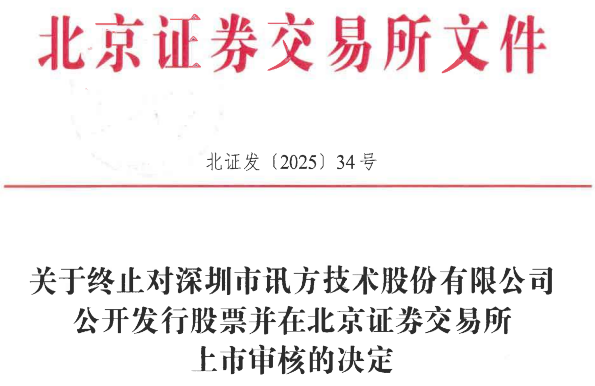
Core Points - The Beijing Stock Exchange has decided to terminate the review of Shenzhen Xunfang Technology Co., Ltd.'s application for public offering and listing [1][2] - Xunfang Technology submitted its application for public offering on September 21, 2023, and later requested to withdraw the application on April 23, 2025 [2] - The company specializes in ICT (Information and Communication Technology) services, providing network technology services to telecom equipment manufacturers and large enterprises, and supporting educational institutions in building training facilities [2] Company Structure - Dai Yi holds 32.70% of the company's shares, making him the largest shareholder, with other significant shareholders being Cheng Zongyu (11.08%), Xunfang Investment (10.31%), and Liu Guofeng (7.67%) [3] - The shareholding structure is relatively dispersed, with no agreements among the major shareholders, confirming Dai Yi as the actual controller of the company [3] - Dai Yi's shareholding allows him to significantly influence the company's decisions, as he serves as the legal representative and chairman [3] Fundraising Plans - Xunfang Technology initially planned to raise 25 million yuan for regional service network upgrades, research center construction, and to supplement working capital [3] Sponsorship - The company's sponsor (lead underwriter) is Huachuang Securities Co., Ltd., with Wang Zhaocheng and Lu Changcheng as the signing representatives [4]
中国软件国际
2025-06-04 15:25
Summary of Conference Call Notes Company and Industry Overview - **Company**: 中软国际 (China Software International) - **Industry**: ICT (Information and Communication Technology), Software Development, Cloud Computing Key Points and Arguments - **Hongmeng Ecosystem Growth**: The Hongmeng ecosystem is expected to see significant growth, with related revenues projected to double year-on-year by 2025. Although there may be short-term impacts on Huawei's sales, long-term technological iterations are anticipated to enhance user experience [2][4] - **Hongmeng PC Business**: The Hongmeng PC business includes virtual machine software and hardware PCs. Software will be sold to both ToC (Consumer) and ToB (Business) markets, while hardware PCs will initially target B-end customers, with potential future expansion into the ToC market [2][5] - **ICT Spending Trends**: Operators are showing significant incremental spending in the ICT sector, with a concentration of market share leading to sustained growth rates of 40-50%. Central state-owned enterprises are increasing software investments, driven by AI transformation and demand for new projects [2][7] - **China Software International's Financials**: The company's revenue is expected to remain flat compared to 2021, but profit levels are comparable to those in 2016. The company is transitioning towards productization and new business layouts, with a projected compound annual growth rate (CAGR) of 70-80% over the next three years, and an anticipated gradual increase in gross margin [2][7] - **New Business Segment Impact**: The new product-oriented business segment, which includes self-developed products and services, is expected to reach nearly 1 billion in size by 2024, positively impacting the overall retail proportion and gross margin of the company [2][8] - **Huawei Cloud Business**: Huawei's cloud intelligent business has surpassed 40% of its revenue, with the pure product segment estimated at around 1 billion, expected to grow to 2 billion by 2025, representing over 10% of total revenue [2][9] Additional Important Insights - **Employee Planning at Huawei**: Huawei plans to maintain its workforce at approximately 75,000 employees in 2025, aiming for revenue growth without increasing headcount through AI coding tools and cost optimization [3][10] - **Future Development Events for Huawei**: Key events to watch for Huawei in 2025 include the establishment of joint ventures and product launches. Investors should pay attention to mid-term performance reports, with expectations of over 30% annual growth and potential stock buybacks [3][11]